Wood Shaving Fuel Pellets (Industrial)
CN → US| HS Code | Tariff Rate | Origin | Destination | Doc |
|---|---|---|---|---|
| 4402900100 | 35.0% | CN | US | Official Doc |
| 4401394220 | 35.0% | CN | US | Official Doc |
| 4405000000 | 38.2% | CN | US | Official Doc |
| 4401310000 | 35.0% | CN | US | Official Doc |
| 4401394210 | 35.0% | CN | US | Official Doc |
Product Images
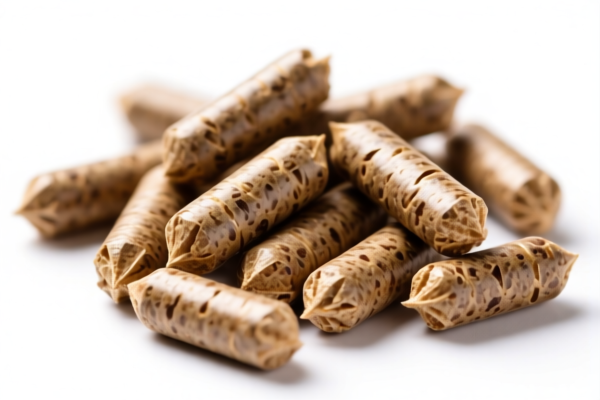
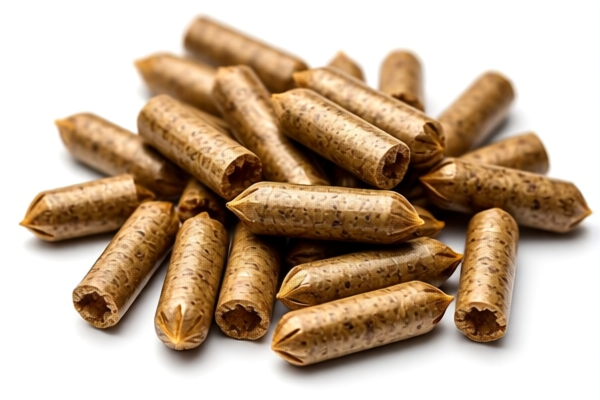
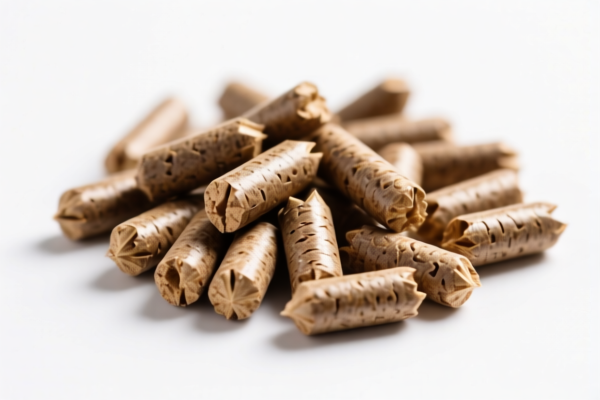

AI Analysis
🔥 Wood Shaving Fuel Pellets (Industrial)
🌐 HS Code Reference & Customs Clearance Guide | 2026 Latest Tariff Analysis | Professional Clearance Strategy
📌 I. Product Definition & Classification: What Exactly Are "Wood Shaving Fuel Pellets"?
Wood shaving fuel pellets are a form of biomass fuel derived from wood by-products (such as sawdust, shavings, or chips). They are compressed into dense cylindrical shapes to improve burning efficiency, reduce storage volume, and ensure consistent energy output. In international trade, these products fall under Chapter 44 (Wood and articles of wood; wood charcoal).
The classification depends heavily on: 1. Material State: Is it processed into pellets/granules (fuel) or kept as raw shavings/sawdust? 2. Processing Level: Are they merely shaped, or chemically treated? 3. Intended Use: Industrial heating vs. residential biomass boilers.
⚠️ Key Distinction Point:
- If the product is processed into dense pellets primarily for fuel, it typically falls under Heading 4401 (Fuel wood, including wood chips, pellets, and briquettes).
- If the product is raw wood shavings or loosely bound, it may fall under Heading 4405 (Wood wool, shavings, chips, particles, sawdust).
- Incorrect classification can lead to significant tariff differences and customs delays.
📦 II. HS Code Classification Details (2026 Latest Tariff Authority Comparison)
Based on the provided data, here are the five potential HS Codes and their rationales:
| HS Code | Product Description | Application Scenario | Reason for Classification |
|---|---|---|---|
4402.90.01.00 |
Fuel pellets from wood shavings | Biomass fuel, industrial boilers | Fits the category of "carbonaceous/wood-based fuel" under other categories. Wood shaving material in pellet form. |
4401.39.42.20 |
Wood Shaving Pellets | Industrial fuel pellets | "Wood Shaving" = "Shavings", "Pellets" = "Pellets". Material and form match this code definition. |
4401.31.00.00 |
Pelletized Wood Sawdust/Shavings | High-efficiency industrial fuel | "Wood Shaving" and "Pellets" perfectly match the material and form definition of pelletized wood sawdust. |
4401.39.42.10 |
Industrial Wood Pellets | General industrial biomass fuel | Material: Wood; Form: Pellets. Fits the definition of fuel sawdust, pellets, and similar items in Category 4401.39. |
4405.00.00.00 |
Wood Shavings, Sawdust & Particles | Raw/semi-processed wood by-product | "Wood Shaving" matches wood wool/shavings material; "Pellets" are a processed form of sawdust, fitting primary/semi-finished characteristics. |
🔍 Important Note:
- Codes4401.39.42.20,4401.31.00.00, and4401.39.42.10all relate to fuel wood (processed into pellets/shapes).
- Code4405.00.00.00relates to wood waste/by-products (less processed).
- Critical Decision: If the pellets are compacted and designed for high-density fuel,4401is generally more accurate than4405. Misclassifying fuel pellets as raw wood waste (4405) may trigger audits if the density/packaging indicates fuel intent.
💰 III. 2026 Latest Tariff Rate Breakdown (Including Surcharges & Policy Add-ons)
✅ Applicable Country: United States (US)
✅ Country of Origin: China (CN)
✅ Effective Date: From November 10, 2025 (including subsequent imports)
🎯 1. 4402.90.01.00 — Wood Shaving Fuel Pellets
| Item | Detail |
|---|---|
| Base Tariff Rate | 0% (ad valorem) |
| USITC Surcharge (Section 301) | +25% |
| IEEPA Surcharge (Section 122/Other) | +10% |
| Total Effective Tax Rate | 35.0% |
| Tax Calculation | CIF Value × 35% |
| De Minimis Eligibility | ❌ Not Eligible (Due to Section 301/IEEPA surcharges) |
| Legal Basis Path | IEEPA:9903.01.25 → USITC:4402.90.01.00 → FOOTNOTE:9903.88.01 |
📌 Explanation:
- The 25% surcharge comes from the US Trade Law Section 301 "Additional Duties."
- The 10% IEEPA surcharge is an additional penalty on Chinese products.
- Total 35%: This is a high tariff rate. Importers must calculate landed costs carefully.
- Note: While the base rate is 0%, the surcharges make it significantly more expensive than non-Chinese origin wood pellets.
🎯 2. 4401.39.42.20 — Wood Shaving Pellets
| Item | Detail |
|---|---|
| Base Tariff Rate | 0% |
| USITC Surcharge | +25% |
| IEEPA Surcharge | +10% |
| Total Effective Tax Rate | 35.0% |
| Tax Calculation | CIF × 35% |
| De Minimis Eligibility | ❌ Not Eligible |
| Legal Basis Path | IEEPA:9903.01.25 → USITC:4401.39.42.20 → FOOTNOTE:9903.88.01 |
📌 Note:
- Same tariff structure as4402.90.01.00.
- Applies to wood shavings specifically processed into pellets for fuel.
- Ensure product description explicitly states "Fuel" and "Pellets" to avoid misclassification.
🎯 3. 4401.31.00.00 — Pelletized Wood Sawdust/Shavings
| Item | Detail |
|---|---|
| Base Tariff Rate | 0% |
| USITC Surcharge | +25% |
| IEEPA Surcharge | +10% |
| Total Effective Tax Rate | 35.0% |
| Tax Calculation | CIF × 35% |
| De Minimis Eligibility | ❌ Not Eligible |
| Legal Basis Path | IEEPA:9903.01.25 → USITC:4401.31.00.00 → FOOTNOTE:9903.88.01 |
📌 Note:
- This code is for "Wood Sawdust" shaped into pellets.
- If your product is labeled "Wood Shaving" but structurally identical to sawdust pellets, this code is highly relevant.
- Tariff impact is identical to other fuel wood codes under current US-China trade policies.
🎯 4. 4401.39.42.10 — Industrial Wood Pellets
| Item | Detail |
|---|---|
| Base Tariff Rate | 0% |
| USITC Surcharge | +25% |
| IEEPA Surcharge | +10% |
| Total Effective Tax Rate | 35.0% |
| Tax Calculation | CIF × 35% |
| De Minimis Eligibility | ❌ Not Eligible |
| Legal Basis Path | IEEPA:9903.01.25 → USITC:4401.39.42.10 → FOOTNOTE:9903.88.01 |
📌 Note:
- General category for "Industrial Wood Pellets" under 4401.39.
- Broad applicability if specific material (shaving vs. sawdust) is not critical to the customs broker.
- Critical: Must be declared as "Fuel" to distinguish from other wood particles.
🎯 5. 4405.00.00.00 — Wood Shavings, Sawdust & Particles (Less Processed)
| Item | Detail |
|---|---|
| Base Tariff Rate | 3.2% |
| USITC Surcharge | +25% |
| IEEPA Surcharge | +10% |
| Total Effective Tax Rate | 38.2% |
| Tax Calculation | CIF × 38.2% |
| De Minimis Eligibility | ❌ Not Eligible |
| Legal Basis Path | IEEPA:9903.01.25 → USITC:4405.00.00.00 → FOOTNOTE:9903.88.01 |
📌 Warning:
- This code has a higher total tax (38.2%) due to the 3.2% base tariff.
- Risk: Using this code for densely compressed fuel pellets may be challenged by Customs if the product is clearly intended for fuel (which is better classified under 4401).
- Recommendation: Only use if the product is loose, un-compressed, or sold as raw material for other industries (e.g., animal bedding, particleboard feedstock).
🛠️ IV. Customs Clearance Practical Advice (Real-World Pitfall Guide)
✅ 1. Required Documentation Checklist (Essential)
| Document | Mandatory? | Description |
|---|---|---|
| ✅ Product Specification Sheet | ✔️ | Must detail material composition (100% wood?), moisture content, density, and form (pellets/shavings). |
| ✅ Commercial Invoice | ✔️ | Clearly state: "Wood Shaving Fuel Pellets, Industrial Grade, HS Code [XXX], Made in China." |
| ✅ Packing List | ✔️ | Show bulk packaging (e.g., jumbo bags, pallets) vs. retail packaging. |
| ✅ Certificate of Origin (CO) | ✔️ | Required for origin verification. No preferential treatment available for China origin under current policies. |
| ✅ MSDS / Chemical Analysis | ✔️ | Proves product is natural wood, not chemically treated or hazardous waste. |
| ✅ Burning Efficiency Report (Optional) | ✔️ | Helps justify classification as "Fuel" (4401) rather than "Raw Wood Waste" (4405). |
✅ 2. Declaration Tips (Key Mantra)
🔥 "Clear Material, Exact Form, Fuel Intent, Avoid 38.2%!"
| Scenario | Correct Declaration | Incorrect Action |
|---|---|---|
| Compressed Fuel Pellets | 4401.31.00.00 or 4401.39.42.20 |
Declare as 4405.00.00.00 → Higher Tax (38.2%) & Risk of Misclassification |
| Raw Wood Shavings (Loose) | 4405.00.00.00 |
Declare as Fuel Pellets → Delay for Inspection |
| Treated/Bonded Pellets | Check for Chemical Additives | If chemicals are added, may shift to Chapter 39 or 38, changing tariffs entirely |
| Small Sample Shipments | Declare as "Sample" | Still subject to 35% tariff if origin is China. Do not rely on de minimis. |
✅ 3. Special Case Handling
| Scenario | Handling Advice |
|---|---|
| Mixed Packaging | If packed with other wood products, declare separately. Mixed shipments can trigger comprehensive audits. |
| Moisture Content High | If moisture > 20%, may be classified as "green wood" or waste. Keep moisture low for fuel classification. |
| Brand/OEM | Provide original manufacturer info. Customs may check for circumvention of tariffs via third-country transshipment. |
| Environmental Certifications | Provide FSC or PEFC certificates if available. While not affecting tariff, it helps clear environmental checks. |
🌍 V. Global Market Clearance Comparison (2026 Latest)
| Country/Region | Recommended HS Code | Tariff (China Origin) | Certification Requirements | Notes |
|---|---|---|---|---|
| 🇺🇸 USA | 4401.31.00.00 / 4401.39.42.20 |
35% | None specific (but MSDS required) | High Surcharge. No de minimis. |
| 🇨🇳 China | 4401.31.00.00 |
0% | None | Import of waste wood is restricted. Ensure it's "processed wood." |
| 🇪🇺 EU | 4401.31.00 |
0% | CE (if applicable), FSC recommended | No Section 301 equivalent. Lower barrier. |
| 🇬🇧 UK | 4401.31.00 |
0% | UKCA (if applicable) | Post-Brexit rules similar to EU for wood products. |
| 🇦🇺 Australia | 4401.31.00 |
5% | Biosecurity Permit (Critical) | Strict Biosecurity. Must treat for pests. |
📌 Conclusion:
- USA is the most expensive market due to 35% total tariff.
- Australia/EU have lower tariffs but stricter biosecurity/environmental regulations.
- Always confirm IPPC markings on pallets for international shipping.
📌 VI. Common Mistakes & Pitfall Guide (Lessons Learned)
❌ Mistake 1: Declaring compressed fuel pellets as "Wood Shavings" (4405) to avoid higher base rates.
👉 Consequence: Customs may reject the code because pellets are "processed fuel," leading to audit + back taxes + penalties. The 38.2% rate is only for raw/loose material.
❌ Mistake 2: Assuming "De Minimis" applies to small shipments.
👉 Consequence: Section 301 and IEEPA surcharges apply to all shipments, regardless of value. No duty-free entry for de minimis for Chinese-origin wood pellets.
❌ Mistake 3: Failing to specify "Industrial Fuel" in the description.
👉 Consequence: Customs may classify as "Wood Waste" or "Miscellaneous Wood Products," causing delays.
❌ Mistake 4: Ignoring Moisture Content.
👉 Consequence: High moisture content may lead to classification as "non-combustible" or waste, affecting environmental clearance.
✅ Correct Practice:
"Industrial Wood Shaving Fuel Pellets, 100% Natural Wood, Compressed, Moisture <10%, HS Code 4401.31.00.00, Made in China"
🎯 VII. Conclusion: Precise Classification, Cost Control, Smooth Clearance!
🎯 Remember the Mantra:
🔹 "Pellets = Fuel = 4401 = 35% Tax."
🔹 "Raw Shavings = Waste = 4405 = 38.2% Tax (Riskier)."
🔹 "No De Minimis for China. Plan Ahead!"
📌 Pro Tip:
If you are shipping to the US, consider:
1. Pre-Ruling: Apply for an Advance Ruling (CBP Ruling) to confirm HS Code and tax liability.
2. Supply Chain Diversification: If possible, source from non-China origins (e.g., Vietnam, Brazil) to potentially avoid the 35% surcharge (subject to US trade rules for those countries).
3. Biosecurity Compliance: Ensure all packaging is heat-treated and IPPC marked to avoid rejection by USDA (US) or APRA (Australia).
📣 Immediate Action:
📞 Contact a licensed customs broker + Provide Product Photos/Specs + Apply for Advance Ruling.
🚀 Ensure your wood pellets clear customs smoothly, avoid penalties, and protect your margins!
✨ Professional clearance starts with accurate classification!
💼 Every percentage point of tariff matters in the biomass fuel trade!
Customer Reviews
About HS Code Classification
The Harmonized System (HS) is an internationally standardized nomenclature developed by the World Customs Organization (WCO) to classify traded products. Over 200 countries use the HS system as the basis for customs tariffs, trade statistics, and import/export regulations.
Each HS code follows a hierarchical structure:
- Chapter (2 digits) — Broad category of goods (e.g., Chapter 84: Machinery and Mechanical Appliances)
- Heading (4 digits) — More specific grouping within the chapter
- Subheading (6 digits) — Internationally standardized breakdown, used by all WCO member countries
- National subdivisions (8-10 digits) — Country-specific extensions for further classification, such as US HTSUS 10-digit codes
Correct HS code classification is essential for smooth customs clearance, accurate duty payment, and compliance with trade regulations. Misclassification can lead to customs delays, overpayment of duties, or penalties.
When importing from CN to US, the applicable tariff rates may include:
- Most-Favored-Nation (MFN) rate — The standard duty rate applied to WTO members
- General rate — Applied to countries without trade agreements
- Trade remedy duties — Additional tariffs such as Section 301 (anti-dumping), Section 232 (national security), or countervailing duties
The information provided on this page is for reference purposes only. For official classification, please consult with your local customs authority or a licensed customs broker.