Wood Shingles
CN → US| HS Code | Tariff Rate | Origin | Destination | Doc |
|---|---|---|---|---|
| 4418500030 | 35.0% | CN | US | Official Doc |
| 4409101020 | 35.0% | CN | US | Official Doc |
| 4409101060 | 35.0% | CN | US | Official Doc |
Product Images
AI Analysis
🏠 Wood Shingles (Timber Roofing Tiles)
🌐 HS Code Reference & Customs Clearance Guide | 2026 Latest Tariff Analysis | Professional Clearance Strategy
📌 Part I: Product Definition & Classification: Do You Really Understand "Wood Shingles"?
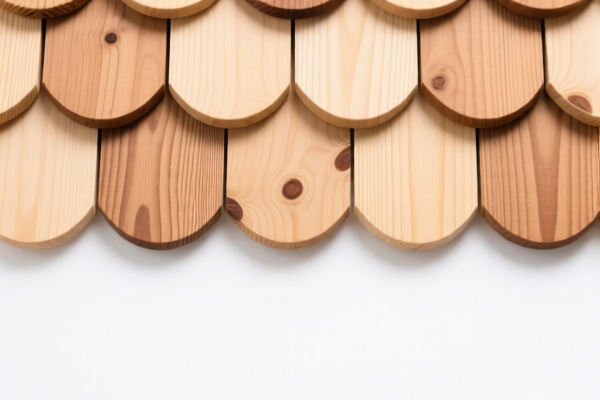
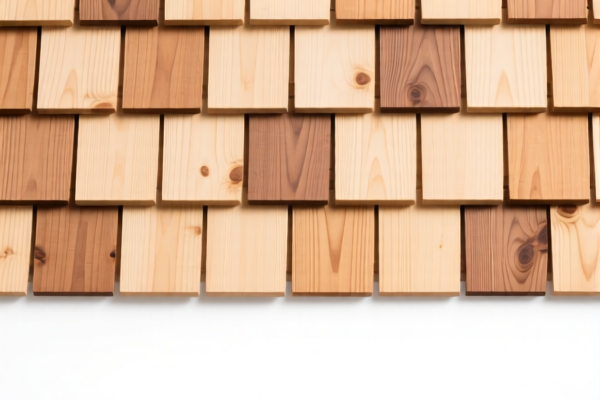
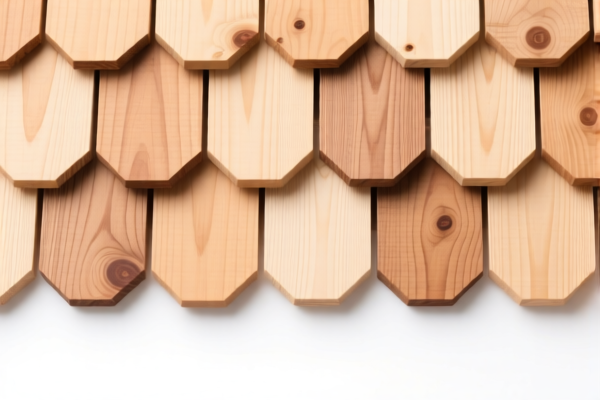
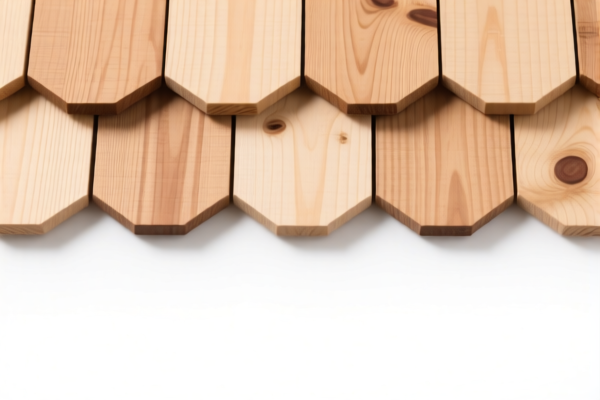
Wood Shingles are thin, tapered pieces of wood used primarily for roofing and siding. In international trade, they are classified not just by material (wood), but by their specific form and function as building components.
While often colloquially called "tiles" or "shingles," customs authorities scrutinize the material composition and processing method: * Material: Must be wood (typically Cedar, Pine, or Western Red Cedar). * Form: Split, sawn, or hand-hewn pieces, often tapered. * Application: Roof covering, siding, or facade cladding.
⚠️ Key Distinction Point:
- If the product is solid wood cut into shingle/siding shapes → It falls under Chapter 44 (Wood and Wood Articles).
- If it contains significant non-wood binding agents or is a composite panel → It may fall under different chapters (e.g., 39 or 47), but standard Wood Shingles are strictly Chapter 44.
📦 Part II: HS Code Classification Details (2026 Latest Tariff Authoritative Comparison)
Based on the specific characteristics of wood shingles, the following HS codes are applicable. Note that while the summary categories are similar, the sub-codes distinguish between general wood products and specific coniferous/siding applications.
| HS Code | Product Description | Application Scenario | Material/Type Specifics |
|---|---|---|---|
4418.50.00.30 |
Wood Shingles & Slates | Roofing, exterior siding | Explicitly includes "Wood Shingles." Matches material (wood) and form (shingle/slate). |
4409.10.10.20 |
Wood Shingles (General) | General wood covering/paneling | Treated as wood planks/coverings. Non-conflicting with coniferous siding categories. |
4409.10.10.60 |
Wood Shingles (Coniferous) | Western Red Cedar, Pine siding | Specifically for Coniferous wood (Western Red Cedar). Treated as a continuation of wall paneling/finishing applications. |
🔍 Key Insight:
-4418.50.00.30is the most direct and specific classification for "Wood Shingles" (瓦 - Shingles/Slates).
-4409.10.10.x0codes apply if the shingles are classified broadly as wood flooring or wall paneling (coniferous wood).
- Do not misclassify as roofing fiberglass or asphalt tiles (Chapter 68 or 39); wood shingles are strictly Chapter 44.
💰 Part III: 2026 Latest Tariff Rate Details (Including Surtaxes & Policy Add-ons)
✅ Applicable Country: United States (US)
✅ Country of Origin: China (CN)
✅ Effective Date: From November 10, 2025 (including subsequent imports)
🎯 1. 4418.50.00.30 —— Wood Shingles (Explicit Classification)
| Item | Content |
|---|---|
| Base Tariff Rate | 0.0% (ad valorem) |
| USITC Surtax (Section 301) | +25.0% (Additional Tariff on Chinese Goods) |
| IEEPA Surtax (Section 122) | +10.0% (Targeted Tariff on Chinese Products) |
| Total Tax Rate | 35.0% |
| Tax Calculation | CIF Value × 35.0% |
| De Minimis Eligibility | ❌ Not Eligible (deny_de_minimis) |
| Legal Basis Path | Base: 0% → Surtax: 25% → IEEPA: 10% → Total: 35% |
📌 Explanation:
- The 25% surtax is the standard Section 301 tariff for many wood products from China.
- The 10% is the additional IEEPA/Section 122 tariff.
- Total Duty: 35%. This is a high-cost import, and de minimis (de minimis exemption for low-value shipments) is NOT available.
🎯 2. 4409.10.10.20 & 4409.10.10.60 —— Wood Shingles (Paneling/Siding Category)
| Item | Content |
|---|---|
| Base Tariff Rate | 0.0% (ad valorem) |
| USITC Surtax (Section 301) | +25.0% (Additional Tariff on Chinese Goods) |
| IEEPA Surtax (Section 122) | +10.0% (Targeted Tariff on Chinese Products) |
| Total Tax Rate | 35.0% |
| Tax Calculation | CIF Value × 35.0% |
| De Minimis Eligibility | ❌ Not Eligible (deny_de_minimis) |
| Legal Basis Path | Base: 0% → Surtax: 25% → IEEPA: 10% → Total: 35% |
📌 Note:
- Whether classified under4409(Coniferous wood flooring/paneling) or4418(Wood shingles), the total duty rate remains identical at 35% for Chinese-origin goods.
-4409.10.10.60is specifically relevant if your shingles are made from Western Red Cedar or other coniferous species, often used for high-end siding.
🛠️ Part IV: Customs Clearance Practical Advice (Battle-Tested Pitfall Avoidance Guide)
✅ 1. Documentation Checklist (Missing Items = Delays/Seizures)
| Document | Required? | Explanation |
|---|---|---|
| ✅ Product Specification Sheet | ✔️ | Must state: Species of Wood (e.g., Western Red Cedar, Pine), Dimensions, Thickness, Treatment (if any). |
| ✅ Product Photos | ✔️ | Clear images showing the tapered shape, grain, and packaging. |
| ✅ Commercial Invoice | ✔️ | Must explicitly state: "Wood Shingles" or "Timber Roofing Tiles". Avoid vague terms like "Building Materials." |
| ✅ Packing List | ✔️ | Detail weight, volume, and number of bundles. |
| ✅ Fumigation Certificate (ISPM 15) | ✔️ | CRITICAL: Wood products from China MUST be fumigated or heat-treated. Lack of this certificate leads to rejection. |
| ✅ Certificate of Origin (CO) | ✔️ | Required to prove Chinese origin (triggering the 35% duty). |
✅ 2. Declaration Tips (Key Mantras)
🔥 "Specify Species, Prove Fumigation, Declare Form Clearly!"
| Scenario | Correct Declaration | Incorrect Action |
|---|---|---|
| Western Red Cedar Shingles | HS: 4409.10.10.60 / 4418.50.00.30 Name: "Western Red Cedar Wood Shingles" |
Generic "Wood Tiles" → Ambiguity risk |
| Pine Shingles | HS: 4418.50.00.30 Name: "Pine Wood Roof Shingles" |
Declaring as "Lumber" → Wrong classification |
| Untreated Wood | Must include ISPM 15 Fumigation Label | No fumigation proof → Seizure |
| Treated Wood (CCA/Copper) | Declare as Treated Wood May require additional EPA/CDPQ declarations |
Hiding treatment → Health/Safety violation |
✅ 3. Special Circumstances Handling
| Situation | Handling Advice |
|---|---|
| Composite Shingles (Wood + Asphalt) | If >50% wood by weight/value, may still be Ch. 44, but check with broker. If asphalt dominates, it becomes Ch. 39 or 68. |
| Pre-finished/Shaped Shingles | Clearly describe as "Pre-cut Shingles" vs. "Raw Lumber." Pre-cut fits 4418 or 4409. |
| Small Sample Shipments | Still subject to 35% duty. De minimis is DENIED for wood products from China. |
🌍 Part V: Global Market Comparison (2026 Latest)
| Country/Region | Recommended HS Code | Tariff Rate (China Origin) | Certification Requirements | Notes |
|---|---|---|---|---|
| 🇺🇸 USA | 4418.50.00.30 or 4409.10.10.x0 |
35% (0% Base + 25% + 10%) | ISPM 15 Fumigation | High duty. De minimis excluded. |
| 🇨🇳 China | 4418.50.00.30 |
Varies (Export Duty may apply) | N/A | Export regulations vary. |
| 🇪🇺 EU | 4418.50.00 |
0% (Standard MFN) | REACH, FSC/PEFC (Optional) | Lower duty than US, but strict phytosanitary rules. |
| 🇬🇧 UK | 4418.50.00 |
0% (Standard MFN) | UKCA Mark (if applicable) | Post-Brexit rules align with EU generally. |
| 🇨🇦 Canada | 4418.50.00 |
0% (USMCA/CUSMA if eligible) | PHAC Fumigation | Preferential if from US/Mexico. |
📌 Conclusion:
- The US is the most expensive market for wood shingles due to the 35% combined duty.
- Europe and Canada offer lower or zero base duties, but Phytosanitary (Fumigation) requirements are equally strict.
- Always prioritize Fumigation Compliance; it is the #1 reason for US customs holds on wood products.
📌 Part VI: Common Errors & Pitfall Guide (Lessons from Experience)
❌ Mistake 1: Declaring "Wood Shingles" as "Building Lumber" (4407)
👉 Consequence: Wrong HS code → Possible penalties or delays in reclassification. Shingles are processed further than simple lumber.
❌ Mistake 2: Omitting Wood Species (e.g., not specifying "Western Red Cedar")
👉 Consequence: Customs may classify under the most restrictive general wood code, or demand extra verification.
❌ Mistake 3: Ignoring ISPM 15 Fumigation Label
👉 Consequence: Immediate rejection/destruction of cargo by USDA APHIS. No exceptions.
❌ Mistake 4: Assuming De Minimis Applies for Small Batches
👉 Consequence: 35% Duty still applies. No duty-free entry for wood products from China under Section 321.
✅ Correct Approach:
"Western Red Cedar Wood Shingles, Tapered, 18\" x 5\", Heat-Treated per ISPM 15, Fumigation Certificate Attached, Model XYZ."
🎯 Part VII: Conclusion: Precision in Classification Saves Money!
🎯 Remember the Mantra:
🔹 "Wood Shingles = Ch. 44"
🔹 "China Origin = 35% Total Duty (0% + 25% + 10%)"
🔹 "No Fumigation = No Entry"
🔹 "De Minimis = DENIED for Wood Products"
📌 Pro Tip:
If you are importing Western Red Cedar, use
4409.10.10.60if it fits the paneling/siding definition, or4418.50.00.30for explicit shingles. Both have the same 35% duty rate, so accuracy depends on product form description.
Apply for a Pre-Ruling if your product is unique (e.g., mixed material) to avoid post-import audits.
📣 Immediate Action:
📞 Contact your Customs Broker + Provide Fumigation Certificate + Declare Specific Wood Species.
🚀 Ensure smooth clearance, avoid 35% surprises, and maximize your profit margin!
✨ Professional Clearance Starts with Accurate Classification!
💼 Every percent of duty matters!
Customer Reviews
About HS Code Classification
The Harmonized System (HS) is an internationally standardized nomenclature developed by the World Customs Organization (WCO) to classify traded products. Over 200 countries use the HS system as the basis for customs tariffs, trade statistics, and import/export regulations.
Each HS code follows a hierarchical structure:
- Chapter (2 digits) — Broad category of goods (e.g., Chapter 84: Machinery and Mechanical Appliances)
- Heading (4 digits) — More specific grouping within the chapter
- Subheading (6 digits) — Internationally standardized breakdown, used by all WCO member countries
- National subdivisions (8-10 digits) — Country-specific extensions for further classification, such as US HTSUS 10-digit codes
Correct HS code classification is essential for smooth customs clearance, accurate duty payment, and compliance with trade regulations. Misclassification can lead to customs delays, overpayment of duties, or penalties.
When importing from CN to US, the applicable tariff rates may include:
- Most-Favored-Nation (MFN) rate — The standard duty rate applied to WTO members
- General rate — Applied to countries without trade agreements
- Trade remedy duties — Additional tariffs such as Section 301 (anti-dumping), Section 232 (national security), or countervailing duties
The information provided on this page is for reference purposes only. For official classification, please consult with your local customs authority or a licensed customs broker.