Wood Splitter
CN → US| HS Code | Tariff Rate | Origin | Destination | Doc |
|---|---|---|---|---|
| 8479899595 | 37.5% | CN | US | Official Doc |
| 8479820080 | 35.0% | CN | US | Official Doc |
| 8479909560 | 35.0% | CN | US | Official Doc |
| 8465960015 | 19.9% | CN | US | Official Doc |
| 8431499015 | 85.0% | CN | US | Official Doc |
Product Images
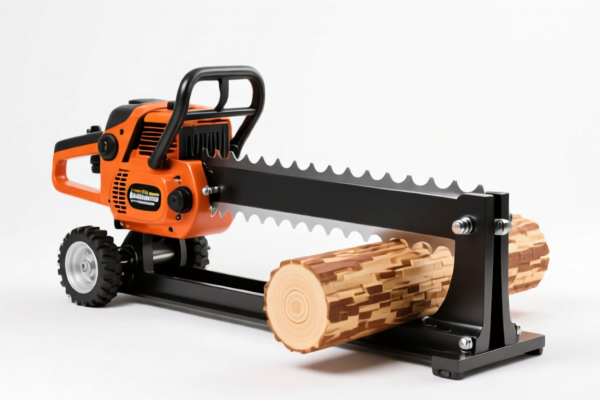
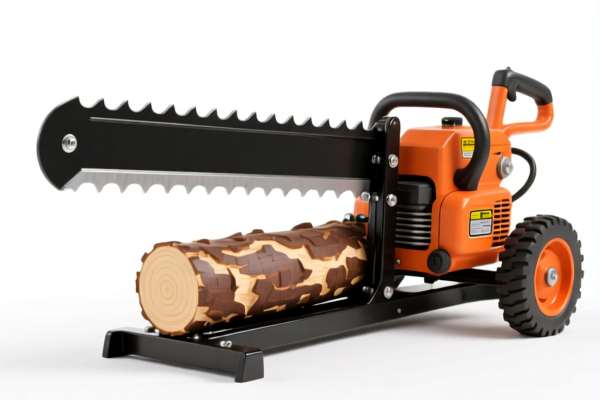
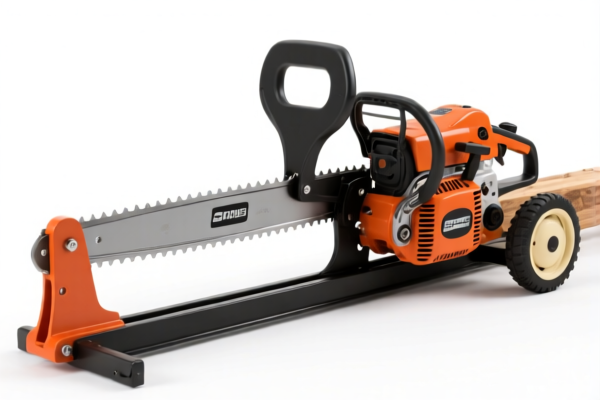
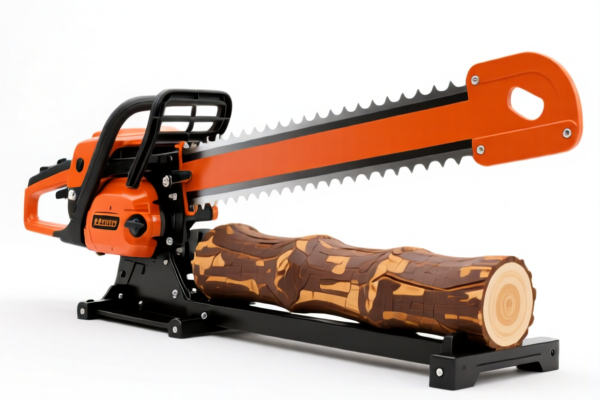
AI Analysis
🪓 Wood Splitter (Log Splitters) | Global Trade Classification & Duty Analysis
🌐 HS Code Reference & Customs Clearance Guide | 2026 Latest Tariff Breakdown | Professional Clearance Strategy
📌 I. Product Definition & Classification: What Exactly is a "Wood Splitter"?
A Wood Splitter (also known as a Log Splitter or Log Splitting Machine) is a mechanical device designed to split logs into smaller pieces, typically for firewood or biomass fuel. In international trade, its classification hinges on its mechanical function and specific operational logic.
According to the provided , there are four primary HS Code classifications depending on how the machine is engineered and described. The key differentiator is whether it is viewed as a "general mechanical apparatus," a "crushing/shredding device," a "wood processing tool," or a "mechanical accessory."
⚠️ Critical Distinction:
- If the machine uses hydraulic/pneumatic pressure to physically split logs along the grain → It is often classified under 8479 (Machines with individual functions) or 8465 (Wood working).
- If the machine is considered a crushing/shredding mechanism (breaking wood into chips/pieces) → It falls under 8479.82 (Mixing/Kneading/Crushing).
- If declared as a standalone functional machine → It falls under 8479.89.
- If declared as an attachment/Accessory to another machine → It falls under 8431 or 8479.90.
📦 II. HS Code Classification Details (Based on Provided )
| HS Code | Product Description (Based on ) | Functional Logic | Total Tax Rate (China Origin → US) |
|---|---|---|---|
| 8479.89.95.95 | Wood Splitter (General Machine) | Classified as a mechanical apparatus with an independent function for wood cutting. Attributes are consistent with industrial vibration machines. | 37.5% |
| 8479.82.00.80 | Log Splitting Machine (Crushing Type) | Classified as equipment that physically crushes/shreds wood via mechanical force. Fits under "Crushing" machinery. | 35.0% |
| 8479.90.95.60 | Log Splitting Machine (Processing Tool) | Classified as machinery for handling wood or softwood. Inferred as a general processing machine. | 35.0% |
| 8465.96.00.15 | Log Splitter (Woodworking Machine) | Directly aligned with "Wood Working Machines." Matches the material and use definition for wood processing equipment. | 19.9% |
| 8431.49.90.15 | Log Splitter (Mechanical Accessory) | Classified as a mechanical processing equipment accessory. Core function aligns with tearing/removal mechanical attachments. | 85.0% |
🔍 Key Insight:
- The lowest duty (19.9%) is achieved by classifying it as a Wood Working Machine (8465).
- The highest duty (85.0%) occurs if it is incorrectly classified as a Mechanical Accessory (8431) with additional metal tariffs.
- 8479 codes fall in the middle (35-37.5%) and are common for general-purpose splitting machines not strictly defined as woodworking tools.
💰 III. 2026 Latest Tariff Rate Breakdown (Detailed Tax Clauses)
✅ Applicable Country: United States (US)
✅ Origin: China (CN)
✅ Effective Time: 2025/2026 Current Trade Policies (Section 301 & IEEPA)
🎯 1. 8465.96.00.15 — Log Splitter (Wood Working Machine)
Recommended for lowest duty if functionally accurate.
| Item | Details |
|---|---|
| Base Duty | 2.4% |
| Section 301 Tariff | +7.5% |
| 122-Clause Tariff | +10% |
| Total Effective Rate | 19.9% |
| Tax Calculation | CIF Value × 19.9% |
| De Minimis Eligibility | ❌ No (Subject to Section 301) |
| Legal Basis | USITC:8465.96.00.15 → Section 301: 7.5% → 122-Clause: 10% |
📌 Explanation:
- This classification views the splitter as a specialized woodworking machine.
- It avoids the higher "General Machine" or "Crusher" surcharges.
- Note: Must prove the primary function is splitting logs for wood processing, not just general debris crushing.
🎯 2. 8479.89.95.95 — Wood Splitter (Independent Mechanical Apparatus)
Common for general-purpose splitters.
| Item | Details |
|---|---|
| Base Duty | 2.5% |
| Section 301 Tariff | +25.0% |
| 122-Clause Tariff | +10% |
| Total Effective Rate | 37.5% |
| Tax Calculation | CIF Value × 37.5% |
| De Minimis Eligibility | ❌ No |
| Legal Basis | USITC:8479.89.95.95 → Section 301: 25% → 122-Clause: 10% |
📌 Explanation:
- This is the most common classification for hydraulic log splitters that don't fit neatly into woodworking machinery chapters.
- The 25% Section 301 tariff is the dominant cost driver here.
- The 10% "122-Clause" tax applies to specific industrial equipment from China.
🎯 3. 8479.82.00.80 & 8479.90.95.60 — Log Splitting Machines (Crushing/Processing)
Alternative classifications for specific designs.
| Item | Details |
|---|---|
| Base Duty | 0.0% |
| Section 301 Tariff | +25.0% |
| 122-Clause Tariff | +10% |
| Total Effective Rate | 35.0% |
| Tax Calculation | CIF Value × 35.0% |
| De Minimis Eligibility | ❌ No |
| Legal Basis | USITC:8479.82.00.80 / 8479.90.95.60 → Section 301: 25% → 122-Clause: 10% |
📌 Explanation:
- Even though the base duty is 0%, the 35% total is still high due to the 25% + 10% surcharges.
- Use this classification if the machine is marketed as a "crusher" or "shredder" for wood waste, rather than a precision splitting tool.
🎯 4. 8431.49.90.15 — Log Splitter (Mechanical Accessory)
⚠️ HIGHEST RISK CLASSIFICATION
| Item | Details |
|---|---|
| Base Duty | 0.0% |
| Section 301 Tariff | +25.0% |
| 122-Clause Tariff | +10% |
| Metal Tariff (Steel/Aluminum/Copper) | +50% |
| Total Effective Rate | 85.0% |
| Tax Calculation | CIF Value × 85.0% |
| De Minimis Eligibility | ❌ No |
| Legal Basis | USITC:8431.49.90.15 → Section 301: 25% → 122-Clause: 10% → Metal Tariff: 50% |
📌 Explanation:
- CRITICAL WARNING: If customs determines the wood splitter is an attachment (e.g., for a tractor) AND made of steel/aluminum/copper, an additional 50% tariff may apply.
- This results in an 85% effective tax rate, making it economically unviable for most importers.
- Avoid this classification unless the product is strictly a detachable part sold separately from a main machine.
🛠️ IV. Customs Clearance Practical Advice (Avoiding Pitfalls)
✅ 1. Documentation Checklist (Mandatory)
| Document | Required? | Notes |
|---|---|---|
| ✅ Product Specification Sheet | ✔️ | Must clearly state: "Hydraulic Log Splitter," "Wood Processing," "No crushing function." |
| ✅ Technical Drawings | ✔️ | Show the splitting wedge and hydraulic mechanism. Prove it’s for splitting, not chipping. |
| ✅ Product Photos | ✔️ | Include label showing Model, Brand, Input Voltage, and Max Splitting Force (tons). |
| ✅ Commercial Invoice | ✔️ | Use precise description: "Hydraulic Wood Log Splitter for Firewood Processing" |
| ✅ Bill of Lading | ✔️ | Ensure package dimensions match HS code packaging requirements. |
| ✅ CE/FCC Certificates | ✔️ | For electrical/hydraulic components. |
✅ 2. Declaration Strategy (Key Tips)
🔥 "Clarify Function, Avoid 'Accessory' Label, Specify 'Woodworking'"
| Scenario | Recommended HS Code | Description Strategy |
|---|---|---|
| Standalone Hydraulic Splitter | 8465.96.00.15 or 8479.89.95.95 |
"Wood Working Machine," "Log Splitter," "Independent Function" |
| Tractor-Mounted Splitter (Standalone Sale) | 8465.96.00.15 |
"Portable Wood Splitter," even if it mounts to a tractor, if sold as a unit. |
| Splitter Blade/Wedge (Part Only) | 8431.49.90.15 |
⚠️ High Risk! Only if clearly a part of a larger machine. |
| Electric Mini-Splitter | 8465.96.00.15 |
Emphasize "Wood Processing" in description. |
⚠️ Critical Warning:
- Do NOT describe the product as "Attachment for Tractor" if it is sold as a standalone unit. This triggers the 85% tax bracket.
- Do NOT call it "Wood Chipper" if it only splits logs. Misclassification can lead to audits. Use "Splitter" or "Log Splitter."
✅ 3. Special Cases
| Situation | Handling Advice |
|---|---|
| Tractor-Attached Splitter | If sold with the tractor, it may be part of the tractor’s HTS. If sold separately, declare as 8465 or 8479. |
| Battery-Powered Splitter | Same as hydraulic, but ensure electrical components are declared separately if needed. |
| Manual/Axle-Type Splitter | May fall under 8205 (Hand Tools), but large mechanical ones still go to 8479. Verify with customs broker. |
| Wood Processing vs. Crushing | If the machine crushes wood into chips → 8479.82. If it splits logs into halves → 8465 or 8479.89. |
🌍 V. Global Market Comparison (2026)
| Country/Region | Recommended HS Code | Estimated Duty (China Origin) | Notes |
|---|---|---|---|
| 🇺🇸 USA | 8465.96.00.15 |
19.9% (Best Case) | High risk of 35-37.5% if misclassified. |
| 🇺🇸 USA | 8479.89.95.95 |
37.5% (Common) | Most likely for general splitters. |
| 🇪🇺 EU | 8465.96.00 |
~0-5% | Lower tariffs, but CE certification required. |
| 🇨🇳 China | 8465.96.00 |
~5-10% | Import duty varies by type. |
| 🇨🇦 Canada | 8465.96.00 |
~0-5% | No Section 301 equivalent. |
📌 Conclusion:
- The USA has the highest barrier due to Section 301 and 122-Clause tariffs.
- Classifying as a "Wood Working Machine" (8465) offers the best savings (19.9% vs 37.5%).
- Avoid "Accessory" classification (8431) at all costs for standalone units.
📌 VI. Common Mistakes & Pitfalls (Lessons Learned)
❌ Mistake 1: Declaring as "Tractor Attachment" for a standalone machine
👉 Consequence: Triggers 85% tax (Metal Surcharge + Section 301).
✅ Fix: Declare as "Independent Wood Splitting Machine."
❌ Mistake 2: Using "Chipper" or "Shredder" in description for a splitter
👉 Consequence: May be classified as 8479.82 (35%) or face additional scrutiny.
✅ Fix: Use "Splitter," "Log Splitter," "Wood Separator."
❌ Mistake 3: Ignoring the "122-Clause" 10% tax
👉 Consequence: Underpayment, penalties, and delays.
✅ Fix: Always include 10% 122-Clause in cost calculations for Chinese-origin machinery.
❌ Mistake 4: Assuming all mechanical tools are "General Purpose" (8479.89)
👉 Consequence: Paying 37.5% instead of 19.9%.
✅ Fix: Provide technical proof that the machine is specifically designed for wood processing to qualify for 8465.
🎯 VII. Conclusion: Optimize Your Classification, Maximize Profit!
🎯 Key Takeaways:
🔹 Best HS Code:
8465.96.00.15(19.9% Total Duty) — Requires strong "Woodworking" justification.
🔹 Safe HS Code:8479.89.95.95(37.5% Total Duty) — Common, but expensive.
🔹 Avoid:8431.49.90.15(85% Total Duty) — Catastrophic tax burden.
📌 Pro Tip:
- Always provide technical datasheets proving the machine’s primary function is log splitting for wood processing.
- Clearly state "Independent Machine" in the commercial invoice, not "Attachment."
- Calculate landed costs using 19.9% or 37.5%, not the base rate.
📣 Immediate Action:
📞 Consult a Customs Broker to pre-classify your specific model.
📄 Update Product Listings to use precise HS Code descriptions.
🚀 Secure Your Margin by avoiding the 85% "Accessory" trap!
✨ Precision Classification = Lower Costs = Higher Competitiveness!
💼 Don’t let tariff complexity split your profits!
Customer Reviews
About HS Code Classification
The Harmonized System (HS) is an internationally standardized nomenclature developed by the World Customs Organization (WCO) to classify traded products. Over 200 countries use the HS system as the basis for customs tariffs, trade statistics, and import/export regulations.
Each HS code follows a hierarchical structure:
- Chapter (2 digits) — Broad category of goods (e.g., Chapter 84: Machinery and Mechanical Appliances)
- Heading (4 digits) — More specific grouping within the chapter
- Subheading (6 digits) — Internationally standardized breakdown, used by all WCO member countries
- National subdivisions (8-10 digits) — Country-specific extensions for further classification, such as US HTSUS 10-digit codes
Correct HS code classification is essential for smooth customs clearance, accurate duty payment, and compliance with trade regulations. Misclassification can lead to customs delays, overpayment of duties, or penalties.
When importing from CN to US, the applicable tariff rates may include:
- Most-Favored-Nation (MFN) rate — The standard duty rate applied to WTO members
- General rate — Applied to countries without trade agreements
- Trade remedy duties — Additional tariffs such as Section 301 (anti-dumping), Section 232 (national security), or countervailing duties
The information provided on this page is for reference purposes only. For official classification, please consult with your local customs authority or a licensed customs broker.