Wood Spring Clamp
CN → US| HS Code | Tariff Rate | Origin | Destination | Doc |
|---|---|---|---|---|
| 8466306040 | 37.9% | CN | US | Official Doc |
| 8466925010 | 39.7% | CN | US | Official Doc |
| 4415208000 | 45.7% | CN | US | Official Doc |
| 4415109000 | 45.7% | CN | US | Official Doc |
| 3926906520 | 14.2% | CN | US | Official Doc |
Product Images
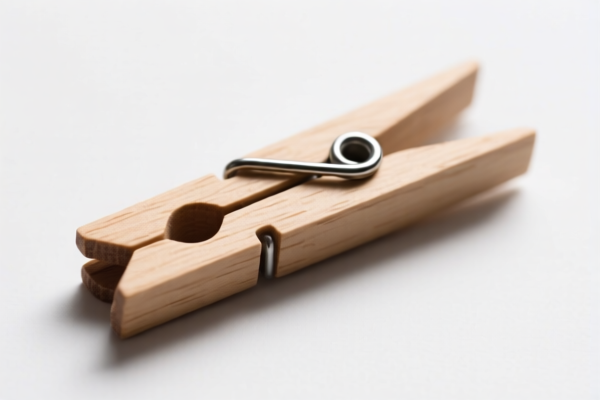
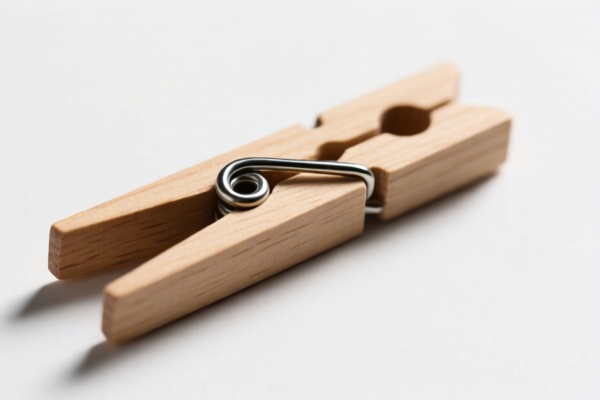
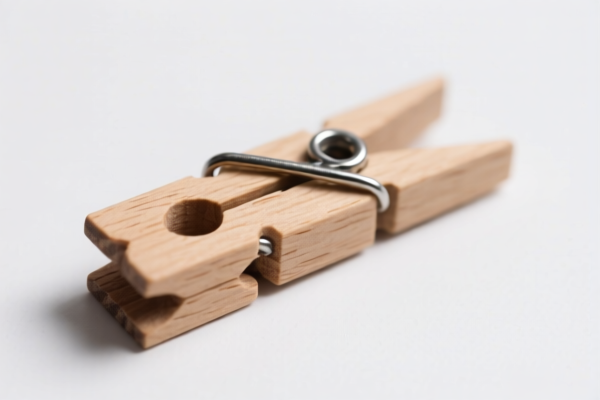
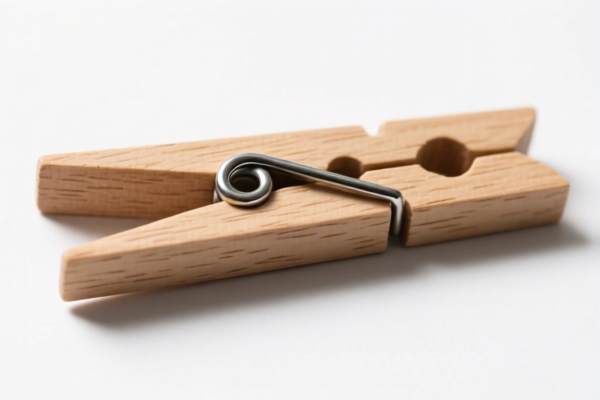
AI Analysis
🛠️ Wood Spring Clamp (Spring Clamps for Woodworking)
🌐 HS Code Reference & Customs Clearance Guide | 2026 Latest Tariff Analysis | Professional-Level Strategy for US Imports
📌 I. Product Definition & Classification: Do You Really Understand "Wood Spring Clamps"?
Wood spring clamps are essential tools in woodworking, furniture manufacturing, and DIY projects. They utilize spring tension to hold workpieces securely. However, in international trade, their classification depends heavily on material composition and specific function. Are they viewed as mechanical attachments (metal parts) or wooden packaging/containers? This distinction drastically affects your tax burden.
⚠️ Key Distinction Point:
- If the clamp is primarily a metal mechanical attachment for woodworking machines or general clamping →归入 Chapter 84 (Machinery) or Chapter 44 (Wood if wooden parts dominate).
- If it is a wooden article used for loading, fastening, or similar purposes →归入 Chapter 44 (Wood).
- If it is plastic (even if described as "spring clamp") →归入 Chapter 39 (Plastics).
📦 II. HS Code Classification Details (2026 Latest Tariff Authority Comparison)
Based on the provided data, here are the five potential HS Codes for "Wood Spring Clamp" variants, sorted by tax impact and material logic.
| HS Code | Product Description | Application/Scenario | Material Focus | Total Tax Rate (US/CN) |
|---|---|---|---|---|
3926.90.65.20 |
Plastic Spring Clamp (Clothespin Style) | Laundry, general purpose, lightweight | Plastic | 14.2% |
8466.30.60.40 |
Wood Spring Clamp (Mechanical Attachment) | Woodworking machinery attachments, precision clamping | Metal/Mechanical | 37.9% |
8466.92.50.10 |
Wood Spring Clamp (Machine Accessory) | Clamping accessories for woodworking machines | Metal/Mechanical | 39.7% |
4415.20.80.00 |
Spring Wooden Clamp (Loading/Fastening) | Wooden tool for loading or fastening goods | Wood | 45.7% |
4415.10.90.00 |
Spring Wooden Clamp (Packaging) | Wooden box/barrel related clamping or packaging accessory | Wood | 45.7% |
🔍 Critical Insight:
- Plastic clamps are the cheapest to import (14.2%) but may not be durable enough for heavy woodworking.
- Metal/Mechanical clamps (Chapter 84) offer a middle ground (37.9%-39.7%). They are classified as "parts/attachments of machinery."
- Wooden clamps (Chapter 44) are the most expensive (45.7%). Even if called "Wood Spring Clamp," if they are classified under Chapter 44, they hit the highest tariff tier due to the 10.7% base + 25% Section 301 + 10% IEEPA.
💰 III. 2026 Latest Tariff Rate Details (Including Surcharges & Policy Add-ons)
✅ Applicable Country: United States (US)
✅ Origin: China (CN)
✅ Effective Time: 2025/2026 (Current Trade War Rates)
🎯 1. 3926.90.65.20 —— Plastic Spring Clamp (Lowest Tax)
| Item | Content |
|---|---|
| Base Rate | 4.2% |
| Section 301 Surcharge | 0.0% (Plastics often have different Section 301 exemptions or lower lists) |
| IEEPA Surcharge | +10% (China-specific) |
| Total Rate | 14.2% |
| Tax Calculation | CIF Value × 14.2% |
| De Minimis Eligibility | ❌ No (Subject to scrutiny if small packages, but rate is low) |
| Legal Basis Path | USITC:3926.90.65.20 → IEEPA:9903.01.24 |
📌 Explanation:
- This code is for plastic spring clamps (like large clothespins).
- Significant Savings: Compared to wooden/metal equivalents, you save ~25% in duties.
- Risk: If your product is labeled "Wood Spring Clamp" but is actually plastic, customs may reclassify it, leading to penalties. Ensure material matches.
🎯 2. 8466.30.60.40 —— Wood Spring Clamp (Mechanical Attachment)
| Item | Content |
|---|---|
| Base Rate | 2.9% |
| Section 301 Surcharge | +25.0% |
| IEEPA Surcharge | +10.0% |
| Total Rate | 37.9% |
| Tax Calculation | CIF Value × 37.9% |
| De Minimis Eligibility | ❌ No |
| Legal Basis Path | IEEPA:9903.01.25 → USITC:8466.30.60.40 → FOOTNOTE:9903.88.01 |
📌 Explanation:
- Classified under Chapter 84 (Machinery Parts).
- Used for woodworking machines or as a mechanical attachment.
- Lower than Wooden Clamps: Despite being for "wood," because it's a metal/mechanical part, it avoids the higher Chapter 44 wood tariffs.
- Recommendation: If your clamp is metal with wooden handles/jaws, argue for this code if it functions as a machine accessory.
🎯 3. 8466.92.50.10 —— Wood Spring Clamp (Machine Accessory)
| Item | Content |
|---|---|
| Base Rate | 4.7% |
| Section 301 Surcharge | +25.0% |
| IEEPA Surcharge | +10.0% |
| Total Rate | 39.7% |
| Tax Calculation | CIF Value × 39.7% |
| De Minimis Eligibility | ❌ No |
| Legal Basis Path | IEEPA:9903.01.24 → USITC:8466.92.50.10 |
📌 Explanation:
- Another Chapter 84 option, slightly higher base rate (4.7% vs 2.9%).
- Specific to clamping accessories for woodworking machinery.
- Use this if the clamp is an integral part of a larger automated woodworking setup.
🎯 4. 4415.20.80.00 & 4415.10.90.00 —— Wooden Spring Clamp (Highest Tax)
| Item | Content |
|---|---|
| Base Rate | 10.7% |
| Section 301 Surcharge | +25.0% |
| IEEPA Surcharge | +10.0% |
| Total Rate | 45.7% |
| Tax Calculation | CIF Value × 45.7% |
| De Minimis Eligibility | ❌ No |
| Legal Basis Path | IEEPA:9903.01.25 → USITC:4415.20.80.00 |
📌 Explanation:
- Classified under Chapter 44 (Wood).
-4415.20.80.00: Loading/Fastening tools (e.g., large wooden clips for bundles).
-4415.10.90.00: Packaging/Box/Barrel related.
- Why So High? Wood products from China face the highest base tariffs in this category.
- Warning: Do not use "Wood Spring Clamp" in your description if you intend to claim Chapter 84 or 39 codes. Misclassification is risky.
🛠️ IV. Customs Clearance Practical Advice (Pitfall Avoidance Guide)
✅ 1. Documentation Checklist (Mandatory)
| Document | Required | Notes |
|---|---|---|
| ✅ Product Specification Sheet | ✔️ | Must specify material (Wood vs. Metal vs. Plastic). |
| ✅ Material Composition Breakdown | ✔️ | Crucial for HS Code determination. E.g., "Steel spring, wooden jaws." |
| ✅ Product Photos (Labeled) | ✔️ | Show the spring mechanism and contact surfaces. |
| ✅ Commercial Invoice | ✔️ | Description must match HS Code. If HS84, use "Mechanical Clamping Attachment." |
| ✅ Packing List | ✔️ | Detail weights and dimensions. |
✅ 2. Declaration Strategy (Key Mnemonic)
🔥 "Material Dictates Code: Plastic=14%, Metal/Mech=38%, Pure Wood=46%!"
| Scenario | Correct Declaration | Wrong Practice | Consequence |
|---|---|---|---|
| Metal Spring, Wooden Jaws | 8466.30.60.40 (Mechanical Part) |
Call it "Wooden Tool" | Risk of being reclassified to 4415 (45.7%) |
| 100% Wood Clip | 4415.20.80.00 |
Call it "Plastic Clip" | Severe Penalty/Fraud |
| Plastic Clothespin-style | 3926.90.65.20 |
Call it "Wood Spring Clamp" | Rejected by Customs (Material Mismatch) |
| Accessory for CNC Router | 8466.92.50.10 |
General "Clamp" | Might be accepted, but specific code is better |
✅ 3. Special Situations
| Situation | Handling Advice |
|---|---|
| OEM Custom Clamps | Provide design specs showing it’s a mechanical component, not a simple wood craft. |
| Mixed Materials | If >50% value is metal/mechanical, argue for Chapter 84. If wood dominates, Chapter 44. |
| Small Batches | High taxes apply. Consider consolidating shipments or checking for any temporary exemptions. |
| Plastic Substitution | If switching from Wood to Plastic saves 30% in tax, evaluate durability trade-offs. |
🌍 V. Global Market Comparison (2026 Update)
| Region | Recommended HS Code | Tax Rate (China Origin) | Key Requirement |
|---|---|---|---|
| 🇺🇸 USA | 3926.90.65.20 (Plastic) |
14.2% | Accurate material declaration |
| 🇺🇸 USA | 8466.30.60.40 (Metal Part) |
37.9% | Must be used with machinery |
| 🇺🇸 USA | 4415.20.80.00 (Wood) |
45.7% | High duty, avoid if possible |
| 🇨🇳 China | 4415.20.80.00 |
5-10% | Standard import |
| 🇪🇺 EU | 8205.59 / 4420.90 |
Varies (often 0-4%) | CE/FSC certification for wood |
📌 Conclusion:
- USA is the most punitive market for these items due to Section 301 + IEEPA tariffs.
- Plastic clamps offer the best margin but may lack "professional" perception.
- Metal/Mechanical classification (8466) is the "sweet spot" for durable, professional wood clamps, saving ~8% compared to wooden clamps.
📌 VI. Common Errors & Pitfalls (Lessons Learned)
❌ Error 1: Calling a plastic clamp a "Wood Spring Clamp"
👉 Consequence: Customs detects material mismatch → Seizure or forced reclassification + fines.
❌ Error 2: Classifying a metal mechanical clamp under Chapter 44 (Wood)
👉 Consequence: Overpaying ~8% in duties unnecessarily.
❌ Error 3: Not specifying "Mechanical Attachment" for Chapter 84 codes
👉 Consequence: Customs may view it as a general tool and assign a higher default rate.
❌ Error 4: Ignoring IEEPA 10% surcharge
👉 Consequence: Budgeting only for Section 301 (25%) + Base → Unexpected 10% hit.
✅ Correct Approach:
"Wood Spring Clamp, Steel Spring, Wooden Jaws, for Use with Woodworking Machinery, Model XYZ, Origin China"
→ Use8466.30.60.40(37.9%)
🎯 VII. Conclusion: Professional Declaration, Cost Optimization!
🎯 Remember the Rule:
🔹 "Plastic is Cheap (14%), Metal is Medium (38%), Wood is Expensive (46%)!"
🔹 "HS Code Defines Duty: Choose Material Accuracy Over Generic Names!"
🔹 "10% IEEPA is Always On: Plan Your Margins Accordingly!"
📌 Pro Tip:
If your product is wooden, consider if a metal replacement or plastic variant is viable to drop from 45.7% to 14.2%. For professional woodworking, the Chapter 84 (37.9%) code is the best balance of durability and cost.
📣 Immediate Action:
📞 Contact a Customs Broker + Provide Material Breakdown + Apply for Advance Ruling if volume is high
🚀 Let your clamps clear smoothly, maximize profit, and stay compliant!
✨ Professional Clearance Starts with Precise Classification!
💼 Every Cent in Duty Counts!
Customer Reviews
About HS Code Classification
The Harmonized System (HS) is an internationally standardized nomenclature developed by the World Customs Organization (WCO) to classify traded products. Over 200 countries use the HS system as the basis for customs tariffs, trade statistics, and import/export regulations.
Each HS code follows a hierarchical structure:
- Chapter (2 digits) — Broad category of goods (e.g., Chapter 84: Machinery and Mechanical Appliances)
- Heading (4 digits) — More specific grouping within the chapter
- Subheading (6 digits) — Internationally standardized breakdown, used by all WCO member countries
- National subdivisions (8-10 digits) — Country-specific extensions for further classification, such as US HTSUS 10-digit codes
Correct HS code classification is essential for smooth customs clearance, accurate duty payment, and compliance with trade regulations. Misclassification can lead to customs delays, overpayment of duties, or penalties.
When importing from CN to US, the applicable tariff rates may include:
- Most-Favored-Nation (MFN) rate — The standard duty rate applied to WTO members
- General rate — Applied to countries without trade agreements
- Trade remedy duties — Additional tariffs such as Section 301 (anti-dumping), Section 232 (national security), or countervailing duties
The information provided on this page is for reference purposes only. For official classification, please consult with your local customs authority or a licensed customs broker.