Wood Sulfonate Water Reducer
CN → US| HS Code | Tariff Rate | Origin | Destination | Doc |
|---|---|---|---|---|
| 3824405000 | 40.0% | CN | US | Official Doc |
| 3824401000 | 41.5% | CN | US | Official Doc |
| 3804001000 | 35.0% | CN | US | Official Doc |
| 3804005000 | 38.7% | CN | US | Official Doc |
| 3824405000 | 40.0% | CN | US | Official Doc |
Product Images
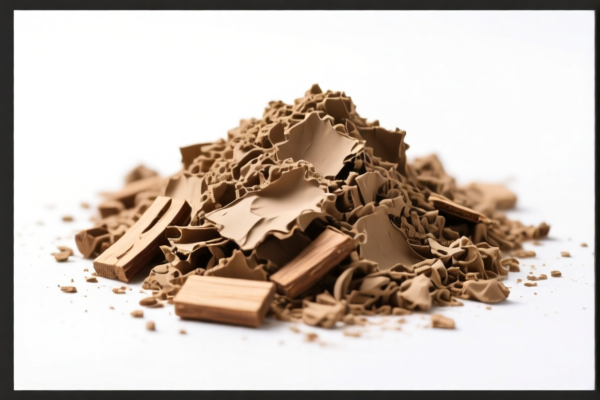
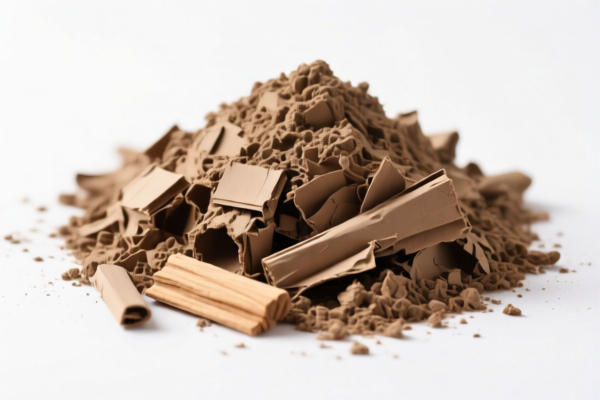
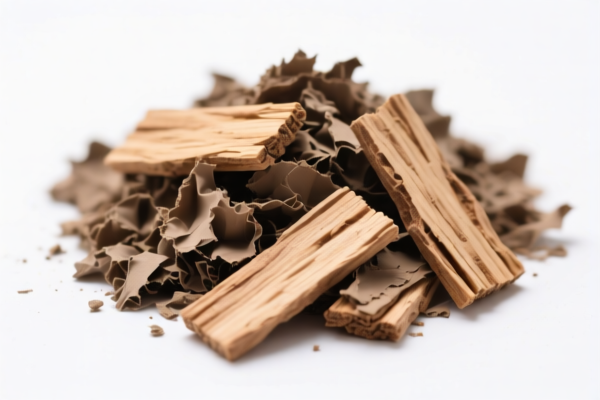
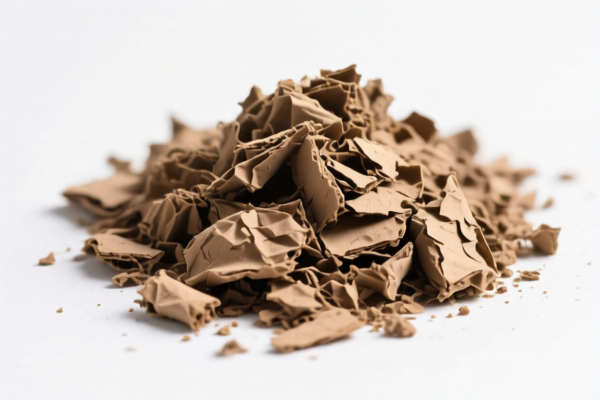
AI Analysis
🧪 Wood Sulfonate Water Reducer (Lignin Sulfonate Concrete Admixture)
🌐 HS Code Reference & Customs Clearance Guide | 2026 Latest Tariff Analysis | Professional Transit Strategy
📌 I. Product Definition & Classification: What Exactly Is "Wood Sulfonate Water Reducer"?
Wood Sulfonate Water Reducer, primarily composed of Lignin Sulfonate, is a critical chemical admixture used in the construction industry. It serves as a water-reducing agent and plasticizer for concrete, mortar, and cement.
In international trade, its classification depends heavily on two factors: 1. Physical State: Is it a solution (liquid) or a solid powder/paste? 2. Specific Application & Composition: Is it explicitly marketed/formulated as a "preparatory additive for concrete" or is it a generic chemical residue/solution from pulp/paper manufacturing?
⚠️ Key Distinction Point:
- If the product is a solid or generic solution derived from lignin pulp/paper processes, it may fall under Chapter 38 (40) ("Residual Alkali Liquors...").
- If the product is specifically formulated as a chemical additive for concrete/mortar/cement, it falls under Chapter 38 (24) ("Preparatory Additives for Cement/Mortar/Concrete").
📦 II. HS Code Classification Details (2026 Latest Tariff Authority Comparison)
| HS Code | Product Description | Applicable Scenario | Form/State | Total Tax Rate (US/CN) |
|---|---|---|---|---|
3804.00.10.00 |
Lignin Sulfonate Solution Material: Lignin Sulfonate. Form: Solution. Fits characteristics of residual alkali liquor. |
Generic lignin solution, potential paper/pulp by-product, not specifically formulated as concrete additive. | 🧪 Solution | 35.0% |
3804.00.50.00 |
Lignin Sulfonate Solution Material: Lignin Sulfonate. Form: Solution. Fits characteristics of residual alkali liquor from paper pulp manufacturing. |
Specific to paper/pulp manufacturing waste/by-product, residual alkali liquor. | 🧪 Solution | 38.7% |
3824.40.50.00 |
Wood Sulfonate Water Reducer (Concrete Use) Chemical preparation for cement/mortar/concrete. Material: Chemical preparation (sulfonate class). |
Standard concrete admixture, specifically formulated to reduce water/cement ratio. Can also apply to lignin sulfonate solution if classified as concrete additive. | 💧/⚪ Solid/Solution | 40.0% |
3824.40.10.00 |
Wood Sulfonate Water Reducer (Concrete Use) Preparatory additive for cement/mortar/concrete. Material: Chemical substance form. |
Chemical additive for concrete, generic chemical substance form, not specifically "solution" defined under 3804. | ⚪ Solid/Powder | 41.5% |
🔍 Key Reminder:
- If the product is a solid powder specifically for concrete →3824.40.10.00(41.5%)
- If the product is a liquid solution explicitly sold as a concrete admixture →3824.40.50.00(40.0%) (Note: This is often the preferred classification for liquid admixtures as it has a slightly lower rate than the solid form and avoids the "pulp residue" category)
- If the product is a liquid solution but considered a generic chemical/pulp by-product →3804.00.10.00(35.0%) or3804.00.50.00(38.7%)
💰 III. 2026 Latest Tariff Rate Breakdown (Including Additional Taxes & Policy Surcharges)
✅ Applicable Country: United States (US)
✅ Country of Origin: China (CN)
✅ Effective Time: 2025 November 10 onwards (Including subsequent imports)
🎯 1. 3824.40.50.00 —— Wood Sulfonate Water Reducer (Concrete Additive)
| Item | Content |
|---|---|
| Base Tariff | 5.0% |
| Section 301 Surcharge | +25.0% |
| IEEPA Surcharge (Section 122) | +10.0% |
| Total Tariff Rate | 40.0% |
| Tax Calculation | CIF Value × 40% |
| De Minimis Exemption | ❌ Not Eligible |
| Legal Basis Path | USITC:3824.40.50.00 → Section 301 Footnote → IEEPA Section 122 |
📌 Explanation:
- Base Tariff (5%): Standard MFN rate for chemical preparations for concrete.
- Section 301 (25%): Standard punitive tariff on Chinese chemical goods.
- IEEPA 122 (10%): Additional surcharge under the International Emergency Economic Powers Act.
- Total: 40%. This is the most common classification for commercial concrete water reducers.
🎯 2. 3824.40.10.00 —— Wood Sulfonate Water Reducer (Solid/Generic Chemical Form)
| Item | Content |
|---|---|
| Base Tariff | 6.5% |
| Section 301 Surcharge | +25.0% |
| IEEPA Surcharge (Section 122) | +10.0% |
| Total Tariff Rate | 41.5% |
| Tax Calculation | CIF Value × 41.5% |
| De Minimis Exemption | ❌ Not Eligible |
| Legal Basis Path | USITC:3824.40.10.00 → Section 301 Footnote → IEEPA Section 122 |
📌 Explanation:
- This code typically applies if the product is a solid powder or a generic chemical substance not specifically defined as a "solution" in the context of concrete additives.
- Total: 41.5%. Slightly higher than the solution form due to the higher base tariff.
🎯 3. 3804.00.10.00 —— Lignin Sulfonate Solution (Residual Alkali)
| Item | Content |
|---|---|
| Base Tariff | 0.0% |
| Section 301 Surcharge | +25.0% |
| IEEPA Surcharge (Section 122) | +10.0% |
| Total Tariff Rate | 35.0% |
| Tax Calculation | CIF Value × 35% |
| De Minimis Exemption | ❌ Not Eligible |
| Legal Basis Path | USITC:3804.00.10.00 → Section 301 Footnote → IEEPA Section 122 |
📌 Explanation:
- Base Tariff (0%): Lower base rate for residual alkali liquors.
- Total: 35.0%. This is the lowest total rate among the options.
- Risk: You must prove the product is NOT specifically formulated as a concrete additive, but rather a generic chemical solution or pulp by-product. Misclassification here can lead to severe penalties if customs finds it’s actually a concrete admixture.
🎯 4. 3804.00.50.00 —— Lignin Sulfonate Solution (Paper Pulp Residue)
| Item | Content |
|---|---|
| Base Tariff | 3.7% |
| Section 301 Surcharge | +25.0% |
| IEEPA Surcharge (Section 122) | +10.0% |
| Total Tariff Rate | 38.7% |
| Tax Calculation | CIF Value × 38.7% |
| De Minimis Exemption | ❌ Not Eligible |
| Legal Basis Path | USITC:3804.00.50.00 → Section 301 Footnote → IEEPA Section 122 |
📌 Explanation:
- Specifically for residual alkali liquors from paper pulp manufacturing.
- Total: 38.7%. Higher than3804.00.10.00due to the 3.7% base tariff.
- Use only if the product is explicitly documented as a by-product of the paper industry.
🛠️ IV. Customs Clearance Practical Advice (Battle-Tested Pitfall Avoidance)
✅ 1. Required Documentation Checklist (Non-Negotiable)
| Document | Mandatory | Description |
|---|---|---|
| ✅ Product Specification Sheet | ✔️ | Must detail chemical composition (Lignin Sulfonate %), physical state (liquid/solid), and intended use (Concrete Admixture) |
| ✅ SDS (Safety Data Sheet) | ✔️ | Crucial for determining hazardous material status and proper handling |
| ✅ Commercial Invoice | ✔️ | Must clearly state: "Lignin Sulfonate Water Reducer for Concrete/Mortar" or "Residual Alkali Liquor from Pulp Process" |
| ✅ Certificate of Origin (CO) | ✔️ | To confirm Chinese origin for Section 301/IEEPA application |
| ✅ Packing List | ✔️ | Detail net/gross weight, volume, and packaging type (drums/bulk) |
| ✅ Lab Test Report | ✔️ | Optional but recommended to prove chemical composition if classification is disputed |
✅ 2. Declaration Strategy (Key Mantra)
🔥 "Specify Use, Define State, Choose Code Wisely!"
| Scenario | Correct Declaration | Incorrect Practice |
|---|---|---|
| Liquid Concrete Admixture | 3824.40.50.00Description: "Liquid Lignin Sulfonate Water Reducer for Concrete" |
Declare as 3804.00.10.00 to save tax → High Audit Risk |
| Solid Powder Concrete Admixture | 3824.40.10.00Description: "Wood Sulfonate Powder for Cement Admixture" |
Declare as 3804.00.10.00 → Wrong Classification |
| Generic Pulp By-product Liquid | 3804.00.10.00Description: "Lignin Sulfonate Solution, Residual Alkali Liquor, Not for Concrete" |
Declare as 3824.40.50.00 → Missed Savings (35% vs 40%) |
| Paper Pulp Residue | 3804.00.50.00Description: "Residual Alkali from Paper Pulp Manufacturing" |
Declare as 3824.40.50.00 → Wrong Description |
📌 Critical Tip:
- If your product is liquid and used for concrete, try to justify3824.40.50.00(40%) if the documentation is strong on its "additive" nature.
- If you can prove it is NOT a specialized concrete additive but a generic chemical solution,3804.00.10.00(35%) offers 5% savings. However, this requires robust evidence that it is not marketed/formulated as a concrete admixture.
✅ 3. Special Case Handling
| Scenario | Handling Advice |
|---|---|
| OEM/Private Label Concrete Admixture | Provide customer contract showing it’s for concrete use. Must declare under 3824 category. |
| Mixed Shipments (Solid + Liquid) | Declare separately. Do not mix 3824 and 3804 codes in one line item. |
| Hazardous Material Classification | Check if the solution is flammable or corrosive. May require DOT/IMDG compliance. |
| Small Sample Shipments | Still subject to full tariff. No de minimis exemption for these HS codes from China. |
🌍 V. Global Major Market Customs Comparison (2026 Latest)
| Country/Region | Recommended HS Code | Total Tariff (China Origin) | Certification/Compliance | Notes |
|---|---|---|---|---|
| 🇺🇸 USA | 3824.40.50.00 or 3804.00.10.00 |
35% - 41.5% | TSCA Compliance | High Tariff Environment. Section 301 + IEEPA apply. |
| 🇨🇳 China | 3824.40.50.00 |
~5% (Import) | No specific extra | Standard chemical import tax. |
| 🇪🇺 EU | 3824.40.90 |
6.5% | REACH Registration | No Section 301/IEEPA. Lower rates, but REACH compliance is critical. |
| 🇯🇵 Japan | 3824.90.10 |
6% | FSCA Notification | Moderate rates, strict chemical listing requirements. |
| 🇦🇺 Australia | 3824.90.10 |
5% | AICA/NER Registration | Moderate rates, require detailed safety data. |
📌 Conclusion:
- USA is the most expensive market due to the combination of Base Tariff + Section 301 (25%) + IEEPA (10%).
- Total rates range from 35% to 41.5%.
- Cost Optimization: If the product is a generic solution, try to qualify for3804.00.10.00(35%) to save 5-6.5% compared to the concrete-specific codes. However, this requires careful documentation.
📌 VI. Common Errors & Pitfall Guide (Blood-Tears Lessons)
❌ Error 1: Declaring "Concrete Admixture" as 3804.00.10.00 without proof it’s NOT for concrete.
👉 Consequence: Customs audit, penalty, and forced payment of difference + interest.
👉 Fix: Ensure SDS and Invoice clearly state "Not for Concrete Use" or provide proof of generic chemical status.
❌ Error 2: Ignoring the IEEPA 10% surcharge.
👉 Consequence: Under-declaration of tax, leading to seizure and fines.
👉 Fix: Always add 10% to the Section 301 25% for Chinese origins.
❌ Error 3: Confusing "Wood Sulfonate" with "Wood Preservative" (HS 3808/3814).
👉 Consequence: Wrong classification, potential misclassification penalties.
👉 Fix: Wood Sulfonate for concrete is not a preservative; it’s a chemical preparation/admixture (3824).
❌ Error 4: Using "Chemical" as a generic description.
👉 Consequence: Customs may assign a higher default rate or request additional information.
👉 Fix: Use specific descriptions: "Lignin Sulfonate Water Reducer for Concrete" or "Residual Alkali Liquor from Pulp Process".
✅ Correct Declaration Example:
"LIGNIN SULFONATE SOLUTION, WATER REDUCER FOR CONCRETE, CHEMICAL PREPARATION, MODEL XYZ, FOR USE IN CEMENT MIXTURES TO REDUCE WATER CONTENT"
🎯 VII. Conclusion: Professional Declaration, Save Cost, Ensure Smooth Clearance!
🎯 Remember the Mantra:
🔹 "Concrete Additive → 3824 (40-41.5%) | Generic Solution → 3804 (35-38.7%)"
🔹 "Section 301 (25%) + IEEPA (10%) is Non-Negotiable for China Origin!"
🔹 "Documentation is Key: Prove your Use and State!"
📌 Pro Tip:
- If your product is liquid, consider negotiating with suppliers to provide generic chemical solutions rather than pre-formulated concrete admixtures to potentially qualify for the 35% rate (3804.00.10.00).
- Always apply for an Advance Ruling from US Customs (CBP) if the classification is ambiguous. This provides legal protection against future audits.
📣 Immediate Action Required:
📞 Consult with a licensed customs broker.
📄 Prepare detailed SDS and Technical Datasheets.
🚀 Declare Accurately, Save Costs, Avoid Delays!
✨ Professional Customs Clearance Starts with Precise Classification!
💼 Your Bottom Line Depends on These Percentages!
Customer Reviews
About HS Code Classification
The Harmonized System (HS) is an internationally standardized nomenclature developed by the World Customs Organization (WCO) to classify traded products. Over 200 countries use the HS system as the basis for customs tariffs, trade statistics, and import/export regulations.
Each HS code follows a hierarchical structure:
- Chapter (2 digits) — Broad category of goods (e.g., Chapter 84: Machinery and Mechanical Appliances)
- Heading (4 digits) — More specific grouping within the chapter
- Subheading (6 digits) — Internationally standardized breakdown, used by all WCO member countries
- National subdivisions (8-10 digits) — Country-specific extensions for further classification, such as US HTSUS 10-digit codes
Correct HS code classification is essential for smooth customs clearance, accurate duty payment, and compliance with trade regulations. Misclassification can lead to customs delays, overpayment of duties, or penalties.
When importing from CN to US, the applicable tariff rates may include:
- Most-Favored-Nation (MFN) rate — The standard duty rate applied to WTO members
- General rate — Applied to countries without trade agreements
- Trade remedy duties — Additional tariffs such as Section 301 (anti-dumping), Section 232 (national security), or countervailing duties
The information provided on this page is for reference purposes only. For official classification, please consult with your local customs authority or a licensed customs broker.