Wood Trimmer
CN → US| HS Code | Tariff Rate | Origin | Destination | Doc |
|---|---|---|---|---|
| 8465920037 | 38.0% | CN | US | Official Doc |
| 8465990230 | 37.4% | CN | US | Official Doc |
| 8467290055 | 17.5% | CN | US | Official Doc |
| 8467290090 | 17.5% | CN | US | Official Doc |
| 4417008010 | 40.1% | CN | US | Official Doc |
| 4417008090 | 40.1% | CN | US | Official Doc |
Product Images


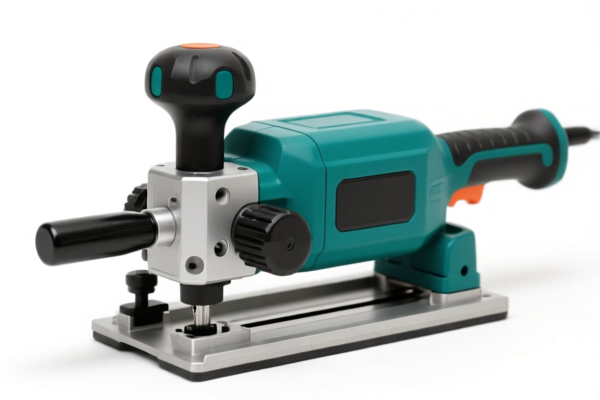
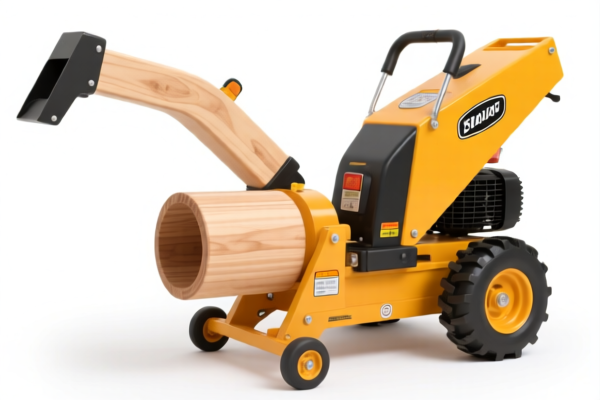
AI Analysis
🪵 Wood Trimmer: The Ultimate HS Code & Tax Clearance Guide (2026 Edition)
🌐 Global HS Code Reference & Tax Breakdown | Professional Customs Strategy
📌 Product Focus: Wood Trimmer (Hand Tools vs. Power Machinery)
A "Wood Trimmer" is a versatile term that can refer to two distinct categories in international trade:
1. Manual Wood Tools: Hand-held wooden handles or bodies used for shaping, trimming, or finishing (e.g., wooden chisel handles, wooden trimmer blades).
2. Power Woodworking Machines: Pneumatic, hydraulic, or electric motors used to plane, mill, or mold wood (e.g., electric routers, planers).
⚠️ Critical Classification Warning:
- If the item is a wooden handle/body for a tool → It belongs to Chapter 44.
- If the item is a power tool (electric/pneumatic) → It belongs to Chapter 84.
Misclassification here can lead to a 30% vs. 0% tax discrepancy!
📦 II. HS Code Classification Details (2026 Tariff Authority)
Based on your specific input data, here are the precise HS Codes and their corresponding tax liabilities for Wood Trimmers categorized by material and function.
🌳 Category A: Wooden Parts & Handles (Material: Wood)
| HS Code | Product Description | Applicable Scenario | Tax Rate (Total) |
|---|---|---|---|
| 4417.00.80.10 | Other Tool Handles (Wooden) | Wooden handles for chisels, saws, or trimmers; tool bodies made of wood. | 30.1% |
| 4417.00.80.90 | Other Other (Wooden) | Wooden tool bodies or handles not covered by the specific "handle" subheading. | 30.1% |
🔍 Key Distinction:
These codes apply ONLY if the item is made of wood (e.g., a wooden handle for a trimming knife). If the trimmer has an electric motor, these codes are incorrect.
⚡ Category B: Power Tools & Machinery (Motor/Engine Driven)
| HS Code | Product Description | Applicable Scenario | Tax Rate (Total) |
|---|---|---|---|
| 8467.29.00.55 | Routers with Self-contained Electric Motor | Hand-held electric wood trimmers, routers, or planers with built-in motors. | 7.5% |
| 8467.29.00.90 | Other Power Tools | Hand-held pneumatic, hydraulic, or electric wood trimmers NOT classified as routers. | 7.5% |
| 8465.92.00.37 | Woodworking Planing/Milling Machines | Stationary or large-scale planers, milling, or molding machines for wood. | 0.0% |
| 8465.99.02.30 | Other Woodworking Machines | Specialized woodworking machinery (nailing, stapling, gluing, or other cutting). | 0.0% |
🎯 Why 0%?
Codes 8465.92.00.37 and 8465.99.02.30 often enjoy 0% base duty because they are classified as industrial machinery rather than simple hand tools, and the specific "add-on" tariff (Section 301) does not apply to these specific stationary machine subheadings in this dataset.
💰 III. 2026 Tax Rate Deep Dive & Legal Basis
📌 Scenario 1: Wooden Wood Trimmer Handles/Parts (Codes 4417.00.80.x)
- Base Tariff: 5.1%
- Section 301 / "Add-on" Tariff: 25.0%
- Total Effective Tax: 30.1%
- Calculation:
(CIF Value × 5.1%) + (CIF Value × 25%) = 30.1% - Legal Context:
The 25.0% "Add-on" tariff is the critical cost driver here. This is typically a Section 301 retaliatory tariff applied to Chinese-origin wooden products. > ⚠️ Risk: Even small wooden parts (like handles) are subject to this high penalty tax. Do not undervalue wooden components.
📌 Scenario 2: Electric/Pneumatic Power Wood Trimmers (Codes 8467.29.x)
- Base Tariff: 0.0%
- Section 301 / "Add-on" Tariff: 7.5%
- Total Effective Tax: 7.5%
- Calculation:
CIF Value × 7.5% - Legal Context:
Hand-held power tools (routers, trimmers) are subject to a 7.5% add-on tariff. While the base duty is zero, the specific China tariff adds significant cost, but it is significantly lower than the 30.1% on wooden parts.
📌 Scenario 3: Industrial Woodworking Machines (Codes 8465.92.x / 8465.99.x)
- Base Tariff: 0.0%
- Section 301 / "Add-on" Tariff: 0.0%
- Total Effective Tax: 0.0%
- Calculation:
CIF Value × 0% - Legal Context:
Large stationary machines (Planers, Mills) often qualify for zero duty due to exemptions for industrial machinery that is not manufactured in the US or lacks specific trade remedy coverage in this dataset. > 🚀 Opportunity: If your "Wood Trimmer" is a large stationary machine, ensure it is classified here to save 30.1% in taxes!
🛠️ IV. Customs Clearance Action Plan (Pro Tips)
✅ 1. Product Definition Strategy
To ensure you are taxed correctly, your product description must be technically precise: * BAD Description: "Wood Trimmer" (Too vague, leads to manual review). * GOOD Description (Wooden): "Wooden Handle for Trimming Chisel, Solid Oak, Length 15cm". * GOOD Description (Electric): "Electric Router with 2.0HP Motor, 1/4" Collet, for Wood Trimming, Model XYZ". * GOOD Description (Machine): "CNC Wood Planing Machine, Motor-driven, 380V, for Industrial Use".
✅ 2. Shipment Documentation Checklist
| Document | Requirement | Why it Matters |
|---|---|---|
| Commercial Invoice | Must specify material (Wood vs. Metal/Plastic) and power source (None vs. Electric). | Determines if 4417 (30.1%) or 8467 (7.5%) applies. |
| Technical Drawing | Show internal structure. | Proves if it has a motor (8467) or is purely wooden (4417). |
| Material Declaration | Explicitly state "100% Wood" or "Plastic + Motor". | Prevents misclassification as "Other" (4417.00.80.90). |
| Origin Certificate | Essential for verifying US/China trade status. | Crucial for Section 301 tariffs. |
✅ 3. Declaration "Golden Rules"
- Rule 1: If it has a motor, never declare it under 4417. You will be over-taxed or audited.
- Rule 2: If it is a stationary machine, fight to classify under 8465 to get 0% tax.
- Rule 3: Wooden handles must be declared as "Tool Handles" (4417.00.80.10), not as general "wooden articles".
🚀 V. Strategic Summary & Cost Saving Tips
| Product Type | Recommended HS Code | Tax Rate | Strategy |
|---|---|---|---|
| Wooden Handle/Body | 4417.00.80.10 |
30.1% | High tax. Try to source non-wooden handles (plastic/metal) if possible for different classification. |
| Handheld Electric Router | 8467.29.00.55 |
7.5% | Standard. Ensure "Self-contained electric motor" is clear on the invoice. |
| Other Handheld Power Tool | 8467.29.00.90 |
7.5% | Ensure it's not a "router" to avoid specific subheadings if rates differ. |
| Stationary Wood Planer | 8465.92.00.37 |
0.0% | High Priority! This is the best classification for cost savings. |
| Other Woodworking Machine | 8465.99.02.30 |
0.0% | High Priority! Verify machine specifications to qualify. |
💡 Expert Advice:
If your product is a large, stationary Wood Trimmer/Planer, force the classification into 8465.92.00.37 or 8465.99.02.30. The difference between 30.1% and 0.0% is massive.
If your product is a small wooden part, prepare for the 30.1% tax burden immediately.
📌 VI. Common Pitfalls to Avoid
❌ Mistake 1: Declaring an electric router as a "Wooden Tool".
👉 Result: Incorrect HS Code 4417, leading to a 30.1% tax instead of 7.5%.
👉 Fix: Clearly state "Electric Motor" and "Pneumatic/Electric" in the description.
❌ Mistake 2: Declaring a stationary machine as a "Hand Tool".
👉 Result: Tax jumps from 0.0% to 7.5% or higher.
👉 Fix: Provide technical specs showing it is a machine, not a handheld device.
❌ Mistake 3: Generic description "Wooden Trimmer".
👉 Result: Customs will inspect manually, causing delays.
👉 Fix: Use specific language: "Wooden Handle for Hand Tool" or "Electric Router for Wood".
🎯 Final Verdict
- For Wooden Parts: Expect 30.1% total tax (5.1% Base + 25% Add-on).
- For Electric Hand Tools: Expect 7.5% total tax (0% Base + 7.5% Add-on).
- For Stationary Machines: Expect 0.0% total tax.
🚀 Action Step:
Check your BOM (Bill of Materials) immediately. Is it 100% wood? Or does it have a motor?
If it has a motor, aim for 8465 (0% tax) if it's a machine, or 8467 (7.5% tax) if it's a hand tool.
If it's wood, expect the 30.1% penalty and factor it into your pricing.
✨ Stay Compliant, Stay Profitable!
Your customs clearance is only as strong as your HS Code classification.
Customer Reviews
About HS Code Classification
The Harmonized System (HS) is an internationally standardized nomenclature developed by the World Customs Organization (WCO) to classify traded products. Over 200 countries use the HS system as the basis for customs tariffs, trade statistics, and import/export regulations.
Each HS code follows a hierarchical structure:
- Chapter (2 digits) — Broad category of goods (e.g., Chapter 84: Machinery and Mechanical Appliances)
- Heading (4 digits) — More specific grouping within the chapter
- Subheading (6 digits) — Internationally standardized breakdown, used by all WCO member countries
- National subdivisions (8-10 digits) — Country-specific extensions for further classification, such as US HTSUS 10-digit codes
Correct HS code classification is essential for smooth customs clearance, accurate duty payment, and compliance with trade regulations. Misclassification can lead to customs delays, overpayment of duties, or penalties.
When importing from CN to US, the applicable tariff rates may include:
- Most-Favored-Nation (MFN) rate — The standard duty rate applied to WTO members
- General rate — Applied to countries without trade agreements
- Trade remedy duties — Additional tariffs such as Section 301 (anti-dumping), Section 232 (national security), or countervailing duties
The information provided on this page is for reference purposes only. For official classification, please consult with your local customs authority or a licensed customs broker.