Wood Veneer Edge Banding
CN → US| HS Code | Tariff Rate | Origin | Destination | Doc |
|---|---|---|---|---|
| 4823902000 | 35.0% | CN | US | Official Doc |
| 4823908620 | 35.0% | CN | US | Official Doc |
| 4408900105 | 35.0% | CN | US | Official Doc |
| 4408900110 | 35.0% | CN | US | Official Doc |
| 4407990295 | 35.0% | CN | US | Official Doc |
| 4407990261 | 35.0% | CN | US | Official Doc |
Product Images
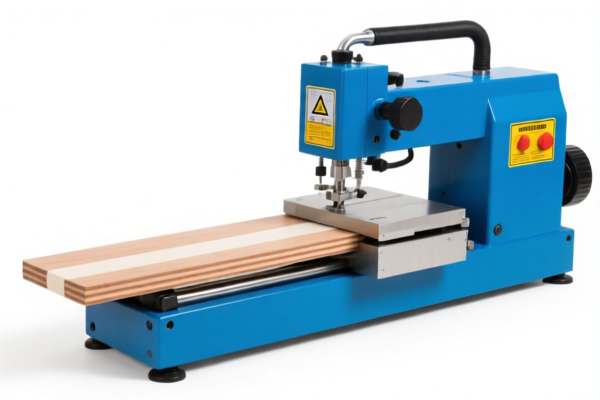
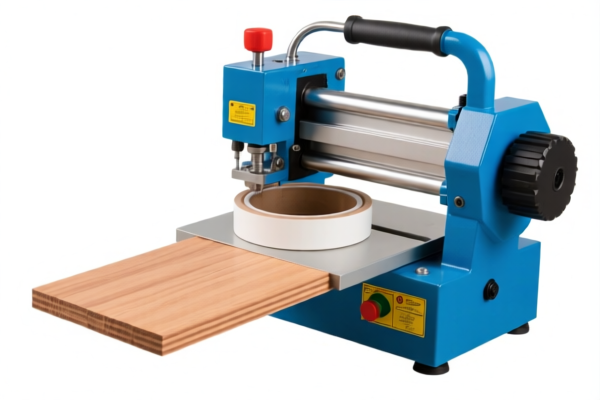
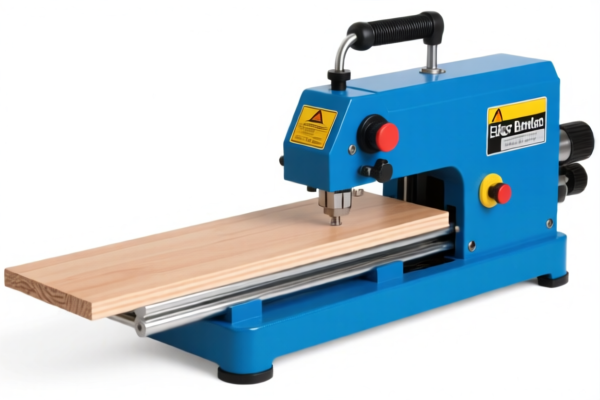
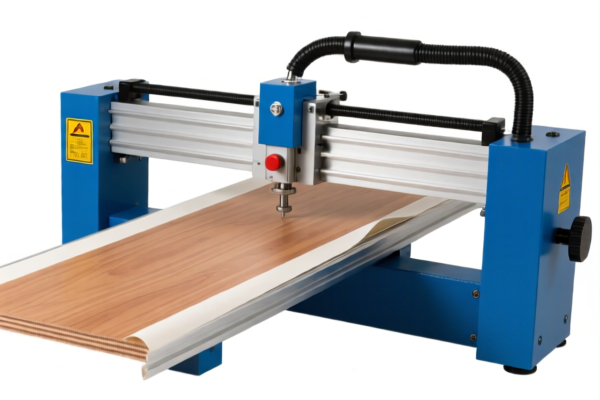
AI Analysis
🪵 Wood Veneer Edge Banding & Sliced Wood Sheets
🌐 HS Code Reference & Customs Clearance Guide | 2026 Latest Tariff Analysis | Professional Clearance Strategy
📌 I. Product Definition & Classification: Do You Really Understand "Wood Veneer Edge Banding"?
Wood veneer edge banding, often referred to in trade as sliced wood, thin wood sheets, or veneer logs, refers to wood that has been sawn, sliced, or peeled lengthwise. These products are characterized by their thickness not exceeding 6 mm (for veneering sheets) or exceeding 6 mm (for thicker non-coniferous/non-coniferous sawn wood depending on specific processing).
In international trade, the classification is strictly divided based on thickness and processing method:
- Thin Veneering Sheets (≤ 6 mm): Specifically sliced or peeled for plywood, veneering, or similar laminated wood. These are often supplied as continuous rolls or sheets for edge banding machines.
- Sliced Wood (> 6 mm): Wood sawn or chipped lengthwise, sliced, or peeled, exceeding 6 mm in thickness, often used for high-end furniture or solid wood applications.
⚠️ Key Distinction:
- If the wood is spliced, end-jointed, planed, or sanded, it still falls under Chapter 44, but specific sub-codes apply based on species (Ash, Birch, Walnut, etc.).
- If the product is cut to size/shape for furniture parts (like pre-cut edge bands), it might fall under Chapter 48 (Paper/Cellulose) only if it is made of papier-mâché or cellulose fibers, NOT solid wood. Solid wood edge banding is Chapter 44.
📦 II. HS Code Classification Details (2026 Latest Tariff Authority对照)
| HS Code | Product Description | Application Scenario | Thickness | Processing Status |
|---|---|---|---|---|
4408.90.01.05 |
Sheets for veneering, for plywood or similar laminated wood; Ash (Fraxinus spp.) | High-end furniture, Ash veneer edge banding, Spliced/End-jointed | ≤ 6 mm | Sliced, Planed, Sanded, Spliced |
4408.90.01.10 |
Sheets for veneering, for plywood or similar laminated wood; Birch (Betula spp.) | Birch veneer edge banding, Spliced/End-jointed | ≤ 6 mm | Sliced, Planed, Sanded, Spliced |
4407.99.02.95 |
Wood sawn/chipped lengthwise, sliced/peeled; Other non-coniferous; Other | Thick wood slices, non-specified exotic wood, >6mm thickness | > 6 mm | Sliced, Planed, Sanded |
4407.99.02.61 |
Wood sawn/chipped lengthwise, sliced/peeled; Walnut (Juglans spp) | Premium Walnut edge banding/slices, >6mm thickness | > 6 mm | Sliced, Planed, Sanded |
4823.90.20.00 |
Other paper, paperboard, cellulose wadding; Of papier-mâché | FAKE WOOD (Paper-based edge banding), NOT solid wood | N/A | Papier-mâché/Cellulose |
4823.90.86.20 |
Other articles of paper pulp/paper; Shoe covers of a kind described in statistical note 2 | NOT WOOD; Specific paper article (Statistical Note 2) | N/A | Paper/Cellulose |
🔍 Critical Reminder:
- Solid Wood Veneer/Edge Banding (≤6mm) falls under 4408.xx.xx.
- Solid Wood Slices/Planks (>6mm) fall under 4407.xx.xx.
- Paper-based "Wood" look-alikes (e.g., MDF with wood grain print, or papier-mâché) fall under Chapter 48.
- Shoe covers (HS 4823.90.86.20) are explicitly listed in the data but are NOT wood veneer. They are paper products. If your product is solid wood, do not use this code.
💰 III. 2026 Latest Tariff Rate Detailed Analysis (Including Additional Duties & Policy Surcharges)
✅ Applicable Country: United States (US)
✅ Origin: China (CN)
✅ Effective Date: November 10, 2025 onwards (Including subsequent imports)
🎯 1. 4408.90.01.05 & 4408.90.01.10 —— Wood Veneering Sheets (Ash, Birch, ≤6mm)
| Item | Content |
|---|---|
| Base Tariff | 0% (ad valorem) |
| USITC Additional Duty | +25% (From USITC Footnote 9903.88.01 / Section 301) |
| IEEPA Additional Duty | +10% (For Chinese/HK products, effective Nov 10, 2025) |
| Total Tariff Rate | 35% |
| Tax Calculation | CIF Value × 35% |
| De Minimis Exemption | ❌ Not Available (deny_de_minimis) |
| Legal Basis Path | IEEPA:9903.01.25 → IEEPA:9903.01.24 → USITC:4408.90.01.05 → FOOTNOTE:9903.88.01 |
📌 Explanation:
- Wood veneer sheets (≤6mm) are subject to Section 301 tariffs (25%).
- In addition, the IEEPA 10% surcharge applies to Chinese-origin wood products.
- Total: 35%. This is a high tariff category. Pre-planning is essential.
🎯 2. 4407.99.02.95 & 4407.99.02.61 —— Sliced Wood Planks/Slices (>6mm, Non-Coniferous, Walnut/Other)
| Item | Content |
|---|---|
| Base Tariff | 0% (ad valorem) |
| USITC Additional Duty | +25% |
| IEEPA Additional Duty | +10% |
| Total Tariff Rate | 35% |
| Tax Calculation | CIF Value × 35% |
| De Minimis Exemption | ❌ Not Available (deny_de_minimis) |
| Legal Basis Path | IEEPA:9903.01.25 → IEEPA:9903.01.24 → USITC:4407.99.02.61 → FOOTNOTE:9903.88.01 |
📌 Note:
- Solid wood slices thicker than 6mm also face the same 35% total tariff.
- Whether it is Walnut or Other Non-Coniferous, the Section 301 and IEEPA duties apply equally.
- Do not assume thicker wood is taxed differently; it is still subject to the same 35%.
🎯 3. 4823.90.20.00 —— Papier-Mâché Articles (Paper-Based "Wood" Look)
| Item | Content |
|---|---|
| Base Tariff | 0% |
| USITC Additional Duty | +25% |
| IEEPA Additional Duty | +10% |
| Total Tariff Rate | 35% |
| Tax Calculation | CIF Value × 35% |
| De Minimis Exemption | ❌ Not Available (deny_de_minimis) |
📌 Warning:
- If you are selling paper-based edge banding (e.g., PVC/PE with wood print is different, but papier-mâché is Chapter 48), it is still taxed at 35%.
- Clarification: PVC/PE edge banding with wood grain usually falls under Chapter 39 (Plastics), which may have different tariffs. However, based on the provided data, papier-mâché is taxed at 35%. Check if your product is truly "papier-mâché" or "plastic" (Chapter 39) for potentially lower rates.
🎯 4. 4823.90.86.20 —— Shoe Covers (Paper)
| Item | Content |
|---|---|
| Base Tariff | 0% |
| USITC Additional Duty | +25% |
| IEEPA Additional Duty | +10% |
| Total Tariff Rate | 35% |
| Tax Calculation | CIF Value × 35% |
⚠️ Irrelevant for Wood Veneer: This code is for Shoe Covers. Do not use this for wood products. Misclassification leads to penalties.
🛠️ IV. Customs Clearance Practical Advice (实战避坑指南)
✅ 1. Preparation Checklist (Non-negotiable)
| Material | Mandatory | Description |
|---|---|---|
| ✅ Product Specification Sheet | ✔️ | Must include Species (Ash, Birch, Walnut, etc.), Thickness (≤6mm or >6mm), Dimensions, Moisture Content. |
| ✅ Material Composition Proof | ✔️ | Proof that it is Solid Wood, not plywood, MDF, or papier-mâché. |
| ✅ Product Photos (Clear) | ✔️ | Show cross-section to prove it is solid wood, not layered. |
| ✅ Commercial Invoice | ✔️ | Must state "Wood Veneer Sheets" or "Sliced Wood", not generic "Wood Parts". |
| ✅ Bill of Lading | ✔️ | Consistent with invoice. |
| ✅ ISF Filing | ✔️ | File 10+2 ISF 24 hours before loading. |
✅ 2. Declaration Tips (Critical Mnemonics)
🔥 "Species & Thickness Define Code; Paper is NOT Wood; 35% is the Norm!"
| Scenario | Correct HS Code | Wrong Approach | Consequence |
|---|---|---|---|
| Ash/Birch Veneer (≤6mm) | 4408.90.01.05/10 |
Declare as "Furniture Part" | Delay + Penalties |
| Walnut Slices (>6mm) | 4407.99.02.61 |
Declare as "Paper Product" | 35% + Fine |
| Papier-Mâché "Wood" | 4823.90.20.00 |
Declare as "Solid Wood" | Misclassification |
| PVC Edge Banding (Wood Print) | Not in Data (Likely Ch. 39) | Declare as "Paper/Wood" | Wrong Code, Wrong Tax |
| Shoe Covers | 4823.90.86.20 |
Declare as "Wood" | Severe Penalty |
✅ 3. Special Cases Handling
| Scenario | Advice |
|---|---|
| Spliced/End-Jointed Veneer | Specify "Spliced" in description. Code 4408.90.01.05 covers Ash spliced. |
| Mixed Species Containers | Declare each species separately. Do not lump Ash and Walnut together. |
| Wood vs. Papier-Mâché | If it bends like paper and smells like glue, it might be papier-mâché (Ch 48). If it has wood grain and knots, it’s Ch 44. |
| Edge Banding Rolls | If it is PVC/PE with wood print, it is Chapter 39 (Plastics). The provided data does not cover Chapter 39. Check Chapter 39 for potentially lower rates! |
🌍 V. Global Market Comparison (2026 Latest)
| Country/Region | Recommended HS Code (for Wood Veneer) | Tariff (China Origin) | Certification | Notes |
|---|---|---|---|---|
| 🇺🇸 USA | 4408.90.xx or 4407.99.xx |
35% (25% + 10%) | None specific | High tariff. Plan carefully. |
| 🇨🇳 China | 4408.90.xx or 4407.99.xx |
5% | FSC (Optional) | Lower entry barrier. |
| 🇪🇺 EU | 4408.90.xx or 4407.99.xx |
0% - 6% | FSC/PEFC | No Section 301 tax. |
| 🇬🇧 UK | 4408.90.xx or 4407.99.xx |
0% - 6% | UKCA | Post-Brexit rules apply. |
📌 Conclusion:
- USA is the most expensive market for Chinese wood veneer/edge banding due to 35% combined tariffs.
- EU/UK have lower tariffs but require FSC/PEFC certification for many buyers.
- Plastic Edge Banding (PVC/PE) may have different tariffs (often 0-5% in EU, but check US Ch 39 rules). Do not assume all edge banding is wood!
📌 VI. Common Mistakes & Pitfalls (Lessons Learned)
❌ Mistake 1: Declaring PVC Edge Banding as Wood Veneer
👉 Consequence: If caught, penalties for misdeclaration. PVC is Chapter 39, Wood is Chapter 44.
❌ Mistake 2: Ignoring Thickness (≤6mm vs >6mm)
👉 Consequence: Wrong HS Code selection. 4408 vs 4407 have different sub-codes for species.
❌ Mistake 3: Using "Shoe Cover" Code for Paper Products
👉 Consequence: 4823.90.86.20 is specifically for shoe covers. Using it for other paper items is illegal misclassification.
❌ Mistake 4: Assuming Papier-Mâché is Wood
👉 Consequence: Both are taxed at 35%, but the description must be accurate. "Papier-Mâché" is not "Wood".
✅ Correct Approach:
"Solid Wood Veneer, Ash Species, Thickness 1mm, Spliced, Sliced, for Furniture Edge Banding, HS 4408.90.01.05"
🎯 VII. Conclusion: Precise Classification Saves Money!
🎯 Remember the Mantra:
🔹 "Veneer ≤6mm is 4408, >6mm is 4407;
🔹 Species Matters: Ash, Birch, Walnut;
🔹 US Tariff: 35%, No Exemption;
🔹 Plastic is NOT Wood, Check Chapter 39!"
📌 Pro Tip:
If your edge banding is PVC or Melamine-based (plastic/paper composite), it is NOT covered by the HS codes above. Check Chapter 39 for Plastic Edge Banding. It may have lower US tariffs (e.g., 0-5% under some HTSUs, but check Section 301 applicability for plastics).
Contact a professional customs broker to verify if your product is Solid Wood or Plastic/Paper-based.
📣 Immediate Action:
📞 Confirm Material (Wood vs. Plastic vs. Papier-Mâché)
📞 Measure Thickness (≤6mm or >6mm)
📞 Identify Species (Ash, Birch, Walnut, etc.)
🚀 Avoid 35% Surprise! Clear Customs Efficiently!
✨ Professional Clearance Starts with Accurate Classification!
💼 Every 1% of Tax Saved is Pure Profit!
Customer Reviews
About HS Code Classification
The Harmonized System (HS) is an internationally standardized nomenclature developed by the World Customs Organization (WCO) to classify traded products. Over 200 countries use the HS system as the basis for customs tariffs, trade statistics, and import/export regulations.
Each HS code follows a hierarchical structure:
- Chapter (2 digits) — Broad category of goods (e.g., Chapter 84: Machinery and Mechanical Appliances)
- Heading (4 digits) — More specific grouping within the chapter
- Subheading (6 digits) — Internationally standardized breakdown, used by all WCO member countries
- National subdivisions (8-10 digits) — Country-specific extensions for further classification, such as US HTSUS 10-digit codes
Correct HS code classification is essential for smooth customs clearance, accurate duty payment, and compliance with trade regulations. Misclassification can lead to customs delays, overpayment of duties, or penalties.
When importing from CN to US, the applicable tariff rates may include:
- Most-Favored-Nation (MFN) rate — The standard duty rate applied to WTO members
- General rate — Applied to countries without trade agreements
- Trade remedy duties — Additional tariffs such as Section 301 (anti-dumping), Section 232 (national security), or countervailing duties
The information provided on this page is for reference purposes only. For official classification, please consult with your local customs authority or a licensed customs broker.