Wood Waste Briquettes
CN → US| HS Code | Tariff Rate | Origin | Destination | Doc |
|---|---|---|---|---|
| 4401394210 | 35.0% | CN | US | Official Doc |
| 4401310000 | 35.0% | CN | US | Official Doc |
| 4405000000 | 38.2% | CN | US | Official Doc |
| 4402900100 | 35.0% | CN | US | Official Doc |
| 3606903000 | 15.9% | CN | US | Official Doc |
Product Images
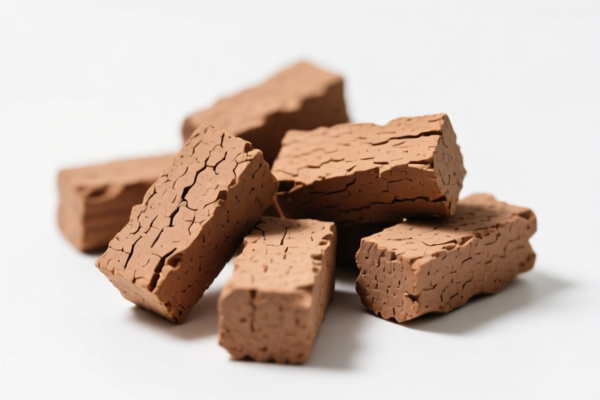
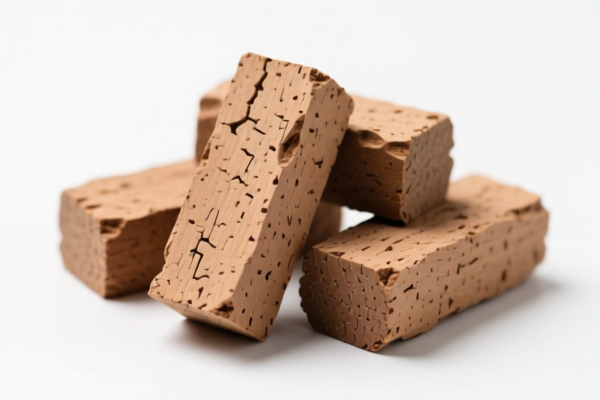
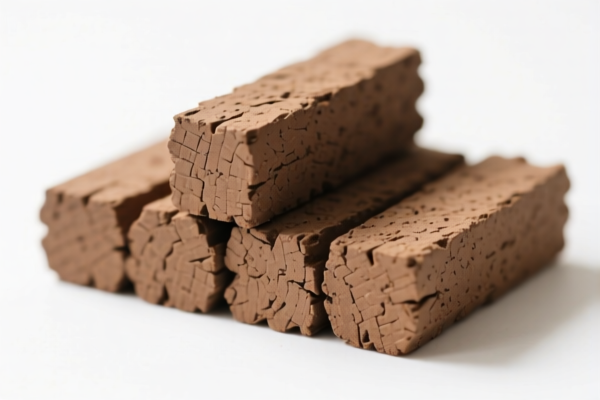
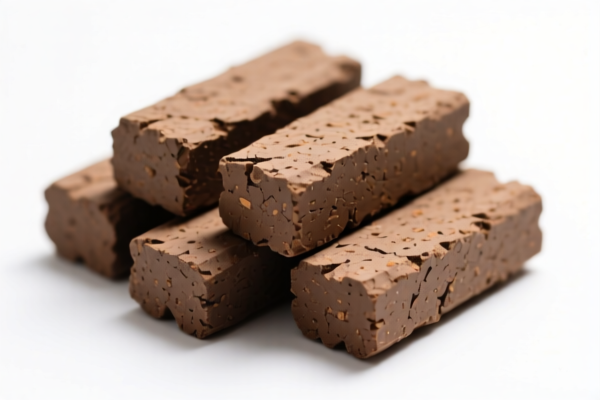
AI Analysis
🪵 Wood Waste Briquettes (Bio-Energy Raw Materials)
🌐 HS Code Reference & Clearance Guide | 2024 Latest Tariff Analysis | Strategic Customs Compliance Strategy
📌 I. Product Definition & Classification: What exactly are "Wood Waste Briquettes"?
Wood Waste Briquettes are dense, compacted forms of wood by-products (sawdust, wood chips, shavings) used primarily as solid biofuel. In international trade, they are not a monolithic category. Their classification depends heavily on their physical form (granules vs. briquettes) and specific application (direct fuel vs. fire starters).
Misclassification here is risky because the tax rates vary significantly between 35.0% and 38.2%, with subtle differences in the "Base Duty" component.
⚠️ Key Distinction Points:
- If the product is loose granules/pellets made from wood waste/shavings → Look at 4401.39 or 4401.31.
- If the product is compressed blocks/briquettes specifically for fire-starting (with chemical aids or specific density) → Look at 4402.90.
- If the product is wood flour/powder compressed into pellets → Look at 4405.00.
- If the product is a combustible material product specifically marketed as fire-starters (not just general fuel) → Look at 3606.90.
📦 II. HS Code Classification Details (Based on Provided Data)
| HS Code | Product Description (Summary) | Form/Material | Primary Use |
|---|---|---|---|
4401.39.42.10 |
Wood dust biomass fuel pellets | Pellets/Granules | Fuel |
4401.31.00.00 |
Wood pellets (Wood dust) | Pellets/Granules | General Biofuel |
4405.00.00.00 |
Wood flour and granules | Pellets/Granules | Industrial/Fuel |
4402.90.01.00 |
Wood waste compressed briquettes for ignition | Compressed Blocks | Fire Starters/Ignition |
3606.90.30.00 |
Combustible material products (Wood waste) | Combustible Product | Ignition/Fire-starting |
🔍 Critical Note:
- 4401 covers "Wood in the form of chips, particles or pellets... for combustion." This is the most common category for general biomass fuel.
- 4402 covers "Briquettes, ovoids or similar forms of wood... for combustion." Note that4402.90.01.00is specifically linked to ignition/fire-starting uses in the provided data.
- 3606 covers "Fireworks... and other combustible preparations." This is a niche category for combustible material products used for ignition, often with a lower base duty (5.9% vs 0% or 3.2%).
💰 III. 2024/2025 Latest Tariff Rate Breakdown (Including Surtaxes & Policy Surcharges)
✅ Applicable Country: United States (US)
✅ Origin: China (CN)
✅ Effective Time: Ongoing (Section 301 & IEEPA tariffs apply)
🎯 1. 4401.39.42.10 & 4401.31.00.00 — Wood Pellets (Biomass Fuel)
| Item | Detail |
|---|---|
| Base Duty | 0.0% (Ad Valorem) |
| Section 301 Surtax | +25.0% (USITC Footnote 115) |
| IEEPA 122 Clause | +10.0% (Targeting Chinese Bio-energy/Forestry products) |
| Total Effective Rate | 35.0% |
| Tax Calculation | CIF Value × 35.0% |
| De Minimis Exemption | ❌ Not Eligible (Deny de minimis) |
| Legal Basis Path | USITC:4401.39.42.10 → SECTION:301 → IEEPA:122 |
📌 Explanation:
- The 0% base duty makes the product appear cheap, but the 25% Section 301 tariff + 10% IEEPA surcharge adds up quickly.
- This is the standard classification for general wood pellet fuel.
🎯 2. 4405.00.00.00 — Wood Flour and Granules
| Item | Detail |
|---|---|
| Base Duty | 3.2% (Ad Valorem) |
| Section 301 Surtax | +25.0% |
| IEEPA 122 Clause | +10.0% |
| Total Effective Rate | 38.2% |
| Tax Calculation | CIF Value × 38.2% |
| De Minimis Exemption | ❌ Not Eligible |
| Legal Basis Path | USITC:4405.00.00.00 → SECTION:301 → IEEPA:122 |
📌 Explanation:
- This is more expensive than standard wood pellets due to the 3.2% base duty.
- Only use this if the product is strictly wood flour/powder compressed into granules, not standard biomass fuel pellets.
🎯 3. 4402.90.01.00 — Wood Waste Compressed Briquettes for Ignition
| Item | Detail |
|---|---|
| Base Duty | 0.0% |
| Section 301 Surtax | +25.0% |
| IEEPA 122 Clause | +10.0% |
| Total Effective Rate | 35.0% |
| Tax Calculation | CIF Value × 35.0% |
| De Minimis Exemption | ❌ Not Eligible |
| Legal Basis Path | USITC:4402.90.01.00 → SECTION:301 → IEEPA:122 |
📌 Explanation:
- Despite being a "briquette" (compressed block), it shares the 35% total rate with pellets because the base duty is 0%.
- Key is the ignition/fuel distinction.
🎯 4. 3606.90.30.00 — Combustible Material Products (Fire Starters)
| Item | Detail |
|---|---|
| Base Duty | 5.9% |
| Section 301 Surtax | 0.0% |
| IEEPA 122 Clause | +10.0% |
| Total Effective Rate | 15.9% |
| Tax Calculation | CIF Value × 15.9% |
| De Minimis Exemption | ❌ Not Eligible (Check specific rules) |
| Legal Basis Path | USITC:3606.90.30.00 → SECTION:301 (Exempt) → IEEPA:122 |
📌 Explanation:
- This is the MOST COST-EFFECTIVE option!
- Total rate is only 15.9% because Section 301 surtax is 0% for this specific subheading.
- Condition: Must be clearly defined as a combustible material product for ignition (e.g., fire starters, fire logs with specific combustible matrix), NOT general fuel.
🛠️ IV. Customs Clearance Practical Advice (Pitfall Avoidance Guide)
✅ 1. Preparation Checklist (Non-Negotiable)
| Document | Mandatory? | Purpose |
|---|---|---|
| ✅ Product Specification Sheet | ✔️ | Must detail: Material (Wood species), Form (Pellet/Briquette), Size, Density, Moisture Content. |
| ✅ Usage Declaration | ✔️ | Clearly state: "For Combustion" (Fuel) vs. "For Ignition/Fire-starting". Crucial for HS 3606 vs 4401. |
| ✅ Product Photos | ✔️ | Show raw material (sawdust) and final product (pellets/briquettes). |
| ✅ Commercial Invoice | ✔️ | Must match HS Code description exactly. Avoid vague terms like "Wood Chips." |
| ✅ Certificate of Origin | ✔️ | Required for Section 301 determination. |
| ✅ Test Report | ✔️ | Proving combustible nature (if claiming 3606). |
✅ 2. Declaration Strategy (Key Mantra)
🔥 "Form defines Code, Use defines Tax. Pellets go to 4401, Fire-Starter to 3606!"
| Scenario | Correct HS Code | Why? | Risk if Wrong |
|---|---|---|---|
| Standard Wood Pellets for Heating | 4401.39.42.10 or 4401.31.00.00 |
Form: Pellets; Use: Fuel | Misdeclaring as 3606 → 19.1% penalty (35% - 15.9%) |
| Compressed Wood Blocks for Ignition | 4402.90.01.00 |
Form: Briquette; Use: Ignition | Misdeclaring as 3606 → 19.1% penalty |
| Fire Starters / Combustible Logs | 3606.90.30.00 |
Use: Ignition; Material: Combustible Bio | Misdeclaring as 4401 → 19.1% penalty |
| Wood Flour/Powder Pellets | 4405.00.00.00 |
Material: Wood Flour | Overpayment of 3.2% base duty |
✅ 3. Special Considerations
| Situation | Recommendation |
|---|---|
| Mixed Shipments | Do not mix 3606 (15.9%) with 4401 (35%) in one BL without clear separation. Customs will scrutinize. |
| "Biomass" Labeling | If labeling as "Biomass Fuel," you are locked into 4401 (35%). To claim 3606 (15.9%), label as "Fire-Starting Material" or "Combustible Product." |
| Moisture Content | High moisture (>30%) may lead to rejection or reclassification. Ensure specs are accurate. |
| Chemical Additives | If chemical accelerants are added, it strengthens the case for 3606 (Combustible Product). |
🌍 V. Market Comparison & Strategy (2024/2025)
| HS Code | Total Tax Rate | Classification Type | Best For |
|---|---|---|---|
3606.90.30.00 |
15.9% | Combustible Material | Fire Starters, Fire Logs, High-Value Ignition Products |
4401.39.42.10 |
35.0% | Wood Pellets (Fuel) | General Biomass Fuel, Heating Pellets |
4402.90.01.00 |
35.0% | Wood Briquettes | Compressed Briquettes for Ignition |
4405.00.00.00 |
38.2% | Wood Flour/Granules | Specialty Wood Powder Products |
📌 Conclusion:
- Maximize Profit with 3606: If your product can be legally described as a "combustible material for ignition" (e.g., fire starters), HS 3606.90.30.00 saves you 19.1% in tariffs.
- Standard Fuel is Expensive: General wood pellets/briquettes for heating are heavily taxed at 35% due to Section 301 + IEEPA.
📌 VI. Common Mistakes & Pitfalls (Lessons Learned)
❌ Mistake 1: Calling all wood biofuels "Pellets" and using 4401.
👉 Result: Paying 35% when 3606 (15.9%) might apply.
✅ Fix: If for fire-starting, use "Combustible Product" description.
❌ Mistake 2: Using 4405.00.00.00 for standard fuel pellets.
👉 Result: Paying 38.2% (highest rate) due to 3.2% base duty.
✅ Fix: Use 4401.39.42.10 for standard biomass pellets (0% base duty).
❌ Mistake 3: Ignoring IEEPA 122 Clause.
👉 Result: Even with 0% base duty, 10% IEEPA applies.
✅ Fix: Factor 10% into all cost calculations, regardless of HS Code.
🎯 VII. Conclusion: Professional Declaration, Lower Costs!
🎯 Remember the Mantra:
🔹 "Fuel is 35%, Fire-Starter is 16%, Base Duty Matters, Section 301 is Real!"
🔹 "Don't pay 35% if you can justify 15.9% – Define Your Use!"
📌 Pro Tip:
If your product is wood briquettes used for heating, you are stuck with 35%.
If you can market them as "Fire Starters" or "Combustible Ignition Products," you may qualify for 15.9%.
Action: Update your product labels and commercial invoices to reflect "Ignition/Combustible Product" if technically accurate.
📣 Immediate Action:
📞 Consult a Customs Broker to review your Product Specification for
3606.90.30.00eligibility.
🚀 Save 19.1% on Tariffs – Declare Smarter, Not Harder!
✨ Professional Customs Compliance Starts with Accurate Classification!
💼 Every Percentage Point Counts in Global Trade!
Customer Reviews
About HS Code Classification
The Harmonized System (HS) is an internationally standardized nomenclature developed by the World Customs Organization (WCO) to classify traded products. Over 200 countries use the HS system as the basis for customs tariffs, trade statistics, and import/export regulations.
Each HS code follows a hierarchical structure:
- Chapter (2 digits) — Broad category of goods (e.g., Chapter 84: Machinery and Mechanical Appliances)
- Heading (4 digits) — More specific grouping within the chapter
- Subheading (6 digits) — Internationally standardized breakdown, used by all WCO member countries
- National subdivisions (8-10 digits) — Country-specific extensions for further classification, such as US HTSUS 10-digit codes
Correct HS code classification is essential for smooth customs clearance, accurate duty payment, and compliance with trade regulations. Misclassification can lead to customs delays, overpayment of duties, or penalties.
When importing from CN to US, the applicable tariff rates may include:
- Most-Favored-Nation (MFN) rate — The standard duty rate applied to WTO members
- General rate — Applied to countries without trade agreements
- Trade remedy duties — Additional tariffs such as Section 301 (anti-dumping), Section 232 (national security), or countervailing duties
The information provided on this page is for reference purposes only. For official classification, please consult with your local customs authority or a licensed customs broker.