Wood Working Tools
CN → US| HS Code | Tariff Rate | Origin | Destination | Doc |
|---|---|---|---|---|
| 8467210030 | 11.7% | CN | US | Official Doc |
| 8205100000 | 41.2% | CN | US | Official Doc |
| 8205306000 | 40.0% | CN | US | Official Doc |
| 8465950055 | 38.0% | CN | US | Official Doc |
| 8467210050 | 11.7% | CN | US | Official Doc |
| 8465950020 | 38.0% | CN | US | Official Doc |
Product Images
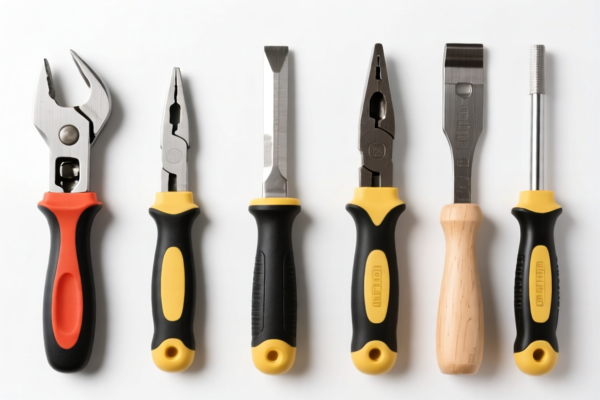
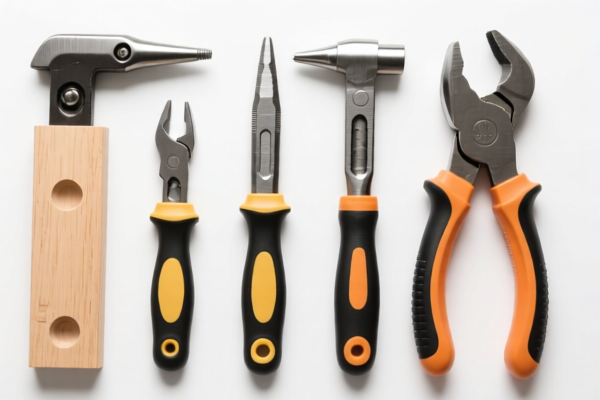
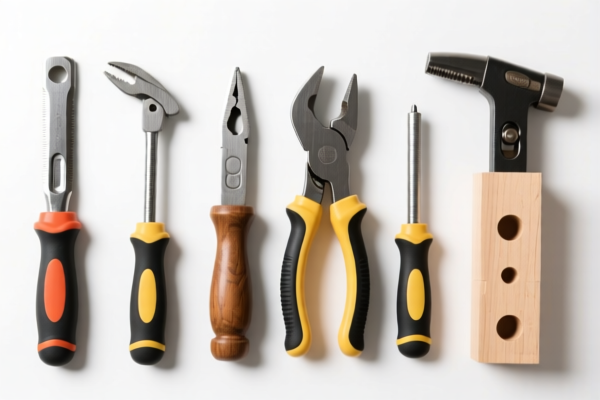
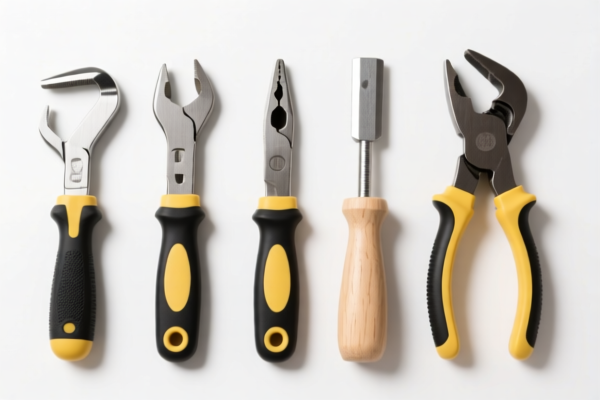
AI Analysis
🪚 Wood Working Drills & Tools (木工钻工具/木工加工工具)
🌐 HS Code Reference & Customs Clearance Guide | 2026 Latest Tariff Analysis | Professional Clearance Strategy
📌 1. Product Definition & Classification: What exactly are "Wood Working Drills"?
In international trade, "Wood Working Tools" is a broad category. The specific HS Code depends entirely on how the tool operates (manual vs. electric) and its specific function (drilling, tapping, or part of a machine).
Key Distinction: * Portable Power Tools: Hand-held electric drills or rotary tools used for woodworking → Chapter 84 (8467.21) * Non-Power Tools/Hand Tools: Drills, taps, dies, or cutting tools without motors → Chapter 82 (8205) * Machine Parts: Parts of woodworking machines (e.g., drill bits for stationary drill presses) → Chapter 84 (8465.95)
⚠️ Critical Classification Point:
- If it is a hand-held electric drill →归入 8467.21.00 (Low Base Duty!)
- If it is a manual drill/tap/die or cutting tool → 归入 8205 (High Duty due to Trade Wars!)
- If it is a part for a woodworking machine (e.g., bit for a stationary machine) → 归入 8465.95 (High Duty due to Trade Wars!)
📦 2. HS Code Classification Details (2026 Latest Tariff Authority Comparison)
Based on the provided data, here is the breakdown for "Wood Working Tools":
| HS Code | Product Description | Scenario | Tax Burden |
|---|---|---|---|
8467.21.00.30 |
Woodworking drill tools, hand-held rotary drills, suitable for wood processing. | Hand-held electric drills, cordless drills. | 11.7% |
8467.21.00.50 |
Woodworking drill tools, hand-held electric rotary drills. | Hand-held electric drills, cordless drills. | 11.7% |
8205.10.00.00 |
Woodworking drill tools, classified as drilling, tapping, or dieing tools. | Manual drills, taps, dies, wrenches. | 41.2% |
8205.30.60.00 |
Woodworking drill tools, classified under woodworking cutting tools. | Saw blades, chisels, cutting bits (non-machine). | 40.0% |
8465.95.00.55 |
Woodworking drill tools, classified as drilling machines for woodworking. | Parts of stationary woodworking machines (e.g., bits for bench drills). | 38.0% |
8465.95.00.20 |
Woodworking drill tools, classified as drilling tools for wood processing. | Parts/attachments for stationary wood drilling machines. | 38.0% |
🔍 Key Insight:
- Electric Hand-held Tools (8467.21) enjoy significantly lower base duties (1.7%) compared to manual/cutting tools or machine parts.
- Manual Tools (8205) & Machine Parts (8465.95) suffer from high "Section 301" and "122 Clause" tariffs, pushing total rates above 38%.
💰 3. 2026 Latest Tariff Rate Breakdown (Including Surcharges & Policy Add-ons)
✅ Applicable Country: USA (US)
✅ Origin: China (CN)
✅ Effective Time: 2025/2026 (Including subsequent imports)
🎯 1. 8467.21.00.30 & 8467.21.00.50 —— Hand-held Electric Rotary Drills
| Item | Content |
|---|---|
| Base Duty | 1.7% (ad valorem) |
| Additional Duty (301) | 0.0% |
| Section 122 Duty | 10.0% |
| Total Tax Rate | 11.7% |
| Tax Calculation | CIF Value × 11.7% |
| De Minimis Exemption | ❌ Not Available (High value tools usually excluded, check specific value thresholds) |
| Legal Basis Path | HTSUS:8467.21.00 → Section 122 Add-on |
📌 Explanation:
- These codes fall under "Hand-held tools, air-driven or with self-contained electric or non-electric motor."
- Crucially, there is NO 25% Section 301 tariff for these specific electric hand-held drill codes in the provided data.
- Only the 10% Section 122 surcharge applies.
- Result: This is the most cost-effective classification for electric woodworking drills.
🎯 2. 8205.10.00.00 —— Drilling, Tapping, or Dieing Tools (Manual/Non-Electric)
| Item | Content |
|---|---|
| Base Duty | 6.2% (ad valorem) |
| Additional Duty (301) | 25.0% |
| Section 122 Duty | 10.0% |
| Total Tax Rate | 41.2% |
| Tax Calculation | CIF Value × 41.2% |
| De Minimis Exemption | ❌ Not Available |
| Legal Basis Path | HTSUS:8205.10.00 → Section 301 (Footnote 9903.88.01) → Section 122 Add-on |
📌 Explanation:
- This code covers manual drills, taps, and dies.
- It is subject to the full 25% Section 301 tariff PLUS the 10% Section 122 surcharge.
- Result: Very high tax burden. Avoid if the product can be classified as electric.
🎯 3. 8205.30.60.00 —— Woodworking Cutting Tools
| Item | Content |
|---|---|
| Base Duty | 5.0% (ad valorem) |
| Additional Duty (301) | 25.0% |
| Section 122 Duty | 10.0% |
| Total Tax Rate | 40.0% |
| Tax Calculation | CIF Value × 40.0% |
| De Minimis Exemption | ❌ Not Available |
| Legal Basis Path | HTSUS:8205.30.60 → Section 301 → Section 122 Add-on |
📌 Explanation:
- Covers cutting tools like saw blades, chisels, or planer blades used for woodworking.
- Subject to 25% + 10% surcharges.
- Result: High tax burden, similar to manual drills.
🎯 4. 8465.95.00.55 & 8465.95.00.20 —— Parts of Woodworking Machines (Drill Machines)
| Item | Content |
|---|---|
| Base Duty | 3.0% (ad valorem) |
| Additional Duty (301) | 25.0% |
| Section 122 Duty | 10.0% |
| Total Tax Rate | 38.0% |
| Tax Calculation | CIF Value × 38.0% |
| De Minimis Exemption | ❌ Not Available |
| Legal Basis Path | HTSUS:8465.95.00 → Section 301 → Section 122 Add-on |
📌 Explanation:
- These codes are for parts of woodworking machines (e.g., drill bits for stationary drill presses, spindles, etc.).
- Even though the base duty is low (3.0%), the 25% + 10% surcharges make it expensive.
- Result: High tax burden. Only use if the item is strictly a machine part and not a hand-held tool.
🛠️ 4. Customs Clearance Practical Advice (Battle-Tested Pitfall Guide)
✅ 1. Preparation Checklist (Must-Have)
| Material | Required | Note |
|---|---|---|
| ✅ Product Specifications | ✔️ | Must clearly state: Power source (Electric/Manual), Voltage, Power (Watts), Usage (Woodworking). |
| ✅ Photos (Labeled) | ✔️ | Show the whole unit, motor label, and any specific cutting/drilling tips. |
| ✅ Commercial Invoice | ✔️ | Description must match HS Code. e.g., "Hand-held Electric Wood Drill" vs. "Woodworking Drill Bit". |
| ✅ Packing List | ✔️ | List accessories separately. If batteries are included, declare them. |
| ✅ Origin Certificate | ✔️ | Prove Chinese origin to apply correct Section 301/122 rates. |
✅ 2. Declaration Strategy (Key Mantra)
🔥 "Electric is Cheap, Manual is Expensive! Describe Precisely!"
| Scenario | Correct HS Code | Incorrect Code | Consequence |
|---|---|---|---|
| Hand-held Electric Drill | 8467.21.00.30/50 (11.7%) |
8205 (41.2%) |
Overpaying ~30% in taxes! |
| Manual Tap/Die Set | 8205.10.00.00 (41.2%) |
8467 (11.7%) |
Underpaying → Penalty + Back Taxes! |
| Drill Bit for Machine | 8465.95.00.20 (38.0%) |
8207 (If misclassified as hand tool) |
Risk of reclassification & delay. |
| Saw Blade | 8205.30.60.00 (40.0%) |
8467 (11.7%) |
Risk of reclassification & delay. |
✅ 3. Special Cases
| Situation | Advice |
|---|---|
| Combo Kits (Drill + Bits) | Declare as the main tool (Electric Drill 8467.21). Bits are accessories. Do not split declaration unless asked. |
| Lithium Battery Included | Ensure proper UN38.3 testing documentation. Battery does not change HS Code for the drill, but requires special shipping labels. |
| "Woodworking Tool" Vague Description | Avoid! Customs will reject vague terms. Use "Hand-held Electric Rotary Drill for Wood" or "Manual Wood Drilling Tap". |
| OEM/White Label | Ensure the invoice lists the actual manufacturer or "OEM for [Brand]". Avoid "No Brand" if possible, as it triggers extra scrutiny. |
🌍 5. Global Market Comparison (2026)
| Market | Recommended HS Code | Duty Rate | Certification |
|---|---|---|---|
| 🇺🇸 USA | 8467.21.00.30 |
11.7% | UL/ETL (Safety), FCC (EMI) |
| 🇺🇸 USA | 8205.10.00.00 |
41.2% | No specific tool safety cert required usually |
| 🇪🇺 EU | 8467.21 |
~4.5% (Varies) | CE, Machinery Directive |
| 🇨🇳 China | 8467.21 |
~7.5% | CCC (if applicable) |
📌 Conclusion:
- For Electric Drills, the US tariff (11.7%) is manageable but still significant due to the 10% Section 122 add-on.
- For Manual Tools/Machine Parts, the US tariff (38-41%) is prohibitive. Consider sourcing from non-China origins (e.g., Vietnam, Thailand) to avoid Section 301 if possible.
📌 6. Common Mistakes & Pitfalls (Lessons Learned)
❌ Mistake 1: Declaring an Electric Drill as a Manual Drill (8205)
👉 Consequence: You pay 41.2% instead of 11.7%. Do not do this!
❌ Mistake 2: Declaring a Machine Part (Drill Bit) as a Hand Tool
👉 Consequence: Customs may reject it because the physical characteristics (size, shank type) don't match hand tools. Delay + Storage Fees.
❌ Mistake 3: Using vague descriptions like "Wood Tool"
👉 Consequence: Customs issues a Red Line Examination. They will open the box, assess the item, and likely assign the highest possible duty rate for manual/cutting tools.
✅ Correct Declaration Example:
"Hand-held Electric Rotary Drill, Cordless, 20V, for Woodworking, Model WD-2020, Includes 2 Batteries" → HS Code
8467.21.00.30
🎯 7. Conclusion: Professional Declaration, Save Costs, Speed Up Clearance!
🎯 Remember the Mantra:
🔹 "Electric is 11.7%, Manual is 41%, Machine Parts 38%!"
🔹 "If it has a motor, it's 8467.21. If it doesn't, it's expensive."
📌 Tip:
If you are importing large quantities of wood tools, consider applying for an Exclusion under Section 301 or 122 if available for your specific HS Code and product type.
For 8467.21, there is no Section 301, but the 10% Section 122 is mandatory. Check for any future policy changes on Section 122 exemptions.
📣 Immediate Action:
📞 Contact your freight forwarder with photos and specs.
🚀 Ensure your commercial invoice clearly states "Hand-held Electric Rotary Drill" to secure the 11.7% rate.
💡 Precision in classification is your biggest cost-saving tool!
✨ Professional Clearance Starts with Accurate Classification!
💼 Every percentage point counts!
Customer Reviews
About HS Code Classification
The Harmonized System (HS) is an internationally standardized nomenclature developed by the World Customs Organization (WCO) to classify traded products. Over 200 countries use the HS system as the basis for customs tariffs, trade statistics, and import/export regulations.
Each HS code follows a hierarchical structure:
- Chapter (2 digits) — Broad category of goods (e.g., Chapter 84: Machinery and Mechanical Appliances)
- Heading (4 digits) — More specific grouping within the chapter
- Subheading (6 digits) — Internationally standardized breakdown, used by all WCO member countries
- National subdivisions (8-10 digits) — Country-specific extensions for further classification, such as US HTSUS 10-digit codes
Correct HS code classification is essential for smooth customs clearance, accurate duty payment, and compliance with trade regulations. Misclassification can lead to customs delays, overpayment of duties, or penalties.
When importing from CN to US, the applicable tariff rates may include:
- Most-Favored-Nation (MFN) rate — The standard duty rate applied to WTO members
- General rate — Applied to countries without trade agreements
- Trade remedy duties — Additional tariffs such as Section 301 (anti-dumping), Section 232 (national security), or countervailing duties
The information provided on this page is for reference purposes only. For official classification, please consult with your local customs authority or a licensed customs broker.