Wood based panels (HS 4410)
CN → US| HS Code | Tariff Rate | Origin | Destination | Doc |
|---|---|---|---|---|
| 4410110060 | 35.0% | CN | US | Official Doc |
| 4410110010 | 35.0% | CN | US | Official Doc |
| 4412513111 | 43.0% | CN | US | Official Doc |
| 4412913110 | 43.0% | CN | US | Official Doc |
| 4410190060 | 35.0% | CN | US | Official Doc |
Product Images
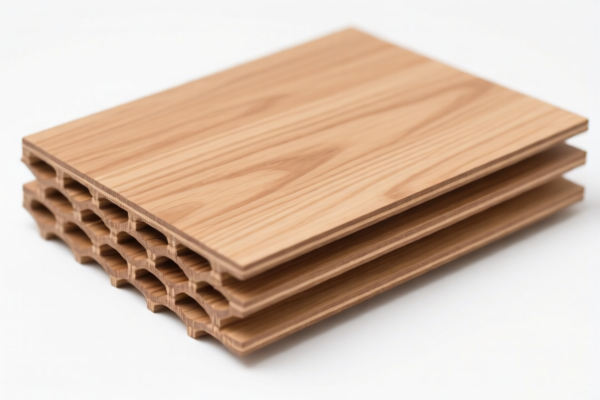
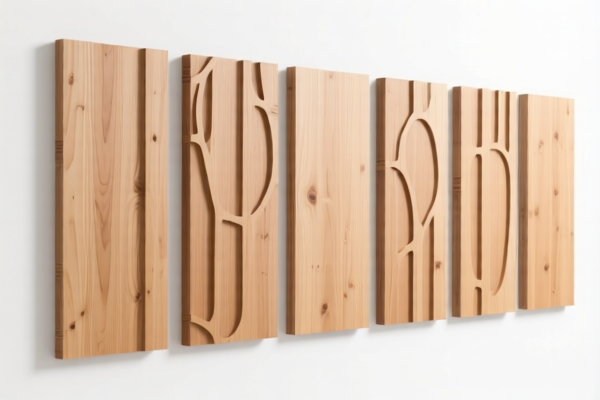
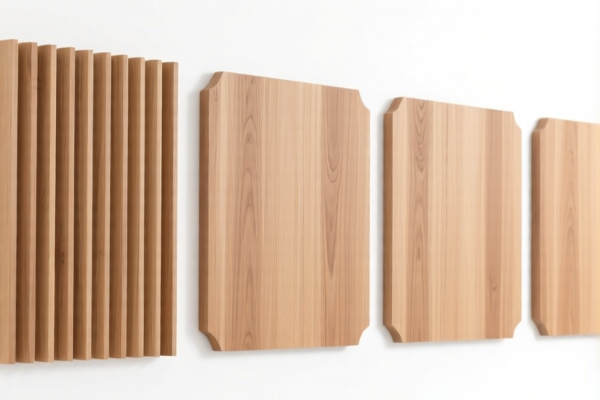
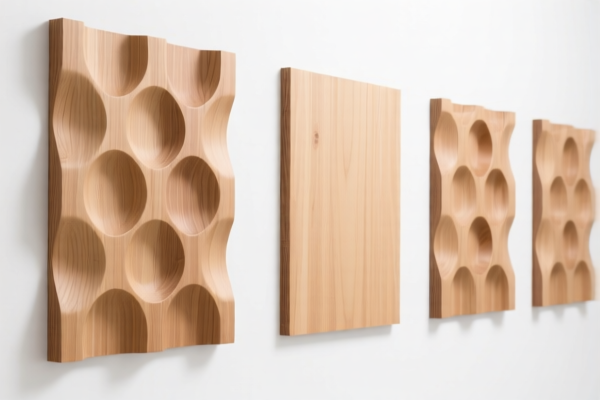
AI Analysis
🪵 Wood-Based Panels (HS Code 4410-4412)
🌐 HS Code Reference & Customs Clearance Guide | 2026 Latest Tariff Analysis | Professional Classification Strategy
📌 I. Product Definition & Classification: Do You Really Know "Wood-Based Panels"?
Wood-based panels are engineered wood products created by bonding wood strands, particles, fibers, or veneers with adhesives under heat and pressure. In international trade, they are strictly classified based on their raw material structure and manufacturing process.
For imports into the United States, the distinction is critical because it determines the Base Tariff Rate and eligibility for certain exemptions. The primary categories relevant to your data are:
- Particleboard/Chipboard (HS 4410): Made from wood particles or chips bonded together.
- Plywood/Veneered Products (HS 4412): Made by bonding layers of wood veneer.
⚠️ Key Distinction Point:
- If the product is made of wood chips/particles → Classify under HS 4410 (Base Duty: 0%)
- If the product is made of veneers/layers → Classify under HS 4412 (Base Duty: 8%)
- Misclassification Risk: Misclassifying Plywood as Particleboard to save 8% base duty will result in severe penalties and back duties.
📦 II. HS Code Classification Details (Based on Provided Data)
| HS Code | Product Description | Material/Format Match | Base Duty |
|---|---|---|---|
4410.11.00.60 |
Wood-Based Panels | Matches specific classification requirements for wood-based panel materials. | 0.0% |
4410.11.00.10 |
Wood-Based Panels | Matches Particleboard and similar panels; full match in form and classification. | 0.0% |
4412.51.31.11 |
Wood-Based Panels | Consistent with Plywood category; HS Code fully matches. | 8.0% |
4412.91.31.10 |
Wood-Based Panels | Belongs to wood制品 (Wood Products) category; consistent with Plywood/Laminated Wood material attributes. | 8.0% |
4410.19.00.60 |
Wood-Based Panels | Highly consistent with HS 4411.13.60.00 requirements in material and form; specific classification. | 0.0% |
🔍 Critical Note:
- HS 4410 products (Particleboard/Chipboard) generally have a 0% Base Duty.
- HS 4412 products (Plywood) generally have an 8% Base Duty.
- All these codes are subject to Additional Tariffs for Chinese-origin goods.
💰 III. 2026 Latest Tariff Rate Breakdown (Including Surcharges & Policy Add-ons)
✅ Applicable Country: United States (US)
✅ Country of Origin: China (CN)
✅ Effective Time: Current rates apply (Section 301 & Section 122 provisions)
🎯 1. 4410.11.00.60 / 4410.11.00.10 / 4410.19.00.60
Category: Particleboard / Chipboard (Base Duty 0%)
| Item | Detail |
|---|---|
| Base Tariff | 0.0% (Ad Valorem) |
| Section 301 Additional Tariff | +25.0% (Applied to goods of Chinese origin under USITC Footnote) |
| Section 122 Tariff | +10.0% (Specific trade remedy provision) |
| Total Tax Rate | 35.0% |
| Tax Calculation | CIF Value × 35% |
| De Minimis Exemption | ❌ Not Eligible (Deny De Minimis) |
| Legal Basis Path | Section 301: 25% → Section 122: 10% → Base: 0% |
📌 Explanation:
- The 25% surcharge is the standard Section 301 tariff on Chinese engineered wood.
- The 10% surcharge is applied under Section 122 provisions.
- Total: 35%. This is a high-cost category. Even though the base duty is 0%, the additional tariffs make it expensive.
🎯 2. 4412.51.31.11 / 4412.91.31.10
Category: Plywood / Veneer Panels (Base Duty 8%)
| Item | Detail |
|---|---|
| Base Tariff | 8.0% (Ad Valorem) |
| Section 301 Additional Tariff | +25.0% |
| Section 122 Tariff | +10.0% |
| Total Tax Rate | 43.0% |
| Tax Calculation | CIF Value × 43% |
| De Minimis Exemption | ❌ Not Eligible (Deny De Minimis) |
| Legal Basis Path | Base: 8% → Section 301: 25% → Section 122: 10% |
📌 Explanation:
- Plywood (HS 4412) has a higher base duty (8%) compared to particleboard (0%).
- The additional tariffs (25% + 10%) are applied on top of the base duty.
- Total: 43%. This is the highest cost scenario among the provided codes.
🛠️ IV. Customs Clearance Practical Advice (Combat Pitfalls Guide)
✅ 1. Preparation Checklist (缺一不可 / Non-Negotiable)
| Document | Required | Description |
|---|---|---|
| ✅ Product Specification Sheet | ✔️ | Must clearly state: Material type (Particleboard vs. Plywood), Dimensions, Adhesive type (e.g., Urea-Formaldehyde), Thickness. |
| ✅ Material Composition Statement | ✔️ | Crucial for distinguishing between HS 4410 and HS 4412. Must specify if it's "veneers" or "particles". |
| ✅ Product Photos | ✔️ | Clear images showing cross-section (to identify wood structure) and surface finish. |
| ✅ Commercial Invoice | ✔️ | Must include: HS Code, Country of Origin (China), Unit Price, Total Value. |
| ✅ Packing List | ✔️ | Detailed description of contents. Avoid vague terms like "Wood Parts". Use "Plywood Sheet" or "Particleboard Panel". |
| ✅ Certificate of Origin (CO) | ✔️ | Required to verify Chinese origin for additional tariff calculation. |
✅ 2. Declaration Tips (Key Mnemonics)
🔥 "Material Defines Code, Code Defines Cost!"
| Scenario | Correct Declaration | Incorrect Practice | Consequence |
|---|---|---|---|
| Particleboard/Chipboard | HS 4410.xxxx.xx | Misdeclare as Plywood | Lower tax (0% vs 8% base), but high penalty risk for false declaration. |
| Plywood/Laminated Wood | HS 4412.xxxx.xx | Misdeclare as Particleboard | Higher tax (43% vs 35%). Unlikely to help, but if declared wrong, it's fraud. |
| Mixed Packaging | Declare separately | Combine into one vague line | Customs may scrutinize and assign highest duty rate to all. |
| Vague Description | "Wood Panels" | "Furniture Parts" | Customs Refusal. Must use specific HS Code and description. |
✅ 3. Special Cases Handling
| Situation | Handling Advice |
|---|---|
| Engineered Wood with Composite Materials | If the product includes non-wood materials (e.g., metal frames), ensure they are declared separately or as accessories to avoid misclassification. |
| Formaldehyde Emissions | Ensure compliance with CARB/EPA TSCA Title VI standards. Non-compliance leads to border detention, not just tariff issues. |
| Wood Pulp vs. Wood Panels | HS 4410 is for panels, not wood pulp (HS 4706). Do not confuse raw material with finished panel. |
| Transshipment from Vietnam/Mexico | If goods are substantially transformed in a third country, you may apply for IEEPA exemption. Requires proof of substantial transformation. |
🌍 V. Global Market Comparison (2026 Latest)
| Country/Region | Recommended HS Code | Base Duty | Additional Tariffs (China) | Total Effective Rate | Notes |
|---|---|---|---|---|---|
| 🇺🇸 United States | 4410.xxxx.xx (Particleboard) |
0% | +35% (25% Sec 301 + 10% Sec 122) | 35% | High barrier to entry. |
| 🇺🇸 United States | 4412.xxxx.xx (Plywood) |
8% | +35% (25% Sec 301 + 10% Sec 122) | 43% | Highest cost category. |
| 🇨🇳 China | 4410.xxxx.xx |
8-15% | N/A | 8-15% | Export from China to China not applicable, but for reference. |
| 🇪🇺 European Union | 4410/4412 |
0-8% | None (General) | 0-8% | No Section 301 equivalent. Favorable for exporters. |
| 🇦🇺 Australia | 4410/4412 |
5% | None (General) | 5% | Low duty, no surcharges. |
| 🇯🇵 Japan | 4410/4412 |
0-5% | None (General) | 0-5% | Very favorable. |
📌 Conclusion:
- The US is the most expensive market for Chinese wood-based panels due to Section 301 and Section 122 tariffs.
- Particleboard (4410) is cheaper than Plywood (4412) by 8 percentage points on base duty, but both are heavily taxed.
- Diversification Strategy: Consider sourcing from Vietnam, Mexico, or other countries not subject to these specific tariffs to reduce costs by 35-43%.
📌 VI. Common Errors & Pitfalls (Lessons Learned)
❌ Error 1: Misclassifying Plywood (4412) as Particleboard (4410) to save 8% base duty.
👉 Consequence: Customs audits will catch this via cross-section analysis. Back duties + Penalties + Legal Action.
❌ Error 2: Ignoring Section 122 Tariffs.
👉 Consequence: Many brokers forget the 10% Sec 122 tariff. Underpayment leads to delays and fines.
❌ Error 3: Vague Description "Wood Board".
👉 Consequence: Customs cannot determine if it's 4410 or 4412. Shipment held until clarification.
❌ Error 4: Assuming De Minimis Exemption ($800) applies.
👉 Consequence: Wood products from China are explicitly excluded from De Minimis. All shipments pay full duty.
✅ Correct Approach:
"Particleboard, 18mm, 4x8ft, Urea-Formaldehyde Bonded, CARB Compliant, HS 4410.11.00.10, Origin: China"
🎯 VII. Conclusion: Professional Classification, Cost Control, Compliance!
🎯 Remember the Mnemonic:
🔹 "4410 is Chips (0% Base), 4412 is Veneer (8% Base). Both pay 35%+ Surcharges. De Minimis is DEAD for Wood from China!"
🔹 "Check the Cross-Section! If it's layered, it's Plywood (43% Total). If it's chunks, it's Particleboard (35% Total)."
📌 Pro Tip:
If your wood-based panels are substantially transformed in a third country (e.g., Vietnam), you MAY be eligible for IEEPA exemptions.
Action:
1. Get a Substantial Transformation Certificate.
2. Consult a customs broker for Advance Ruling.
3. Adjust supply chain to Vietnam/Mexico if volumes are high.
📣 Immediate Action:
📞 Contact a Professional Customs Broker + Provide Product Photos + Apply for HS Code Advance Ruling.
🚀 Avoid Border Delays, Prevent Penalties, and Optimize Your Supply Chain!
✨ Professional Customs Clearance Starts with Accurate Classification!
💼 Every Percent of Duty Saved is Pure Profit!
Customer Reviews
About HS Code Classification
The Harmonized System (HS) is an internationally standardized nomenclature developed by the World Customs Organization (WCO) to classify traded products. Over 200 countries use the HS system as the basis for customs tariffs, trade statistics, and import/export regulations.
Each HS code follows a hierarchical structure:
- Chapter (2 digits) — Broad category of goods (e.g., Chapter 84: Machinery and Mechanical Appliances)
- Heading (4 digits) — More specific grouping within the chapter
- Subheading (6 digits) — Internationally standardized breakdown, used by all WCO member countries
- National subdivisions (8-10 digits) — Country-specific extensions for further classification, such as US HTSUS 10-digit codes
Correct HS code classification is essential for smooth customs clearance, accurate duty payment, and compliance with trade regulations. Misclassification can lead to customs delays, overpayment of duties, or penalties.
When importing from CN to US, the applicable tariff rates may include:
- Most-Favored-Nation (MFN) rate — The standard duty rate applied to WTO members
- General rate — Applied to countries without trade agreements
- Trade remedy duties — Additional tariffs such as Section 301 (anti-dumping), Section 232 (national security), or countervailing duties
The information provided on this page is for reference purposes only. For official classification, please consult with your local customs authority or a licensed customs broker.