Wood based panels (HS 4410190060)
CN → US| HS Code | Tariff Rate | Origin | Destination | Doc |
|---|---|---|---|---|
| 4410110060 | 35.0% | CN | US | Official Doc |
| 4410110010 | 35.0% | CN | US | Official Doc |
| 4412513111 | 43.0% | CN | US | Official Doc |
| 4412913110 | 43.0% | CN | US | Official Doc |
| 4410190060 | 35.0% | CN | US | Official Doc |
Product Images
AI Analysis
🪵 Wood-Based Panels (HS 4410.19.00.60)
🌐 HS Code Reference & Customs Clearance Guide | 2026 Latest Tariff Analysis | Professional Clearance Strategy
📌 I. Product Definition & Classification: What Exactly Are You Shipping?
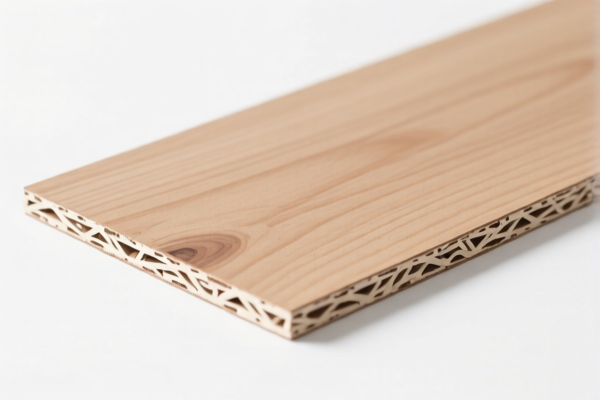
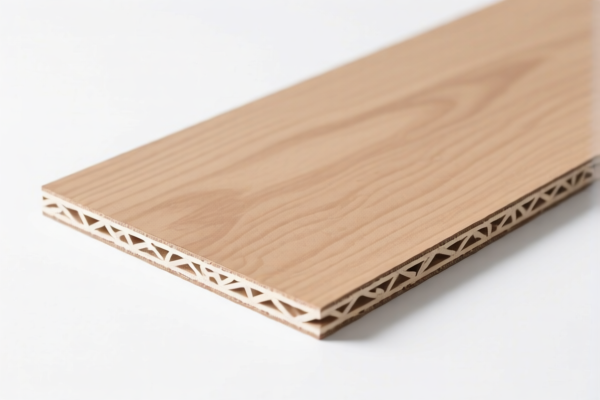
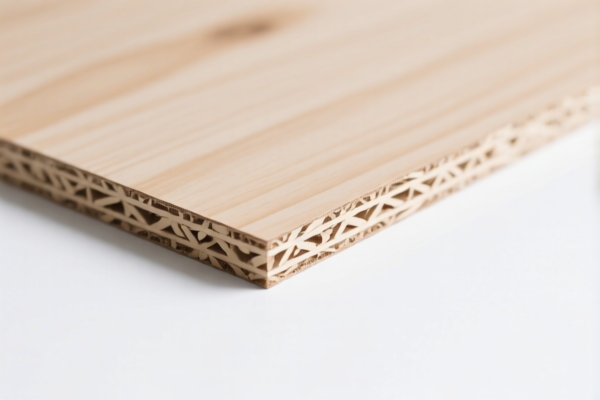
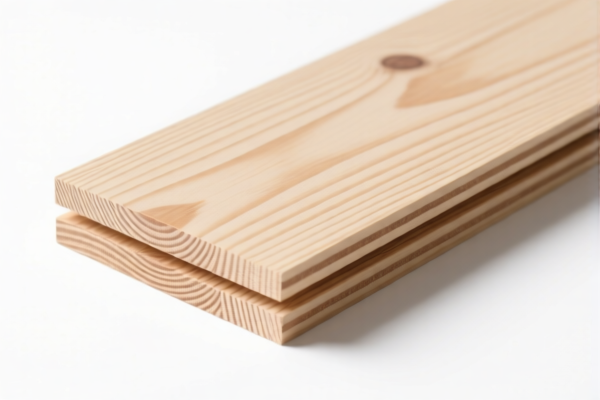
Wood-based panels are engineered wood products made by bonding wood particles, fibers, or veneers with adhesives under heat and pressure. They are distinct from solid timber and include products like particleboard, fiberboard, and orientation strand board (OSB).
In international trade, HS 4410 covers "Wood sawn lengthways, chipped, split or peeled lengthwise, impregnated, or not, whether or not planed, sanded, finger-jointed, end-jointed or otherwise assembled."
⚠️ Key Classification Point for 4410.19.00.60:
This specific subheading is often a catch-all for wood-based panels not specified elsewhere in chapter 44 (like specific plywood in 4412 or specific particleboard in 4410.11). It typically applies to Medium Density Fiberboard (MDF), High Density Fiberboard (HDF), or Oriented Strand Board (OSB) when they do not fit the stricter definitions of particleboard (4410.11) or plywood (4412). - If it is Particleboard (wood particles): It often falls under 4410.11.00.10 or .60 depending on density and form. - If it is Fiberboard (MDF/HDF): It may fall under 4411.13 (if high density) or 4410.19 (if categorized as other wood-based panels). - Specific Note for 4410.19.00.60: The provided data explicitly links this code to "Wood-based panels... highly consistent with HS 4411.13.60.00... belonging to specific categories." This suggests it may cover certain high-density fiberboards or specific assembled wood panels that are technically classified under 4410 for tariff purposes but share material properties with 4411.
📦 II. HS Code Classification Details (2026 Latest Tariff Authority Comparison)
Based on the provided data, here are the potential HS Codes for wood-based panels and their corresponding tax implications. Note that 4410.19.00.60 is the primary focus, but other related codes are listed for context.
| HS Code | Product Description | Applicable Scenario | Tax Rate (Total) |
|---|---|---|---|
4410.19.00.60 |
Wood-based panels, not elsewhere specified; often linked to high-density fiberboard or specific assembled panels | MDF, HDF, OSB, or other engineered wood not fitting particleboard/plywood definitions | 35.0% |
4410.11.00.60 |
Wood-based panels,符合木制板材材质要求 (Matches wood-based panel material requirements) | General particleboard or low-density panels | 35.0% |
4410.11.00.10 |
Wood-based panels, matching particleboard and similar panels | Standard particleboard (chipboard) | 35.0% |
4412.51.31.11 |
Wood-based panels, consistent with plywood category | Plywood (specifically, layered wood with alternating grain) | 43.0% |
4412.91.31.10 |
Wood-based panels, belonging to wood products category; consistent with plywood/laminated wood | Multi-layered laminated wood or plywood variants | 43.0% |
🔍 Key Insight:
- Particleboard & Fiberboard (4410 series) generally incur a 35% total tariff. - Plywood (4412 series) generally incurs a 43% total tariff due to a higher Base Tariff (8%) compared to the 0% base tariff for most 4410 products. - Misclassification Risk: Classifying Plywood as "Wood-based Panel" (4410) instead of Plywood (4412) is a common error. However, if the product is MDF/HDF, 4410 is correct.
💰 III. 2026 Latest Tariff Rate Breakdown (Including Surtaxes & Policy Surcharges)
✅ Applicable Country: USA (US)
✅ Origin: China (CN)
✅ Effective Time: Ongoing (Section 301 & IEEPA measures)
🎯 1. 4410.19.00.60 —— Wood-Based Panels (e.g., MDF/HDF/OSB)
| Item | Content |
|---|---|
| Base Tariff | 0.0% (ad valorem) |
| USITC Surtax (Section 301) | +25% (From USITC Footnote related to Chapter 44 wood products) |
| IEEPA Surtax | +10% (Targeting Chinese/HK products, effective from Nov 10, 2025) |
| Total Tax Rate | 35.0% |
| Tax Calculation | CIF Value × 35% |
| De Minimis Exemption | ❌ Not Eligible (deny_de_minimis) |
| Legal Basis Path | IEEPA:9903.01.25 → IEEPA:9903.01.24 → USITC:4410.19.00.60 → FOOTNOTE:301.84.00.00 (Example path) |
📌 Explanation:
- "USITC Surtax 25%": This is the Section 301 Tariff, which applies to a wide range of Chinese goods, including wood products. - "IEEPA 10%": This is the International Emergency Economic Powers Act surcharge, specifically targeting imports from China to counter national security/economic threats. - Combined Total: 35%. This is a high tariff rate that significantly impacts profit margins.
🎯 2. 4410.11.00.60 / 4410.11.00.10 —— Particleboard
| Item | Content |
|---|---|
| Base Tariff | 0.0% |
| USITC Surtax | +25% |
| IEEPA Surtax | +10% |
| Total Tax Rate | 35.0% |
| Tax Calculation | CIF × 35% |
| De Minimis Exemption | ❌ Not Eligible |
📌 Note: Same tax structure as 4410.19.00.60. The base tariff for particleboard is also 0%, but the surcharges are identical.
🎯 3. 4412.51.31.11 / 4412.91.31.10 —— Plywood
| Item | Content |
|---|---|
| Base Tariff | 8.0% |
| USITC Surtax | +25% |
| IEEPA Surtax | +10% |
| Total Tax Rate | 43.0% |
| Tax Calculation | CIF × 43% |
| De Minimis Exemption | ❌ Not Eligible |
📌 Warning:
- Plywood is taxed 8% higher in total than particleboard/fiberboard due to the 8% base tariff. - Ensure correct classification to avoid overpaying or underpaying (which leads to penalties).
🛠️ IV. Customs Clearance Practical Advice (Combat Pitfall Guide)
✅ 1. Required Documentation Checklist (Non-negotiable)
| Document | Required | Explanation |
|---|---|---|
| ✅ Product Specification Sheet | ✔️ | Must include: Density (kg/m³), Thickness, Size, Moisture Content, Formaldehyde Emission Standard (E1/E2/Carb2). |
| ✅ Composition Analysis | ✔️ | Proof of wood species (pine, oak, etc.) and adhesive type (MDI, UF, PF). Crucial for determining HS Code. |
| ✅ Commercial Invoice | ✔️ | Must clearly state "Wood-Based Panels," HS Code, Country of Origin (China), and CIF Value. |
| ✅ Packing List | ✔️ | Detail weight, dimensions, and number of pallets. |
| ✅ Certificate of Origin (CO) | ✔️ | To prove Chinese origin (which triggers the 35%/43% tariffs). |
| ✅ Formaldehyde Test Report | ✔️ | Required for US EPA TSCA Title VI compliance. Non-compliance can lead to seizure. |
| ✅ Fumigation Certificate | ✔️ | If solid wood is used (less common for engineered panels, but required for wooden pallets/crating). |
✅ 2. Declaration Tips (Key Mantras)
🔥 "Be Precise on Material, Declare Origin Clear, Avoid Plywood Misclassification!"
| Situation | Correct Declaration | Wrong Practice |
|---|---|---|
| MDF/HDF | 4410.19.00.60 (or 4411.13... if high density) |
Classifying as "Particleboard" (4410.11) if it's actually fiberboard → Potential audit risk. |
| Particleboard | 4410.11.00.60 |
Classifying as "Plywood" (4412) → Higher tax (43% vs 35%). |
| Plywood | 4412.51.31.11 |
Classifying as "Wood Panel" (4410) → Under-declaration of tax → Penalties & Back Taxes. |
| OSB (Oriented Strand Board) | Often 4410.19.00.60 or 4410.11... |
Misclassifying as solid wood → Incorrect duty. |
📌 Critical Advice:
- Do NOT split shipments to avoid de minimis (under $800) if you are trying to evade Section 301 taxes. The de minimis exemption is denied for these goods from China. - Formaldehyde Compliance: US EPA requires enforcement of TSCA Title VI. Ensure your panels have a CARB Phase 2 or EPA TSCA Title VI compliance label. Customs may withhold goods without this proof.
✅ 3. Special Circumstances Handling
| Situation | Handling Advice |
|---|---|
| OEM Custom Panels | Provide client order + design specs. Ensure material description matches HS code definition exactly. |
| Laminated Panels | If veneered, still classified under 4410/4412 based on core material. Do not classify as "Furniture" (9403) until fully assembled into furniture. |
| Wooden Crating/Pallets | Must be frozen or heat-treated (ISPM 15). Provide phytosanitary certificate. Failure leads to rejection at port. |
| Mixed Containers | If mixing wood panels with non-wood items, declare separately. Wood panels will still incur the 35%/43% tariff. |
🌍 V. Global Market Comparison (2026 Latest)
| Country/Region | Recommended HS Code | Tariff (China Origin) | Certification Requirements | Notes |
|---|---|---|---|---|
| 🇺🇸 USA | 4410.19.00.60 / 4410.11... |
35% (Panels) 43% (Plywood) |
EPA TSCA Title VI FSC (Optional but recommended) |
Highest Tariff. 35-43% is mandatory. No de minimis. |
| 🇨🇳 China | 4410.19.00.60 |
~5-10% (Import Duty) | GB Standard Compliance | Low duty. No Section 301. |
| 🇪🇺 EU | 4410.19.00 |
0% (Most WF) | FSC/PEFC, E1/E2 Formaldehyde | Generally low duty. Focus on environmental compliance. |
| 🇦🇺 Australia | 4410.19.00 |
5% | AS/NZS Standards | Moderate duty. No major surtaxes like US. |
| 🇯🇵 Japan | 4410.19.00 |
3-5% | JAS Standard | Low duty. Strict formaldehyde rules. |
📌 Conclusion:
- USA is the most expensive market for Chinese wood-based panels due to Section 301 + IEEPA surcharges. - China-origin wood panels face a 35% barrier in the US. - Consider supply chain diversification (e.g., sourcing from Vietnam, Malaysia, or Thailand) to potentially qualify for lower or zero IEEPA tariffs, though Section 301 may still apply depending on substantial transformation rules.
📌 VI. Common Errors & Pitfall Guide (Lessons Learned)
❌ Mistake 1: Declaring "Plywood" as "Wood-Based Panel" (4410) to save 8% base tax.
👉 Consequence: Customs audit, back taxes + 25% penalty + interest.
✅ Correction: Accurately identify core structure. Plywood has alternating grain layers; particleboard/fiberboard does not.
❌ Mistake 2: Ignoring Formaldehyde (EPA TSCA) Compliance.
👉 Consequence: Seizure and Destruction of goods by CBP.
✅ Correction: Ensure all panels have visible labels for CARB Phase 2 / EPA TSCA Title VI compliance.
❌ Mistake 3: Using "De Minimis" (Under $800) to bypass tariffs.
👉 Consequence: Denied entry. Section 301 and IEEPA taxes cannot be avoided via de minimis for Chinese goods.
✅ Correction: Plan full formal entry (Formal Import) with correct HS Codes.
❌ Mistake 4: Vague Description "Wooden Board."
👉 Consequence: Delays, requests for additional info, potential misclassification.
✅ Correction: Use precise terms: "Medium Density Fiberboard (MDF), 18mm, 4x8 ft, E1 Grade, Model XYZ, Made in China."
🎯 VII. Conclusion: Professional Declaration, Save Time & Money!
🎯 Remember the Mantras:
🔹 "Plywood is 43%, Panels are 35%, Don't split the box!"
🔹 "Formaldehyde Label is Key, No Label, No Entry!"
🔹 "HS Code determines destiny, 8% difference can break your margin!"
📌 Pro Tip:
If your wood-based panels are originally from Vietnam, Thailand, or Malaysia (and meet substantial transformation rules), you may exempt IEEPA tariffs, reducing the total rate to 25% (Section 301 only) or even 0% (if no Section 301 applies to that specific subheading).
Recommendation: Apply for an Advance Ruling from US CBP if you are unsure about the classification between 4410 (Panels) and 4412 (Plywood).
📣 Immediate Action:
📞 Contact a professional customs broker + Provide Product Specs + Request CBP Advance Ruling
🚀 Ensure your wood-based panels clear customs smoothly, avoid delays, and maximize profit!
✨ Professional Clearance Starts with Accurate Classification!
💼 Every penny of your cost deserves precise calculation!
Customer Reviews
About HS Code Classification
The Harmonized System (HS) is an internationally standardized nomenclature developed by the World Customs Organization (WCO) to classify traded products. Over 200 countries use the HS system as the basis for customs tariffs, trade statistics, and import/export regulations.
Each HS code follows a hierarchical structure:
- Chapter (2 digits) — Broad category of goods (e.g., Chapter 84: Machinery and Mechanical Appliances)
- Heading (4 digits) — More specific grouping within the chapter
- Subheading (6 digits) — Internationally standardized breakdown, used by all WCO member countries
- National subdivisions (8-10 digits) — Country-specific extensions for further classification, such as US HTSUS 10-digit codes
Correct HS code classification is essential for smooth customs clearance, accurate duty payment, and compliance with trade regulations. Misclassification can lead to customs delays, overpayment of duties, or penalties.
When importing from CN to US, the applicable tariff rates may include:
- Most-Favored-Nation (MFN) rate — The standard duty rate applied to WTO members
- General rate — Applied to countries without trade agreements
- Trade remedy duties — Additional tariffs such as Section 301 (anti-dumping), Section 232 (national security), or countervailing duties
The information provided on this page is for reference purposes only. For official classification, please consult with your local customs authority or a licensed customs broker.