Wood based panels (HS 4411123000)
CN → US| HS Code | Tariff Rate | Origin | Destination | Doc |
|---|---|---|---|---|
| 4412913110 | 43.0% | CN | US | Official Doc |
| 4412513111 | 43.0% | CN | US | Official Doc |
| 4411136000 | 35.0% | CN | US | Official Doc |
| 4410190060 | 35.0% | CN | US | Official Doc |
| 4410110060 | 35.0% | CN | US | Official Doc |
Product Images
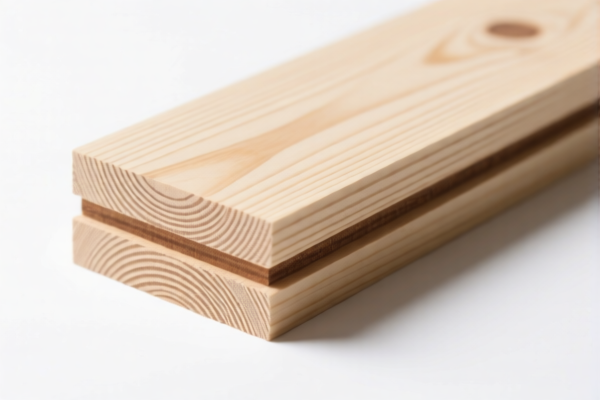
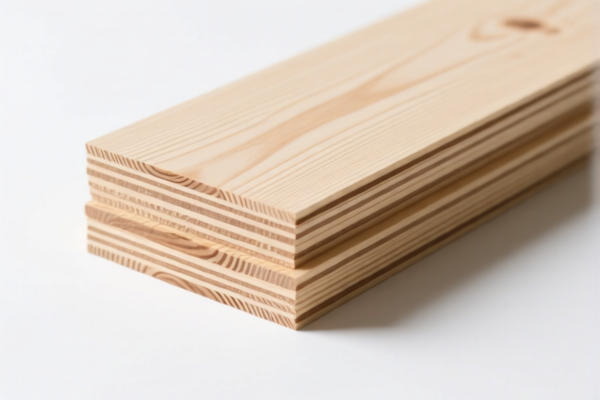
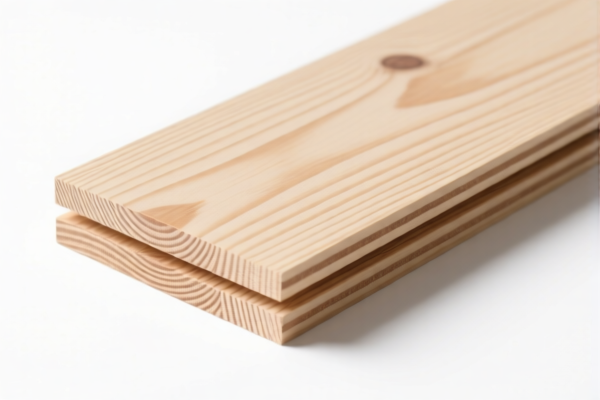
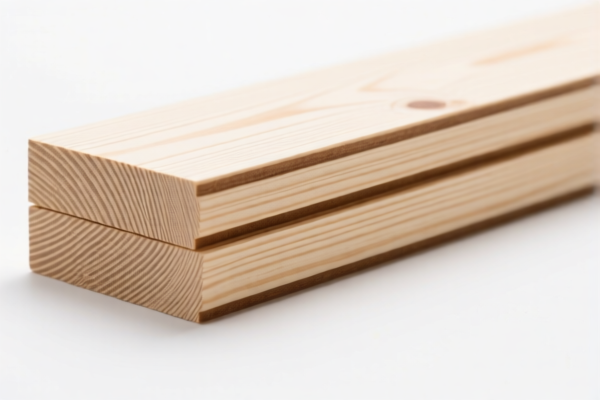
AI Analysis
🪵 Wood Based Panels (Fiberboard & Particle Board)
🌐 HS Code Reference & Clearance Guide | 2026 Latest Tariff Analysis | Professional Clearance Strategy for HS 4411/4412/4410
📌 一、Product Definition & Classification: Do You Really Understand "Wood Based Panels"?
Wood-based panels are a broad category of manufactured wood products used in construction, furniture, and packaging. In international trade, they are strictly categorized by manufacturing process, density, and layering structure.
The HS Code 4411123000 specifically refers to Medium Density Fibreboard (MDF) with a thickness of >3mm. However, wood-based panels are often misclassified between Fiberboard (4411), Plywood/Laminated Wood (4412), and Particle Board (4410).
⚠️ Key Distinction Point:
- MDF (4411): Made from wood fibers, homogenous structure, smooth surface.
- Plywood (4412): Made from veneers glued in alternating grain directions, layered structure.
- Particle Board (4410): Made from wood chips/shavings compressed with resin, rougher texture.
📦 II. HS Code Classification Details (2026 Latest Tariff Authority Comparison)
Based on the provided data, here are the exact HS Codes and their logical mappings for wood-based panels:
| HS Code | Product Description | Material & Form Characteristics | Total Tax Rate |
|---|---|---|---|
4411.13.60.00 |
Medium Density Fibreboard (MDF) (Specific sub-category for >3mm) |
Consistent with wood fiberboard; made from wood fibers bonded with resin. Homogeneous internal structure. | 35.0% |
4412.91.31.10 |
Wooden Boards (Plywood/Laminated) | Consistent with plywood/laminated wood; made from veneers layered with adhesive. Distinct grain direction changes. | 43.0% |
4412.51.31.11 |
Plywood Boards | Exact match with plywood category; material and form characteristics align with veneer-based laminated wood. | 43.0% |
4410.19.00.60 |
Wood Boards (Specific Category) | Highly consistent with wood board material and form; specific classification under wood boards (could include other engineered woods not fitting 4411/4412). | 35.0% |
4410.11.00.60 |
Particle Board / Similar Boards | Consistent with chipboard/particle board; made from wood particles/chips compressed with resin. Rougher, less dense than MDF. | 35.0% |
🔍 Critical Reminder:
- MDF (4411) is distinct from Plywood (4412) due to its fiber-based vs. veneer-based structure.
- Particle Board (4410) is different from MDF due to the size of the raw material (chips vs. fibers).
- Misclassifying Plywood as MDF (or vice versa) leads to incorrect tax calculations and potential customs penalties.
💰 III. 2026 Latest Tariff Rate Breakdown (Including Surcharges & Policy Add-ons)
✅ Applicable Country: United States (US)
✅ Origin: China (CN)
✅ Effective Date: November 10, 2025 onwards (including subsequent imports)
🎯 1. 4411.13.60.00 — Medium Density Fibreboard (MDF)
| Item | Detail |
|---|---|
| Base Duty Rate | 0.0% (Ad Valorem) |
| Section 301 Surcharge | +25.0% |
| Section 122 Clause Tariff | +10.0% |
| Total Tax Rate | 35.0% |
| Tax Calculation | CIF Value × 35% |
| De Minimis Exemption | ❌ Not Available (deny_de_minimis) |
| Legal Basis Path | USITC:4411.13.60.00 → Section 301 Footnote → Section 122 Clause |
📌 Explanation:
- The 25% surcharge comes from US Trade Law Section 301 against China.
- The 10% surcharge is specific to the "122 Clause" (likely related to specific trade remedies or administrative tariffs).
- Total 35% is considered a high tariff for engineered wood products.
🎯 2. 4412.91.31.10 & 4412.51.31.11 — Plywood / Laminated Wood
| Item | Detail |
|---|---|
| Base Duty Rate | 8.0% (Ad Valorem) |
| Section 301 Surcharge | +25.0% |
| Section 122 Clause Tariff | +10.0% |
| Total Tax Rate | 43.0% |
| Tax Calculation | CIF Value × 43% |
| De Minimis Exemption | ❌ Not Available (deny_de_minimis) |
| Legal Basis Path | USITC:4412.91.31.10 → Section 301 Footnote → Section 122 Clause |
📌 Note:
- Plywood has a higher base duty (8%) compared to MDF (0%), resulting in a total rate of 43%, which is 8% higher than MDF.
- Even if the product looks similar, the layered veneer structure pushes it into HS 4412, increasing costs significantly.
🎯 3. 4410.19.00.60 & 4410.11.00.60 — Other Wood Boards / Particle Board
| Item | Detail |
|---|---|
| Base Duty Rate | 0.0% (Ad Valorem) |
| Section 301 Surcharge | +25.0% |
| Section 122 Clause Tariff | +10.0% |
| Total Tax Rate | 35.0% |
| Tax Calculation | CIF Value × 35% |
| De Minimis Exemption | ❌ Not Available (deny_de_minimis) |
📌 Note:
- Particle board and certain other wood boards fall under HS 4410.
- They share the same total rate (35%) as MDF, but the material definition is different (particles vs. fibers).
🛠️ IV. Clearance Practical Advice (Battle-Tested Pitfall Avoidance Guide)
✅ 1. Documentation Checklist (All Required)
| Document | Must Provide | Description |
|---|---|---|
| ✅ Product Specification Sheet | ✔️ | Must include density (kg/m³), thickness, moisture content, and type of resin used. |
| ✅ Technical Data Sheet (TDS) | ✔️ | Proves whether it is MDF (fiber), Plywood (veneer), or Particle Board (chip). |
| ✅ Product Photos | ✔️ | Clear shots showing the edge profile (layers vs. homogenous) and surface finish. |
| ✅ Commercial Invoice | ✔️ | Must clearly state "Medium Density Fibreboard" or "Plywood," not generic "Wood Panels." |
| ✅ Packing List | ✔️ | Details dimensions, weight, and number of layers (for plywood). |
| ✅ FSC Certification (Optional) | ✔️ | If marketed as sustainable, may help with buyer compliance, but doesn't affect US customs duty. |
✅ 2. Declaration Tips (Key Mnemonics)
🔥 "Layered is Plywood (4412), Fibers are MDF (4411), Chips are Particle (4410). Name it right, pay less wrong!"
| Scenario | Correct Declaration | Common Error |
|---|---|---|
| Homogenous, smooth surface, >3mm thick | 4411.13.60.00 (MDF) |
Calling it "Plywood" → 43% Tax |
| Visible layers, alternating grain | 4412.91.31.10 or 4412.51.31.11 (Plywood) |
Calling it "MDF" → 35% Tax (but customs may reject due to structural mismatch) |
| Rough, chip-based, uniform texture | 4410.11.00.60 (Particle Board) |
Calling it "MDF" → 35% Tax (but customs may reject due to material mismatch) |
| General Wood Board (Unclear) | 4410.19.00.60 |
Vague description → Delays & Penalties |
✅ 3. Special Cases Handling
| Situation | Handling Advice |
|---|---|
| Multi-layer Panels (e.g., MDF core + veneer skin) | Often classified as Plywood (4412) if the veneer contributes significantly to the structure. Check with customs for "composite goods" ruling. |
| MDF with Laminated Surface (e.g., melamine) | Still classified as MDF (4411) if the substrate is the primary material. Do not declare as "Laminated Wood Panel" unless the lamination is the main feature. |
| Recycled Wood Panels | May still qualify for HS 4411/4412, but must provide proof of recycling process. No tariff benefit in US-China trade. |
| Small Quantity (De Minimis) | ❌ No Exemption. Wood products are explicitly denied de minimis entry for Chinese origin. Even $1 shipments are subject to full tariffs. |
🌍 V. Global Market Clearance Comparison (2026 Latest)
| Country/Region | Recommended HS Code | Duty Rate (China Origin) | Certification Requirements | Notes |
|---|---|---|---|---|
| 🇺🇸 USA | 4411.13.60.00 (MDF)4412.91.31.10 (Plywood) |
35% (MDF) 43% (Plywood) |
None for standard panels | High tariffs due to Section 301 & 122 Clause. |
| 🇨🇳 China | 4411.13.60.00 |
5% | N/A | No surcharges. |
| 🇪🇺 EU | 4411.13.60.00 |
0% (if compliant with EUTR) | FSC/PEFC (recommended) | No Section 301 surcharges. |
| 🇬🇧 UK | 4411.13.60.00 |
5% | UK EUTR | Post-Brexit tariffs apply. |
| 🇯🇵 Japan | 4411.13.60.00 |
0% | None | Low tariffs for wood panels. |
📌 Conclusion:
- USA is the most expensive market for Chinese wood panels due to 35%-43% total tariffs.
- EU and Japan offer significantly lower tariff barriers (0%-5%).
- Consider supply chain diversification to Vietnam or Mexico if exporting to the US, though rules of origin must be strictly met.
📌 VI. Common Errors & Pitfall Guide (Lessons Learned)
❌ Error 1: Declaring Plywood as MDF to save 8% in duty.
👉 Consequence: Customs inspects and finds layers → Penalty + Back Taxes + Seizure Risk.
❌ Error 2: Using generic term "Wood Boards" in the invoice.
👉 Consequence: Customs cannot determine the correct HS code → Delays, Audits, and Possible Rejection.
❌ Error 3: Assuming De Minimis applies to small shipments.
👉 Consequence: Wood products from China are explicitly excluded. All shipments, regardless of value, are taxed.
❌ Error 4: Ignoring Section 122 Clause in tax calculations.
👉 Consequence: Underestimating total landed cost by 10%, leading to budget overruns.
✅ Correct Approach:
"Medium Density Fibreboard, 18mm, 2.8mm, Melamine Faced, Model XYZ, FSC Certified, HS 4411.13.60.00"
🎯 VII. Conclusion: Professional Declaration, Time-Saving, Cost-Efficient!
🎯 Remember the Mnemonic:
🔹 "Layers = Plywood (43%), Fibers = MDF (35%), Chips = Particle (35%). No De Minimis, No Exemptions."
🔹 "HS Code determines destiny, 8% difference is huge. Wrong declaration, tax bill is due!"
📌 Tips:
- If your wood panels are originating from Vietnam, Mexico, Thailand, or Malaysia, they may exempt from Section 301 tariffs (subject to strict rules of origin).
- Consider applying for an Advance Ruling from US Customs and Border Protection (CBP) to confirm the correct HS Code before shipping.
📣 Immediate Action:
📞 Contact professional freight forwarders + Provide product specs + Apply for HS Code Advance Ruling
🚀 Let your wood panels pass customs smoothly, expand your market, and maximize profits!
✨ Professional Clearance Starts with Accurate Classification!
💼 Every cent of your cost deserves to be calculated precisely!
Customer Reviews
About HS Code Classification
The Harmonized System (HS) is an internationally standardized nomenclature developed by the World Customs Organization (WCO) to classify traded products. Over 200 countries use the HS system as the basis for customs tariffs, trade statistics, and import/export regulations.
Each HS code follows a hierarchical structure:
- Chapter (2 digits) — Broad category of goods (e.g., Chapter 84: Machinery and Mechanical Appliances)
- Heading (4 digits) — More specific grouping within the chapter
- Subheading (6 digits) — Internationally standardized breakdown, used by all WCO member countries
- National subdivisions (8-10 digits) — Country-specific extensions for further classification, such as US HTSUS 10-digit codes
Correct HS code classification is essential for smooth customs clearance, accurate duty payment, and compliance with trade regulations. Misclassification can lead to customs delays, overpayment of duties, or penalties.
When importing from CN to US, the applicable tariff rates may include:
- Most-Favored-Nation (MFN) rate — The standard duty rate applied to WTO members
- General rate — Applied to countries without trade agreements
- Trade remedy duties — Additional tariffs such as Section 301 (anti-dumping), Section 232 (national security), or countervailing duties
The information provided on this page is for reference purposes only. For official classification, please consult with your local customs authority or a licensed customs broker.