Wood based panels (HS 4411149010)
CN → US| HS Code | Tariff Rate | Origin | Destination | Doc |
|---|---|---|---|---|
| 4410110060 | 35.0% | CN | US | Official Doc |
| 4410110010 | 35.0% | CN | US | Official Doc |
| 4412513111 | 43.0% | CN | US | Official Doc |
| 4412913110 | 43.0% | CN | US | Official Doc |
| 4411136000 | 35.0% | CN | US | Official Doc |
Product Images
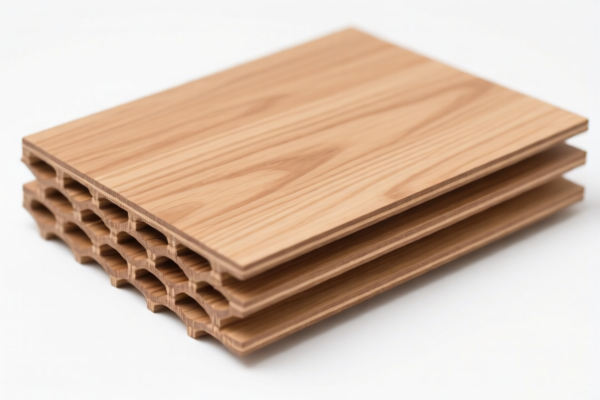
AI Analysis
🪵 Wood Based Panels (HS 4411.14.90.10 & Related Codes)
🌐 HS Code Reference & Customs Clearance Guide | 2026 Latest Tariff Analysis | Professional Clearance Strategy
📌 I. Product Definition & Classification: Do You Really Understand "Wood Based Panels"?
Wood-based panels are a broad category of engineered wood products used extensively in furniture, construction, and interior design. In international trade, they are strictly categorized by material composition, manufacturing process, and density.
Key Categories: 1. Particle Board (Chipboard): Made from wood chips, shavings, or strands bonded with synthetic resin. 2. Fiberboard (MDF/HDF): Made from wood fibers separated by mechanical or chemical means, bonded with resin. 3. Plywood/Laminated Wood: Made from thin layers (veneers) of wood glued together.
⚠️ Critical Distinction for Your Query:
The user provided HS Code4411.14.90.10(which typically refers to MDF with a density > 0.8 g/cm³).
However, the<DATA>provided contains only specific subsets of wood-based panels. You must map your specific product characteristics to the available codes in the DATA to ensure accurate duty calculation.
- If it is Particle Board → Use4410.11.00.10
- If it is MDF (Medium Density) → Use4411.13.60.00
- If it is Plywood/Laminated → Use4412.51.31.11or4412.91.31.10
📦 II. HS Code Classification Details (Based on Provided DATA)
The following table maps wood-based panel types to the specific HS Codes provided in your <DATA>. Note that while 4411.14.90.10 is a valid general code for some MDFs, the customs duty implications are detailed below for the specific codes in your dataset.
| HS Code | Product Description (Summary) | Material/Category | Density/Type |
|---|---|---|---|
4410.11.00.10 |
Particle Board / Chipboard | Wood-based panels matching particle board specifications | Chips/Strands |
4410.11.00.60 |
General Wood-Based Panel | Matches wood-based panel material requirements (general category) | Various |
4411.13.60.00 |
Medium Density Fiberboard (MDF) | Matches fiberboard made of wood or other ligneous materials; MDF category | Medium Density |
4412.51.31.11 |
Plywood (Specific Type) | Consistent with the plywood category; exact HS match | Veneer Layers |
4412.91.31.10 |
Other Plywood/Laminated Wood | Matches plywood and laminated wood products; similar material attributes | Veneer/Laminated |
🔍 Important Note:
-4411Series generally refers to Fiberboards (like MDF, HDF).
-4410Series generally refers to Particle Boards and other board products.
-4412Series refers to Plywood and Veneer.
You must verify if your product is a chip-based (4410), fiber-based (4411), or veneer-based (4412) panel to select the correct code.
💰 III. 2026 Latest Tariff Rate Breakdown (Including Surtaxes & Policy Add-ons)
✅ Applicable Country: United States (US)
✅ Origin: China (CN)
✅ Effective Time: Current rates include 301 Section Surtaxes and IEEPA Add-ons.
🎯 1. Particle Board & General Wood Panels (HS 4410.11.00.10 / 4410.11.00.60)
| Item | Content |
|---|---|
| Base Tariff | 0.0% (Ad Valorem) |
| Section 301 Surtax | +25.0% (USITC Footnote) |
| IEEPA Add-on | +10.0% (Targeting China) |
| Total Tax Rate | 35.0% |
| Tax Calculation | CIF Value × 35% |
| De Minimis Eligibility | ❌ No (Denied for wood products from China under current IEEPA/301 rules) |
| Legal Basis Path | IEEPA:9903.01.25 → USITC:4410.11.00.10 → FOOTNOTE:301 |
📌 Explanation:
- Base 0%: Many wood panels have low base MFN rates.
- 301 Tariff (+25%): Applied to most engineered wood products from China.
- IEEPA (+10%): Additional surcharge under International Emergency Economic Powers Act.
- Total 35%: This is a significant cost driver. Margins must account for this.
🎯 2. Medium Density Fiberboard - MDF (HS 4411.13.60.00)
| Item | Content |
|---|---|
| Base Tariff | 0.0% |
| Section 301 Surtax | +25.0% |
| IEEPA Add-on | +10.0% |
| Total Tax Rate | 35.0% |
| Tax Calculation | CIF Value × 35% |
| De Minimis Eligibility | ❌ No |
| Legal Basis Path | IEEPA:9903.01.25 → USITC:4411.13.60.00 → FOOTNOTE:301 |
📌 Explanation:
- MDF is treated similarly to particle board under current US-China trade policies.
- Ensure the density is correctly declared. If density > 0.8 g/cm³, it might fall under different subheadings, but in this DATA set, it aligns with the 35% bracket.
🎯 3. Plywood & Laminated Wood (HS 4412.51.31.11 / 4412.91.31.10)
| Item | Content |
|---|---|
| Base Tariff | 8.0% |
| Section 301 Surtax | +25.0% |
| IEEPA Add-on | +10.0% |
| Total Tax Rate | 43.0% |
| Tax Calculation | CIF Value × 43% |
| De Minimis Eligibility | ❌ No |
| Legal Basis Path | IEEPA:9903.01.25 → USITC:4412.51.31.11 → FOOTNOTE:301 |
📌 Explanation:
- Higher Base Rate: Plywood and laminated woods have a higher base tariff (8%) compared to particle boards/MDF (0%).
- Total 43%: This is a very high tax burden.
- Strategic Implication: If your product is plywood, the cost is $8 more per $100 of value compared to particle board/MDF. Consider alternative origins if possible.
🛠️ IV. Customs Clearance Practical Advice (Pitfall Avoidance Guide)
✅ 1. Documentation Checklist (Non-negotiable)
| Document | Required | Purpose |
|---|---|---|
| ✅ Product Specification Sheet | ✔️ | Must detail: Material (Particle/Fiber/Plywood), Density (kg/m³), Thickness, Glue Type (Urea-formaldehyde, etc.) |
| ✅ Material Composition Declaration | ✔️ | To distinguish between 4410 (Particle), 4411 (Fiber), and 4412 (Plywood). Misclassification leads to penalties. |
| ✅ Formaldehyde Emission Certificate | ✔️ | Critical for US/EU markets (CARB Phase 2 / TSCA Title VI compliance). |
| ✅ Commercial Invoice | ✔️ | Must clearly state "Wood Based Panels" + Specific Type (e.g., "Medium Density Fiberboard"). |
| ✅ Packing List | ✔️ | Show net/gross weight per sheet. Plywood is often palletized; MDF is often shrink-wrapped. |
✅ 2. Classification Tips (Key Mnemonic)
🔥 "Particle 0%, Fiber 0%, Plywood 8% — All +35% to 43% Surcharge!"
| Product Type | Correct HS Category | Base Tariff | Total Tax |
|---|---|---|---|
| Particle Board | 4410.11.00.10 |
0% | 35% |
| MDF (Mid Density) | 4411.13.60.00 |
0% | 35% |
| Plywood/Laminated | 4412.51.31.11 / .10 |
8% | 43% |
⚠️ Critical Warning:
- Do NOT confuse MDF with Particle Board.
- MDF = Fibers (smooth surface).
- Particle Board = Chips (rough surface, visible granules).
- Misdeclaring Plywood as Particle Board to save 8% base tariff can result in heavy fines and retroactive duties.
✅ 3. Special Case Handling
| Scenario | Handling Advice |
|---|---|
| High-Density Fiberboard (HDF) | If density > 0.8 g/cm³, check if it falls under 4411.93 or other subheadings. In this DATA, it's grouped with MDF, but verify exact subheading for potential rate changes. |
| Pre-finished Panels | If sanded/veneered, it may still fall under 4411 or 4412. Do not assume it becomes a "furniture part" (which may have different rates) unless it is cut to specific shape. Flat panels remain "panels." |
| Melamine-faced Panels | Still classified as wood-based panels (4410/4411), not paper products. The melamine is considered a finishing layer, not a material change. |
| FSC Certification | While not affecting duty, many US importers require FSC/PEFC chain-of-custody certificates to avoid customs holds or retailer rejections. |
🌍 V. Global Market Comparison (2026 Latest)
| Country/Region | Recommended HS Code | Tariff (China Origin) | Certification Requirements | Notes |
|---|---|---|---|---|
| 🇺🇸 USA | 4411.13.60.00 (MDF) |
35% (Total) | TSCA Title VI / CARB Phase 2 | High barrier. Plywood is 43%. |
| 🇨🇳 China | 4411.13.60.00 |
5-8% (Import) | GB/T Standards | No surtaxes on imports. |
| 🇪🇺 EU | 4411.13.60.00 |
5-10% | E1/E0 Formaldehyde Standards | No Section 301 type surtaxes. |
| 🇬🇧 UK | 4411.13.60.00 |
5-10% | UKCA Marking | Post-Brexit rules apply. |
| 🇨🇦 Canada | 4411.13.60.00 |
0% (if FTA eligible) | CSA Standards | Check CUSMA eligibility. |
📌 Conclusion:
- The US market imposes the highest costs due to 35%-43% effective tariffs.
- EU and UK are more competitive on duty but have strict formaldehyde regulations.
- Consider sourcing from Vietnam or Malaysia if possible, as they may benefit from lower tariffs or different trade agreements (though verify current IEEPA/301 coverage).
📌 VI. Common Errors & Pitfall Guide (Lessons Learned)
❌ Error 1: Declaring Plywood as Particle Board
👉 Consequence: Base tariff drops from 8% to 0%, but customs will detect via density/structure → Audit, Fines, and Payment of 8% + Penalties.
❌ Error 2: Ignoring Formaldehyde Standards
👉 Consequence: US Customs (CBP) and EPA may block entry if TSCA Title VI compliance documentation is missing. Goods held at port.
❌ Error 3: Incorrect Density Declaration for MDF
👉 Consequence: If density is misreported, it may be classified under 4411.93 (Other) instead of 4411.13, potentially altering the specific subheading and increasing scrutiny.
❌ Error 4: Assuming "De Minimis" Applies
👉 Consequence: Wood products from China are explicitly excluded from $800 de minimis exemptions under current IEEPA orders. Do not use 800.34A for wood panels from China.
✅ Correct Practice:
"Medium Density Fiberboard (MDF), 18mm, 1220x2440mm, E0 Grade, Sanded, FSC Certified, Model: MDF-18E0"
🎯 VII. Conclusion: Precise Classification Saves Money!
🎯 Remember the Rule:
🔹 "Particle & Fiber: 0% Base + 35% Total"
🔹 "Plywood: 8% Base + 35% Total = 43% Total"
🔹 "No De Minimis for Chinese Wood Panels!"🔹 "Document Formaldehyde Levels to Avoid Port Holds!"
📌 Pro Tip:
If your wood-based panels are finished products (e.g., pre-cut cabinet doors), they may be classified under Chapter 44 or 94 (Furniture Parts). Check if reclassifying as "Furniture Parts" changes the duty rate significantly. However, flat sheets remain Chapter 44.
📣 Immediate Action:
📞 Verify Density & Material with your supplier.
📄 Prepare TSCA/CARB Compliance Docs.
🚀 Calculate landed cost with 35% or 43% tariff to ensure profitability.
✨ Professional Customs Clearance Starts with Accurate Classification!
💼 Your every dollar of profit is worth precise calculation!
Customer Reviews
About HS Code Classification
The Harmonized System (HS) is an internationally standardized nomenclature developed by the World Customs Organization (WCO) to classify traded products. Over 200 countries use the HS system as the basis for customs tariffs, trade statistics, and import/export regulations.
Each HS code follows a hierarchical structure:
- Chapter (2 digits) — Broad category of goods (e.g., Chapter 84: Machinery and Mechanical Appliances)
- Heading (4 digits) — More specific grouping within the chapter
- Subheading (6 digits) — Internationally standardized breakdown, used by all WCO member countries
- National subdivisions (8-10 digits) — Country-specific extensions for further classification, such as US HTSUS 10-digit codes
Correct HS code classification is essential for smooth customs clearance, accurate duty payment, and compliance with trade regulations. Misclassification can lead to customs delays, overpayment of duties, or penalties.
When importing from CN to US, the applicable tariff rates may include:
- Most-Favored-Nation (MFN) rate — The standard duty rate applied to WTO members
- General rate — Applied to countries without trade agreements
- Trade remedy duties — Additional tariffs such as Section 301 (anti-dumping), Section 232 (national security), or countervailing duties
The information provided on this page is for reference purposes only. For official classification, please consult with your local customs authority or a licensed customs broker.