Wood based panels (HS 4411936000)
CN → US| HS Code | Tariff Rate | Origin | Destination | Doc |
|---|---|---|---|---|
| 4412913110 | 43.0% | CN | US | Official Doc |
| 4412513111 | 43.0% | CN | US | Official Doc |
| 4410110060 | 35.0% | CN | US | Official Doc |
| 4410110010 | 35.0% | CN | US | Official Doc |
| 4410190060 | 35.0% | CN | US | Official Doc |
Product Images
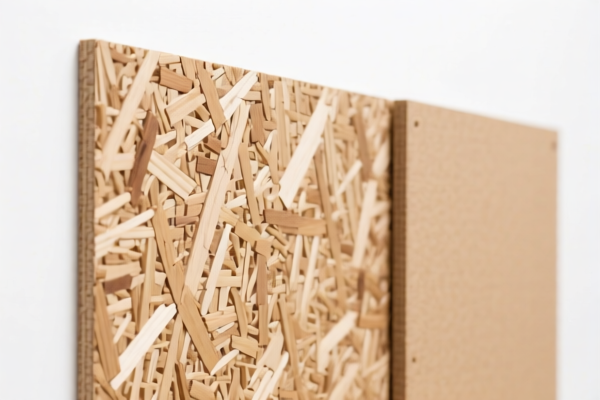
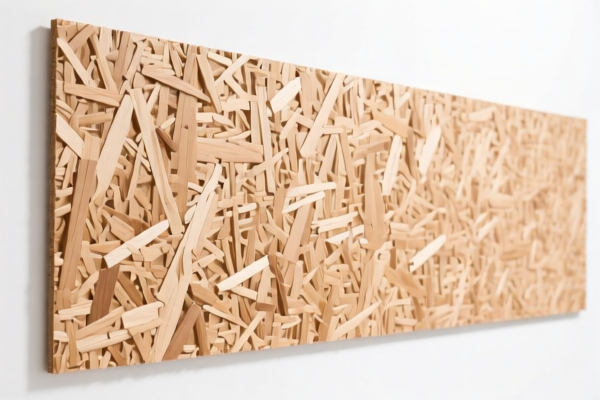
AI Analysis
🪵 Wood Based Panels: HS Code Classification & Tariff Analysis (USA Market)
🌐 HS Code Reference & Customs Clearance Guide | 2026 Latest Tariff Structure | Professional Clearance Strategy
📌 I. Product Definition: What Are "Wood Based Panels"?
Wood-based panels are engineered wood products manufactured by gluing together wood strands, particles, fibers, or veneers. In international trade, they are critical raw materials for furniture, flooring, cabinetry, and construction.
⚠️ Crucial Distinction:
The user inputHS 4411936000is not fully compliant with the specific 10-digit Harmonized Tariff Schedule (HTSUS) provided in the reference data. For precise US customs clearance, you must identify the exact structural composition (Veneer vs. Particleboard/MDF) to select the correct code from theDATAset below. - Veneer-based (Plywood/Laminated): Falls under Heading 4412. - Particleboard/MDF/Chipboard: Falls under Heading 4410 or 4411.
📦 II. HS Code Classification Matrix (Based on Provided DATA)
The following table maps your product type to the exact HS Codes and Tariffs defined in the reference data. Note that the input code 4411936000 is a generic international 8-digit code; the US requires a 10-digit breakdown.
| HS Code (10-Digit) | Product Description & Material Attribute | Material Classification | Base Tariff | 301 Add. Tariff | Section 301 (122) | Total Tax Rate |
|---|---|---|---|---|---|---|
| 4412.91.31.10 | Wood Panels, Veneer-based (Plywood/Laminated) | ✅ Consistent with Plywood/Laminated Wood | 8.0% | 25.0% | 10% | 43.0% |
| 4412.51.31.11 | Wood Panels, Veneer-based (Specific Thickness) | ✅ Consistent with Plywood Category | 8.0% | 25.0% | 10% | 43.0% |
| 4410.11.00.60 | Wood Substrate, Particleboard-like | ✅ Consistent with Particleboard/Chipboard | 0.0% | 25.0% | 10% | 35.0% |
| 4410.11.00.10 | Wood Panels, Explicitly Particleboard | ✅ Matches Particleboard Form & Class | 0.0% | 25.0% | 10% | 35.0% |
| 4410.19.00.60 | Wood Panels, Other Wood Substrates | ✅ High consistency with specific wood board categories | 0.0% | 25.0% | 10% | 35.0% |
🔍 Key Insight:
- If your "Wood Based Panel" is Plywood or Veneer-based (layers of wood glued together), it falls under 4412.xx.xx.xx with a 43% total tariff.
- If your "Wood Based Panel" is Particleboard, MDF, or Chipboard (compressed wood particles/fibers), it falls under 4410.xx.xx.xx with a 35% total tariff.
- Do not use a generic code. Misclassification can lead to audits, penalties, or delayed clearance.
💰 III. 2026 Latest Tariff Rate Breakdown (Detailed Tax Analysis)
✅ Applicable Country: United States (US)
✅ Origin: China (CN)
✅ Effective Date: Current tariffs apply as per Section 301 and Section 301 (122) rules.
🎯 1. For Plywood/Veneer Panels (e.g., 4412.91.31.10)
| Item | Content |
|---|---|
| Base Duty Rate | 8.0% (Ad Valorem) |
| Section 301 Additional Duty | +25.0% (USITC Footnote 9903.88.01) |
| Section 301 (122) Additional Duty | +10.0% (Specific Chinese goods provision) |
| Total Effective Tax Rate | 43.0% |
| Tax Calculation | CIF Value × 43% |
| De Minimis Exemption | ❌ Not Eligible (Deny De Minimis) |
| Legal Basis Path | HTSUS:4412.91.31.10 → 301_Add:25% → 301_122:10% |
📌 Explanation:
- The 8% is the standard Most Favored Nation (MFN) duty for plywood.
- The 25% is the major penalty tariff imposed under Trade Act Section 301.
- The 10% is an additional layer of tariffs specifically targeting certain Chinese wood products under newer trade provisions.
- Total: 43%. This is a high-cost barrier. You must factor this into your landed cost calculation.
🎯 2. For Particleboard/MDF Panels (e.g., 4410.11.00.10)
| Item | Content |
|---|---|
| Base Duty Rate | 0.0% (Ad Valorem) |
| Section 301 Additional Duty | +25.0% (USITC Footnote 9903.88.01) |
| Section 301 (122) Additional Duty | +10.0% (Specific Chinese goods provision) |
| Total Effective Tax Rate | 35.0% |
| Tax Calculation | CIF Value × 35% |
| De Minimis Exemption | ❌ Not Eligible (Deny De Minimis) |
| Legal Basis Path | HTSUS:4410.11.00.10 → 301_Add:25% → 301_122:10% |
📌 Explanation:
- Although the Base Duty is 0%, the 35% total tariff is still significant.
- Do not assume 0% duty! The Section 301 tariffs override the base rate.
- This applies to Particleboard, Hardboard, and Medium-Density Fiberboard (MDF).
🛠️ IV. Customs Clearance Practical Advice (Actionable Guide)
✅ 1. Documentation Checklist (Mandatory)
| Document | Required | Notes |
|---|---|---|
| Commercial Invoice | ✅ Yes | Must clearly state "Wood Based Panels" and specify material (Plywood vs. Particleboard). |
| Packing List | ✅ Yes | Detail dimensions, weight, and number of plies/layers. |
| Material Certificate | ✅ Yes | Proves wood species and adhesive type (formaldehyde emissions). |
| ISF (10+2) Filing | ✅ Yes | Must file 24 hours before loading. |
| Fumigation Certificate | ✅ Yes | Required for raw wood products (ISPM 15 standard). |
| TSCA Title VI Compliance | ✅ Yes | EPA formaldehyde emission standard compliance document. |
✅ 2. Declaration Tips (Critical!)
🔥 "Material Specifics, No Generic Terms!"
| Scenario | Correct Declaration | Wrong Declaration | Consequence |
|---|---|---|---|
| Plywood | "Wood Veneer Panels, Birch, 5-Ply, Glued" | "Wood Board" | Risk of misclassification → Higher duty or penalty |
| Particleboard | "Wood Particleboard, E-0 Grade, 18mm" | "Wood Fiber Board" | Risk of audit → Delayed release |
| MDF | "Medium Density Fiberboard, 4x8 ft" | "Wood Panel" | Risk of penalty → 35% vs 43% error |
✅ 3. Special Handling
| Situation | Recommendation |
|---|---|
| Composite Goods | If panels are pre-finished or laminated, ensure the HTS code reflects the primary material (wood), not the laminate. |
| Formaldehyde Emissions | Ensure TSCA Title VI compliance documents are attached. Non-compliance leads to refusal of entry. |
| Wood Treatment | If heat-treated, provide ISPM 15 mark. If chemically treated, provide MSDS. |
🌍 V. Global Market Comparison (2026 Update)
| Country/Region | Recommended HS Code | Tariff (China Origin) | Key Requirement |
|---|---|---|---|
| 🇺🇸 USA | 4412.xx.xx.xx or 4410.xx.xx.xx |
35% - 43% | TSCA Title VI, ISPM 15 |
| 🇨🇳 China | 4411 or 4412 |
5% - 8% | CCC (if applicable) |
| 🇪🇺 EU | 4412 or 4410 |
6% - 8% | EUTR (Wood Regulation) |
| 🇬🇧 UK | 4412 or 4410 |
6% - 8% | UKTR (Wood Regulation) |
| 🇨🇦 Canada | 4412 or 4410 |
0% - 5% | CFIA Permit |
📌 Conclusion:
- USA is the most expensive market due to Section 301 and Section 301 (122) tariffs.
- EU and UK require strict wood origin tracking (EUTR/UKTR).
- China has lower tariffs but strict domestic environmental standards.
📌 VI. Common Mistakes & Pitfalls (Lessons Learned)
❌ Mistake 1: Using a generic 8-digit code like 4411936000 without US-specific 10-digit breakdown.
👉 Result: Customs may assign a default code with higher duties or reject the entry.
❌ Mistake 2: Confusing "Plywood" (4412) with "Particleboard" (4410).
👉 Result: Incorrect tariff rate (43% vs 35%) → Potential underpayment penalty.
❌ Mistake 3: Failing to declare formaldehyde emissions.
👉 Result: Refusal of Entry by CBP due to TSCA Title VI non-compliance.
❌ Mistake 4: Assuming "Wood Based Panels" are exempt from Section 301.
👉 Result: 35-43% tariff still applies. No exemption exists for these wood products.
✅ Correct Practice:
"Specify: Wood Veneer/Particleboard, Ply Count, Thickness, Formaldehyde Grade (E-0/E-1), and Correct 10-Digit HTSUS Code."
🎯 VII. Conclusion: Professional Classification for Cost Efficiency
🎯 Key Takeaway:
🔹 "Plywood = 43%, Particleboard = 35%. No Exemptions."
🔹 "Use 10-Digit HTSUS Codes for Accuracy."
🔹 "TSCA Compliance is Non-Negotiable."
📌 Pro Tip:
If your supplier is from Vietnam, Malaysia, or Thailand, you may avoid Section 301 tariffs (check origin rules carefully). However, anti-dumping duties may still apply. Always verify the Country of Origin on the bill of lading.
📣 Immediate Action:
📞 Consult with a licensed customs broker.
📄 Provide detailed product specs (Veneer vs. Particle).
🚀 Ensure TSCA Title VI compliance documents are ready.
✨ Precision in Classification Saves You Thousands!
💼 Don't let a decimal point cost you your margin!
Customer Reviews
About HS Code Classification
The Harmonized System (HS) is an internationally standardized nomenclature developed by the World Customs Organization (WCO) to classify traded products. Over 200 countries use the HS system as the basis for customs tariffs, trade statistics, and import/export regulations.
Each HS code follows a hierarchical structure:
- Chapter (2 digits) — Broad category of goods (e.g., Chapter 84: Machinery and Mechanical Appliances)
- Heading (4 digits) — More specific grouping within the chapter
- Subheading (6 digits) — Internationally standardized breakdown, used by all WCO member countries
- National subdivisions (8-10 digits) — Country-specific extensions for further classification, such as US HTSUS 10-digit codes
Correct HS code classification is essential for smooth customs clearance, accurate duty payment, and compliance with trade regulations. Misclassification can lead to customs delays, overpayment of duties, or penalties.
When importing from CN to US, the applicable tariff rates may include:
- Most-Favored-Nation (MFN) rate — The standard duty rate applied to WTO members
- General rate — Applied to countries without trade agreements
- Trade remedy duties — Additional tariffs such as Section 301 (anti-dumping), Section 232 (national security), or countervailing duties
The information provided on this page is for reference purposes only. For official classification, please consult with your local customs authority or a licensed customs broker.