Wood based panels (HS 4412316100)
CN → US| HS Code | Tariff Rate | Origin | Destination | Doc |
|---|---|---|---|---|
| 4412913110 | 43.0% | CN | US | Official Doc |
| 4412513111 | 43.0% | CN | US | Official Doc |
| 4410110060 | 35.0% | CN | US | Official Doc |
| 4410110010 | 35.0% | CN | US | Official Doc |
| 4410190060 | 35.0% | CN | US | Official Doc |
Product Images
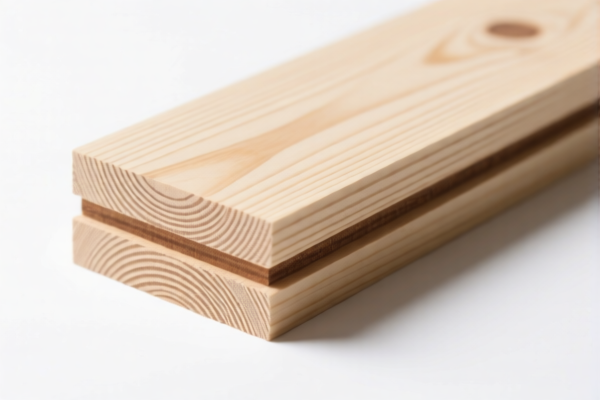
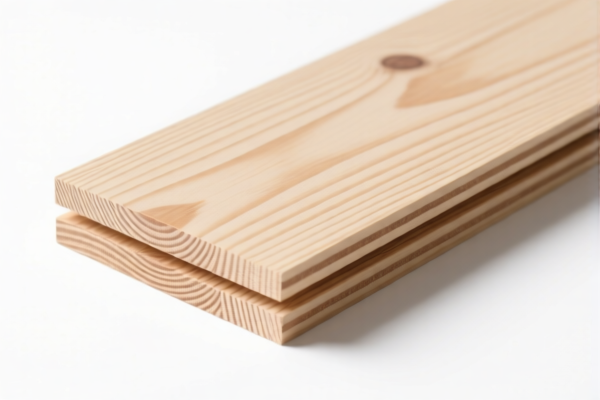
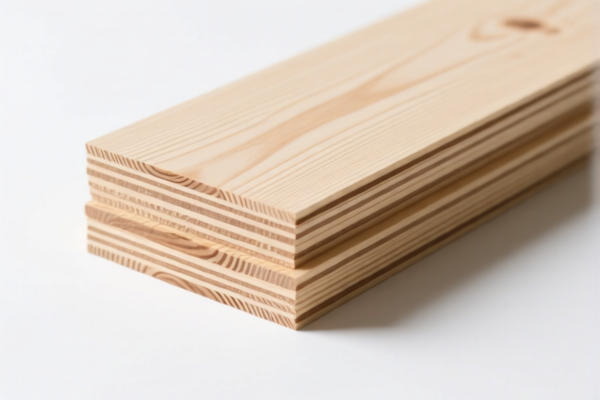
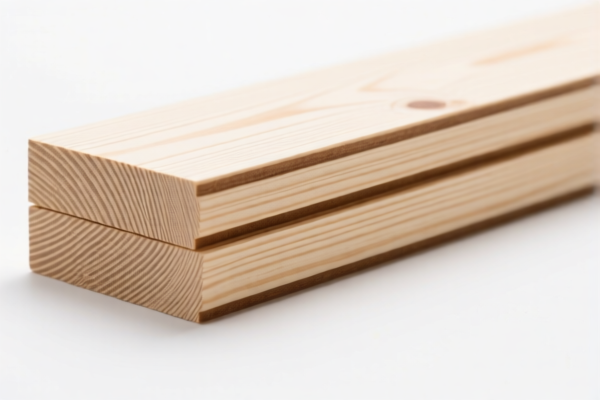
AI Analysis
🪵 Wood Based Panels (HS Code Reference & Tariff Analysis)
🌐 HS Code Reference & Customs Clearance Guide | 2026 Latest Tariff Rules | Professional Compliance Strategy
📌 I. Product Definition & Classification: Do You Really Understand "Wood Panels"?
Wood-based panels are critical construction and furniture materials, broadly categorized into Plywood/Veneer Panels and Particle/MDF Boards. In international trade, precise classification determines tariff liabilities, especially for US-bound goods from China.
Key Distinction: - Plywood/Laminated Wood (HS 4412): Layers of wood veneer glued together. Higher duty burden due to 122 Clause. - Particle Board/MDF (HS 4410/4411): Compressed wood particles or fibers. Slightly lower base duty but still subject to heavy additional tariffs.
⚠️ Critical Differentiator:
- If the product is plywood, laminated wood, or veneer-based → Look at 4412.xxxx series.
- If the product is particle board, MDF, or chipboard → Look at 4410.xxxx series.
- All these categories face significant US additional tariffs (Section 301 + Section 122/IEEPA).
📦 II. HS Code Classification Details (2026 Latest Tariff Alignment)
Based on the provided data, here are the exact HS codes and their corresponding product descriptions:
| HS Code | Product Description | Material/Type Match | Total Tax Rate |
|---|---|---|---|
4412.91.31.10 |
Wood-based panels, falling under wood products category, consistent with plywood/laminated wood material attributes | Plywood / Veneer Panels | 43.0% |
4412.51.31.11 |
Wood-based panels, consistent with plywood category, HS code fully matched | Plywood | 43.0% |
4410.11.00.60 |
Wood substrate, meeting wood panel material requirements, specific classification for similar products | Wood Substrate / Particle Board | 35.0% |
4410.11.00.10 |
Wood-based panels, explicitly pointing to particle board and similar boards, shape and classification match | Particle Board / Chipboard | 35.0% |
4410.19.00.60 |
Wood-based panels, highly consistent with material and form required by HS 4411.13.60.00 | Alternative Wood Board | 35.0% |
🔍 Key Insight:
- 4412 Codes (Plywood): Higher total tax (43%) due to the inclusion of the "122 Clause Tariff" (10%) on top of Section 301.
- 4410 Codes (Particle Board/MDF): Lower total tax (35%) as they typically carry a 0% base duty but are still subject to Section 301 (25%) and IEEPA/122 (10%).
💰 III. 2026 Latest Tariff Rate Breakdown (Including Additional Taxes & Policy Surcharges)
✅ Applicable Country: United States (US)
✅ Country of Origin: China (CN)
✅ Effective Date: Ongoing (as per 2025/2026 trade policies)
🎯 1. Plywood & Veneer Panels (HS 4412 Series)
Codes: 4412.91.31.10, 4412.51.31.11
| Item | Content |
|---|---|
| Base Tariff | 8.0% (Ad Valorem) |
| Section 301 Additional Tariff | +25.0% |
| 122 Clause Tariff | +10.0% (Specific to certain wood products from China) |
| Total Effective Tax Rate | 43.0% |
| Tax Calculation | CIF Value × 43.0% |
| De Minimis Exemption | ❌ Not Eligible (Deny De Minimis for Chinese goods >$800 in this category) |
| Legal Basis Path | HTSUS:4412.xxxx → Section 301 Footnote 9903.88.01 → 122 Clause Enforcement |
📌 Explanation:
- The 8% base tariff is standard for wood products under HTSUS Chapter 44.
- The 25% Section 301 tariff applies to all Chinese-origin plywood/veneer.
- The 10% 122 Clause tariff is a specific retaliatory or protective measure on certain wood imports, pushing the total to 43%.
- Risk: High cost burden. Ensure product description clearly states "Plywood" or "Laminated Wood" to avoid misclassification penalties.
🎯 2. Particle Board & Wood Substrates (HS 4410 Series)
Codes: 4410.11.00.60, 4410.11.00.10, 4410.19.00.60
| Item | Content |
|---|---|
| Base Tariff | 0.0% (Ad Valorem) |
| Section 301 Additional Tariff | +25.0% |
| 122 Clause Tariff | +10.0% |
| Total Effective Tax Rate | 35.0% |
| Tax Calculation | CIF Value × 35.0% |
| De Minimis Exemption | ❌ Not Eligible |
| Legal Basis Path | HTSUS:4410.xxxx → Section 301 Footnote 9903.88.01 → 122 Clause Enforcement |
📌 Explanation:
- Particle Board/MDF enjoys a 0% base tariff under normal trade relations.
- However, the 25% Section 301 and 10% 122 Clause tariffs still apply, resulting in a 35% total rate.
- Savings: Compared to plywood (43%), particle board saves 8% in total duties, but still faces significant costs.
🛠️ IV. Customs Clearance Practical Advice (Avoid Pitfalls)
✅ 1. Documentation Checklist (Mandatory)
| Document | Required | Notes |
|---|---|---|
| ✅ Product Specification Sheet | ✔️ | Must specify wood type, glue type (formaldehyde emission), dimensions, and thickness. |
| ✅ Commercial Invoice | ✔️ | Clearly state "Wood-Based Panel" + HS Code + Country of Origin (China). |
| ✅ Packing List | ✔️ | Detail net/gross weight, number of pallets/boxes. |
| ✅ Formaldehyde Emission Certificate | ✔️ | CARB Phase 2 or EPA TSCA Title VI compliance is mandatory for wood products entering the US. |
| ✅ Bill of Lading | ✔️ | Ensure consignee info matches invoice. |
| ✅ Certificate of Origin | ✔️ | To confirm CN origin (triggers tariffs). |
⚠️ Critical Warning:
- Non-compliance with CARB/EPA standards will lead to shipment rejection or destruction at US ports, regardless of tariff payment.
- Misclassification: Declaring "Wood Panel" as "Furniture Part" or "Other Wood" to avoid tariffs is fraud. Penalties include fines and loss of importing privileges.
✅ 2. Classification Strategy
| Scenario | Correct Classification | Risk if Incorrect |
|---|---|---|
| Plywood with Veneer | 4412.91.31.10 or 4412.51.31.11 (43%) |
If misdeclared as Particle Board → 35% → Underpayment Penalty + Back Taxes |
| Particle Board/MDF | 4410.11.00.10 (35%) |
If misdeclared as Solid Wood → Higher base duty + Different regulatory scrutiny |
| MDF with Surface Finish | 4410.11.00.60 or 4410.19.00.60 (35%) |
Ensure description matches "Processed" vs "Unprocessed" wood |
🔥 Key Tip:
- "Wood-Based Panels" is a broad term. You must distinguish between Plywood (4412) and Particle Board/MDF (4410/4411) because of the 8% difference in total duty.
- Use precise terms: "Chinese Plywood" vs "Chinese Particle Board".
✅ 3. Special Cases & Mitigation
| Situation | Handling Advice |
|---|---|
| OEM Custom Panels | Provide customer PO and design specs. If veneer is from non-China origin (e.g., veneer from Thailand, core from China), discuss Substantial Transformation rules, but core material often dictates origin. |
| Formaldehyde-Free/Eco-Boards | Still subject to tariffs. Provide CARB Phase 2 or EPA TSCA Title VI certificate to clear customs without regulatory hold. |
| Small Sample Shipments | No De Minimis Exemption for these HS codes from China. Every shipment, regardless of value, is subject to 35%-43% duties. |
🌍 V. Global Market Comparison (2026)
| Country/Region | Recommended HS Code | Approx. Duty Rate (CN Origin) | Certification Required | Notes |
|---|---|---|---|---|
| 🇺🇸 USA | 4412.xxxx / 4410.xxxx |
35% - 43% | CARB Phase 2 / EPA TSCA Title VI | Highest burden due to Section 301 + 122 Clause |
| 🇨🇳 China | 4412.xxxx / 4410.xxxx |
5% - 10% (Import Duty) | FSC (if applicable) | Lower export duty, but high import duty for Chinese producers |
| 🇪🇺 EU | 4412.xxxx / 4410.xxxx |
0% - 5% (Most Favored Nation) | EUTR (EU Timber Regulation) | No Section 301 tariffs, but strict deforestation regulations (EUDR) |
| 🇬🇧 UK | 4412.xxxx / 4410.xxxx |
0% - 5% | UKCA / Defra Compliance | Post-Brexit rules apply |
| 🇯🇵 Japan | 4412.xxxx / 4410.xxxx |
0% - 5% | FSC / PEFC | Generally low tariffs |
📌 Conclusion:
- The US market is exceptionally expensive for Chinese wood panels due to 35%-43% effective duties.
- EU and Japan offer more favorable tariff conditions but require strict environmental and traceability compliance.
- Strategy: Consider supply chain diversification (e.g., sourcing veneer or core from Vietnam/Malaysia) to mitigate US tariffs, but beware of circumvention investigations.
📌 VI. Common Mistakes & Pitfalls (Blood & Tears Lessons)
❌ Mistake 1: Declaring Plywood as "Particle Board" to save 8% duty
👉 Consequence: Customs audit, back taxes, fines, and shipment delay. The structural difference is easily verified by physical inspection.
❌ Mistake 2: Ignoring Formaldehyde Emission Certificates
👉 Consequence: Shipment rejected at US border. No amount of duty payment can override EPA/TSCA compliance.
❌ Mistake 3: Assuming De Minimis ($800) applies
👉 Consequence: Small shipments still taxed at 35-43%. Section 301/122 tariffs apply to all value thresholds for China-origin goods.
❌ Mistake 4: Vague Description: "Wood Stuff"
👉 Consequence: Customs holds shipment for classification review. Delays incur demurrage charges.
✅ Correct Approach:
"Plywood, Birch Veneer, 12mm, CARB Phase 2 Compliant, Made in China, HS 4412.51.31.11"
"Particle Board, 18mm, E1 Grade, EPA TSCA Title VI, Made in China, HS 4410.11.00.10"
🎯 VII. Conclusion: Precision in Classification Saves Money!
🎯 Remember the Key Takeaways:
🔹 "Plywood is 43%, Particle Board is 35%. The 8% difference matters!"
🔹 "CARB/EPA Certs are Non-Negotiable in the US."
🔹 "No De Minimis Exemption for Chinese Wood Panels."
🔹 "Be Specific: 'Wood Panel' is not enough. Specify Type, Thickness, and Compliance."
📌 Pro Tip:
If you are shipping to the US, pre-clearance with a licensed customs broker is highly recommended. Verify the exact HS subheading and ensure all environmental certifications are up-to-date. Consider HTSUS Advance Rulings if you have complex composite products.
📣 Immediate Action:
📞 Contact a Licensed US Customs Broker
📄 Prepare CARB/EPA Compliance Documents
🔍 Verify HS Code: 4412 vs 4410
🚀 Ensure Your Wood Panels Clear Customs Smoothly and Cost-Effectively!
✨ Professional Customs Clearance Starts with Accurate Classification!
💼 Every Percent of Duty Saved is Profit Gained!
Customer Reviews
About HS Code Classification
The Harmonized System (HS) is an internationally standardized nomenclature developed by the World Customs Organization (WCO) to classify traded products. Over 200 countries use the HS system as the basis for customs tariffs, trade statistics, and import/export regulations.
Each HS code follows a hierarchical structure:
- Chapter (2 digits) — Broad category of goods (e.g., Chapter 84: Machinery and Mechanical Appliances)
- Heading (4 digits) — More specific grouping within the chapter
- Subheading (6 digits) — Internationally standardized breakdown, used by all WCO member countries
- National subdivisions (8-10 digits) — Country-specific extensions for further classification, such as US HTSUS 10-digit codes
Correct HS code classification is essential for smooth customs clearance, accurate duty payment, and compliance with trade regulations. Misclassification can lead to customs delays, overpayment of duties, or penalties.
When importing from CN to US, the applicable tariff rates may include:
- Most-Favored-Nation (MFN) rate — The standard duty rate applied to WTO members
- General rate — Applied to countries without trade agreements
- Trade remedy duties — Additional tariffs such as Section 301 (anti-dumping), Section 232 (national security), or countervailing duties
The information provided on this page is for reference purposes only. For official classification, please consult with your local customs authority or a licensed customs broker.