Wood based panels (HS 4412913160)
CN → US| HS Code | Tariff Rate | Origin | Destination | Doc |
|---|---|---|---|---|
| 4412913110 | 43.0% | CN | US | Official Doc |
| 4412513111 | 43.0% | CN | US | Official Doc |
| 4410110060 | 35.0% | CN | US | Official Doc |
| 4410110010 | 35.0% | CN | US | Official Doc |
| 4410190060 | 35.0% | CN | US | Official Doc |
Product Images
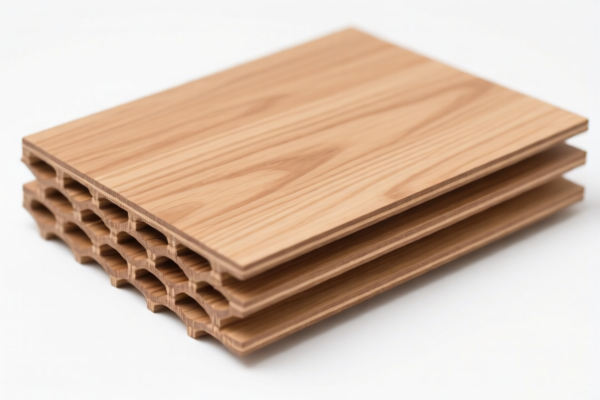
AI Analysis
🪵 Wood Based Panels (HS Code: 4412.91.31.60 / 4412.51.31.11 & Others)
🌐 HS Code Reference & Customs Clearance Guide | 2026 Latest Tariff Analysis | Professional Level Strategy
📌 I. Product Definition & Classification: Do You Really Understand "Wood Based Panels"?
Wood-based panels are a broad category of engineered wood products, widely used in furniture, construction, and interior decoration. In international trade, they are distinguished by their manufacturing process, layering structure, and material composition.
Key Distinctions: 1. Veneer-Based Plywood (4412 Series): Made from layers of wood veneers glued together with adjacent layers having grain directions at right angles. 2. Particle Board/Chipboard (4410 Series): Made from wood particles, shavings, or flakes bonded with synthetic resin.
⚠️ Critical Classification Point:
- If the product is plywood with outer plies of tropical wood (e.g., Meranti, Okoumé) and meets specific thickness/layer requirements → Often falls under 4412.91.31.10 or 4412.51.31.11.
- If the product is Particle Board/Chipboard → Falls under 4410.11.00.60 / 4410.11.00.10.
- If the product is Other Wood-Based Panels not specifically listed elsewhere → May fall under 4410.19.00.60 or 4412.91.31.10.
📦 II. HS Code Classification Details (2026 Latest Tariff Authority Cross-Reference)
| HS Code | Product Description | Applicability | Material/Structure | Total Tax Rate |
|---|---|---|---|---|
4412.91.31.10 |
Wood-based panels (Veneer plywood, outer ply tropical wood) | High-end furniture, cabinetry | Multi-layer veneer, tropical wood face | 43.0% |
4412.51.31.11 |
Wood-based panels (Plywood, 3-5 plies, outer ply tropical) | Standard construction, shelving | 3-5 layers, tropical wood outer | 43.0% |
4410.11.00.60 |
Wood-based panels (Particle board, oriented strand board) | Flat-pack furniture, core material | Wood particles + resin | 35.0% |
4410.11.00.10 |
Particle board & similar wood-based panels | Economy furniture, flooring underlayment | Wood chips/flakes, resin bonded | 35.0% |
4410.19.00.60 |
Other wood-based panels (e.g., HDF, MDF if not elsewhere) | Specific engineered boards | Dense wood fiber/particles | 35.0% |
🔍 Key Reminder:
- Plywood (4412 Series) generally carries a higher total tax rate (43%) due to stricter classification rules for veneer thickness and tropical wood content.
- Particle Board/MDF (4410 Series) carries a lower total tax rate (35%).
- Misclassification between 4410 and 4412 can lead to significant tax discrepancies and customs delays.
💰 III. 2026 Latest Tariff Rate Breakdown (Including Additional Duties, Policy Surcharges)
✅ Applicable Country: United States (US)
✅ Origin: China (CN)
✅ Effective Time: From November 10, 2025 (for subsequent imports)
🎯 1. 4412.91.31.10 & 4412.51.31.11 —— Plywood / Veneer Panels (High Tariff)
| Item | Details |
|---|---|
| Basic Duty Rate | 8.0% (ad valorem) |
| Section 301 Surcharge | +25.0% (From USITC Footnote 9903.88.01) |
| Section 122 / IEEPA Surcharge | +10.0% (Targeting Chinese/HK products) |
| Total Tax Rate | 43.0% |
| Tax Calculation | CIF Value × 43% |
| De Minimis Exemption | ❌ Not Allowed (deny_de_minimis) |
| Legal Basis Path | Base: 8.0% → Section 301: +25% → IEEPA: +10% |
📌 Explanation:
- The 8% basic duty is the standard Most-Favored-Nation (MFN) rate for plywood.
- The 25% Section 301 duty applies to all Chinese-origin plywood and wood-based panels.
- The 10% IEEPA/122 Clause duty is an additional surcharge targeting specific Chinese wood products.
- Total 43% is extremely high. This applies to most plywood products exported from China to the US.
🎯 2. 4410.11.00.60, 4410.11.00.10, 4410.19.00.60 —— Particle Board / MDF / Other Panels (Lower Tariff)
| Item | Details |
|---|---|
| Basic Duty Rate | 0.0% (ad valorem) |
| Section 301 Surcharge | +25.0% (From USITC Footnote 9903.88.01) |
| Section 122 / IEEPA Surcharge | +10.0% (Targeting Chinese/HK products) |
| Total Tax Rate | 35.0% |
| Tax Calculation | CIF Value × 35% |
| De Minimis Exemption | ❌ Not Allowed (deny_de_minimis) |
| Legal Basis Path | Base: 0.0% → Section 301: +25% → IEEPA: +10% |
📌 Note:
- Particle board and MDF often have a 0% basic duty under standard MFN rules.
- However, the 25% Section 301 and 10% IEEPA surcharges still apply, resulting in a 35% total rate.
- This is 8 percentage points lower than plywood (4412 series), making particle board more cost-effective for US importers if the product design allows.
🛠️ IV. Customs Clearance Practical Advice (Combat Pitfall Avoidance Guide)
✅ 1. Required Documentation Checklist (All Mandatory)
| Document | Must Provide | Description |
|---|---|---|
| ✅ Product Specification Sheet | ✔️ | Must detail: Material (Veneer/Particle/MDF), Layers, Glue Type (Formaldehyde content), Dimensions, Thickness. |
| ✅ Composition Report | ✔️ | Detailed breakdown of wood species (e.g., Meranti, Poplar, Pine) and resin type. |
| ✅ Product Photos | ✔️ | Clear shots of edges (showing layers or particles), surfaces, and any labels. |
| ✅ Commercial Invoice | ✔️ | Must explicitly state "Wood Based Panels" and correct HS Code. Avoid vague terms like "Wood Board". |
| ✅ Packing List | ✔️ | Specify net/gross weight, number of packages. |
| ✅ Fumigation Certificate | ✔️ | Required for solid wood packaging or raw wood content (ISPM 15 compliant). |
| ✅ Phenol Formaldehyde Test Report | ✔️ | Critical for compliance with CARB/TSCA Title VI regulations. |
✅ 2. Declaration Tactics (Key Mantra)
🔥 “Identify Material First, Then Layer; Plywood vs. Particle Board Defines the Rate!”
| Scenario | Correct Declaration | Wrong Approach |
|---|---|---|
| Plywood (Veneer layers) | 4412.91.31.10 / 4412.51.31.11 |
Declaring as "Wood Board" → Risk of penalty |
| Particle Board (Chips/Flakes) | 4410.11.00.60 / 4410.11.00.10 |
Declaring as "Plywood" → Overpay 8% |
| MDF (Dense Fiber) | 4410.19.00.60 |
Declaring as "Particle Board" → Risk of reclassification |
| Mixed Packaging | Declare by ** predominant value/weight** | Splitting invoice arbitrarily → Customs audit |
⚠️ Critical:
- Plywood (4412) has an 8% basic duty.
- Particle Board (4410) has a 0% basic duty.
- Even with the same 35% total rate for particle board, the base tax calculation differs. Ensure your invoice and packing list clearly distinguish the product type to avoid misclassification penalties.
✅ 3. Special Cases Handling
| Scenario | Handling Advice |
|---|---|
| Formaldehyde Emission Standards | Must meet CARB Phase 2 or TSCA Title VI limits. Provide test reports from accredited labs (e.g., Intertek, SGS). Failure leads to seizure. |
| Tropical Wood Species | Verify if the outer veneer is from CITES-listed species. If so, CITES permit is required. |
| Composite Panels | If a panel has both veneer and particle board layers, consult a customs broker. It may be classified as plywood (higher tax). |
| Direct Drop Shipping | No De Minimis Exemption for China-origin wood panels. All shipments, regardless of value, are subject to full duties. |
🌍 V. Global Market Clearance Comparison (2026 Latest)
| Country/Region | Recommended HS Code | Total Tax (CN Origin) | Certification Requirements | Notes |
|---|---|---|---|---|
| 🇺🇸 USA | 4412.91.31.10 (Plywood) |
43.0% | TSCA CARB Phase 2, Fumigation | High tariffs apply to all wood panels |
| 🇺🇸 USA | 4410.11.00.60 (Particle) |
35.0% | TSCA CARB Phase 2 | 8% lower total tax than plywood |
| 🇨🇳 China | 4412.91.31.10 |
~8-13% | CCC (if applicable) | Low import tax, high domestic competition |
| 🇪🇺 EU | 4412.91.31.10 |
~5-8% | EUTR (Timber Regulation), FSC/PEFC | No US-style Section 301/122 tariffs |
| 🇦🇺 Australia | 4412.91.31.10 |
~5% | Phytosanitary Certificate | Strict biosecurity controls |
| 🇯🇵 Japan | 4412.91.31.10 |
~5-6% | Fumigation, JAS Certification | Quality standards very high |
📌 Conclusion:
- The US market is uniquely expensive for Chinese wood-based panels due to the combination of MFN, Section 301, and IEEPA/122 tariffs.
- EU and Japan do not impose these punitive tariffs, making them more cost-effective markets for Chinese wood exports.
- Domestic US production or sourcing from ASEAN countries (e.g., Vietnam, Thailand) may offer tariff advantages, but "transshipment" without substantial transformation is illegal.
📌 VI. Common Errors & Pitfall Avoidance (Lessons Learned)
❌ Error 1: Using generic terms like "Wood Board" or "Engineered Wood" on the Invoice
👉 Consequence: Customs cannot classify → Delay for 2-4 weeks → Storage fees at port.
✅ Fix: Use specific terms: "Meranti Veneer Plywood, 12mm, 5-Ply" or "Particle Board, 18mm, Low Formaldehyde".
❌ Error 2: Misclassifying Particle Board as Plywood (or vice versa)
👉 Consequence: Underpayment of tax (if plywood) → Back taxes + Penalties. Overpayment (if particle) → Loss of profit.
✅ Fix: Always check the edge of the board. Layers = Plywood (4412). Flakes/Chips = Particle Board (4410).
❌ Error 3: Ignoring Formaldehyde Test Reports
👉 Consequence: CBP may refer to EPA/CPSC → Seizure and Destruction of goods.
✅ Fix: Include a valid TSCA Title VI test report in the commercial invoice attachments.
❌ Error 4: Assuming De Minimis (Section 321) applies
👉 Consequence: Goods held at border → 100% Inspection → Delay.
✅ Fix: Remember, wood products from China are excluded from De Minimis. All shipments must file entry immediately.
🎯 VII. Conclusion: Precision Classification Saves Money!
🎯 Remember the Mantra:
🔹 "Plywood = 43%, Particle = 35%. Edge Check is Key!"
🔹 "TSCA Report Mandatory, No De Minimis for Wood from China!"
🔹 "Vague Descriptions = Customs Delays. Be Specific, Be Fast."
📌 Pro Tip:
If you are importing high-volume plywood, consider:
1. Pre-classification Ruling: File a request with CBP for a binding ruling on your specific product.
2. Supply Chain Diversification: Source veneers from non-Chinese origins (if possible) or assemble in a third country (ensure substantial transformation).
3. Cost Optimization: If your product can be designed as Particle Board instead of Plywood, you save 8% in basic duties (though total rate is similar, base calculations may vary for certain trade agreements).
📣 Immediate Action:
📞 Contact a Licensed Customs Broker + Provide Product Photos & Edge Cross-Sections + Obtain TSCA Test Report
🚀 Ensure Smooth Clearance, Avoid Seizures, and Protect Your Margins!
✨ Professional Clearance Starts with Accurate Classification!
💼 Every Percentage Point of Tax Matters in the Wood Trade!
Customer Reviews
About HS Code Classification
The Harmonized System (HS) is an internationally standardized nomenclature developed by the World Customs Organization (WCO) to classify traded products. Over 200 countries use the HS system as the basis for customs tariffs, trade statistics, and import/export regulations.
Each HS code follows a hierarchical structure:
- Chapter (2 digits) — Broad category of goods (e.g., Chapter 84: Machinery and Mechanical Appliances)
- Heading (4 digits) — More specific grouping within the chapter
- Subheading (6 digits) — Internationally standardized breakdown, used by all WCO member countries
- National subdivisions (8-10 digits) — Country-specific extensions for further classification, such as US HTSUS 10-digit codes
Correct HS code classification is essential for smooth customs clearance, accurate duty payment, and compliance with trade regulations. Misclassification can lead to customs delays, overpayment of duties, or penalties.
When importing from CN to US, the applicable tariff rates may include:
- Most-Favored-Nation (MFN) rate — The standard duty rate applied to WTO members
- General rate — Applied to countries without trade agreements
- Trade remedy duties — Additional tariffs such as Section 301 (anti-dumping), Section 232 (national security), or countervailing duties
The information provided on this page is for reference purposes only. For official classification, please consult with your local customs authority or a licensed customs broker.