Wood based panels and similar wood products
CN → US| HS Code | Tariff Rate | Origin | Destination | Doc |
|---|---|---|---|---|
| 4411936000 | 35.0% | CN | US | Official Doc |
| 4410900000 | 35.0% | CN | US | Official Doc |
| 4412314880 | 43.0% | CN | US | Official Doc |
| 4412100500 | 43.0% | CN | US | Official Doc |
| 4410190060 | 35.0% | CN | US | Official Doc |
| 4411940040 | 35.0% | CN | US | Official Doc |
Product Images
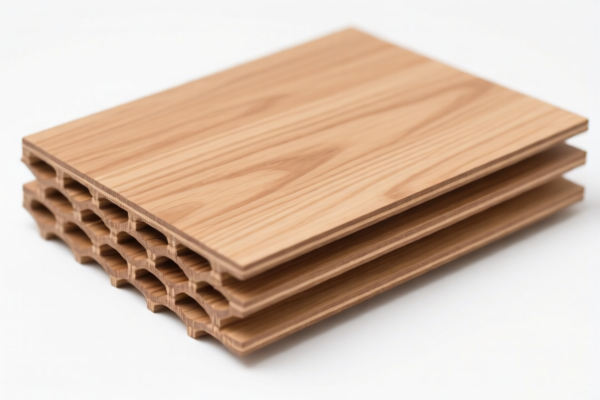
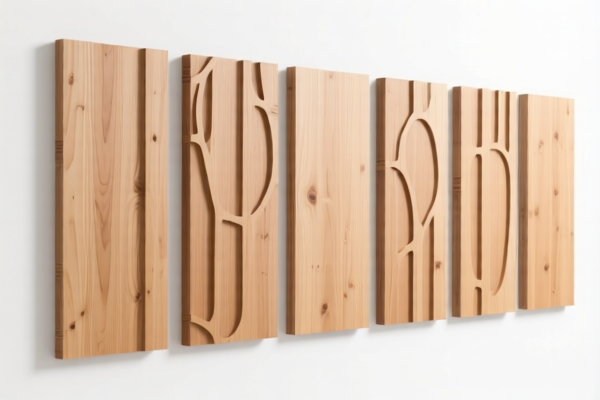
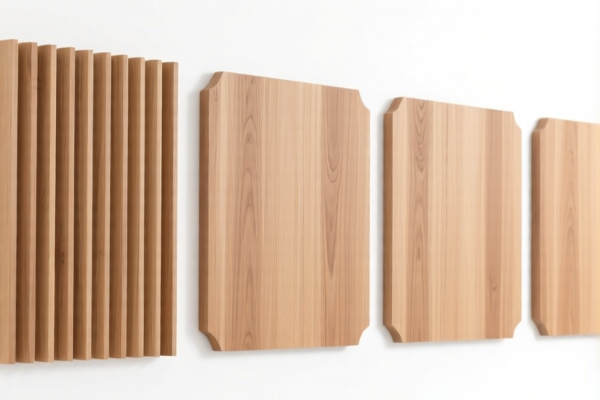
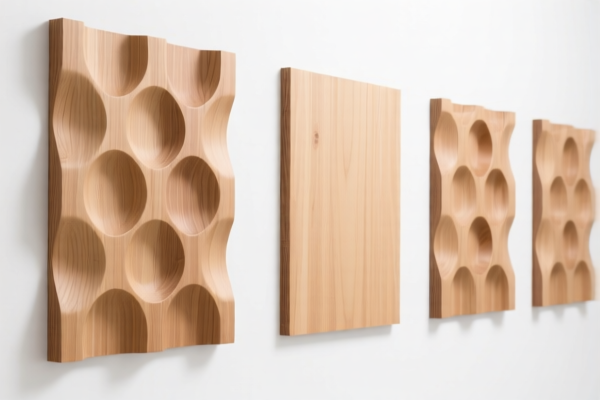
AI Analysis
🪵 Wood-Based Panels & Similar Lignocellulosic Products
🌐 HS Code Reference & Customs Clearance Guide | 2026 Latest Tariff Analysis | Professional Classification Strategy
📌 1. Product Definition: What Exactly Are "Wood-Based Panels"?
Wood-based panels are engineered wood products made from wood chips, strands, fibers, or veneers bonded together with adhesives. In international trade, precise classification is critical because tariff rates vary drastically based on the manufacturing process (particle vs. fiber vs. plywood) and density.
The Three Main Categories: * Board Products (Part 4410): Includes Particle Board (PB), Oriented Strand Board (OSB), and Waferboard. These are made from mechanical wood particles agglomerated with resins. * Fiberboard (Part 4411): Includes MDF (Medium Density Fiberboard) and HDF (High Density Fiberboard). These are made from fibers separated and bonded under heat/pressure. Density is the key differentiator here. * Plywood & Veneered Panels (Part 4412): Constructed by gluing together thin sheets (plies) of wood. Material type (e.g., Bamboo vs. Tropical Wood) and thickness are the key differentiators.
⚠️ Key Distinction Point:
- If it’s made from chunks/strands → 4410 (Particle Board/OSB).
- If it’s made from fibers (like paper pulp but woody) → 4411 (Fiberboard/MDF).
- If it’s made from thin slices (plies) → 4412 (Plywood).
📦 2. HS Code Classification Matrix (2026 Latest Tariff Rules)
| HS Code | Product Description | Key Characteristics | Typical Use Case |
|---|---|---|---|
4410.90.00.00 |
Particle board, OSB, or similar board (Other) | Made from wood particles/strands; agglomerated with resins. "Other" covers standard non-specific types. | Cabinet bodies, furniture backing, general construction. |
4410.19.00.60 |
Particle board, OSB, or similar board (Of wood: Other) | Specific subset of particle board made entirely of wood (no other ligneous materials). | High-grade particle board for premium furniture. |
4411.94.00.40 |
Fiberboard (Other): Density >0.35 but ≤0.5 g/cm³ | Softboard/Light Fiberboard. Low density. | Acoustic insulation, underlayment, low-load applications. |
4411.93.60.00 |
Fiberboard (Other): Density >0.5 but ≤0.8 g/cm³ | Standard MDF. Not surface-covered (except oil). | Cabinetry, molding, painted furniture parts. |
4412.10.05.00 |
Plywood, Veneered Panels: Of Bamboo | Plywood constructed specifically from bamboo strips/layers. | Sustainable furniture, eco-friendly flooring, bamboo decking. |
4412.31.48.80 |
Plywood: Outer ply of Tropical Wood, Plied <6mm | Multi-ply plywood with tropical wood face. Complex classification for thin sheets. | High-end veneered panels, decorative laminates. |
🔍 Critical Note:
- MDF vs. Particle Board: Do not confuse them. MDF (4411) has a smooth surface because it’s made of fibers. Particle board (4410) has a granular texture.
- Density Matters for Fiberboard: Misclassifying a 0.6 g/cm³ board as 0.4 g/cm³ leads to clearance delays and potential penalties.
- Bamboo is Not Wood (Technically): Though often grouped with wood, bamboo products have their own specific subheadings (e.g.,4412.10.05.00) which may have different tariff treatments.
💰 3. 2026 Tariff Rate Breakdown (Detailed Tax Analysis)
✅ Applicable Country: United States (US)
✅ Origin: China (CN) (Note: Most wood panels from China are subject to Section 301 tariffs)
✅ Effective Date: Current rates apply for imports post-2025.
🎯 1. 4410.90.00.00 & 4410.19.00.60 (Particle Board / OSB)
| Item | Detail |
|---|---|
| Base Tariff | 0.0% (Most Favored Nation rate is typically 0% for these items) |
| Section 301 Additional Tariff | +25.0% |
| Total Effective Tax Rate | 25.0% |
| Tax Calculation | CIF Value × 25% |
| De Minimis Exemption? | ❌ NO. Section 301 goods are generally excluded from the $800 de minimis threshold if specific criteria are met, or simply face the full rate. |
| Legal Basis | Section 301 of the Trade Act of 1974 (USITC Footnotes). |
📌 Explanation:
- While the base import duty for particle board is 0%, the 25% additional tariff under Section 301 applies to virtually all wood-based panel products from China.
- This makes Chinese particle board and OSB highly expensive for US importers compared to domestic or non-China sourced materials.
🎯 2. 4411.94.00.40 & 4411.93.60.00 (Fiberboard / MDF)
| Item | Detail |
|---|---|
| Base Tariff | 0.0% |
| Section 301 Additional Tariff | +25.0% |
| Total Effective Tax Rate | 25.0% |
| Tax Calculation | CIF Value × 25% |
| De Minimis Exemption? | ❌ NO. |
📌 Explanation:
- Like particle board, MDF and fiberboard face the 25% Section 301 tariff.
- The base rate of 0% is irrelevant if you are importing from China due to this additional levy.
🎯 3. 4412.10.05.00 (Bamboo Plywood)
| Item | Detail |
|---|---|
| Base Tariff | 0.0% |
| Additional Tariff | 0.0% |
| Total Effective Tax Rate | 0.0% |
| Tax Calculation | $0 |
| De Minimis Exemption? | ✅ YES. (If value <$800 and not subject to specific exclusions) |
📌 Explanation:
- Surprise! Bamboo plywood (4412.10.05.00) often enjoys 0% total duty.
- This is a strategic advantage for importers using bamboo as a sustainable alternative to wood.
- Note: Ensure the product is genuinely bamboo and not mislabeled wood, as customs will scrutinize this heavily.
🎯 4. 4412.31.48.80 (Tropical Wood Plywood)
| Item | Detail |
|---|---|
| Base Tariff | 0.0% |
| Additional Tariff | 0.0% |
| Total Effective Tax Rate | 0.0% |
| Tax Calculation | $0 |
📌 Explanation:
- This specific complex code for tropical wood plywood appears to have 0% total tax in the provided dataset.
- Warning: Ensure the "Tropical Wood" is correctly identified (e.g., Mahogany, Teak, Ipe) and that the plies are indeed ≤6mm. Misclassification here can lead to severe penalties.
🛠️ 4. Customs Clearance Practical Advice
✅ 1. Documentation Checklist (Non-Negotiable)
| Document | Requirement | Why It’s Needed |
|---|---|---|
| Product Specification Sheet | ✔️ Mandatory | Must explicitly state: Density (for fiberboard), Composition (wood particles vs. fibers vs. plies), Adhesive Type. |
| Material Safety Data Sheet (MSDS) | ✔️ Mandatory | Wood panels use formaldehyde-based resins. Customs/CPSC may require proof of formaldehyde emissions (CARB Phase 2 / TSCA Title VI compliance). |
| Commercial Invoice | ✔️ Mandatory | Must clearly state "Particle Board," "MDF," or "Bamboo Plywood." Do NOT use generic terms like "Wood Board." |
| Packing List | ✔️ Mandatory | Include weight and dimensions to verify density calculations if challenged. |
| Fumigation Certificate | ✔️ If Raw Wood | If not processed/heat-treated, ISPM 15 compliance may be required. Most engineered boards are exempt but proof helps. |
| Country of Origin Certificate | ✔️ Mandatory | Crucial for applying the correct Section 301 tariff rate. |
✅ 2. Classification Strategy (Pro Tips)
🔥 "Define by Process, Not Just Name!"
| Scenario | Correct HS Code | Risk of Error |
|---|---|---|
| Standard Brown Particle Board | 4410.90.00.00 |
Low. Ensure it’s not MDF. |
| Smooth White MDF | 4411.93.60.00 (if density 0.5-0.8) |
High. If density is <0.35, it’s 4411.94.... Check density! |
| Green/Eco-Friendly Bamboo Board | 4412.10.05.00 |
Medium. Must prove it’s bamboo, not wood veneer. |
| Thin Decorative Plywood (Tropical Face) | 4412.31.48.80 |
High. Complex code. Must prove outer ply is tropical and thickness <6mm. |
✅ 3. Special Scenarios & Pitfalls
| Scenario | Recommendation |
|---|---|
| Mixing Wood and Bamboo | If a panel is 51% wood/49% bamboo, it is Wood. If 51% bamboo/49% wood, it may be Bamboo. Get a precise composition ratio from the manufacturer. |
| Surface Covered MDF | The code 4411.93.60.00 specifies "Not surface covered." If your MDF is laminated or veneered, it may fall under a different code (often 4412 or 4411.93 with a different sub-code). Check the description carefully! |
| Formaldehyde Compliance | Even if the tariff is 0%, US Customs (CBP) and EPA may block entry if the product does not meet TSCA Title VI standards. Include a Declaration of Compliance with your invoice. |
| Section 301 Exclusions | Some specific wood products may have been excluded from Section 301 tariffs in the past. Check the current USITC Exclusion List before importing. |
🌍 5. Global Market Comparison (2026)
| Market | Key HS Code | Tariff Rate (China Origin) | Key Certification |
|---|---|---|---|
| 🇺🇸 USA | 4410.xxxx / 4411.xxxx |
25% (Section 301) | TSCA Title VI, CARB Phase 2 |
| 🇺🇸 USA | 4412.10.05.00 (Bamboo) |
0% | None specific beyond standard |
| 🇪🇺 EU | 4410/4411/4412 | 0% (Mostly) | E1/E0 Formaldehyde Standards |
| 🇨🇳 China | 4410/4411/4412 | 5-8% (Import) | GB 18580 (Formaldehyde) |
| 🇬🇧 UK | 4410/4411/4412 | 0% | Post-Brexit Tariffs (Likely 0%) |
📌 Insight:
- The USA is the most expensive market due to the 25% Section 301 tariff on most wood panels.
- Bamboo products offer a tariff-free loophole in the US market (4412.10.05.00), making them highly competitive.
- EU/UK markets are tariff-friendly but have strict formaldehyde emission standards.
📌 6. Common Mistakes & How to Avoid Them
❌ Mistake 1: Calling MDF "Particle Board"
👉 Consequence: Wrong HS Code (4410 vs 4411). While both are 25%, if your density is wrong, you might be misclassified under a non-existent subheading, causing delays.
❌ Mistake 2: Ignoring Density for Fiberboard
👉 Consequence: A 0.6 g/cm³ board misclassified as 0.4 g/cm³ will be flagged by CBP algorithms. Expect audits and potential penalties.
❌ Mistake 3: Assuming All Bamboo is Tariff-Free
👉 Consequence: If it’s "Bamboo Veneer on Wood Core," it might be classified as plywood (4412) or wood panel (4410), not 4412.10.05.00. Get the technical breakdown right.
❌ Mistake 4: Forgetting Formaldehyde Compliance
👉 Consequence: CBP may detain the shipment for "Potential Health Hazard" even if tariffs are paid. Always include a TSCA Title VI Compliance Statement.
🎯 7. Conclusion: Smart Sourcing for Maximum Profit
🎯 Key Takeaways:
🔹 Chinese Wood Panels (PB/MDF): Expect 25% extra cost. Budget accordingly.
🔹 Bamboo Plywood: The Golden Ticket. 0% tariff in the US. Push for bamboo-based products if possible.
🔹 Density is King for Fiberboard. Verify the exact density (g/cm³) with your supplier.
🔹 Compliance is Critical. Formaldehyde standards (TSCA/E1) are just as important as tariffs for US entry.
📌 Pro Tip:
If you are importing large volumes of Particle Board or MDF, consider sourcing from Vietnam, Mexico, or Canada to avoid the 25% Section 301 tariff. The logistics cost difference is often worth the 25% tariff savings.
📣 Action Plan:
- Verify product composition (Wood vs. Bamboo vs. Fiber).
- Measure density for all fiberboards.
- Request TSCA Compliance Certificates from suppliers.
- Apply the correct HS Code based on the matrix above.
✨ Precision in Classification = Savings in Customs!
💼 Don’t let 25% tariffs eat your margin. Source smart, classify right.
Customer Reviews
About HS Code Classification
The Harmonized System (HS) is an internationally standardized nomenclature developed by the World Customs Organization (WCO) to classify traded products. Over 200 countries use the HS system as the basis for customs tariffs, trade statistics, and import/export regulations.
Each HS code follows a hierarchical structure:
- Chapter (2 digits) — Broad category of goods (e.g., Chapter 84: Machinery and Mechanical Appliances)
- Heading (4 digits) — More specific grouping within the chapter
- Subheading (6 digits) — Internationally standardized breakdown, used by all WCO member countries
- National subdivisions (8-10 digits) — Country-specific extensions for further classification, such as US HTSUS 10-digit codes
Correct HS code classification is essential for smooth customs clearance, accurate duty payment, and compliance with trade regulations. Misclassification can lead to customs delays, overpayment of duties, or penalties.
When importing from CN to US, the applicable tariff rates may include:
- Most-Favored-Nation (MFN) rate — The standard duty rate applied to WTO members
- General rate — Applied to countries without trade agreements
- Trade remedy duties — Additional tariffs such as Section 301 (anti-dumping), Section 232 (national security), or countervailing duties
The information provided on this page is for reference purposes only. For official classification, please consult with your local customs authority or a licensed customs broker.