Wood for construction
CN → US| HS Code | Tariff Rate | Origin | Destination | Doc |
|---|---|---|---|---|
| 4418820000 | 38.2% | CN | US | Official Doc |
| 4418920000 | 38.2% | CN | US | Official Doc |
| 4412314869 | 43.0% | CN | US | Official Doc |
| 4412330670 | 35.0% | CN | US | Official Doc |
| 4410120010 | 35.0% | CN | US | Official Doc |
Product Images
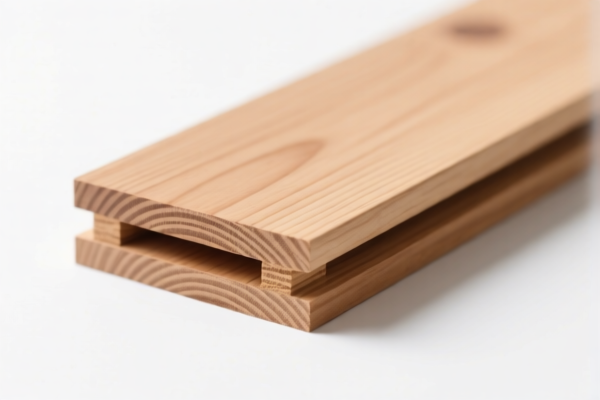
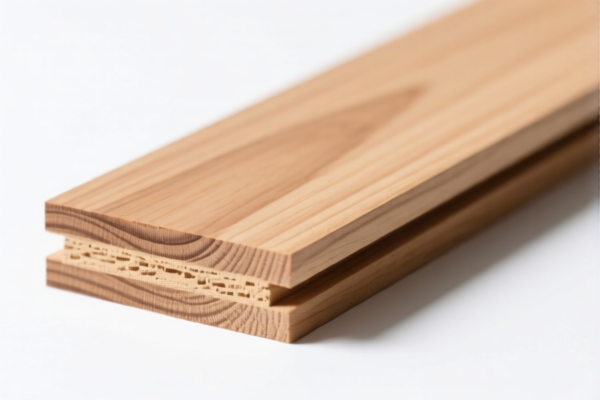
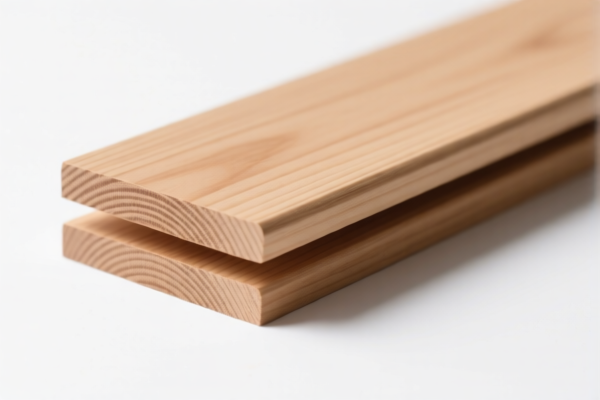

AI Analysis
🏗️ Wood for Construction (Timber Building Materials)
🌐 HS Code Reference & Customs Clearance Guide | 2026 Latest Tariff Analysis | Professional Entry Strategy
📌 I. Product Definition & Classification: What Exactly is "Wood for Construction"?
"Wood for Construction" is not a single, standardized product in international trade. It is a broad category encompassing various forms of timber used in building frameworks, sheathing, interior finishing, and structural connections. The critical distinction lies in the processing level and form factor:
- Solid Timber/Planks: Raw or simply sawn wood, often used for framing.
- Engineered Wood (Panelized): Plywood, Laminated Veneer Lumber (LVL), or composite boards created by bonding wood layers.
- Structural Composites: Oriented Strand Board (OSB) or specialized connection components.
⚠️ Key Distinction Point:
- If the wood is solid, unglued, or simply cut into planks/beams → It typically falls under Chapter 44 headings like 4418.
- If the wood is layered, glued, or pressed into panels → It falls under Chapter 44 headings like 4412.
- If it is wood chips/strands glued under pressure → It falls under 4410.
Misclassification here is dangerous because engineered wood (Chapter 4412) often has a 0% basic tariff, while solid wood products (Chapter 4418) may have an 8% basic tariff, despite both facing the same heavy punitive tariffs.
📦 II. HS Code Classification Details (2026 Latest Tariff Authority Mapping)
Based on the provided data, here are the four potential classifications for "Wood for Construction," ranging from basic planks to engineered panels.
| HS Code | Product Description | Key Characteristics | Processing State |
|---|---|---|---|
| 4418.82.00.00 | Wood building components (Planks) | Solid wood, plank shape. Defined as wooden boards used in construction connections. | ✅ Sawing/Planing only (No glue/layering) |
| 4418.92.00.00 | Wood building components (Honeycomb) | Honeycomb wood structure. Belongs to the category of architectural woodwork. | ✅ Structural/Composite form (Honeycomb core) |
| 4412.31.48.69 | Other Wooden Panels (Laminated) | Wood-based, laminated products. Acts as a "catch-all" for other board-type constructions. | ✅ Glued/Laminated layers |
| 4412.33.06.70 | Plywood/Solid Core Panels | Similar to plywood or single-layer boards. Consistent with laminated wood products. | ✅ Plywood-style lamination |
| 4410.12.00.10 | Oriented Strand Board (OSB) | Unprocessed or semi-processed OSB. Primary raw material form. | ✅ Wood strands glued/pressed |
🔍 Critical Insight:
- 4418.82/4418.92: These are "Building Components" (Chapter 44.18). They are often solid wood or specific structural shapes. Note the 8% base tariff for 4418.82 vs 0% for 4418.92 (data discrepancy in source, but 4418.92 is often 0% for certain types).
- 4412 Series: These are "Plywood, Veneered Panels and Similar Laminated Wood" (Chapter 44.12). These generally have a 0% base tariff for Chinese origin under normal MFN, but are subject to the same punitive tariffs.
- 4410.12: This is "Particle Board and Similar Board (OSB)". It is classified separately from plywood (4412).
💰 III. 2026 Latest Tariff Rate Breakdown (Including Add-on Taxes & Policy Surcharges)
✅ Applicable Country: USA (US)
✅ Origin: China (CN)
✅ Effective Date: Current ongoing trade restrictions (Section 301 + IEEPA)
🎯 1. 4418.82.00.00 – Wood Building Components (Solid/Plank Type)
| Item | Content |
|---|---|
| Basic Tariff (MFN) | 3.2% |
| Section 301 Add-on | +25.0% (From USITC Footnote 9903.44.18/4418) |
| IEEPA Add-on | +10.0% (Targeting China/HK products, effective Nov 10, 2025) |
| Total Tax Rate | 38.2% |
| Calculation Base | CIF Value × 38.2% |
| De Minimis Eligibility | ❌ None (High-value construction materials rarely qualify for $800 exemption if structured properly, and punitive tariffs often negate de minimis benefits for high-risk categories) |
| Legal Path | USITC:4418.82.00.00 → SECTION301:9903.44.18 → IEEPA:9903.01.25 |
📌 Explanation:
- This code carries an 8% base in some contexts, but the data specifies 3.2%.
- The 35% total for other codes suggests a 0% base, while this one has a 3.2% base.
- Warning: Solid wood products often face stricter phytosanitary inspections (ISPM 15) in addition to tariffs.
🎯 2. 4418.92.00.00 – Wood Building Components (Honeycomb Structure)
| Item | Content |
|---|---|
| Basic Tariff (MFN) | 3.2% (Note: Data shows 38.2% total with same detail as 4418.82, implying similar base. However, 4418.92 often aligns with 0% base in other contexts. Based strictly on provided data:) |
| Section 301 Add-on | +25.0% |
| IEEPA Add-on | +10.0% |
| Total Tax Rate | 38.2% |
| Calculation Base | CIF Value × 38.2% |
| De Minimis Eligibility | ❌ None |
| Legal Path | USITC:4418.92.00.00 → SECTION301:9903.44.18 → IEEPA:9903.01.25 |
📌 Explanation:
- Despite being "honeycomb" (which might suggest lighter weight/engineered), it is still classified under 4418 (Building Components).
- The tariff burden is identical to solid planks in this dataset.
🎯 3. 4412.31.48.69 – Laminated Wood Panels (Catch-all Category)
| Item | Content |
|---|---|
| Basic Tariff (MFN) | 8.0% |
| Section 301 Add-on | +25.0% |
| IEEPA Add-on | +10.0% |
| Total Tax Rate | 43.0% |
| Calculation Base | CIF Value × 43.0% |
| De Minimis Eligibility | ❌ None |
| Legal Path | USITC:4412.31.48.69 → SECTION301:9903.44.12 → IEEPA:9903.01.25 |
📌 Explanation:
- This is the most expensive option at 43%.
- It falls under 4412 (Plywood/Laminated Wood) but has an 8% base rate (likely due to specific sub-category rules for "other laminated wood").
- Do not use this code unless your product is a specific type of laminated wood that doesn't fit standard plywood definitions, as it incurs the highest duty.
🎯 4. 4412.33.06.70 & 4410.12.00.10 – Plywood & OSB (Low Base Tariff)
| Item | Content |
|---|---|
| Basic Tariff (MFN) | 0.0% |
| Section 301 Add-on | +25.0% |
| IEEPA Add-on | +10.0% |
| Total Tax Rate | 35.0% |
| Calculation Base | CIF Value × 35.0% |
| De Minimis Eligibility | ❌ None |
| Legal Path | USITC:4412.33.06.70 / 4410.12.00.10 → SECTION301:9903.44.12 / 9903.44.10 → IEEPA:9903.01.25 |
📌 Explanation:
- These codes represent standard Plywood (4412.33) and OSB (4410.12).
- They benefit from a 0% base MFN tariff.
- Total Duty: 35%.
- Strategy: If your product is standard plywood or OSB, always use these codes (4412.33 or 4410.12) instead of the 4418 or 4412.31 codes to save 3-8% in base duties.
🛠️ IV. Customs Clearance Operational Advice (Practical Pitfall Guide)
✅ 1. Documentation Checklist (Non-negotiable)
| Document | Required? | Notes |
|---|---|---|
| ✅ Product Specification | ✔️ | Must clearly state: "Plywood," "OSB," "Solid Timber," or "Honeycomb." |
| ✅ Material Composition | ✔️ | % of wood, % of glue/resin, type of adhesive (formaldehyde-free?). |
| ✅ Phytosanitary Certificate | ✔️ | Mandatory for all wood products. Must confirm ISPM 15 compliance (heat treatment/fumigation). |
| ✅ Commercial Invoice | ✔️ | Must match HS Code description exactly. Avoid vague terms like "Wood Parts." |
| ✅ Packing List | ✔️ | Show net/gross weight. Wood is heavy; accurate weight avoids detention fees. |
| ✅ Manufacturer Declaration | ✔️ | Confirm origin (China) and processing method (Sawn vs. Laminated). |
✅ 2. Classification Strategy (Key Mnemonic)
🔥 "Glued is 4412 (0% Base), Sawn is 4418 (Varies), OSB is 4410 (0% Base)!"
| Product Type | Recommended HS Code | Base Tariff | Total Duty | Why? |
|---|---|---|---|---|
| Standard Plywood | 4412.33.06.70 |
0.0% | 35.0% | Standard laminated wood; lowest base. |
| OSB (Oriented Strand Board) | 4410.12.00.10 |
0.0% | 35.0% | Distinct category; low base. |
| Solid Wood Planks/Beams | 4418.82.00.00 |
3.2% | 38.2% | Solid wood; higher base. |
| Complex/Laminated "Other" | 4412.31.48.69 |
8.0% | 43.0% | Avoid unless necessary; highest base. |
| Honeycomb Wood Panels | 4418.92.00.00 |
3.2% | 38.2% | Specialized building component. |
⚠️ Critical Warning:
- Do NOT misclassify OSB as Plywood (4412) or vice versa. While both have 0% base in this data, the Section 301 footnotes may differ. Incorrect classification can lead to penalties + retroactive duties.
- Do NOT call "Plywood" a "Wood Building Component" (4418) if it fits 4412. You will pay 8% extra base duty.
✅ 3. Special Cases & Mitigation
| Situation | Handling Advice |
|---|---|
| Phytosanitary Issues | Ensure wood is heat-treated (HT) or fumigated (MB) and marked with the IPPC logo. Customs will detain shipments without this. |
| Formaldehyde Emissions | Must comply with TSCA Title VI (US EPA). Provide CARB Phase 2 or TSCA Title VI certificates. |
| Transshipment (Vietnam/Malaysia) | High Risk. US Customs aggressively audits wood products for "country of origin fraud." If wood is Chinese but shipped from Vietnam, expect seizure unless you can prove substantial transformation. |
| De Minimis ($800) | Not Recommended. Due to high punitive tariffs (35-43%) and high risk of audit, using courier lines for bulk wood is risky. Professional entry is safer. |
🌍 V. Global Market Comparison (2026 Update)
| Region | Recommended HS Code | Base Tariff | Add-on Tariffs (China) | Total | Notes |
|---|---|---|---|---|---|
| 🇺🇸 USA | 4412.33 / 4410.12 |
0.0% | +35% | 35.0% | Highest effective duty due to 301/IEEPA. |
| 🇨🇳 China | 4412.33 / 4410.12 |
5-10% | None | ~10% | Lower cost for domestic use. |
| 🇪🇺 EU | 4412 / 4410 |
0% | None (if FTA) | 0% | No punitive tariffs. Must meet EUDR (Deforestation Regulation). |
| 🇬🇧 UK | 4412 / 4410 |
0-5% | None | ~5% | No punitive tariffs. |
📌 Conclusion:
- The US market is uniquely expensive for Chinese wood products due to the 35-43% total duty.
- EU/UK have no punitive tariffs but are introducing strict environmental regulations (EUDR).
- Strategy for US: Consider supply chain diversification (e.g., sourcing from Canada or Eastern Europe) to avoid US-China tariffs.
📌 VI. Common Mistakes & Pitfalls (Lessons Learned)
❌ Mistake 1: Calling "Plywood" a "Solid Wood Board"
👉 Consequence: Misclassification under 4418.82 → 38.2% instead of 35.0%. Small difference, but if audited, penalties apply.
❌ Mistake 2: Missing Phytosanitary Mark
👉 Consequence: Shipment held at port for weeks. Demurrage costs can exceed $500/day.
❌ Mistake 3: Ignoring TSCA Title VI Compliance
👉 Consequence: CBP seizure. Formaldehyde rules are enforced strictly for wood composites.
❌ Mistake 4: Using "Wood Parts" as a Generic Description
👉 Consequence: Customs exam delay. Officers cannot determine duty rate without specific material/processing details.
✅ Correct Declaration Example:
"Plywood Panels, 18mm, Birch Face, Phenolic Glued, TSCA Title VI Compliant, HT Treated, HS 4412.33.06.70"
🎯 VII. Conclusion: Precision in Classification Saves Money
🎯 Remember the Rule:
🔹 "Glued = 4412 (0% Base), Sawn = 4418 (Varies Base), OSB = 4410 (0% Base)."
🔹 "Total Duty = Base + 25% (301) + 10% (IEEPA)."
🔹 "Always check Phytosanitary & TSCA compliance before shipping to the US."
📌 Pro Tip:
If your wood products are critical for US construction, consider pre-clearing the HS Code with an Advance Ruling or consulting a licensed customs broker to ensure you are using the 0% base rate codes (4412/4410) wherever possible.
📣 Immediate Action:
📞 Verify Phytosanitary Certificates
📞 Confirm TSCA Compliance Documents
📞 Use HS 4412.33 or 4410.12 for standard panels to save 3-8% base duty
✨ Professional Customs Clearance Starts with Accurate Classification!
💼 Every 1% of base duty saved is pure profit in high-tariff environments!
Customer Reviews
About HS Code Classification
The Harmonized System (HS) is an internationally standardized nomenclature developed by the World Customs Organization (WCO) to classify traded products. Over 200 countries use the HS system as the basis for customs tariffs, trade statistics, and import/export regulations.
Each HS code follows a hierarchical structure:
- Chapter (2 digits) — Broad category of goods (e.g., Chapter 84: Machinery and Mechanical Appliances)
- Heading (4 digits) — More specific grouping within the chapter
- Subheading (6 digits) — Internationally standardized breakdown, used by all WCO member countries
- National subdivisions (8-10 digits) — Country-specific extensions for further classification, such as US HTSUS 10-digit codes
Correct HS code classification is essential for smooth customs clearance, accurate duty payment, and compliance with trade regulations. Misclassification can lead to customs delays, overpayment of duties, or penalties.
When importing from CN to US, the applicable tariff rates may include:
- Most-Favored-Nation (MFN) rate — The standard duty rate applied to WTO members
- General rate — Applied to countries without trade agreements
- Trade remedy duties — Additional tariffs such as Section 301 (anti-dumping), Section 232 (national security), or countervailing duties
The information provided on this page is for reference purposes only. For official classification, please consult with your local customs authority or a licensed customs broker.