Wood lined Briefcase
CN → US| HS Code | Tariff Rate | Origin | Destination | Doc |
|---|---|---|---|---|
| 4202128980 | 52.6% | CN | US | Official Doc |
| 4202993000 | 35.0% | CN | US | Official Doc |
| 4202128980 | 52.6% | CN | US | Official Doc |
| 4202993000 | 35.0% | CN | US | Official Doc |
| 4202128980 | 52.6% | CN | US | Official Doc |
Product Images
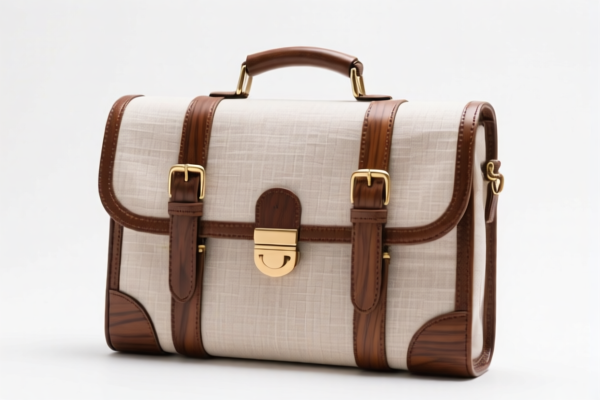
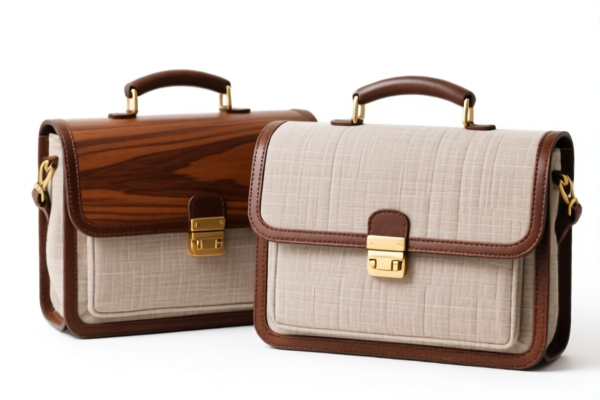
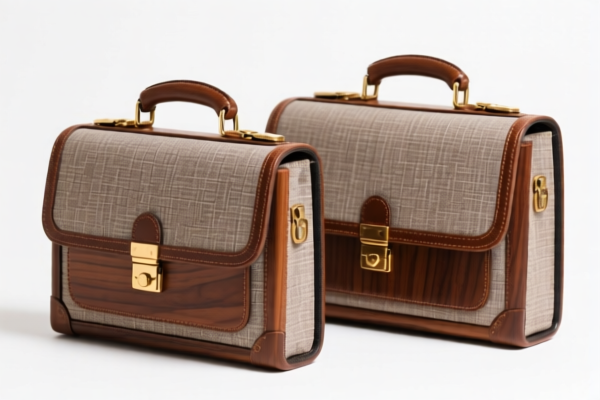
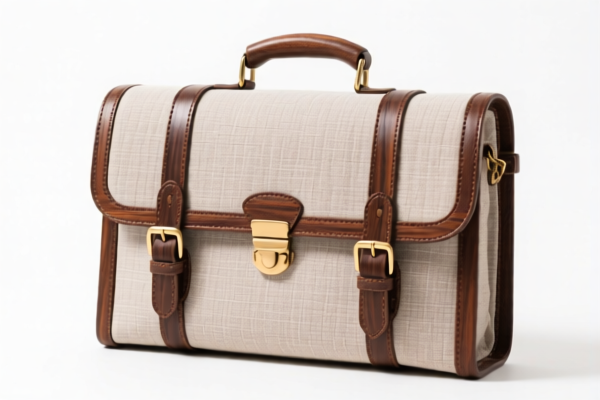
AI Analysis
💼 Wood-Lined Briefcase (Textile Outer Surface)
🌐 HS Code Reference & Customs Clearance Guide | 2026 Latest Tariff Analysis | Professional Clearance Strategy
📌 1. Product Definition & Classification: Do You Truly Understand the "Wood-Lined Briefcase"?
A Wood-Lined Briefcase is a sophisticated professional accessory designed for carrying documents, laptops, and business essentials. In international trade, its classification hinges on two critical factors: 1. Outer Surface Material: The briefcase’s exterior is made of textile materials (fabric, canvas, nylon, etc.). 2. Internal Structure: It features a wooden lining or rigid wooden frame/insert.
⚠️ Key Distinction:
- If the exterior is textile, it generally falls under Heading 42.02 (Articles of apparel, accessories, etc., of leather, composition leather, patent leather, or materials of heading 42.10 or of sheeting of heading 39.21, of leather, of textile materials, etc.).
- If the exterior were leather or plastic, it would be different. But here, textile is king.
- The "wooden lining" affects the specific subheading but does not move it to Chapter 44 (Wood), because the primary characteristic is still a container of textile material.
📦 2. HS Code Classification Details (2026 Latest Tariff Authority Comparison)
Based on the provided data, there are two distinct HS Codes proposed for this product. This discrepancy likely arises from how the "wooden lining" is interpreted:
- Option A: Focuses on the textile outer surface as the primary material → 4202.12.89.80
- Option B: Focuses on the wooden structure/lining as a defining feature → 4202.99.30.00
| HS Code | Product Description | Applicable Scenario | Key Characteristic |
|---|---|---|---|
4202.12.89.80 |
Wood-lined textile briefcase, outer surface is textile material | Standard textile briefcases with internal wooden support/lining | ✅ Textile Outer Surface |
4202.99.30.00 |
Wood-lined textile briefcase, material is wood and lined with cloth | Briefcases where the wooden structure is deemed the primary identity | ✅ Wooden Structure |
🔍 Critical Analysis:
-4202.12.89.80is the more common and likely correct classification for most textile-based briefcases, as Chapter 42 prioritizes the outer surface material. The wooden lining is considered an internal component.
-4202.99.30.00is a high-risk classification that may be rejected by customs if the textile exterior is dominant. It is only applicable if the wooden frame constitutes the essential character of the good (e.g., a rigid wooden box with a cloth liner, rather than a soft-sided textile bag with wood inserts).
💰 3. 2026 Latest Tariff Rate Breakdown (Including Additional Taxes & Policy Add-ons)
✅ Applicable Country: United States (US)
✅ Origin: China (CN)
✅ Effective Date: Post-2025/2026 (Current Trade War Context)
🎯 1. 4202.12.89.80 —— Textile Briefcase (Outer Surface: Textile)
| Item | Content |
|---|---|
| Basic Tariff | 17.6% (Ad Valorem) |
| Section 301 Additional Tariff | +25.0% (USITC Footnote 9903.42.17) |
| Section 122 Tariff | +10.0% (Specific to certain textile/apparel goods) |
| Total Tariff Rate | 52.6% |
| Tax Calculation | CIF Value × 52.6% |
| De Minimis Exemption | ❌ Not Applicable (High tariff items are excluded from Section 321) |
| Legal Basis Path | USITC:4202.12.89.80 → FOOTNOTE:9903.42.17 → IEEPA:9903.01.25 |
📌 Explanation:
- The 17.6% basic tariff reflects the standard duty for textile bags.
- The 25% Section 301 tariff is the bulk of the cost, imposed on Chinese-made consumer goods.
- The 10% Section 122 tariff is an additional safeguard on certain textile products.
- Total: 52.6% is a very high cost factor. Profit margins must account for this.
🎯 2. 4202.99.30.00 —— Wooden-Lined Briefcase (Material: Wood + Cloth)
| Item | Content |
|---|---|
| Basic Tariff | 0.0% (Ad Valorem) |
| Section 301 Additional Tariff | +25.0% (USITC Footnote 9903.42.17) |
| Section 122 Tariff | +10.0% (Specific to certain textile/apparel goods) |
| Total Tariff Rate | 35.0% |
| Tax Calculation | CIF Value × 35.0% |
| De Minimis Exemption | ❌ Not Applicable |
| Legal Basis Path | USITC:4202.99.30.00 → FOOTNOTE:9903.42.17 → IEEPA:9903.01.25 |
📌 Explanation:
- This classification has a 0% basic tariff, which is suspicious for a textile/wood product. It may be classified under "Other" containers.
- However, the 25% + 10% additional tariffs still apply because the goods are of Chinese origin.
- Total: 35.0% is significantly lower than 52.6%, but risky. If customs disagrees with the "wooden material" classification, you will face back taxes + penalties.
🛠️ 4. Customs Clearance Practical Advice (Battle-Tested Pitfall Avoidance)
✅ 1. Required Documentation Checklist (Non-Negotiable)
| Document | Must Provide | Notes |
|---|---|---|
| ✅ Product Specifications | ✔️ | Details: Outer material (textile type), Lining material (wood type/structure), Dimensions, Weight |
| ✅ Product Photos | ✔️ | Clear shots of exterior (textile), interior (wooden lining), and labels |
| ✅ Commercial Invoice | ✔️ | Must accurately describe product as "Briefcase, Textile Outer, Wooden Lining" |
| ✅ Packing List | ✔️ | Itemized list, total gross/net weight |
| ✅ Certificate of Origin | ✔️ | If applicable for other markets, but for US, origin is China |
| ✅ HS Code Pre-Ruling | ✔️ | HIGHLY RECOMMENDED to resolve the 4202.12 vs 4202.99 dispute |
✅ 2. Declaration Tips (Key Mnemonic)
🔥 "Outer Surface Decides, Inner Wood is Secondary!"
| Scenario | Correct Declaration | Wrong Approach |
|---|---|---|
| Standard Textile Briefcase with Wood Inserts | 4202.12.89.80 (52.6%) |
Declaring as 4202.99.30.00 → High risk of audit |
| Rigid Wooden Box with Cloth Lining | 4202.99.30.00 (35.0%) |
Declaring as textile bag → Misclassification |
| Mixed Material Briefcase | Always prioritize Outer Surface Material | Ignoring textile outer surface |
📌 Warning:
- Do not declare "Wooden Briefcase" if the outer surface is clearly textile. Customs will reclassify to4202.12and charge the higher 52.6% + penalties.
- Do not assume 0% basic tariff means "no tax." The 25% + 10% additional taxes still make it expensive.
✅ 3. Special Circumstances Handling
| Situation | Handling Advice |
|---|---|
| OEM Custom Briefcases | Provide design drawings showing textile outer vs. wood interior |
| Hybrid Materials (Leather + Textile) | If leather parts exceed 50% by value, it may be classified as leather (different rate). If textile dominates, stay with 4202.12 |
| Low-Value Shipments (< $800) | ❌ Not Exempt due to Section 301 tariffs. De Minimis (Section 321) does not apply to goods subject to additional tariffs |
🌍 5. Global Market Comparison (2026 Latest)
| Country/Region | Recommended HS Code | Tariff | Notes |
|---|---|---|---|
| 🇺🇸 USA | 4202.12.89.80 |
52.6% | Highest duty due to Section 301 + 122 |
| 🇨🇳 China | 4202.12.89.80 |
~10-15% | Standard import duty, no additional tariffs |
| 🇪🇺 EU | 4202.12.89.80 |
~12% | No Section 301/122 equivalents, but anti-dumping may apply |
| 🇬🇧 UK | 4202.12.89.80 |
~12% | Post-Brexit tariff structure similar to EU |
| 🇦🇺 Australia | 4202.12.89.80 |
~5% | Low base duty, no additional punitive tariffs |
📌 Conclusion:
- USA is the most expensive market for this product due to layered additional tariffs.
- Cost-saving Strategy: Consider sourcing from non-China countries (e.g., Vietnam, India) if possible, to avoid Section 301/122 tariffs.
📌 6. Common Mistakes & Pitfalls (Lessons Learned)
❌ Mistake 1: Declaring "Wooden Briefcase" when outer surface is textile
👉 Result: Customs reclassifies to 4202.12 → Back taxes + 52.6% total duty + penalties
❌ Mistake 2: Assuming 0% basic tariff for 4202.99.30.00 means low cost
👉 Result: Still 35% total due to additional tariffs. No savings!
❌ Mistake 3: Claiming De Minimis exemption for shipments under $800
👉 Result: Rejected. Section 301/122 goods are excluded from Section 321.
✅ Correct Approach:
"Textile Briefcase with Wooden Lining, Outer Surface: 100% Nylon, Inner: Plywood Frame, Model XYZ, FCC/RoHS Compliant (if electronic)"
🎯 7. Conclusion: Precise Classification Saves Money!
🎯 Remember the Mnemonic:
🔹 "Outer Surface is Key, Inner Wood is Secondary!"
🔹 "Textile Outer = 52.6% Duty, Wooden Structure = 35.0% (But Risky)!"
🔹 "De Minimis is Dead for US Imports from China!"
📌 Pro Tip:
If your briefcase originates from Vietnam, Mexico, or India, you may avoid the 25% + 10% additional tariffs.
Strongly recommend obtaining an HS Code Advance Ruling from US CBP to confirm4202.12vs4202.99before shipment.
📣 Immediate Action:
📞 Contact a licensed customs broker + Provide product photos + Apply for HS Code Pre-Ruling
🚀 Ensure your wood-lined briefcase clears customs smoothly, efficiently, and profitably!
✨ Professional Clearance Starts with Accurate Classification!
💼 Every Percent of Duty Matters!
Customer Reviews
About HS Code Classification
The Harmonized System (HS) is an internationally standardized nomenclature developed by the World Customs Organization (WCO) to classify traded products. Over 200 countries use the HS system as the basis for customs tariffs, trade statistics, and import/export regulations.
Each HS code follows a hierarchical structure:
- Chapter (2 digits) — Broad category of goods (e.g., Chapter 84: Machinery and Mechanical Appliances)
- Heading (4 digits) — More specific grouping within the chapter
- Subheading (6 digits) — Internationally standardized breakdown, used by all WCO member countries
- National subdivisions (8-10 digits) — Country-specific extensions for further classification, such as US HTSUS 10-digit codes
Correct HS code classification is essential for smooth customs clearance, accurate duty payment, and compliance with trade regulations. Misclassification can lead to customs delays, overpayment of duties, or penalties.
When importing from CN to US, the applicable tariff rates may include:
- Most-Favored-Nation (MFN) rate — The standard duty rate applied to WTO members
- General rate — Applied to countries without trade agreements
- Trade remedy duties — Additional tariffs such as Section 301 (anti-dumping), Section 232 (national security), or countervailing duties
The information provided on this page is for reference purposes only. For official classification, please consult with your local customs authority or a licensed customs broker.