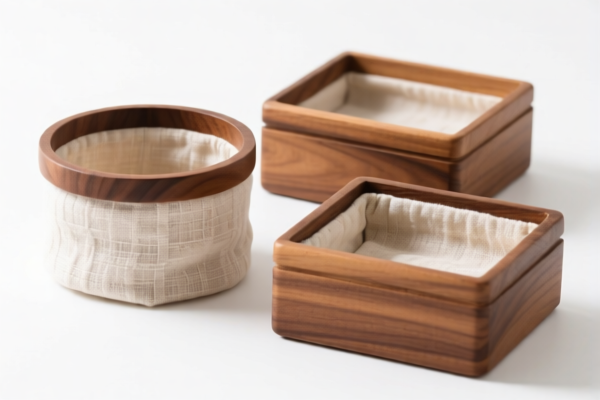
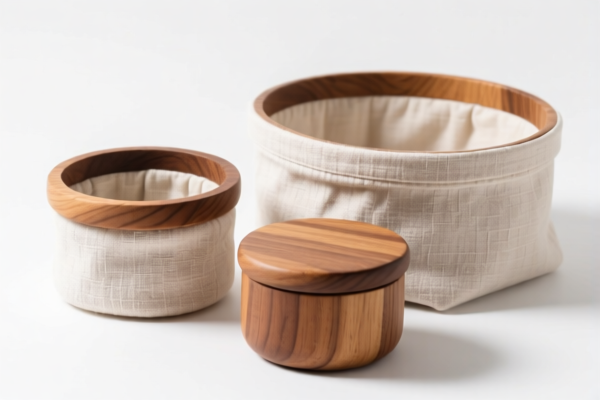
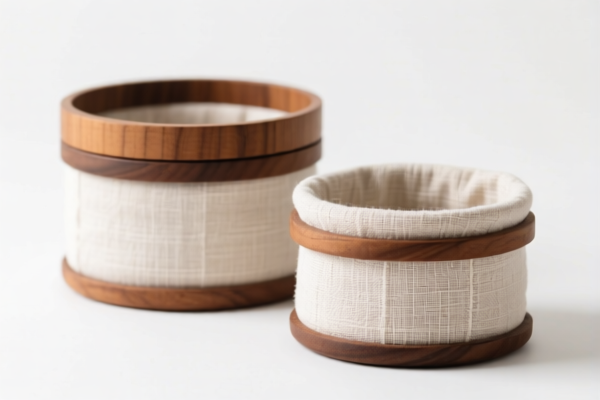
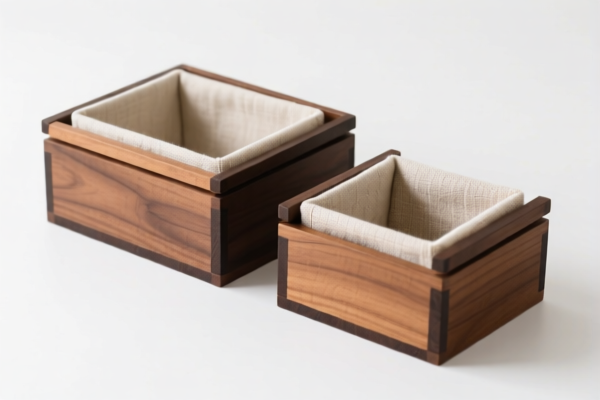
Wood lined Textile Container
CN → US| HS Code | Tariff Rate | Origin | Destination | Doc |
|---|---|---|---|---|
| 3923900080 | 38.0% | CN | US | Official Doc |
| 3923900012 | 38.0% | CN | US | Official Doc |
| 4415109000 | 45.7% | CN | US | Official Doc |
| 4415106000 | 35.0% | CN | US | Official Doc |
| 9403999040 | 85.0% | CN | US | Official Doc |
| 9403999015 | 85.0% | CN | US | Official Doc |
Product Images
AI Analysis
📦 Wood-Lined Textile Container (Wooden Packing Cases)
🌐 HS Code Reference & Customs Clearance Guide | 2026 Latest Tariff Analysis | Professional Clearance Strategy
📌 I. Product Definition & Classification: What is a "Wood-Lined Textile Container"?
A "Wood-Lined Textile Container" refers to a complex packaging structure where wooden external casing/crates are used to protect or contain textile goods, often with internal wooden supports or linings. In international trade and US Customs (CBP) classification, the determining factor is the primary material and function of the packaging itself, not the contents (textiles).
Key Classification Logic: * If the primary structure is wood (crate/box/drum): It falls under Chapter 44 (Wood and articles of wood). * If it is a simple wooden pallet or load board: It falls under 4415.20. * If it is a specialized harvesting container: It falls under 4415.10.60.00.
⚠️ Critical Distinction:
- If the item is a standard wooden crate/box used for general cargo (including textiles) → 4415.10.90.00
- If the item is specifically a harvesting container (e.g., for fruits/vegetables, mistakenly labeled as textile due to fabric liners) → 4415.10.60.00
- Note: "Wood-lined" usually implies a wooden shell. Textiles alone do not dictate the HS code if the rigid structure is wood.
📦 II. HS Code Classification Details (Based on Provided Data)
| HS Code | Product Description | Applicable Scenario | Tax Rate (Total) |
|---|---|---|---|
4415.10.90.00 |
Packing cases, boxes, crates, drums and similar packings, of wood: Other | Standard wooden crates/boxes for general export (including those containing textiles) | 35.7% |
4415.10.60.00 |
Packing cases, boxes, crates, drums and similar packings, of wood: Containers designed for use in the harvesting of fruits and vegetables | Specialized agricultural containers (Even if used for textiles, only if structurally identical to fruit/veg harvest bins) | 0.0% |
🔍 Key Warning:
- Most "Wood-Lined Containers" for industrial/textile use are NOT harvesting containers. They are standard crates/boxes.
- Misclassifying a standard wooden crate as4415.10.60.00(Harvesting) will result in severe penalties and back-tariffs.
- Default Safe Classification:4415.10.90.00for 95% of wooden packaging cases.
💰 III. 2026 Latest Tariff Rate Breakdown (Including Additional Duties)
✅ Applicable Country: United States (US)
✅ Origin: China (CN)
✅ Effective Time: Current US Tariff Structure (Section 301 / IEEPA)
🎯 1. 4415.10.90.00 —— Standard Wooden Packing Cases/Crates
| Item | Content |
|---|---|
| Base Tariff Rate | 10.7% (Ad Valorem) |
| Section 301 Additional Duty | +25.0% (Specific to Chinese-origin goods under USITC Footnote 3) |
| Total Tariff Rate | 35.7% |
| Tax Calculation | CIF Value × 35.7% |
| De Minimis Eligibility | ❌ Not Applicable (Valuation > $800 or commercial shipment) |
| Legal Basis Path | USITC:4415.10.90.00 → FOOTNOTE:3 (Section 301 List 4C/3B) |
📌 Explanation:
- "Base 10.7%": The standard MFN (Most Favored Nation) rate for wooden packing cases.
- "Additional 25%": Imposed under Section 301 of the Trade Act of 1974 on specific Chinese products. Wooden crates/packaging are often included in these lists.
- Total 35.7%: This is a high-cost item for exporters. Do not underestimate this tariff.
🎯 2. 4415.10.60.00 —— Harvesting Containers (Fruits/Vegetables)
| Item | Content |
|---|---|
| Base Tariff Rate | 0.0% |
| Additional Duty | 0.0% |
| Total Tariff Rate | 0.0% |
| Tax Calculation | None |
| De Minimis Eligibility | N/A (0% tax anyway) |
📌 Caution:
- This 0% rate is only for containers specifically designed for harvesting fruits and vegetables (e.g., collapsible wooden crates with slats).
- If your "textile container" is a closed wooden box or crate, it DOES NOT QUALIFY for this 0% rate.
- Misclassification risk: HIGH. CBP will inspect if it looks like a fruit bin.
🛠️ IV. Customs Clearance Practical Advice (Real-World Pitfall Guide)
✅ 1. Document Preparation Checklist (Non-Negotiable)
| Document | Must Provide | Description |
|---|---|---|
| ✅ Product Description | ✔️ | Explicitly state: "Wooden Crate for Packaging Textiles" or "Wooden Packing Case" |
| ✅ Material Declaration | ✔️ | Confirm 100% Wood (or specify if lined with plastic/metal). "Wood-lined" must be clarified as Wooden Shell + Textile Lining vs Textile Bag with Wooden Pallet. |
| ✅ Commercial Invoice | ✔️ | Value must match CIF. Clearly separate packaging value if possible, but usually bundled. |
| ✅ Packing List | ✔️ | Detail dimensions and weight of the wooden crate. |
| ✅ ISPM 15 Marking | ✔️ | Critical! Wooden packaging MUST have the IPPC stamp. Without it, cargo will be rejected/destroyed at US ports. |
✅ 2. Declaration Tips (Key Mnemonic)
🔥 "Wood Shell = 4415.10.90.00 (35.7%) | Harvest Bin = 4415.10.60.00 (0%) | No IPPC = Rejected!"
| Scenario | Correct HS Code | Incorrect Practice |
|---|---|---|
| Wooden Box/Crate for Textiles | 4415.10.90.00 |
Classifying as "Textile Bag" → Wrong Chapter |
| Wooden Pallet Only | 4415.20.00.00 (Not in data, but standard) |
Classifying as crate → Wrong rate |
| Wooden Crate shaped like fruit bin | 4415.10.60.00 (Only if truly for harvest) |
Claiming 0% for standard crate → Audit Risk |
| Plastic Crate with Wood Lining | Could be 3923.90 (Plastics) |
Claiming Wood → Wrong Chapter |
✅ 3. Special Considerations
| Situation | Handling Advice |
|---|---|
| ISPM 15 Non-Compliance | Ensure the wooden crate has the official heat-treatment stamp. CBP may detain cargo for fumigation at your expense. |
| "Lined" vs. "Made of" | If the primary structure is wood, use 4415. If the primary structure is textile (bag) with wooden pallets inside, classify the bag separately (Textiles) and pallets separately. Do not mix. |
| Cost Optimization | Since 4415.10.90.00 has a 35.7% tariff, consider using plastic crates (3923.90.00.80 or 3923.90.00.12) if they offer similar protection. Plastic crates also have high tariffs (28%) but may be lighter/cheaper to ship overall. |
🌍 V. Global Market Comparison (2026)
| Country/Region | Recommended HS Code | Tariff (China Origin) | Key Requirement |
|---|---|---|---|
| 🇺🇸 USA | 4415.10.90.00 |
35.7% | ISPM 15 Stamp Mandatory |
| 🇨🇳 China | 4415.10.90.00 |
~5% (Import Duty) | Standard Wood Packaging |
| 🇪🇺 EU | 4415.10 |
~0-2% (if compliant) | ISPM 15 + Fumigation Certificate |
| 🇬🇧 UK | 4415.10 |
~0-2% | ISPM 15 |
📌 Conclusion:
- The USA has the highest effective tariff (35.7%) due to Section 301.
- ISPM 15 compliance is the #1 clearance risk for wooden packaging.
📌 VI. Common Errors & Pitfalls (Lessons Learned)
❌ Error 1: Classifying a standard wooden crate as 4415.10.60.00 to save tax.
👉 Consequence: CBP audit, back-tariff of 35.7%, plus penalties.
Solution: Only use 4415.10.60.00 for genuine agricultural harvesting containers.
❌ Error 2: Forgetting the ISPM 15 stamp on wooden crates.
👉 Consequence: Cargo rejected at US port. Demurrage fees accumulate daily.
Solution: Verify stamp before loading.
❌ Error 3: Mixing "Textile Container" (textile bag) with "Wooden Crate" in one HS Code.
👉 Consequence: Confusion in valuation.
Solution: Declare the wooden case as 4415.10.90.00 and the textiles inside under their own textile HS codes (e.g., 6307.xxxx). Separate declaration is best practice.
🎯 VII. Conclusion: Professional Declaration, Safe Clearance!
🎯 Remember the Mantra:
🔹 "Wooden Crate = 35.7% (US) | Harvest Bin = 0% | IPPC Stamp = Go!"
🔹 "Don't mix textiles and wood in one line unless specified. Separate for safety."
📌 Pro Tip:
If the wooden container is reusable and high-value, consider leasing rather than exporting, or use plastic alternatives (3923.90) if the 35.7% tariff is too burdensome. Always get a Pre-Ruling from CBP if the container structure is ambiguous.
📣 Immediate Action:
📞 Contact your freight forwarder to verify ISPM 15 compliance.
📄 Provide Photos of the Wooden Crate (including stamps) to your customs broker.
🚀 Avoid 35.7% surprises by declaring accurately!
✨ Professional Clearance Starts with Accurate Classification!
💼 Every percent of tariff counts!
Customer Reviews
About HS Code Classification
The Harmonized System (HS) is an internationally standardized nomenclature developed by the World Customs Organization (WCO) to classify traded products. Over 200 countries use the HS system as the basis for customs tariffs, trade statistics, and import/export regulations.
Each HS code follows a hierarchical structure:
- Chapter (2 digits) — Broad category of goods (e.g., Chapter 84: Machinery and Mechanical Appliances)
- Heading (4 digits) — More specific grouping within the chapter
- Subheading (6 digits) — Internationally standardized breakdown, used by all WCO member countries
- National subdivisions (8-10 digits) — Country-specific extensions for further classification, such as US HTSUS 10-digit codes
Correct HS code classification is essential for smooth customs clearance, accurate duty payment, and compliance with trade regulations. Misclassification can lead to customs delays, overpayment of duties, or penalties.
When importing from CN to US, the applicable tariff rates may include:
- Most-Favored-Nation (MFN) rate — The standard duty rate applied to WTO members
- General rate — Applied to countries without trade agreements
- Trade remedy duties — Additional tariffs such as Section 301 (anti-dumping), Section 232 (national security), or countervailing duties
The information provided on this page is for reference purposes only. For official classification, please consult with your local customs authority or a licensed customs broker.