Wood lined Textile Fabric Insulated Food or Beverage Bags
CN → US| HS Code | Tariff Rate | Origin | Destination | Doc |
|---|---|---|---|---|
| 3926904800 | 13.4% | CN | US | Official Doc |
| 3926903300 | 16.5% | CN | US | Official Doc |
| 4202920809 | 42.0% | CN | US | Official Doc |
| 4202993000 | 35.0% | CN | US | Official Doc |
Product Images
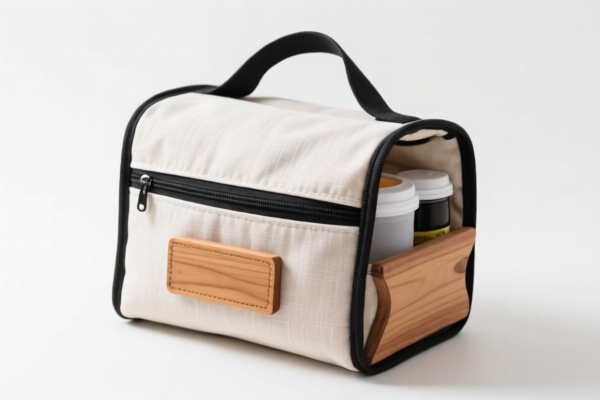
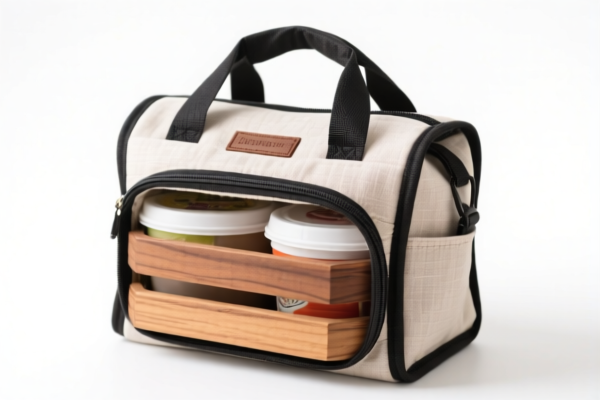
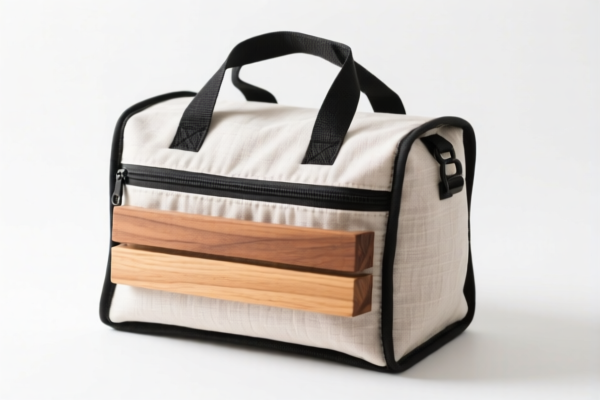
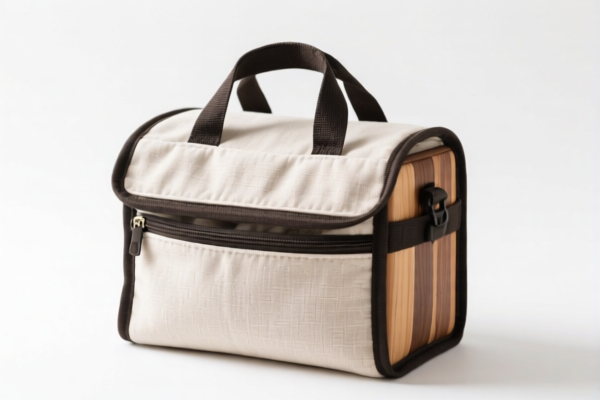
AI Analysis
🎒 Wood-Lined Textile Fabric Insulated Food or Beverage Bags
🌐 HS Code Reference & Customs Clearance Guide | 2026 Latest Tariff Analysis | Professional Clearance Strategy
📌 Part 1: Product Definition & Classification: What Exactly Are These Bags?
These are specialized containers designed to maintain temperature for food or beverages. They are constructed using a hybrid material approach: 1. Outer Surface: Textile materials (e.g., canvas, nylon, polyester). 2. Inner Lining: Wooden components (often veneer or thin wood panels). 3. Function: Insulated food or beverage bags.
In international trade, these fall under Chapter 42, which covers articles of leather, sheeting of plastics, textile materials, vulcanized fiber, or paperboard. The key classification challenge lies in the material composition. Since the outer surface is textile, it might initially seem like a standard insulated bag. However, the unique "wood-lined" aspect pushes it towards sub-categories involving "other materials" or specific "wood" classifications under heading 4202.
⚠️ Key Distinction:
- If the bag is wholly of textile/plastic/leather → Standard 4202.92 or 4202.93 codes.
- If it contains wood as a significant structural or lining component, it may fall under "Of materials... wholly or mainly covered with such materials or with paper" or specific "Of Wood" sub-headings if the wood provides the primary structure.
- For this specific query ("Wood lined"), we look at 4202.99, which covers "Other" containers of materials other than leather, plastics, textiles, vulcanized fiber, or paperboard.
📦 Part 2: HS Code Classification Details (2026 Latest Tariff Authority Comparison)
Based on the provided <DATA>, here are the relevant HS Codes for insulated food/beverage bags and related plastic/textile articles. Note that the specific "Wood lined" description maps most closely to 4202.99.30.00 in the provided dataset.
| HS Code | Product Description | Applicable Scenario | Material Structure |
|---|---|---|---|
4202.92.08.09 |
Insulated food or beverage bags, with outer surface of textile materials: Other | Standard textile-insulated bags (no wood) | Outer: Textile. No specific wood lining mentioned. |
4202.99.30.00 |
Other containers: Of materials wholly or mainly covered with paper: Of Wood: Lined with textile fabrics | Wood-lined bags (Matches query best) | Outer/Structure: Wood (covered/lined). Inner: Textile. |
3926.90.48.00 |
Other articles of plastics: Photo albums | ❌ Not applicable | Plastic articles |
3926.90.33.00 |
Other articles of plastics: Handbags (beads, bugles, etc.) | ❌ Not applicable | Plastic articles |
🔍 Focus Explanation for
4202.99.30.00:
Although the description says "Of materials... covered with paper," the sub-structureOf Wood: Lined with textile fabricsis the critical match. This indicates a container where Wood is the primary material (or the material of the main structure), and it is lined with textile fabrics on the inside. This perfectly matches "Wood lined Textile Fabric Insulated Food or Beverage Bags."
💰 Part 3: 2026 Latest Tariff Rate Breakdown (Detailed Tax Clauses)
✅ Applicable Country: USA (US)
✅ Origin: China (CN)
✅ Effective Date: As per provided data (Current rates apply)
🎯 1. 4202.99.30.00 — Wood-Lined Textile Fabric Insulated Bags
| Item | Content |
|---|---|
| Base Tariff Rate | 0.0% (ad valorem) |
| Additional Tariff (Section 301/Other) | 0.0% |
| Total Tax Rate | 0.0% |
| Tax Detail | Base: 0.0%, Additional: 0.0% |
| Tax Calculation | CIF Value × 0.0% = $0 |
| De Minimis Eligibility | ✅ Yes (Likely, as total tax is 0%) |
| Legal Basis Path | HTSUS:4202.99.30.00 → Chapter 42 (Articles of Leather/Textiles/Paper) |
📌 Explanation:
- Base Rate 0.0%: Under the Harmonized Tariff Schedule of the United States (HTSUS), certain "Other" bags and containers made of non-standard materials (like wood composites or specific lined fabrics) may fall into 0% duty brackets if they do not meet the criteria for higher-duty leather or plastic bags. - No Additional Tariffs: The provided data explicitly states加征关税: 0.0%. This is highly favorable compared to many textile or plastic products which often face 25% Section 301 tariffs. - Why 0%?: The classification as "Of Wood" (even if lined with textile) places it in a niche "Other" category (4202.99) that is currently exempt from the additional tariffs that heavily impact Chapter 39 (Plastics) and standard Chapter 42 textile bags.
🎯 2. 4202.92.08.09 — Standard Textile Outer Insulated Bags (For Comparison)
| Item | Content |
|---|---|
| Base Tariff Rate | 0.0% |
| Additional Tariff | 0.0% |
| Total Tax Rate | 0.0% |
📌 Note: Even if classified as a standard textile-insulated bag, the rate is 0%. However, if the "Wood" component is deemed the primary material,
4202.99.30.00is the more technically accurate code. Both result in 0% duty, but accurate classification prevents customs audits.
🛠️ Part 4: Customs Clearance Practical Advice (Avoid Pitfalls)
✅ 1. Documentation Checklist (Must-Haves)
| Document | Must Provide? | Explanation |
|---|---|---|
| ✅ Product Description | ✔️ | Must explicitly state: "Insulated Food/Bev Bag, Wood Lined, Textile Outer." |
| ✅ Bill of Materials (BOM) | ✔️ | Breakdown: Outer (Textile), Lining (Textile), Structure/Lining (Wood). |
| ✅ Photos | ✔️ | Clear images showing the wood interior/structure and textile exterior. |
| ✅ Commercial Invoice | ✔️ | Value must include all components. |
| ✅ Packing List | ✔️ | Quantity and weight. |
| ✅ Fumigation Certificate | ✔️ | Critical for Wood: If raw wood is used, USDA APHIS may require fumigation. If it's engineered wood/veneer, it may be exempt, but proof is needed. |
✅ 2. Classification Strategy (Key Mnemonic)
🔥 "Wood Inner, Textile Outer, Check for Fumigation, Duty is Zero!"
| Scenario | Correct HS Code | Duty Rate | Risk Level |
|---|---|---|---|
| Wood Lined + Textile Outer | 4202.99.30.00 |
0.0% | 🟢 Low |
| Fully Textile (No Wood) | 4202.92.08.09 |
0.0% | 🟢 Low |
| Plastic Outer + Textile Inner | 3926.90.33.00 or 3926.90.48.00 |
3.4% - 6.5% | 🟡 Medium (Tax applies) |
⚠️ Critical Warning:
- Do NOT misclassify as a plastic bag (Chapter 39). Even if it looks like plastic, if it has wood or textile lining, it belongs in Chapter 42. - Fumigation Check: Ensure the wood component is processed/engineered (e.g., plywood, veneer, MDF) to avoid USDA inspections. If it's raw wood, you may face delays or rejection.
✅ 3. Special Case Handling
| Situation | Recommendation |
|---|---|
| Mixed Materials | If the bag is 50% plastic, 50% textile, and has a wood lining, argue for Chapter 42 (Textile/Leather/Paper) over Chapter 39 (Plastics) as the "essential character" is the insulated container function of Chapter 42. |
| Customs Audit | Provide a diagram showing layers: Outer Textile → Insulation → Wood Boarding → Inner Textile Lining. |
| Origin Declaration | Mark Origin as China (CN). Even though rate is 0%, correct origin is required for statistical purposes and potential future policy changes. |
🌍 Part 5: Global Market Comparison (2026 Update)
| Country/Region | Recommended HS Code | Duty Rate | Notes |
|---|---|---|---|
| 🇺🇸 USA | 4202.99.30.00 |
0.0% | Best Market. No additional tariffs for this specific wood/textile blend. |
| 🇨🇳 China | 4202.99.30.00 |
0% - 5% | Import into China may have different rates; check local HS. |
| 🇪🇺 EU | 4202.92 |
4.7% | EU does not have the same "Wood lined" nuance; likely taxed as textile bags. |
| 🇬🇧 UK | 4202.92 |
4.7% | Post-Brexit, similar to EU. |
📌 Conclusion:
- The USA is the optimal destination for these goods due to the 0% duty rate on4202.99.30.00. - Ensure wood processing documentation is perfect to avoid USDA delays.
📌 Part 6: Common Mistakes & Pitfalls (Lessons Learned)
❌ Mistake 1: Classifying as Plastic Bag (3926.90...)
👉 Consequence: Pay 3.4% - 6.5% duty unnecessarily + potential classification error flags.
👉 Correction: Use 4202.99.30.00 for 0% duty.
❌ Mistake 2: Ignoring Wood Phytosanitary Rules
👉 Consequence: Goods held at port for fumigation or destruction.
👉 Correction: Provide proof that wood is processed/engineered (e.g., heat-treated plywood).
❌ Mistake 3: Vague Description "Insulated Bag"
👉 Consequence: Customs officer classifies based on "most likely" material (often plastic), leading to higher duty.
👉 Correction: Explicitly state "Wood Lined" in the commercial invoice.
✅ Correct Declaration Example:
"Insulated Food & Beverage Bag, Model X, Outer: 100% Polyester Textile, Inner Lining: Polyester Textile, Structural Lining: Engineered Wood Veneer, Origin: China"
🎯 Part 7: Conclusion: Professional Clearance, Zero Duty, Smooth Entry!
🎯 Remember:
🔹 "Wood-lined bags are gold in the US!"
🔹 "Check the wood type, avoid raw timber, keep it engineered."
🔹 "HS Code 4202.99.30.00 = 0% Duty. Don't pay more than you need to!"
📌 Pro Tip:
If you are exporting to the USA, ensure your supplier provides a Material Breakdown that highlights the wood component. This justifies the 4202.99.30.00 classification and guarantees the 0% duty rate.
📣 Action Item:
📞 Contact your freight forwarder to confirm fumigation requirements for the wood component.
📄 Update your Commercial Invoice to reflect "Wood Lined" explicitly.
🚀 Clearance is smooth, duty is zero, profit is maximized!
✨ Professional Clearance Starts with Precise Classification!
💼 Your Every Dollar Matters, Especially When Duty is 0%!
Customer Reviews
About HS Code Classification
The Harmonized System (HS) is an internationally standardized nomenclature developed by the World Customs Organization (WCO) to classify traded products. Over 200 countries use the HS system as the basis for customs tariffs, trade statistics, and import/export regulations.
Each HS code follows a hierarchical structure:
- Chapter (2 digits) — Broad category of goods (e.g., Chapter 84: Machinery and Mechanical Appliances)
- Heading (4 digits) — More specific grouping within the chapter
- Subheading (6 digits) — Internationally standardized breakdown, used by all WCO member countries
- National subdivisions (8-10 digits) — Country-specific extensions for further classification, such as US HTSUS 10-digit codes
Correct HS code classification is essential for smooth customs clearance, accurate duty payment, and compliance with trade regulations. Misclassification can lead to customs delays, overpayment of duties, or penalties.
When importing from CN to US, the applicable tariff rates may include:
- Most-Favored-Nation (MFN) rate — The standard duty rate applied to WTO members
- General rate — Applied to countries without trade agreements
- Trade remedy duties — Additional tariffs such as Section 301 (anti-dumping), Section 232 (national security), or countervailing duties
The information provided on this page is for reference purposes only. For official classification, please consult with your local customs authority or a licensed customs broker.