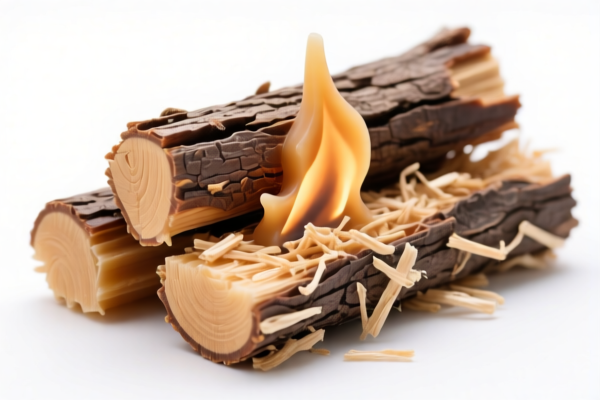
Wood sawdust and waste compressed fuel cylinders
CN → US| HS Code | Tariff Rate | Origin | Destination | Doc |
|---|---|---|---|---|
| 4401310000 | 35.0% | CN | US | Official Doc |
| 4401394210 | 35.0% | CN | US | Official Doc |
Product Images



AI Analysis
🪵 Wood Pellets & Agglomerated Sawdust (Compressed Fuel Cylinders)
🌐 HS Code Reference & Customs Clearance Guide | 2026 Latest Tariff Analysis | Professional Clearance Strategy
📌 I. Product Definition & Classification: What Exactly Is "Wood Sawdust and Waste Compressed Fuel Cylinders"?
"Wood sawdust and waste compressed fuel cylinders" refer to fuel wood in the form of sawdust, chips, or waste that has been compressed into solid shapes. In international trade, these are commonly known as Wood Pellets, Briquettes, or Agglomerated Fuel Logs.
These products fall under Chapter 44 of the Harmonized System (HS): Wood and articles of wood; wood charcoal.
Key Distinction: * Raw Sawdust/Chips: Loose, uncompressed wood waste → HS 4401.39.42.10 * Agglomerated Pellets/Briquettes: Sawdust/waste compressed into logs, briquettes, pellets, or similar forms → HS 4401.31.00.00
⚠️ Critical Classification Point:
- If the wood waste is agglomerated (compressed with or without binders) into pellets, briquettes, or logs → It is classified as "Wood Pellets" or "Other Agglomerated Wood". - If it is loose sawdust (not compressed into fixed shapes) → It is classified as "Other Sawdust".
📦 II. HS Code Classification Details (2026 Official Tariff Alignment)
Based on the provided data, there are two primary HS Codes depending on the physical form of the agglomerated fuel:
| HS Code | Product Description | Physical Form | Application Scenario |
|---|---|---|---|
4401.31.00.00 |
Wood Pellets | Cylindrical, compressed sawdust/waste | Standard home heating, industrial biomass boilers, export-grade fuel pellets |
4401.39.42.10 |
Other: Other Sawdust | Loose sawdust, chips, or non-standard agglomerates | Industrial sawdust, loose wood waste, non-pelletized compressed fuel |
🔍 Note on "Compressed Fuel Cylinders":
- If the "cylinders" are standard wood pellets (typically 6–8mm diameter), they fall under 4401.31.00.00.
- If they are irregular briquettes or non-standard agglomerates that do not fit the strict definition of "pellets," they may fall under 4401.39.42.10.
- Most commercially traded "compressed fuel cylinders" for heating are classified as Wood Pellets (4401.31.00.00).
💰 III. 2026 Latest Tariff Rate Breakdown (Including Surcharge)
✅ Applicable Country: United States (US)
✅ Origin: China (CN) (Implied by the 25% surcharge structure)
✅ Effective Date: 2025 onwards (Subject to current USITC rulings)
🎯 1. 4401.31.00.00 —— Wood Pellets (Agglomerated)
| Item | Detail |
|---|---|
| Base Tariff Rate | 0.0% |
| Additional Surcharge | +25.0% (Section 301 Tariff / USITC Footnote) |
| Total Tax Rate | 25.0% |
| Tax Calculation | CIF Value × 25% |
| De Minimis Eligibility | ❌ Not Eligible (High-risk category for de minimis exemption) |
| Legal Basis | USITC Section 301 Surcharge on Chinese Wood Products |
📌 Explanation:
- Although the base tariff for wood pellets is 0%, the 25% additional duty is applied under US trade remedies (Section 301).
- This makes the effective landed cost significantly higher than pre-2018 levels.
- No other surcharges (like IEEPA) are listed in the provided data for this specific code, so the total is strictly 25%.
🎯 2. 4401.39.42.10 —— Other Sawdust (Loose or Non-Pellet Agglomerates)
| Item | Detail |
|---|---|
| Base Tariff Rate | 0.0% |
| Additional Surcharge | +25.0% (Section 301 Tariff / USITC Footnote) |
| Total Tax Rate | 25.0% |
| Tax Calculation | CIF Value × 25% |
| De Minimis Eligibility | ❌ Not Eligible |
| Legal Basis | USITC Section 301 Surcharge on Chinese Wood Products |
📌 Note:
- The tariff structure for loose sawdust is identical to that of wood pellets in this dataset.
- Both are subject to the 25% surcharge, resulting in a 25% total tax.
🛠️ IV. Customs Clearance Practical Advice (Real-World Pitfall Avoidance)
✅ 1. Required Documentation Checklist
| Document | Mandatory? | Purpose |
|---|---|---|
| ✅ Product Description | ✔️ | Must clearly state: "Wood Pellets" or "Agglomerated Wood Waste" |
| ✅ Material Composition | ✔️ | Specify % of sawdust, bark, binders (if any). Pure wood is preferred. |
| ✅ Certificate of Origin (CO) | ✔️ | To prove origin and apply/verify surcharges |
| ✅ Quality Inspection Report | ✔️ | Moisture content (<10% is standard), ash content, density |
| ✅ Commercial Invoice | ✔️ | Must match HS Code and describe "Fuel Wood, Agglomerated" |
| ✅ Packing List | ✔️ | Detail weight per pallet/bag, total net/gross weight |
✅ 2. Declaration Tips (Key Mnemonics)
🔥 "Be Precise: Pellets vs. Sawdust, Both 25%!"
| Scenario | Correct Declaration | Wrong Declaration |
|---|---|---|
| Standard 6mm Wood Pellets | 4401.31.00.00 - "Wood Pellets" |
"Wood Chips" or "Raw Sawdust" |
| Irregular Wood Briquettes | 4401.39.42.10 - "Other Agglomerated Wood" |
"Fuel Wood, Unprocessed" |
| Loose Sawdust (Not Compressed) | 4401.39.42.10 - "Sawdust" |
"Pellets" |
📌 Warning:
- Misdeclaring pellets as sawdust (or vice versa) may lead to misclassification penalties, even if the tariff rate is the same.
- Ensure the HS Code matches the physical form. If you declare "Pellets" but ship loose sawdust, customs will reclassify and may impose fines.
✅ 3. Special Cases & Risk Mitigation
| Situation | Handling Advice |
|---|---|
| High Moisture Content | Ensure moisture is <10-12%. Wet pellets may be rejected or classified as "green wood" (different HS). |
| Additives/Binders | Declare accurately. If >5% non-wood binders, it may be reclassified under Chapter 39 (Plastics) or 38 (Chemicals). |
| Biomass Certification | Some US importers require FSC/PEFC certification or biomass sustainability proof. Check buyer requirements. |
| Pest Control | Wood products are subject to ISPM 15 standards. Ensure pallets are heat-treated and marked. |
🌍 V. Global Market Comparison (2026 Overview)
| Country/Region | Recommended HS Code | Tariff (China Origin) | Notes |
|---|---|---|---|
| 🇺🇸 USA | 4401.31.00.00 |
25% | Section 301 surcharge applies |
| 🇨🇳 China | 4401.31.00.00 |
0% - 5% | Depends on specific classification |
| 🇪🇺 EU | 4401.31.00.00 |
0% | Favorable for biomass fuel |
| 🇬🇧 UK | 4401.31.00.00 |
0% | Post-Brexit, generally low |
| 🇦🇺 Australia | 4401.31.00.00 |
5% | Wills Levy may apply |
📌 Conclusion:
- The US market is the most expensive for Chinese wood pellets due to the 25% surcharge.
- EU and UK offer 0% tariffs, making them more attractive markets for Chinese wood pellet exporters.
📌 VI. Common Mistakes & Pitfalls (Lessons Learned)
❌ Mistake 1: Declaring "Wood Pellets" but shipping loose sawdust
👉 Consequence: Customs reclassification + penalty + delay
❌ Mistake 2: Ignoring the 25% Surcharge in Cost Calculations
👉 Consequence: Profit margin wiped out; buyer refuses delivery
❌ Mistake 3: Not providing Quality Reports
👉 Consequence: Rejected at port due to high moisture/ash content
❌ Mistake 4: Using vague descriptions like "Wood Fuel"
👉 Consequence: Customs may classify under general waste codes with higher scrutiny
✅ Best Practice:
"Wood Pellets, 6mm Diameter, Birch/Poplar Mix, Moisture <10%, Ash <1%, Bagged 15kg, for Residential Heating, HS 4401.31.00.00"
🎯 VII. Conclusion: Precision Classification for Cost Efficiency
🎯 Remember:
🔹 "Pellets = 4401.31.00.00 | Sawdust = 4401.39.42.10 | Both = 25% Tax!"
🔹 "Clear Description Saves Money, Vague Words Cost You!"
📌 Pro Tip:
- If you are exporting to the US, factor in the 25% additional duty in your pricing model.
- Consider transshipment or origin certification if feasible (though Section 301 is strict on China origin).
- Always verify with a licensed customs broker before shipment.
📣 Take Action Now:
📞 Consult a Customs Broker
📄 Prepare Accurate Product Specs
🚀 Ensure Smooth Clearance & Maximize Profit!
✨ Professional Clearance Starts with Accurate Classification!
💼 Every Dollar Counts in Global Trade!
Customer Reviews
About HS Code Classification
The Harmonized System (HS) is an internationally standardized nomenclature developed by the World Customs Organization (WCO) to classify traded products. Over 200 countries use the HS system as the basis for customs tariffs, trade statistics, and import/export regulations.
Each HS code follows a hierarchical structure:
- Chapter (2 digits) — Broad category of goods (e.g., Chapter 84: Machinery and Mechanical Appliances)
- Heading (4 digits) — More specific grouping within the chapter
- Subheading (6 digits) — Internationally standardized breakdown, used by all WCO member countries
- National subdivisions (8-10 digits) — Country-specific extensions for further classification, such as US HTSUS 10-digit codes
Correct HS code classification is essential for smooth customs clearance, accurate duty payment, and compliance with trade regulations. Misclassification can lead to customs delays, overpayment of duties, or penalties.
When importing from CN to US, the applicable tariff rates may include:
- Most-Favored-Nation (MFN) rate — The standard duty rate applied to WTO members
- General rate — Applied to countries without trade agreements
- Trade remedy duties — Additional tariffs such as Section 301 (anti-dumping), Section 232 (national security), or countervailing duties
The information provided on this page is for reference purposes only. For official classification, please consult with your local customs authority or a licensed customs broker.