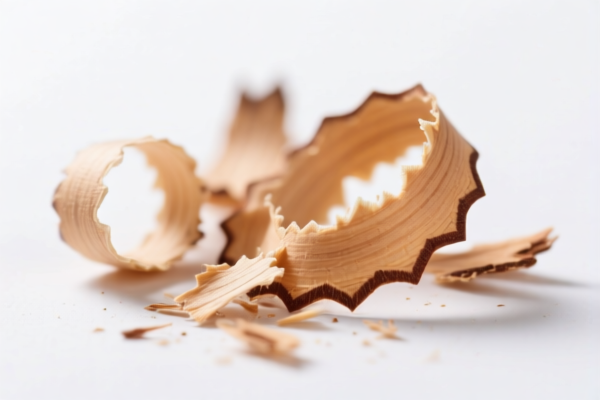
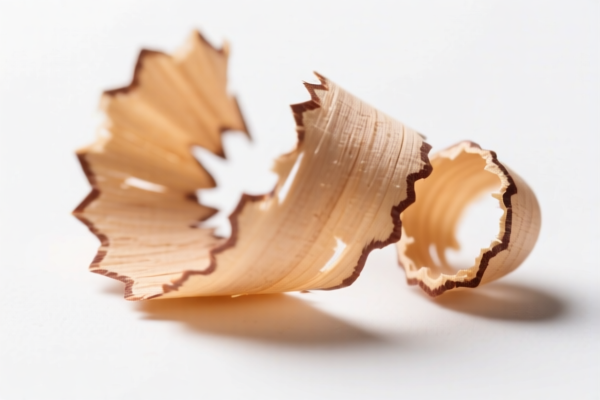
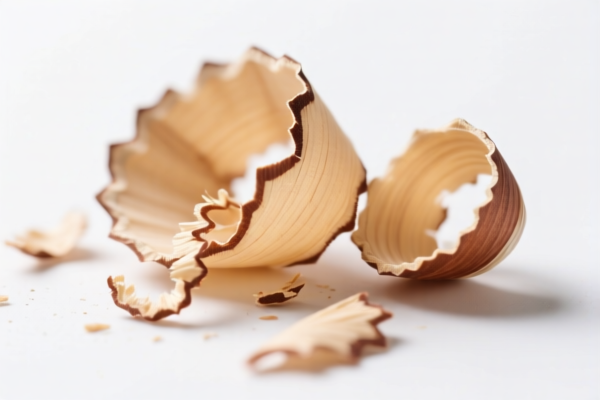
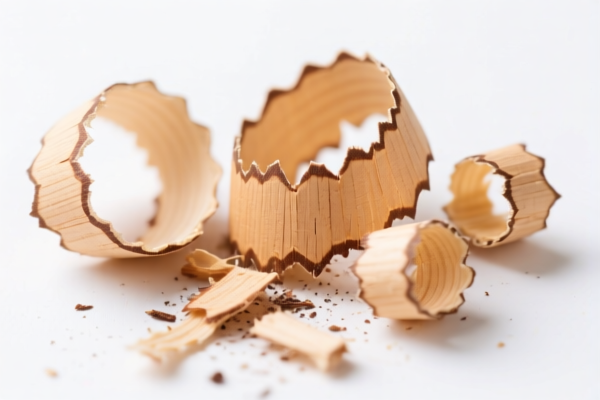
Wood shavings for craft
CN → US| HS Code | Tariff Rate | Origin | Destination | Doc |
|---|---|---|---|---|
| 4407990295 | 35.0% | CN | US | Official Doc |
| 4407990242 | 35.0% | CN | US | Official Doc |
| 4703190000 | 35.0% | CN | US | Official Doc |
| 4703290020 | 35.0% | CN | US | Official Doc |
Product Images
AI Analysis
🪵 Wood Shavings & Sawn Wood (Craft & Industrial Use)
🌐 HS Code Reference & Customs Clearance Guide | 2026 Latest Tariff Analysis | Professional Clearance Strategy
📌 1. Product Definition & Classification: Do You Truly Understand "Wood Shavings for Craft"?
"Woods shavings for craft" is a common trade term, but in international customs classification, it is ambiguous. The correct HS Code depends entirely on the physical state (shavings/chips vs. sawn boards) and processing level (unbleached vs. semibleached/bleached).
Below is the precise classification based on the provided data:
| Product Type | Physical Form | Processing Status | Key Distinction |
|---|---|---|---|
| Chemical Woodpulp | Fibrous/Pulpy | Soda/Sulfate Method | Used for paper manufacturing, not direct crafting. |
| Sawn Wood | Planks/Boards | Planed/Sanded/Jointed | Used for furniture, flooring, or structural craft. |
⚠️ Critical Warning:
- "Shavings" typically imply waste or raw material for pulp/paper. If it is pulp, use 4703.xx.
- "Craft Wood" typically implies sawn wood (planks/shapes). If it is sawn wood, use 4407.xx.
- Do not confuse "Wood Shavings" (waste/pulp) with "Wooden Crafts" (finished goods, usually HS 44 or 95).
📦 2. HS Code Classification Details (Based on Provided Data)
| HS Code | Product Description | Typical Use Case | Tax Rate (China Origin to US) |
|---|---|---|---|
| 4703.19.00.00 | Chemical woodpulp, soda or sulfate, other than dissolving grades: Unbleached: Nonconiferous | Paper pulp, industrial fiber | 25.0% |
| 4703.29.00.20 | Chemical woodpulp, soda or sulfate, other than dissolving grades: Semibleached or bleached: Nonconiferous Semibleached | High-quality paper, tissue | 25.0% |
| 4407.99.02.95 | Wood sawn or chipped lengthwise, sliced or peeled... of thickness >6mm: Other: Other Nonconiferous | General craft wood, non-precious lumber | 25.0% |
| 4407.99.02.42 | Wood sawn or chipped lengthwise...: Other: Hickory (Carya spp.) and Pecan | Premium craft wood, furniture | 25.0% |
🔍 Key Insight:
- All listed HS Codes carry a 25.0% total tax rate (0% base + 25% additional).
- The distinction between 4703 (Pulp) and 4407 (Sawn Wood) is critical for customs declaration accuracy.
💰 3. 2026 Latest Tariff Rate Details
✅ Applicable Country: United States (US)
✅ Origin: China (CN)
✅ Effective Time: 2025 November 10 onwards
🎯 1. HS Code 4703.19.00.00 & 4703.29.00.20 (Wood Pulp)
| Item | Content |
|---|---|
| Base Tariff | 0.0% |
| Additional Tariff (Section 301) | +25.0% |
| Total Tax Rate | 25.0% |
| Calculation Basis | CIF Value × 25% |
| De Minimis Exemption? | ❌ No (Section 301 duties apply regardless of value) |
| Legal Reference | USITC Footnote for Section 301 |
📌 Explanation:
- Wood pulp is considered an industrial raw material.
- The 25% additional tariff is applied due to trade tensions.
- Note: "Soda or Sulfate" refers to the chemical process used to separate wood fibers.
🎯 2. HS Code 4407.99.02.95 & 4407.99.02.42 (Sawn Wood)
| Item | Content |
|---|---|
| Base Tariff | 0.0% |
| Additional Tariff (Section 301) | +25.0% |
| Total Tax Rate | 25.0% |
| Calculation Basis | CIF Value × 25% |
| De Minimis Exemption? | ❌ No |
| Legal Reference | USITC Footnote for Section 301 |
📌 Explanation:
- 4407.99.02.95 covers general non-coniferous wood (e.g., oak, maple, walnut used in crafts).
- 4407.99.02.42 specifically covers Hickory and Pecan woods, which are popular for high-end crafts and furniture.
- Both carry the same 25% additional tariff.
🛠️ 4. Customs Clearance Practical Advice
✅ 1. Documentation Checklist (Mandatory)
| Document | Required | Notes |
|---|---|---|
| Commercial Invoice | ✔️ | Must clearly state "Wood Pulp" or "Sawn Wood" based on HS Code. |
| Packing List | ✔️ | Detail weight, volume, and number of packages. |
| Phytosanitary Certificate | ✔️ | Critical for wood products. Issued by origin country's agricultural department. |
| Fumigation Certificate | ✔️ | Required for solid wood packaging and often for wood cargo to prevent pests. |
| Product Specification | ✔️ | Confirm if it is "Unbleached," "Semibleached," or "Sawn." |
| IsPMPP 15 Marking | ✔️ | If wood packaging is used, it must be heat-treated and marked. |
✅ 2. Declaration Tips (Key Keywords)
🔥 "Describe Accurately, Avoid 'Shavings' Ambiguity!"
| Scenario | Correct Declaration | Incorrect Declaration |
|---|---|---|
| Raw Wood Chips/Flakes | 4703.19.00.00 - "Unbleached Chemical Woodpulp, Nonconiferous" |
"Wood Shavings" (Too vague, may be rejected) |
| Sawn Planks for Crafts | 4407.99.02.95 - "Sawn Wood, Nonconiferous, >6mm" |
"Craft Wood" (Vague, leads to misclassification) |
| Hickory/Pecan Wood | 4407.99.02.42 - "Sawn Hickory/Pecan Wood" |
"Hardwood" (Too general) |
✅ 3. Special Circumstances
| Situation | Handling Advice |
|---|---|
| Mixed Shipments | If Pulp and Sawn Wood are in the same container, declare separately. Do not mix HS Codes. |
| Wood Packaging | If the wood shavings are packed in wooden crates, ensure the crates are compliant with ISPM 15. |
| Origin Declaration | Ensure the Certificate of Origin matches the shipment. Tariffs are origin-specific. |
| Value Declaration | Declare CIF Value (Cost + Insurance + Freight). Under-declaration can lead to fines. |
🌍 5. Global Market Comparison (2026)
| Country/Region | Recommended HS Code | Tariff (China Origin) | Notes |
|---|---|---|---|
| 🇺🇸 USA | 4703.xx or 4407.xx |
25.0% | High tariff due to Section 301. |
| 🇨🇳 China | 4703.xx or 4407.xx |
0-5% | Import duties vary by product. |
| 🇪🇺 EU | 4703.xx or 4407.xx |
0-6% | Requires FLEGT or EUTR compliance. |
| 🇬🇧 UK | 4703.xx or 4407.xx |
0-6% | Post-Brexit rules apply. |
| 🇨🇦 Canada | 4703.xx or 4407.xx |
0-5% | USMCA may apply if originating in NA. |
📌 Conclusion:
- The USA imposes a significant 25% additional tariff on these wood products.
- Proper documentation (Phytosanitary Certificate) is as critical as the HS Code for avoiding delays.
📌 6. Common Mistakes & Pitfalls
❌ Mistake 1: Declaring "Wood Shavings" without specifying "Pulp" or "Sawn Wood"
👉 Consequence: Customs may classify under a higher duty rate or reject the shipment for unclear description.
❌ Mistake 2: Ignoring Phytosanitary Requirements for Wood
👉 Consequence: Shipment quarantined or returned due to pest risk.
❌ Mistake 3: Confusing "Wood Pulp" (4703) with "Wood Chips" (4401)
👉 Consequence: Misclassification, potential penalties, and duty miscalculation.
✅ Correct Approach:
"Unbleached Chemical Woodpulp, Nonconiferous, for Paper Manufacturing"
OR
"Sawn Wood, Nonconiferous, Unplaned, Thickness 10mm, for Craft Use"
🎯 7. Conclusion: Accurate Classification Saves Money & Time
🎯 Remember:
🔹 "Pulp is 4703, Sawn Wood is 4407."
🔹 "Phytosanitary Certificate is a MUST for wood."
🔹 "25% Tariff is fixed for China-origin to US."
📌 Pro Tip:
If you are importing wood shavings for crafts that are pre-cut shapes (not raw wood), they may fall under HS 4420 (Wood marquetry) or HS 9503 (Toys/Models). However, based on the provided data, only 4703 and 4407 are applicable.
Always consult with a customs broker for pre-classification if the product form is unusual.
📣 Action Plan:
📞 Contact Customs Broker + Prepare Phytosanitary Certificate + Apply for Advance Ruling (if needed)
🚀 Ensure Smooth Clearance, Avoid Delays, and Manage Costs!
✨ Professional Clearance Starts with Precise Classification!
💼 Every Duty Saved is Profit Gained!
Customer Reviews
About HS Code Classification
The Harmonized System (HS) is an internationally standardized nomenclature developed by the World Customs Organization (WCO) to classify traded products. Over 200 countries use the HS system as the basis for customs tariffs, trade statistics, and import/export regulations.
Each HS code follows a hierarchical structure:
- Chapter (2 digits) — Broad category of goods (e.g., Chapter 84: Machinery and Mechanical Appliances)
- Heading (4 digits) — More specific grouping within the chapter
- Subheading (6 digits) — Internationally standardized breakdown, used by all WCO member countries
- National subdivisions (8-10 digits) — Country-specific extensions for further classification, such as US HTSUS 10-digit codes
Correct HS code classification is essential for smooth customs clearance, accurate duty payment, and compliance with trade regulations. Misclassification can lead to customs delays, overpayment of duties, or penalties.
When importing from CN to US, the applicable tariff rates may include:
- Most-Favored-Nation (MFN) rate — The standard duty rate applied to WTO members
- General rate — Applied to countries without trade agreements
- Trade remedy duties — Additional tariffs such as Section 301 (anti-dumping), Section 232 (national security), or countervailing duties
The information provided on this page is for reference purposes only. For official classification, please consult with your local customs authority or a licensed customs broker.