Wood shavings for packaging
CN → USProduct Images
AI Analysis
🪵 Wood Shavings for Packaging (Wood Chips/Wool)
🌐 HS Code Reference & Customs Clearance Guide | 2026 Latest Tariff Analysis | Professional Clearance Strategy
📌 I. Product Definition & Classification: Are They Really Just "Shavings"?
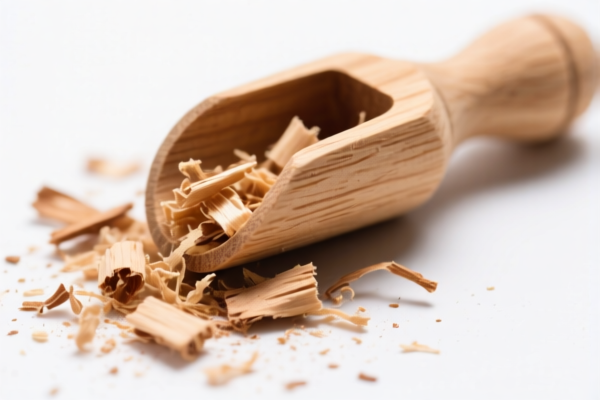
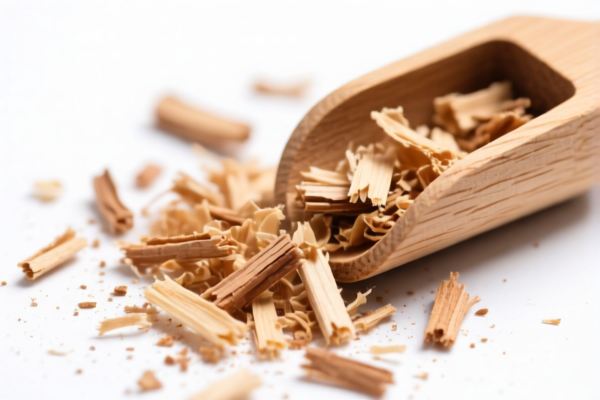
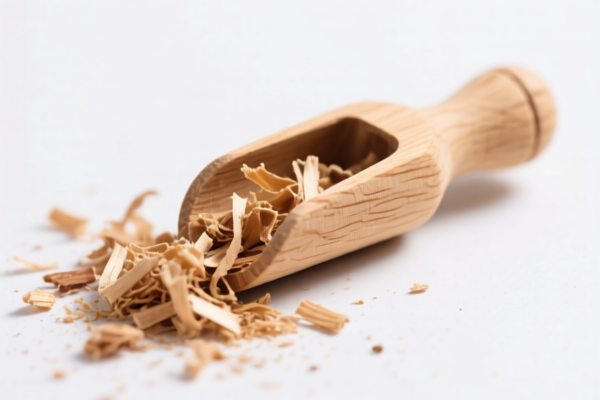
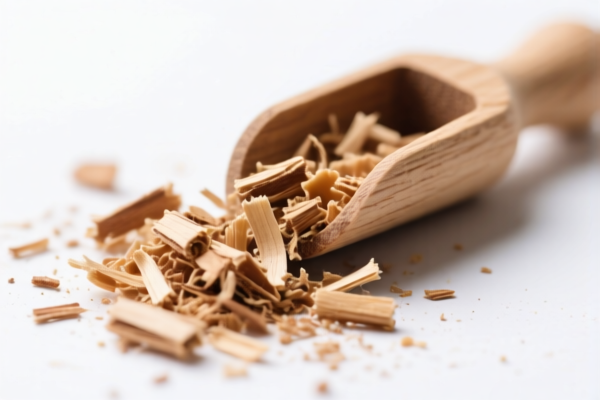
Wood shavings used for packaging (often referred to as wood wool, excelsior, or wood chips) are loose, fibrous, or chip-like wood products designed to cushion goods during transport. In international trade, they are strictly regulated due to phytosanitary risks and fumigation requirements.
Two Main Categories: 1. Wood Wool/Shavings (Loose Fiber) Soft, loose strands used for void fill. → HS 4401.40 2. Wood Chips/Waste (Hard/Chip-like) Small, harder fragments often used in bulk or for specific industrial packaging. → HS 4401.40 or 4401.90
⚠️ Key Distinction:
- If the material is loose, fibrous, or shredded specifically for packing/cushioning → 4401.40.00.00
- If it is hardwood/softwood chips not classified under 4401.40 → 4401.90.00.00
- CRITICAL: Must be debarked and heat-treated (HT) or fumigated to meet ISPM 15 standards if used in direct contact with packaging, though shavings themselves are often exempt from ISPM 15 marking if processed to a specific thickness, but customs still requires phytosanitary certificates.
📦 II. HS Code Classification Details (2026 Latest Tariff Authority Comparison)
| HS Code | Product Description | Application Scenario | ISPM 15 Status |
|---|---|---|---|
4401.40.00.00 |
Wood wool; wood chips and particles (specifically wood wool/shavings for packing) | Loose fill packaging, cushioning material, void filler | ❌ Usually Exempt from Marking (but must be HT) |
4401.90.00.00 |
Other fuel wood; wood chips, particles, sawdust, wood waste | Industrial fuel, biomass, or general wood waste packaging filler | ⚠️ Depends on processing; often requires phytosanitary cert |
🔍 Important Note:
- 4401.40.00.00 is the most common code for packaging wood shavings/wool.
- Do not confuse with pallets/boxes (HS 4415), which require ISPM 15 treatment and marking. Wood shavings are "waste/processed wood" but for packing, they are often exempt from ISPM 15 marking if they are less than 6mm thick or processed, but phytosanitary certification is still mandatory for most countries.
💰 III. 2026 Latest Tariff Rate Details (Including Surtaxes, Policy Additions)
✅ Applicable Country: United States (US)
✅ Origin: China (CN)
✅ Effective Date: November 10, 2025 (including subsequent imports)
🎯 1. 4401.40.00.00 —— Wood Wool; Wood Chips and Particles (for Packing)
| Item | Content |
|---|---|
| Base Tariff | 0% (ad valorem) |
| USITC Surtax | +25% (from USITC Footnote 9903.88.01) |
| IEEPA Surtax | +10% (for China/HK products, effective Nov 10, 2025) |
| Total Tariff | 35% |
| Tax Calculation | CIF Value × 35% |
| De Minimis Eligibility | ❌ Not Eligible (deny_de_minimis) |
| Legal Authority Path | IEEPA:9903.01.25 → IEEPA:9903.01.24 → USITC:4401.40.00.00 → FOOTNOTE:9903.88.01 |
📌 Explanation:
- "25% USITC Surcharge" comes from Section 301 of the U.S. Trade Act;
- "10% IEEPA Surcharge" is a new对华 additional tariff under the International Emergency Economic Powers Act;
- Total 35% is a high tariff, must be anticipated in cost planning!
🎯 2. 4401.90.00.00 —— Other Wood Waste and Scrap (Less Common for Premium Packaging)
| Item | Content |
|---|---|
| Base Tariff | 0% |
| USITC Surcharge | +25% |
| IEEPA Surcharge | +10% |
| Total Tariff | 35% |
| Tax Calculation | CIF × 35% |
| De Minimis Eligibility | ❌ Not Eligible |
| Legal Authority Path | IEEPA:9901.25 → IEEPA:9903.01.24 → USITC:4401.90.00.00 → FOOTNOTE:9903.88.01 |
📌 Note:
- Same tariff structure as 4401.40;
- If your product is not wood wool/shavings but general wood waste, use this code, but 35% total tariff still applies.
🛠️ IV. Customs Clearance Practical Advice (Battle-Tested Pitfall Avoidance Guide)
✅ 1. Required Documentation Checklist (All Are Mandatory)
| Document | Must Provide | Description |
|---|---|---|
| ✅ Phytosanitary Certificate | ✔️ | Issued by the country of origin's plant protection agency, confirming no pests/diseases. |
| ✅ Heat Treatment (HT) Certificate | ✔️ | Proof that wood shavings were treated at ≥56°C for 30 mins (if required by destination). |
| ✅ Product Specification Sheet | ✔️ | Includes fiber length, moisture content, type of wood (hardwood/softwood). |
| ✅ Commercial Invoice | ✔️ | Clearly state "Wood Shavings for Packaging" or "Wood Wool." |
| ✅ Packing List | ✔️ | Detail net/gross weight, number of bags/rolls. |
| ✅ Fumigation Certificate (If not HT) | ✔️ | Alternative to HT if fumigation was used. |
✅ 2. Declaration Tips (Key Mantra)
🔥 "HT Certified, Phyto Attached, Name Accurate, Clearance Speeds Up!"
| Scenario | Correct Declaration | Wrong Practice |
|---|---|---|
| Wood wool for packing | 4401.40.00.00 + Phyto Cert |
Misdeclare as "paper filler" → Seizure/Fine |
| General wood waste | 4401.90.00.00 |
Misdeclare as "4401.40" → Audit Risk |
| Wood chips for fuel | 4401.00.00 (Other) |
Use for packaging → Wrong Use of Tariff |
| Untreated wood | ❌ Do Not Import | No Phyto/HT → Rejection/Return |
✅ 3. Special Situations Handling
| Situation | Handling Advice |
|---|---|
| OEM Custom Shavings | Provide buyer's spec sheet; ensure "wood type" matches declaration. |
| Mixed with Other Materials | If mixed with plastic/foam, declare separately or as composite; do not mix with untreated wood. |
| Direct Contact with Food | Requires Food-Grade Certification in addition to Phyto; otherwise, restricted. |
| EU/UK Import | Requires ISPM 15 Compliance documentation; even if exempt from marking, proof of treatment is needed. |
🌍 V. Global Main Market Clearance Comparison (2026 Latest)
| Country/Region | Recommended HS Code | Tariff | Certification Requirements | Remarks |
|---|---|---|---|---|
| 🇺🇸 USA | 4401.40.00.00 |
35% (CN Origin) | Phyto + HT | 35% is high; budget accordingly |
| 🇨🇳 China | 4401.40.00.00 |
5% | Phyto (if imported) | No surtax |
| 🇪🇺 EU | 4401.40.00.00 |
0% (if compliant) | Phyto + ISPM 15 Proof | Stricter on pests |
| 🇦🇺 Australia | 4401.40.00.00 |
5% | Biosecurity Permit + HT | Very strict on wood imports |
| 🇯🇵 Japan | 4401.40.00.00 |
0% | Phyto + MAFIA Approval | Requires detailed wood species info |
📌 Conclusion:
- USA has a 35% total tariff for Chinese-origin wood shavings;
- EU/Australia have stricter phytosanitary controls;
- China origin faces high tariffs in the US; consider Vietnam/Malaysia origin for IEEPA exemption (tariff drops to 0%~5% if processed sufficiently).
📌 VI. Common Mistakes & Pitfall Avoidance (Blood-and-Tears Lessons)
❌ Mistake 1: Declaring as "Paper Shavings" to avoid tariffs
👉 Consequence: Customs inspection reveals wood fibers → 6-year ban + heavy fines!
❌ Mistake 2: Forgetting Phytosanitary Certificate
👉 Consequence: Shipment held at port for weeks → Demurrage fees + return/re-export!
❌ Mistake 3: Mixing treated and untreated wood shavings
👉 Consequence: Entire batch rejected → Total loss!
❌ Mistake 4: Using "Wood Wool" for non-packaging purposes (e.g., animal bedding) without correct declaration
👉 Consequence: Wrong HS Code → Penalty + Audit!
✅ Correct Practice:
"Wood Wool, Heat Treated, 100% Softwood, for Packaging Use, HT Certificate No. XYZ, Phyto Cert No. ABC"
🎯 VII. Conclusion: Professional Declaration, Save Time, Cut Costs!
🎯 Remember the Mantra:
🔹 "HT Certified, Phyto Attached, Name Accurate, Tariff Clear!"
🔹 "HS Code 4401, Tax 35%, No Phyto, No Entry!"
📌 Tips:
- If your wood shavings are originated from Vietnam, Malaysia, or Thailand, you may qualify for IEEPA exemption, reducing the tariff to 0%~5%;
- Recommend pre-clearance consultation or Advance Ruling to avoid risks.
📣 Take Action Now:
📞 Contact a professional customs broker + Provide product photos + Apply for HS Code Advance Ruling
🚀 Let your wood shavings, pass customs smoothly, efficient export, profit doubled!
✨ Professional Clearance Starts with Precise Classification!
💼 Every cent of your cost deserves precise calculation!
Customer Reviews
About HS Code Classification
The Harmonized System (HS) is an internationally standardized nomenclature developed by the World Customs Organization (WCO) to classify traded products. Over 200 countries use the HS system as the basis for customs tariffs, trade statistics, and import/export regulations.
Each HS code follows a hierarchical structure:
- Chapter (2 digits) — Broad category of goods (e.g., Chapter 84: Machinery and Mechanical Appliances)
- Heading (4 digits) — More specific grouping within the chapter
- Subheading (6 digits) — Internationally standardized breakdown, used by all WCO member countries
- National subdivisions (8-10 digits) — Country-specific extensions for further classification, such as US HTSUS 10-digit codes
Correct HS code classification is essential for smooth customs clearance, accurate duty payment, and compliance with trade regulations. Misclassification can lead to customs delays, overpayment of duties, or penalties.
When importing from CN to US, the applicable tariff rates may include:
- Most-Favored-Nation (MFN) rate — The standard duty rate applied to WTO members
- General rate — Applied to countries without trade agreements
- Trade remedy duties — Additional tariffs such as Section 301 (anti-dumping), Section 232 (national security), or countervailing duties
The information provided on this page is for reference purposes only. For official classification, please consult with your local customs authority or a licensed customs broker.