Wooden Activated Carbon Filter Media
CN → US| HS Code | Tariff Rate | Origin | Destination | Doc |
|---|---|---|---|---|
| 8421390140 | 35.0% | CN | US | Official Doc |
| 8421390115 | 35.0% | CN | US | Official Doc |
| 3802100050 | 39.8% | CN | US | Official Doc |
| 3802100010 | 39.8% | CN | US | Official Doc |
Product Images
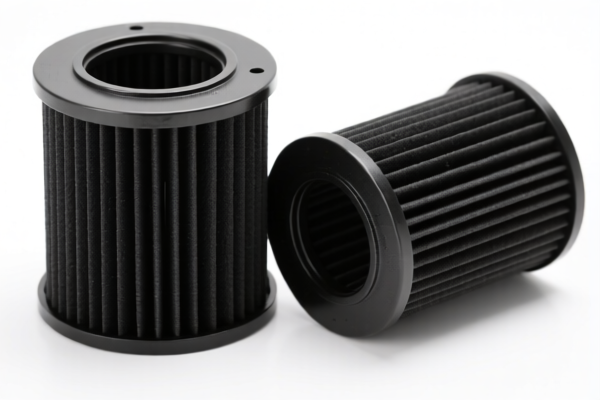
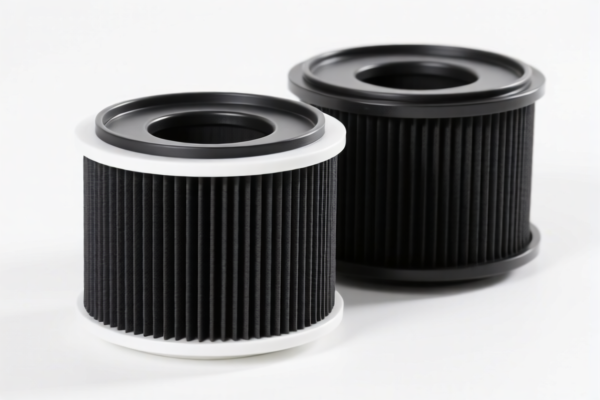
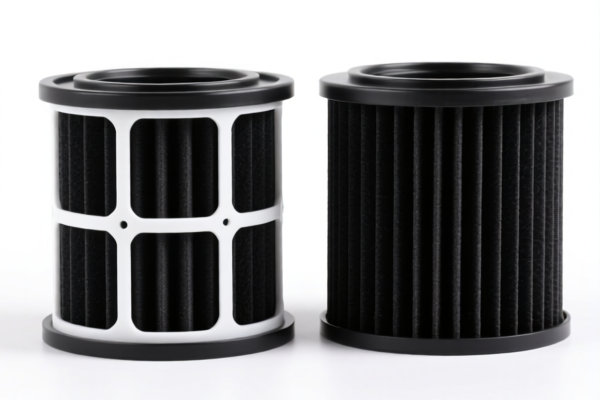

AI Analysis
🪵 Wooden Activated Carbon Filter Media
🌐 HS Code Reference & Customs Clearance Guide | 2026 Latest Tariff Analysis | Professional Compliance Strategy
📌 I. Product Definition & Classification: Do You Really Understand "Wooden Activated Carbon Filter Media"?
"Wooden Activated Carbon Filter Media" refers to activated carbon derived from wood charcoal, used in liquid or gas purification systems. In international trade, it is critically distinguished by its raw material source and physical form.
Wood-Based Activated Carbon: Produced from carbonized wood.
Coal-Based/Other Activated Carbon: Produced from coal, coconut shells, etc.
⚠️ Key Distinction Point:
- If the product is explicitly stated as "Derived from Coal" → It falls under 3802.10.00.10.
- If the product is "Other" Activated Carbon (including wood, coconut, etc., unless specified otherwise as coal) → It falls under 3802.10.00.50.
- Crucial Note: "Wooden" implies it is not coal-derived. Therefore, it defaults to the "Other" category.
📦 II. HS Code Classification Details (2026 Latest Tariff Authority Comparison)
| HS Code | Product Description | Applicable Scenario | Tariff Rate (China Origin to US) |
|---|---|---|---|
3802.10.00.50 |
Activated carbon; other (including wood-based) | Wood-based activated carbon pellets, powder, or granules for general filtration | 29.8% (See Tax Details Below) |
3802.10.00.10 |
Activated carbon; derived from coal | Coal-based activated carbon | 0.0% (See Tax Details Below) |
8421.39.01.40 |
Gas separation equipment (Finished Machine) | Not applicable for raw media | 25.0% |
8421.39.01.15 |
Dust collection/air purification equipment (Finished Machine) | Not applicable for raw media | 25.0% |
🔍 Critical Reminder:
- Raw Material is King: The HS code for activated carbon is determined by its origin material.
- "Wooden" = "Other": Since "Wooden Activated Carbon" is not "Derived from Coal," it cannot use3802.10.00.10. It must use3802.10.00.50.
- Finished vs. Raw: If the carbon is packed inside a filter housing with a frame (a complete unit), it might be classified as filtration equipment (8421.39.01...). However, if it is sold as "Media" (loose pellets, granules, or bags of carbon), it is classified under 3802.
- Assumption: The term "Filter Media" strongly implies the raw material/component, not the finished machine.
💰 III. 2026 Latest Tariff Rate Details (Including Additional Duties & Policy Surcharges)
✅ Applicable Country: United States (US)
✅ Country of Origin: China (CN)
✅ Effective Date: November 10, 2025 onwards
🎯 1. 3802.10.00.50 —— Activated Carbon, Other (Includes Wood-Based)
This is the correct HS Code for Wooden Activated Carbon.
| Item | Content |
|---|---|
| Base Tariff Rate | 4.8% (ad valorem) |
| Section 301 Surcharge (USITC) | +25.0% (Applied to Chinese origin goods under Footnote 9903.88.01) |
| Total Tax Rate | 29.8% |
| Tax Calculation | CIF Value × 29.8% |
| De Minimis Eligibility | ❌ No (Denied for Section 301 goods) |
| Legal Basis Path | HTSUS: 3802.10.00.50 → USITC: Footnote 9903.88.01 → 301 Tariff List |
📌 Explanation:
- The 4.8% is the standard Most Favored Nation (MFN) duty for "Other Activated Carbon."
- The 25% is the additional duty imposed under the Section 301 Trade Action.
- Total Effective Duty: 29.8%. This is a significant cost driver.
🎯 2. 3802.10.00.10 —— Activated Carbon Derived from Coal
This is NOT for wood-based carbon, but provided for comparison to highlight the risk of misclassification.
| Item | Content |
|---|---|
| Base Tariff Rate | 0.0% |
| Section 301 Surcharge | +0.0% (Some coal-derived carbon codes may have exemptions, but generally, check current list. Data shows 0.0% total here) |
| Total Tax Rate | 0.0% |
| Tax Calculation | CIF Value × 0.0% |
| De Minimis Eligibility | ❌ Check specific exemptions |
⚠️ Warning: Do NOT misclassify wood-based carbon as coal-based to get 0% tax. Customs audits raw material claims. If you declare coal but import wood, you face fraud penalties, back taxes, and potential seizure.
🛠️ IV. Customs Clearance Practical Advice (Combat Pitfalls Guide)
✅ 1. Preparation Checklist (Must-Haves)
| Document | Required? | Description |
|---|---|---|
| ✅ Certificate of Origin (CO) | ✔️ | Must clearly state "Wood-based" or "Charcoal-based" if possible. |
| ✅ Material Safety Data Sheet (MSDS) | ✔️ | Proves it is activated carbon (flammable dust hazard). |
| ✅ Product Specification Sheet | ✔️ | Details iodine number, mesh size, moisture content. |
| ✅ Invoice Description | ✔️ | Must say "Wood-based Activated Carbon Media," NOT "Coal Carbon." |
| ✅ Bill of Lading | ✔️ | Consistent with invoice description. |
✅ 2. Declaration Strategy (Key Mantra)
🔥 "Declare Material, Not Just Function. Wood is 'Other,' Coal is 'Coal.'"
| Scenario | Correct HS Code | Error Risk |
|---|---|---|
| Wood-based Carbon Pellets | 3802.10.00.50 |
29.8% Duty |
| Coal-based Carbon Pellets | 3802.10.00.10 |
0% Duty |
| Finished Filter Housing with Wood Carbon | 8421.39.01.40 |
25% Duty |
| Loose Wood Carbon in Bags | 3802.10.00.50 |
29.8% Duty |
📌 Note on Finished Goods:
If your product is a complete filter cartridge (housing + media + end caps), it might be classified under 8421.39.01.40 (Gas separation/purification equipment) or 8421.39.01.15 (Air purification equipment).
-8421.39.01.40Rate: 25.0% (Base 0% + 25% Surcharge)
-8421.39.01.15Rate: 25.0% (Base 0% + 25% Surcharge)Comparison:
- Raw Media (Wood): 29.8%
- Finished Filter Cartridge: 25.0%Strategy: If possible, and if the product fits the definition of a "filter element/cartridge" rather than raw "media," consider classifying as 8421.39.01.40 to save 4.8% in base duties. However, you must prove it is a "part of machinery" or "finished apparatus," not just raw absorbent material.
✅ 3. Special Handling
| Situation | Advice |
|---|---|
| Misdeclaration Risk | Never call "Wood Carbon" "Coal Carbon." Customs may request lab tests (proximate analysis). |
| Dust Hazard | Activated carbon dust is flammable. Ensure packaging meets IATA/IMDG standards if shipped by air/ocean. |
| End-Use Declaration | Clearly state "For industrial air/water purification." Avoid "military" or "dual-use" terms unless authorized. |
🌍 V. Global Market Comparison (2026 Latest)
| Country/Region | Recommended HS Code (Raw Media) | Base Duty | US Surcharge (China) | Total Tax | Notes |
|---|---|---|---|---|---|
| 🇺🇸 USA | 3802.10.00.50 |
4.8% | +25% | 29.8% | High tax due to 301 Tariff. |
| 🇨🇳 China | 3802.10.00.50 |
4.8% | 0% | 4.8% | Standard import duty. |
| 🇪🇺 EU | 3802.10.00.50 |
3.8% | 0% | 3.8% | No Section 301 equivalent. |
| 🇬🇧 UK | 3802.10.00.50 |
3.8% | 0% | 3.8% | Post-Brexit tariff. |
📌 Conclusion:
- USA is the most expensive market for wood-based activated carbon due to the 25% surcharge.
- Total Landed Cost in the US will be significantly higher than in EU/China.
- Consider Duty Drawback or Free Trade Agreement (FTA) sourcing if possible (e.g., from Vietnam if processed there, but rules of origin are strict).
📌 VI. Common Errors & Pitfalls (Blood & Tears Lessons)
❌ Error 1: Declaring "Activated Carbon" without specifying origin.
👉 Consequence: Customs assigns the highest duty code (3802.10.00.50) by default.
👉 Fix: Always specify "Wood-based" or "Coal-based" in commercial invoice.
❌ Error 2: Classifying raw carbon as "Filter Parts" (8421.39...) incorrectly.
👉 Consequence: If it's loose granules, it's 3802. If it's a pre-loaded cartridge, it might be 8421.
👉 Fix: Check if it's "media" (raw) or "assembly" (finished).
❌ Error 3: Ignoring the 4.8% Base Duty.
👉 Consequence: Many traders think 301 tariffs are the only cost.
👉 Fix: Total tax = Base + 301. For wood carbon, it's 4.8% + 25% = 29.8%.
🎯 VII. Conclusion: Precise Classification, Cost Control!
🎯 Remember the Mantra:
🔹 "Wood is 'Other' (50), Coal is 'Coal' (10)."
🔹 "Raw Media = 3802. Finished Cartridge = 8421."
🔹 "US Duty on Wood Carbon = 29.8%. Don't get caught in the 301 Net!"
📌 Pro Tip:
If you are importing large volumes, consider applying for an Exclusion under Section 301 if available (check USTR website annually), or restructure your supply chain to import raw coal-based carbon (if compatible with your product specs) to save the 4.8% base duty, though note that coal-based carbon may have different adsorption properties.
📣 Immediate Action:
📞 Verify HS Code: Confirm with your supplier: "Is this wood-based or coal-based?"
📄 Update Invoice: Label clearly as "Wood-Based Activated Carbon Media."
🚀 Plan for 29.8%: Budget for the total tax burden in US customs.
✨ Professional Customs Clearance Starts with Accurate Classification!
💼 Every 1% of duty saved is 1% of profit retained!
Customer Reviews
About HS Code Classification
The Harmonized System (HS) is an internationally standardized nomenclature developed by the World Customs Organization (WCO) to classify traded products. Over 200 countries use the HS system as the basis for customs tariffs, trade statistics, and import/export regulations.
Each HS code follows a hierarchical structure:
- Chapter (2 digits) — Broad category of goods (e.g., Chapter 84: Machinery and Mechanical Appliances)
- Heading (4 digits) — More specific grouping within the chapter
- Subheading (6 digits) — Internationally standardized breakdown, used by all WCO member countries
- National subdivisions (8-10 digits) — Country-specific extensions for further classification, such as US HTSUS 10-digit codes
Correct HS code classification is essential for smooth customs clearance, accurate duty payment, and compliance with trade regulations. Misclassification can lead to customs delays, overpayment of duties, or penalties.
When importing from CN to US, the applicable tariff rates may include:
- Most-Favored-Nation (MFN) rate — The standard duty rate applied to WTO members
- General rate — Applied to countries without trade agreements
- Trade remedy duties — Additional tariffs such as Section 301 (anti-dumping), Section 232 (national security), or countervailing duties
The information provided on this page is for reference purposes only. For official classification, please consult with your local customs authority or a licensed customs broker.