Wooden Color Window Acrylic Building Blocks
CN → US| HS Code | Tariff Rate | Origin | Destination | Doc |
|---|---|---|---|---|
| 4421999880 | 38.3% | CN | US | Official Doc |
| 9503000073 | 10.0% | CN | US | Official Doc |
| 9503000071 | 10.0% | CN | US | Official Doc |
| 9503000073 | 10.0% | CN | US | Official Doc |
| 9503000071 | 10.0% | CN | US | Official Doc |
Product Images
AI Analysis
🧱 Wooden Color Window Acrylic Building Blocks
🌐 HS Code Reference & Customs Clearance Guide | 2026 Latest Tariff Analysis | Professional Entry Strategy
📌 I. Product Definition & Classification: What Are "Wooden Color Window Acrylic Building Blocks"?
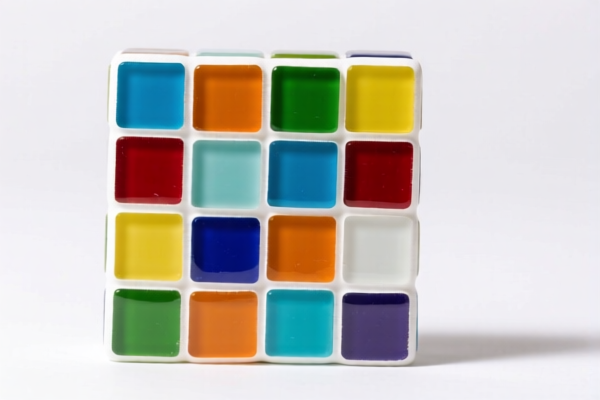
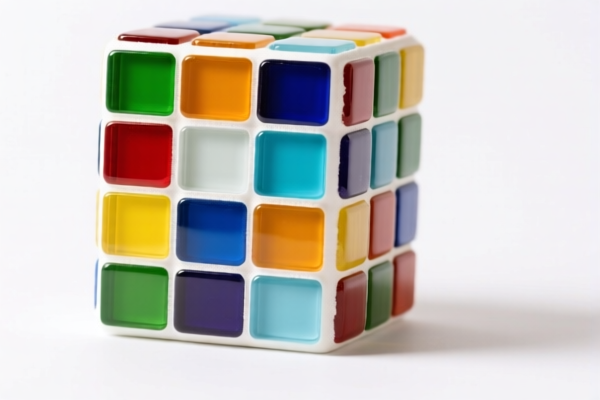
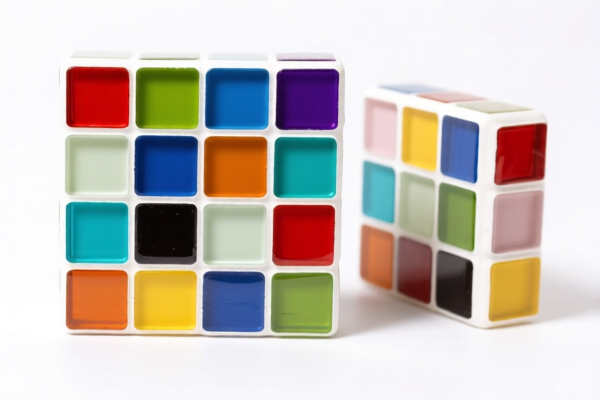
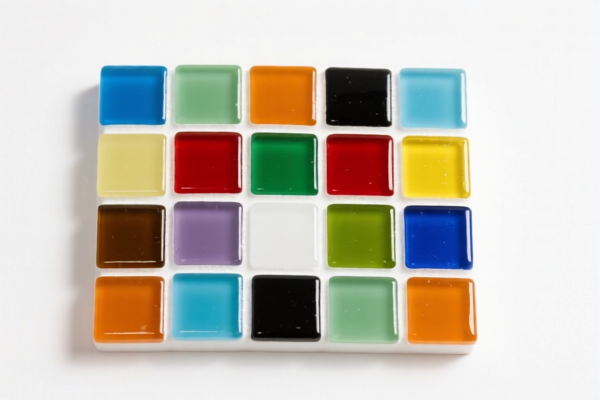
These are educational construction toys composed of wooden pieces and acrylic (transparent plastic) windows. They are designed to resemble architectural elements, allowing children to build structures with transparent "windows."
In international trade, the classification depends heavily on whether the product is viewed primarily as a toy (for play/education) or as a general wood product.
⚠️ Key Distinction:
- If the primary function is play/education and it fits the definition of a puzzle or construction toy → It is classified under Chapter 95 (Toys).
- If it is considered a generic wooden accessory or material without specific toy characteristics → It is classified under Chapter 44 (Wood).
- Customs Reality: Most customs authorities prioritize the function (play) over the material when specific toy headings exist. Therefore, Chapter 95 is the most likely and favorable classification.
📦 II. HS Code Classification Details (2026 Latest Tariff Authority Comparison)
| HS Code | Product Description | Application Scenario | Material Composition |
|---|---|---|---|
9503.00.00.73 |
Toys, put together or kit toys, of other materials | General building blocks (wood + acrylic), construction sets | ✅ Wood + Acrylic |
9503.00.00.71 |
Puzzles and puzzles | Educational block sets resembling puzzles, constructive play | ✅ Wood + Acrylic |
4421.99.98.80 |
Other articles of wood | Generic wooden items, decorative wood panels, non-toy wood items | ✅ Primarily Wood |
🔍 Critical Note:
-9503Codes (Toys): These are the correct classifications for products intended for children's play. The presence of "acrylic windows" does not change its nature as a toy.
-4421Code (Wood): This is a misclassification risk if the product is clearly marketed and used as a toy. Customs may reject this if they perceive it as a toy but it’s declared as wood, leading to delays.
- Why two Toy Codes?
-9503.00.00.71is used if the product is emphasized as a puzzle/educational item.
-9503.00.00.73is used for general building blocks/construction toys. Both have identical tax rates in the provided data.
💰 III. 2026 Latest Tariff Rate Breakdown (Including Surcharges)
✅ Applicable Country: United States (US)
✅ Origin: China (CN)
✅ Effective Date: Current rates apply (Section 301 & IEEPA surcharges active)
🎯 1. 9503.00.00.73 & 9503.00.00.71 —— Toys / Puzzles (Building Blocks)
| Item | Content |
|---|---|
| Base Duty Rate | 0.0% (ad valorem) |
| Section 301 Surcharge | 0.0% (Toys are generally exempt from the 25% Section 301 tariff) |
| IEEPA Surcharge (122 Clause) | +10.0% (Targeting Chinese products under Executive Order 14034) |
| Total Tariff Rate | 10.0% |
| Tax Calculation | CIF Value × 10% |
| De Minimis Eligibility | ❌ Not Eligible (For Section 301/IEEPA items, de minimis thresholds often do not apply or are scrutinized) |
| Legal Basis Path | IEEPA:9903.01.25 → USITC:9503.00.00.73 / 9503.00.00.71 |
📌 Explanation:
- Base 0%: Toys often have low or zero base duties to encourage education/play.
- IEEPA 10%: This is the critical additional tax for Chinese-manufactured toys.
- Section 301 Exemption: Unlike electronics or steel, wooden/acrylic toys are NOT subject to the additional 25% Section 301 tariff. This makes them significantly cheaper than many other Chinese imports.
- Total Cost: Only 10% of the CIF value.
🎯 2. 4421.99.98.80 —— Other Wooden Articles (Misclassification Risk)
| Item | Content |
|---|---|
| Base Duty Rate | 3.3% |
| Section 301 Surcharge | +25.0% (General application to many wood products) |
| IEEPA Surcharge | +10.0% (122 Clause) |
| Total Tariff Rate | 38.3% |
| Tax Calculation | CIF Value × 38.3% |
| De Minimis Eligibility | ❌ Not Eligible |
| Legal Basis Path | IEEPA:9903.01.24 → USITC:4421.99.98.80 |
📌 Warning:
- Declaring toys as "Wooden Articles" to avoid toy regulations is highly risky.
- If Customs determines the product is a toy, they may reclassify it, but if you declared it as wood, you may face penalties for misdeclaration.
- Even if accepted as wood, the 38.3% rate is 3.8 times higher than the toy rate (10%).
- However, if the product is NOT a toy (e.g., a decorative wood panel with acrylic inserts), then this code is correct. For "Building Blocks," it is incorrect.
🛠️ IV. Customs Clearance Practical Advice (Avoiding Pitfalls)
✅ 1. Documentation Checklist (Mandatory)
| Document | Required? | Explanation |
|---|---|---|
| ✅ Product Specification Sheet | ✔️ | Must detail: Wood type, Acrylic thickness, Dimensions, Piece Count. |
| ✅ Product Photos | ✔️ | Clear images showing assembly instructions or play usage to prove it’s a toy. |
| ✅ Composition Statement | ✔️ | Explicitly state: "Made of Wood and Acrylic. Intended for Children’s Play." |
| ✅ Commercial Invoice | ✔️ | Use HS Code 9503.00.00.73 or 71. Do NOT use 4421 unless it’s a non-toy item. |
| ✅ CPSIA Compliance (USA) | ✔️ | Critical for Toys: Must provide CPSIA test reports to prove non-toxic materials. |
| ✅ ASTM F963 Test Report | ✔️ | US Standard for Toy Safety. Customs may ask for this. |
✅ 2. Declaration Strategy (Key Tips)
🔥 “Declare as Toy, Not Wood! Prove Play Value!”
| Scenario | Correct Declaration | Incorrect Declaration |
|---|---|---|
| Product: Wooden Blocks with Acrylic Windows | HS 9503.00.00.73 (Toy) | HS 4421.99.98.80 (Wood) → 38.3% Tax |
| Product: Decorative Wooden Wall Panel with Acrylic Inserts | HS 4421.99.98.80 (Wood) | HS 9503.00.00.73 (Toy) → Customs Rejection |
| Product: Puzzle Set (Wooden Pieces) | HS 9503.00.00.71 (Puzzle) | HS 9503.00.00.73 (Block) → Same Rate, but Wrong Description |
📌 Why Choose 9503?
- Lower Tax: 10% vs 38.3%.
- Correct Classification: Matches the product’s primary function (play).
- Exemption from Section 301: Saves an extra 25% compared to wood products.
✅ 3. Special Cases
| Case | Handling Advice |
|---|---|
| Small Pieces (Choking Hazard) | Must include Warning Labels ("Not for children under 3 years") on packaging and invoice. |
| Acrylic Material | Ensure it is non-toxic and complies with CPSIA heavy metal limits. Provide test reports. |
| Mixed Packaging (Toys + Wood Crafts) | Split the shipment or declare separately. Mixed HS codes require clear itemization in the invoice. |
🌍 V. Global Market Comparison (2026 Latest)
| Country/Region | Recommended HS Code | Tariff Rate | Certification Requirements | Notes |
|---|---|---|---|---|
| 🇺🇸 USA | 9503.00.00.73 |
10.0% | CPSIA + ASTM F963 | Best Option: 10% total tax. Avoid 4421 (38.3%). |
| 🇨🇳 China | 9503.00.00.73 |
0.5% | CCC (if applicable) | Low import duty for re-export or domestic sale. |
| 🇪🇺 EU | 9503.00.30 |
4.5% | CE + EN71 | Standard toy duty. No IEEPA surcharge. |
| 🇬🇧 UK | 9503.00.30 |
4.0% | UKCA + EN71 | Post-Brexit rules apply. |
| 🇦🇺 Australia | 9503.00.00.90 |
5.0% | ACCC + AS/NZS | Moderate duty. |
📌 Conclusion:
- USA: Declaring as Toy (9503) is crucial to save 28.3% in tariffs (10% vs 38.3%).
- EU/UK: Tariffs are generally lower and more stable.
- Always provide CPSIA/EN71 reports for toy imports to avoid seizure.
📌 VI. Common Errors & Pitfalls (Lessons Learned)
❌ Error 1: Declaring Building Blocks as "Wooden Accessories" (4421)
👉 Consequence: Pay 38.3% tax instead of 10%. Waste of money!
❌ Error 2: No CPSIA Report for Toys
👉 Consequence: Customs detention, return of goods, or fines. Toys require safety proof!
❌ Error 3: Using "Wooden Toys" without specifying "Acrylic"
👉 Consequence: Customs may suspect hidden plastic components. Be transparent in descriptions.
❌ Error 4: Ignoring Section 301 Exemptions
👉 Consequence: Assuming all Chinese goods have 25% surcharge. Toys are exempt!
✅ Correct Approach:
"Wooden and Acrylic Building Blocks, Educational Toy for Children, CPSIA Certified, HS Code 9503.00.00.73"
🎯 VII. Conclusion: Smart Classification Saves Money!
🎯 Remember the Mantra:
🔹 "Toys are Toys, Not Wood! 10% Tax Beats 38.3%!"
🔹 "CPSIA Report is Key, No Report No Entry!"
🔹 "Section 301 Exempt for Toys, Don't Pay Extra 25%!"
📌 Pro Tip:
- Always pre-classify with a customs broker if the product has mixed materials.
- Keep test reports (CPSIA/ASTM) readily available for US imports.
- Use HS Code 9503.00.00.73 for maximum efficiency and cost savings in the US market.
📣 Immediate Action:
📞 Contact your customs broker + Provide CPSIA Test Reports + Declare as Toy (9503)
🚀 Clear Customs Fast, Save 28% in Tariffs, Boost Profits!
✨ Professional Customs Clearance Starts with Accurate Classification!
💼 Every Percent of Tax Saved is Pure Profit!
Customer Reviews
About HS Code Classification
The Harmonized System (HS) is an internationally standardized nomenclature developed by the World Customs Organization (WCO) to classify traded products. Over 200 countries use the HS system as the basis for customs tariffs, trade statistics, and import/export regulations.
Each HS code follows a hierarchical structure:
- Chapter (2 digits) — Broad category of goods (e.g., Chapter 84: Machinery and Mechanical Appliances)
- Heading (4 digits) — More specific grouping within the chapter
- Subheading (6 digits) — Internationally standardized breakdown, used by all WCO member countries
- National subdivisions (8-10 digits) — Country-specific extensions for further classification, such as US HTSUS 10-digit codes
Correct HS code classification is essential for smooth customs clearance, accurate duty payment, and compliance with trade regulations. Misclassification can lead to customs delays, overpayment of duties, or penalties.
When importing from CN to US, the applicable tariff rates may include:
- Most-Favored-Nation (MFN) rate — The standard duty rate applied to WTO members
- General rate — Applied to countries without trade agreements
- Trade remedy duties — Additional tariffs such as Section 301 (anti-dumping), Section 232 (national security), or countervailing duties
The information provided on this page is for reference purposes only. For official classification, please consult with your local customs authority or a licensed customs broker.