Wooden Colorful Window Acrylic Building Blocks
CN → US| HS Code | Tariff Rate | Origin | Destination | Doc |
|---|---|---|---|---|
| 9503000073 | 10.0% | CN | US | Official Doc |
| 9503000071 | 10.0% | CN | US | Official Doc |
| 3926909989 | 22.8% | CN | US | Official Doc |
| 4421999880 | 38.3% | CN | US | Official Doc |
| 9503000073 | 10.0% | CN | US | Official Doc |
Product Images
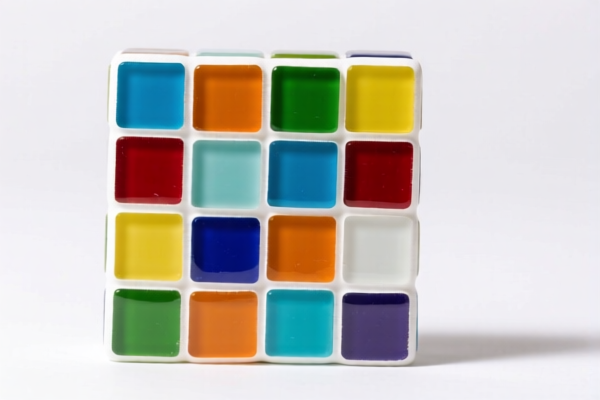
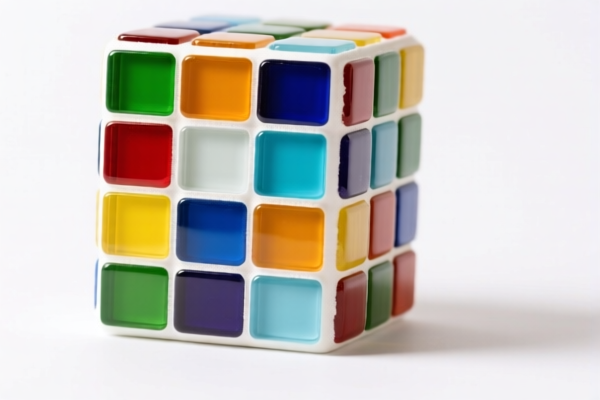
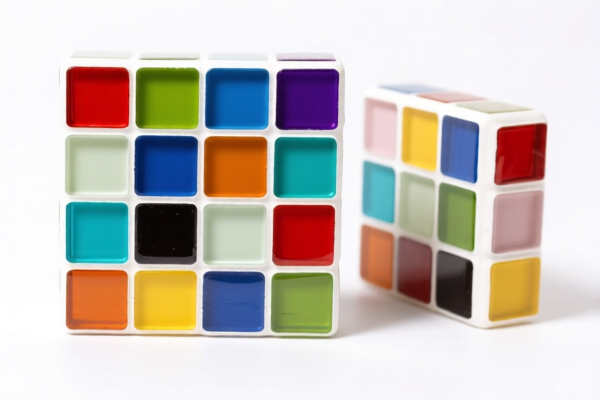
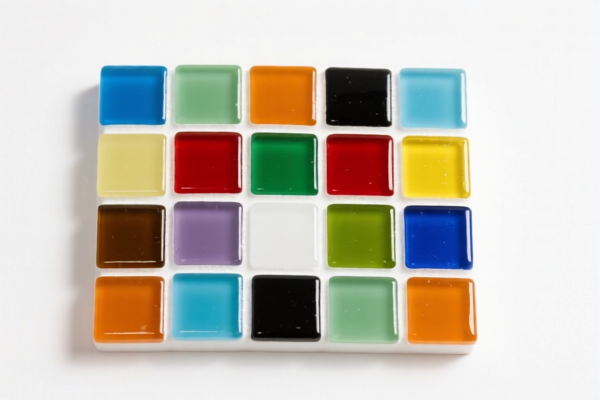
AI Analysis
🧱 Wooden & Acrylic Building Blocks (Educational Toys)
🌐 HS Code Reference & Customs Clearance Guide | 2026 Latest Tariff Analysis | Professional Strategy for US Imports
📌 I. Product Definition & Classification: What Are "Building Blocks"?
Building blocks, particularly those combining wooden and acrylic (plastic) materials, are classified under international trade standards based on their primary function (toys/games) rather than just their material composition. However, mixed-material products often lead to classification disputes.
Key Distinction:
- Toy Category (Chapter 95): If the primary purpose is play, education, or amusement, and it fits the description of "puzzles," "models," or "other toys."
- Plastic Product Category (Chapter 39): If viewed primarily as an unlisted plastic article (less common for defined toys).
- Wooden Product Category (Chapter 44): If viewed primarily as a wooden artifact (rare for mixed toys).
⚠️ Critical Classification Insight:
- Best Practice: Classify under Chapter 95 (Toys) because the product’s function is play.
- Risk: Misclassification as plastic (Ch. 39) or wood (Ch. 44) leads to significantly higher duties due to additional tariffs.
📦 II. HS Code Classification Details (2026 Latest Tariff Reference)
| HS Code | Product Description | Material/Feature | Duty Rate (China-Origin to US) | Key Reason for Classification |
|---|---|---|---|---|
| 9503.00.00.73 | Building Blocks (Toys) | Wood + Acrylic | 10.0% | ✅ Recommended. Classified as a toy/puzzle. Matches "Building Blocks" under Chapter 95. |
| 9503.00.00.71 | Building Blocks (Puzzles/Models) | Wood + Acrylic | 10.0% | ✅ Recommended. Classified under puzzles/models. Same tax burden as 73. |
| 3926.90.99.89 | Other Plastic Articles | Acrylic (Plastic) | 22.8% | ⚠️ Risky. Misclassification. Ignores toy function; applies only to plastic parts. Higher duty. |
| 4421.99.98.80 | Other Wooden Articles | Wood | 38.3% | ❌ Avoid. Misclassification. Ignores toy function; applies only to wooden parts. Highest duty. |
🔍 Why 9503 is the Best Choice:
- 9503 covers "Bicycles, scooters, pedal cars... and other toys." Building blocks are explicitly recognized as toys in customs rulings.
- Mixed materials (wood + acrylic) do not automatically shift the product to Chapter 39 or 44 if the primary character is that of a toy.
- Tax Savings: Choosing 9503 (10%) over 4421 (38.3%) saves 28.3% on duties.
💰 III. 2026 Latest Tariff Rate Breakdown (Including Section 301 & IEEPA)
✅ Applicable Country: United States (US)
✅ Origin: China (CN)
✅ Effective Date: November 10, 2025 (Current Policy)
🎯 1. 9503.00.00.73 & 9503.00.00.71 – Toys (Building Blocks)
(Recommended Classification)
| Item | Details |
|---|---|
| Base Duty Rate | 0.0% (MFN Rate) |
| Section 301 Duty (Add-on) | 0.0% (No additional Section 301 tariff for these subcodes under current exemptions) |
| IEEPA Duty (122 Clause) | +10.0% (Additional tariff on Chinese goods under IEEPA) |
| Total Duty Rate | 10.0% |
| Calculation | CIF Value × 10% |
| De Minimis Eligibility | ❌ No (Subject to high tariffs) |
| Legal Basis | IEEPA:9903.01.24 → USITC:9503.00.00.73 |
📌 Explanation:
- The 10% IEEPA tariff is the only significant duty applied to Chinese-made toys under this classification.
- Total Cost Impact: Low. This is the most cost-effective and legally sound classification.
🎯 2. 3926.90.99.89 – Other Plastic Articles
(Misclassification Risk)
| Item | Details |
|---|---|
| Base Duty Rate | 5.3% |
| Section 301 Duty (Add-on) | +7.5% |
| IEEPA Duty (122 Clause) | +10.0% |
| Total Duty Rate | 22.8% |
| Calculation | CIF Value × 22.8% |
| De Minimis Eligibility | ❌ No |
| Legal Basis | IEEPA:9903.01.25 → USITC:3926.90.99.89 → FOOTNOTE:9903.88.01 |
⚠️ Risk: If Customs deems the acrylic content as the "principal material" (unlikely for blocks), you face +12.8% more duty than the toy classification.
🎯 3. 4421.99.98.80 – Other Wooden Articles
(Misclassification Risk)
| Item | Details |
|---|---|
| Base Duty Rate | 3.3% |
| Section 301 Duty (Add-on) | +25.0% |
| IEEPA Duty (122 Clause) | +10.0% |
| Total Duty Rate | 38.3% |
| Calculation | CIF Value × 38.3% |
| De Minimis Eligibility | ❌ No |
| Legal Basis | IEEPA:9903.01.25 → USITC:4421.99.98.80 |
❌ Avoid! This classification results in the highest duty (38.3%). It ignores the toy function and misapplies wood tariffs.
🛠️ IV. Customs Clearance Practical Advice (Avoid Pitfalls)
✅ 1. Required Documentation Checklist
| Document | Must Provide | Notes |
|---|---|---|
| ✅ Product Description | ✔️ | Use: "Wooden and Acrylic Building Blocks for Educational Play" |
| ✅ Material Breakdown | ✔️ | Specify % of wood vs. acrylic (to justify toy classification) |
| ✅ Product Photos | ✔️ | Show assembled blocks, packaging, and scale |
| ✅ Function Statement | ✔️ | Emphasize: "For children's play, education, and cognitive development" |
| ✅ Commercial Invoice | ✔️ | HS Code: 9503.00.00.73 or 9503.00.00.71 |
| ✅ Packaging List | ✔️ | Include piece count, box dimensions |
✅ 2. Declaration Tips
🔥 "Call it a Toy, Not a Piece!"
| Scenario | Correct Declaration | Incorrect Declaration |
|---|---|---|
| Mixed Material Blocks | "Toy Building Blocks (Wood/Acrylic)" | "Wooden Craft" or "Plastic Parts" |
| HS Code | 9503.00.00.73 |
4421.99.98.80 |
| Duty | 10.0% | 38.3% |
| Result | Smooth Clearance | High Duty + Potential Audit |
📌 Key Tip:
- Do not describe the product as "wooden decoration" or "acrylic display stand."
- Always emphasize "Toy" and "Building Blocks" in the commercial invoice and packing list.
- If asked, confirm that the product is not for adult collectible display only (which might shift classification), but for play.
✅ 3. Special Cases
| Case | Handling Advice |
|---|---|
| OEM Custom Blocks | Provide design drawings showing toy-like assembly; avoid "artistic sculpture" language. |
| Age-Appropriate Labeling | Include "Not for children under 3" if applicable, to align with toy safety standards (CPSIA). |
| Mixed Shipments | If shipped with other non-toy items, declare separately to avoid misclassification of the entire container. |
🌍 V. Global Market Comparison (2026)
| Country | Recommended HS Code | Duty (China Origin) | Notes |
|---|---|---|---|
| 🇺🇸 USA | 9503.00.00.73 |
10.0% | Best option. Avoid Ch. 39/44. |
| 🇨🇳 China | 9503.00.00.73 |
5.0% | Lower domestic import duty. |
| 🇪🇺 EU | 9503.00.90 |
0% | No additional tariffs for toys. |
| 🇬🇧 UK | 9503.00.00 |
0% | Favorable for toys. |
| 🇯🇵 Japan | 9503.00.00 |
0%~5% | Generally low duty for toys. |
📌 Conclusion:
- USA is the most tariff-sensitive market for Chinese goods.
- Correct classification (9503) is critical to save up to 28.3% in duties compared to misclassification.
📌 VI. Common Mistakes & Pitfalls
❌ Mistake 1: Describing the product as "Wooden Crafts"
👉 Result: Misclassified under 4421 → 38.3% duty instead of 10%.
❌ Mistake 2: Ignoring the "Toy" function
👉 Result: Customs may reclassify as "Plastic Articles" → 22.8% duty.
❌ Mistake 3: Using vague terms like "Blocks" without context
👉 Result: Risk of audit. Must specify "Building Blocks for Play/Education."
✅ Correct Practice:
"Educational Building Blocks: Wooden and Acrylic Pieces for Children's Play, HS Code 9503.00.00.73"
🎯 VII. Conclusion: Professional Classification Saves Money!
🎯 Remember the Golden Rule:
🔹 "Toys go to 95, Not 44 or 39!"
🔹 "10% Duty vs. 38% Duty – Classify as Toy!"
📌 Tips:
- If your building blocks are only for adult collectors, they may still fall under 9503 if they are "models," but verify with a customs broker.
- For mixed shipments, always declare toys separately to avoid cross-contamination of classification.
📣 Action Required:
📞 Contact a Licensed Customs Broker to file an Advance Ruling if unsure.
🚀 Declare as "Toy Building Blocks" to secure the 10% duty rate.
✨ Professional Customs Clearance Starts with Accurate Classification!
💼 Every percentage point saved is pure profit!
Customer Reviews
About HS Code Classification
The Harmonized System (HS) is an internationally standardized nomenclature developed by the World Customs Organization (WCO) to classify traded products. Over 200 countries use the HS system as the basis for customs tariffs, trade statistics, and import/export regulations.
Each HS code follows a hierarchical structure:
- Chapter (2 digits) — Broad category of goods (e.g., Chapter 84: Machinery and Mechanical Appliances)
- Heading (4 digits) — More specific grouping within the chapter
- Subheading (6 digits) — Internationally standardized breakdown, used by all WCO member countries
- National subdivisions (8-10 digits) — Country-specific extensions for further classification, such as US HTSUS 10-digit codes
Correct HS code classification is essential for smooth customs clearance, accurate duty payment, and compliance with trade regulations. Misclassification can lead to customs delays, overpayment of duties, or penalties.
When importing from CN to US, the applicable tariff rates may include:
- Most-Favored-Nation (MFN) rate — The standard duty rate applied to WTO members
- General rate — Applied to countries without trade agreements
- Trade remedy duties — Additional tariffs such as Section 301 (anti-dumping), Section 232 (national security), or countervailing duties
The information provided on this page is for reference purposes only. For official classification, please consult with your local customs authority or a licensed customs broker.