Wooden Construction Components
CN → US| HS Code | Tariff Rate | Origin | Destination | Doc |
|---|---|---|---|---|
| 9406100000 | 37.6% | CN | US | Official Doc |
| 9406900190 | 87.9% | CN | US | Official Doc |
| 4418919120 | 38.2% | CN | US | Official Doc |
| 4418999120 | 38.2% | CN | US | Official Doc |
Product Images
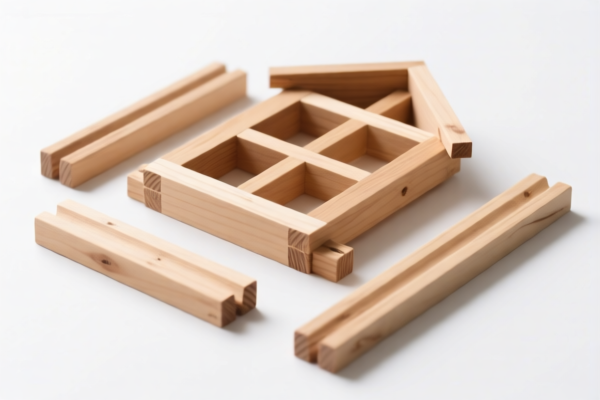

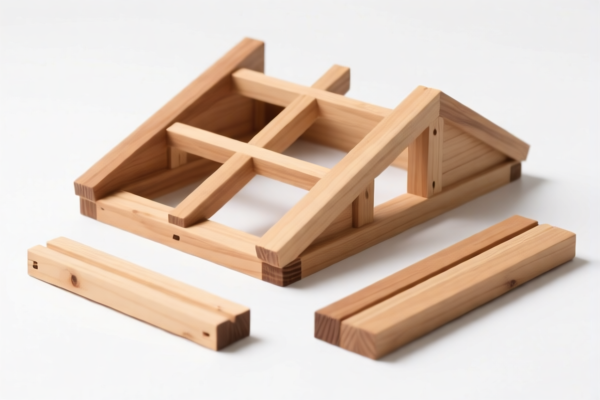
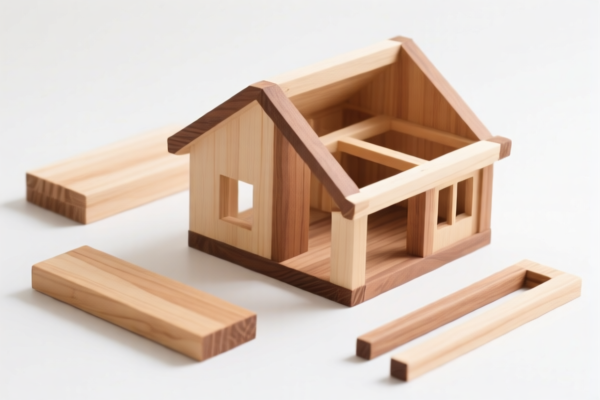
AI Analysis
🪵 Wooden Construction Components (Prefabricated Wooden Structures & Trusses)
🌐 HS Code Reference & Customs Clearance Guide | 2026 Latest Tariff Analysis | Professional Clearance Strategy
📌 I. Product Definition & Classification: What Exactly Are "Wooden Construction Components"?
In international trade, wooden construction components are primarily categorized based on their pre-fabricated status and specific structural function (e.g., roof structures vs. general trusses). The key distinction lies in whether the item is a complete structural unit (like a roof frame) or a specific component (like a truss), and whether it falls under specific "wooden works" chapters or "prefabricated building" chapters.
1. Prefabricated Wooden Roof Structures (Chapter 94):
Items classified as entire roof systems or prefabricated structural units intended for immediate assembly. These often fall under Chapter 94 (Furniture, bedding, etc., but specifically includes prefabricated buildings/components in certain contexts or are grouped with building parts).
Note: The provided data groups these under HS 9406.*
2. Wooden Roof Trusses & Structural Works (Chapter 44):
Individual trusses, frames, or other wooden works for building construction. These fall under Chapter 44 (Wood and articles of wood), specifically under headings for "Other wooden works."
Note: The provided data splits these into specific truss codes (9406 vs 4418).*
⚠️ Key Distinction Point:
- If the item is described broadly as a "prefabricated building component" or "roof structure" in a general sense → It may be grouped under 9406.
- If the item is specifically identified as a "truss" (triangular framework) → It is highly likely to be classified under 4418.
- Material Matters: If the structure contains significant steel/aluminum reinforcement, it may trigger different sub-headings (e.g., 9406.90) with higher penalties.
📦 II. HS Code Classification Details (2026 Latest Tariff Authority Comparison)
Based on the provided data, the components are classified into four specific HS Codes. Note that while 9406 and 4418 are distinct chapters, they are used here to differentiate between broad prefabricated assemblies and specific wooden truss works.
| HS Code | Product Description | Application Scenario | Material/Structure Specifics |
|---|---|---|---|
9406.10.00.00 |
Prefabricated wooden building components, specifically Wooden Roof Structures | Complete prefabricated roof units, modular wooden housing parts | ✅ Wood-based prefabricated assembly |
9406.90.01.90 |
Non-wooden prefabricated structural components (Other categories) | Structures containing Steel, Aluminum, or Copper reinforcements | ❌ Mixed/Metal Components (Higher Risk) |
4418.91.91.20 |
Wooden Roof Trusses | Specific triangular structural frames, highly matched material/usage | ✅ Pure Wood Trusses |
4418.99.91.20 |
Wooden Roof Structures (Synonymous with Trusses) | General wooden roof framing, often used interchangeably with 4418.91 in clearance | ✅ Wood-based Framing |
🔍 Critical Reminder:
- HS 9406.90.01.90 involves Non-wooden materials (steel/aluminum). This code attracts significantly higher tariffs (up to 87.9%) due to the inclusion of metal products.
- HS 9406.10 and 4418 Series are for pure wooden components and enjoy lower base tariffs (~2.6-3.2%), though they still face heavy add-on tariffs.
💰 III. 2026 Latest Tariff Rate Details (Including Add-Ons & Policy Surcharges)
✅ Applicable Country: United States (US)
✅ Origin: China (CN)
✅ Effective Date: Current tariffs apply (Includes Section 301 and Section 232/122 implications)
🎯 1. 9406.10.00.00 & 4418.91.91.20 / 4418.99.91.20 —— Wooden Roof Structures & Trusses
These codes share a similar tariff structure because they are both wood-based prefabricated/truss components.
| Item | Content |
|---|---|
| Base Tariff (MFN) | 2.6% - 3.2% (Ad Valorem) |
| Section 301 Add-On Tariff | +25.0% (Specific to Chinese goods in this category) |
| Section 122 / Other Add-Ons | +10% (Often applied to specific wooden works or under recent trade measures) |
| Total Effective Tax Rate | 37.6% - 38.2% |
| Tax Calculation | CIF Value × 37.6% (for 9406.10) or 38.2% (for 4418 series) |
| De Minimis Exemption | ❌ Not Applicable (High-value construction components are excluded from de minimis) |
| Legal Basis Path | USITC:9406.10.00.00 / 4418.91.91.20 → Section 301: Footnote 9903.88.01 → Section 122: Additional 10% |
📌 Explanation:
- The Base Tariff is relatively low for wood products.
- The 25% Section 301 tariff is the dominant cost driver.
- The 10% Section 122 tariff (or equivalent policy add-on) further increases the burden.
- Total: Roughly 38%. This is a high-cost entry for wooden construction components.
🎯 2. 9406.90.01.90 —— Non-Wooden/Metal-Reinforced Prefabricated Structures
This code applies if the wooden structure contains significant steel, aluminum, or copper components, or if it is classified as "other" non-wooden prefabricated parts.
| Item | Content |
|---|---|
| Base Tariff | 2.9% (Ad Valorem) |
| Section 301 Add-On Tariff | +25.0% |
| Section 122 / Steel-Aluminum Tariff | +50% (Specific for Steel/Aluminum/Copper products under Section 232/122) |
| Total Effective Tax Rate | 87.9% |
| Tax Calculation | CIF Value × 87.9% |
| De Minimis Exemption | ❌ Not Applicable |
| Legal Basis Path | USITC:9406.90.01.90 → Section 301: 25% → Section 232/122: 50% for Metals |
📌 Warning:
- This code carries an astronomical tax rate of ~88%.
- Reason: The combination of the 25% Section 301 tariff AND the 50% Section 232/122 tariff on steel/aluminum components.
- Strategy: Avoid this classification if possible. Ensure your wooden components are pure wood or clearly separated from metal structures to qualify for the lower 38% rate.
🛠️ IV. Customs Clearance Practical Advice (Pitfall Avoidance Guide)
✅ 1. Documentation Checklist (Mandatory)
| Document | Required | Description |
|---|---|---|
| ✅ Product Specification Sheet | ✔️ | Must clearly state: "Wooden Roof Truss" or "Prefabricated Wooden Roof Structure." Specify wood type (e.g., Spruce, Pine, LVL). |
| ✅ Material Composition Report | ✔️ | Crucial for distinguishing between 38% and 88% rates. Confirm % of steel/aluminum vs. wood. |
| ✅ Technical Drawings | ✔️ | Show structure, dimensions, and assembly method. |
| ✅ Commercial Invoice | ✔️ | Description must match HS Code (e.g., "Wooden Roof Truss, LVL, Prefabricated"). Avoid vague terms like "Building Part." |
| ✅ Packing List | ✔️ | Detail packaging to prevent damage; confirm no prohibited woods (e.g., untreated softwood from certain regions may require ISPM 15). |
| ✅ Phytosanitary Certificate | ✔️ | Often required for wood products to prove treatment against pests. |
✅ 2. Declaration Tips (Key Mantra)
🔥 "Be Specific: Wood vs. Metal, Truss vs. Panel. Accuracy Saves 50%!"
| Scenario | Correct Declaration | Wrong Action |
|---|---|---|
| Pure Wooden Truss | 4418.91.91.20 or 4418.99.91.20 |
Misclassifying as metal component → 87.9% |
| Prefabricated Wooden Roof Unit | 9406.10.00.00 |
Vague description "Wooden Part" → Risk of Audit |
| Wood + Steel Reinforcement | Risk Zone! | Declare as pure wood → Seizure/Fine for Misclassification |
| Mixed Material Structure | 9406.90.01.90 |
Attempting to hide metal content → 87.9% Tariff + Penalties |
✅ 3. Special Case Handling
| Situation | Handling Advice |
|---|---|
| LVL (Laminated Veneer Lumber) Trusses | Clearly specify "LVL" in description. May have different duty nuances, but generally falls under 4418. |
| Pre-Drilled/Pre-Cut Components | If highly processed, it strengthens the case for "Prefabricated Building Component" (9406). |
| With Metal Connectors (Gussets) | If metal gussets are minor (<10-20% value), ensure the primary material is declared as wood. However, if classified as "Steel Structure with wood," the 50% metal tariff may apply. Consult a customs broker. |
| ISPM 15 Compliance | Ensure all wooden packaging AND wooden components are treated and marked. Failure leads to rejection/return. |
🌍 V. Global Market Comparison (2026 Context)
| Country/Region | Recommended HS Code | Tariff Rate (China Origin) | Key Requirements | Notes |
|---|---|---|---|---|
| 🇺🇸 USA | 4418.91.91.20 / 9406.10.00.00 |
~38% | ISPM 15, Detailed Specs | Avoid 9406.90 to save ~50%. |
| 🇨🇳 China | 4418.91.91.20 |
Low | FSC Certification (Optional) | Domestic trade benefits. |
| 🇪🇺 EU | 4418.91.91.20 |
Varies (often 0-4%) | FSC/PEFC, Phytosanitary | No Section 301. Lower barrier. |
| 🇨🇦 Canada | 4418.91.91.20 |
Low | Phytosanitary | CUSMA benefits may apply. |
📌 Conclusion:
- The US market is the most expensive due to Section 301 and potential Section 232 tariffs.
- Strict separation of wood and metal components is vital to avoid the 87.9% rate.
📌 VI. Common Mistakes & Pitfalls (Lessons Learned)
❌ Mistake 1: Classifying wooden trusses with metal connectors under 9406.90.01.90
👉 Consequence: Tax jumps from ~38% to 87.9%.
👉 Solution: Ensure the primary value and character is wood. Use 4418 series if possible.
❌ Mistake 2: Vague Description: "Wooden Parts for Building"
👉 Consequence: Customs delays, requests for additional info, potential reclassification to highest duty.
👉 Solution: Use precise terms: "Prefabricated Wooden Roof Truss, LVL, 12ft Span."
❌ Mistake 3: Ignoring ISPM 15 for Wood Products
👉 Consequence: Cargo detained at port for fumigation/return.
👉 Solution: Ensure treatment marks are visible on all wooden items.
✅ Best Practice:
"Prefabricated Wooden Roof Truss, Laminated Veneer Lumber (LVL), Prefinished, ISPM 15 Treated, Model XYZ"
🎯 VII. Conclusion: Professional Classification, Cost Control, and Smooth Clearance
🎯 Remember the Mantra:
🔹 "Wooden Trusses: 38%, Metal Mix: 88%. Be Precise or Pay Double!"
🔹 "ISPM 15 is Mandatory. No Stamp, No Entry."
🔹 "HS Code 4418 is your friend for Trusses. 9406.90 is your enemy."
📌 Pro Tip:
If your wooden components contain significant steel/aluminum, consider:
1. Structural Separation: Ship wooden and metal parts separately to classify them correctly (wood under 4418, metal under appropriate steel codes).
2. Advance Ruling: Apply for a US Customs Advance Ruling to get a binding decision on classification, especially if the design is complex.
📣 Immediate Action:
📞 Consult a licensed customs broker with forestry product expertise.
🚀 Provide detailed BOM (Bill of Materials) showing wood vs. metal ratios.
🚀 Ensure ISPM 15 treatment for all wooden items.
✨ Professional Clearance Starts with Accurate Classification!
💼 Every percentage point in tariff counts. Protect your margin!
Customer Reviews
About HS Code Classification
The Harmonized System (HS) is an internationally standardized nomenclature developed by the World Customs Organization (WCO) to classify traded products. Over 200 countries use the HS system as the basis for customs tariffs, trade statistics, and import/export regulations.
Each HS code follows a hierarchical structure:
- Chapter (2 digits) — Broad category of goods (e.g., Chapter 84: Machinery and Mechanical Appliances)
- Heading (4 digits) — More specific grouping within the chapter
- Subheading (6 digits) — Internationally standardized breakdown, used by all WCO member countries
- National subdivisions (8-10 digits) — Country-specific extensions for further classification, such as US HTSUS 10-digit codes
Correct HS code classification is essential for smooth customs clearance, accurate duty payment, and compliance with trade regulations. Misclassification can lead to customs delays, overpayment of duties, or penalties.
When importing from CN to US, the applicable tariff rates may include:
- Most-Favored-Nation (MFN) rate — The standard duty rate applied to WTO members
- General rate — Applied to countries without trade agreements
- Trade remedy duties — Additional tariffs such as Section 301 (anti-dumping), Section 232 (national security), or countervailing duties
The information provided on this page is for reference purposes only. For official classification, please consult with your local customs authority or a licensed customs broker.