Wooden Door and Door Frame
CN → US| HS Code | Tariff Rate | Origin | Destination | Doc |
|---|---|---|---|---|
| 4418214000 | 39.8% | CN | US | Official Doc |
| 4418294000 | 39.8% | CN | US | Official Doc |
Product Images
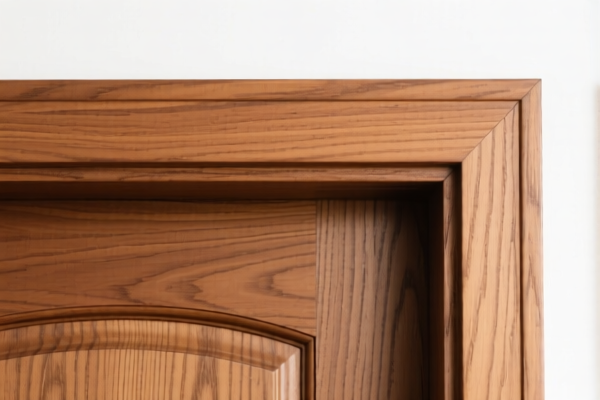
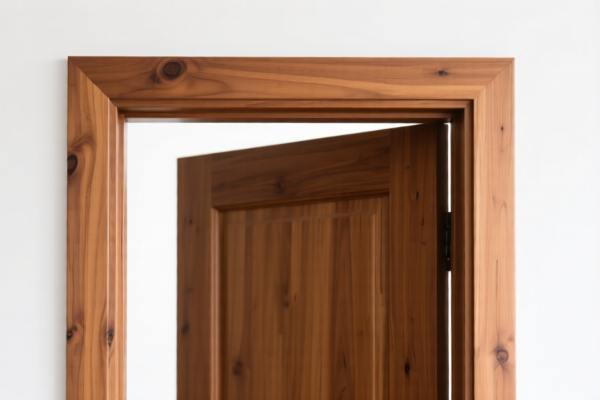
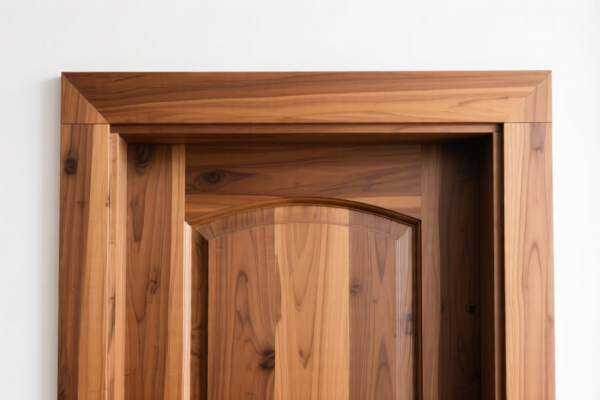
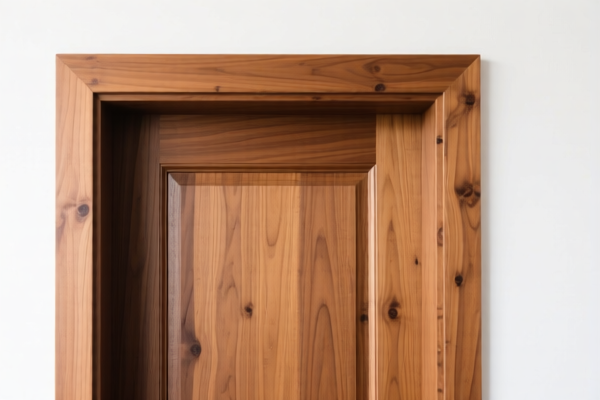
AI Analysis
🚪 Wooden Doors & Frames (Builders' Joinery)
🌐 HS Code Reference & Customs Clearance Guide | 2024 Tariff Analysis | Professional Entry Strategy
📌 I. Product Definition & Classification: Do You Really Understand "Wooden Doors"?
Wooden doors and frames fall under Chapter 44: Wood and articles of wood; wood charcoal. Specifically, they are classified as Builders' joinery and carpentry, including assembled flooring panels, shingles, and shakes.
The critical distinction in customs classification lies in the type of wood used: 1. Tropical Wood: High-density, exotic hardwoods (e.g., Mahogany, Teak, Ipe). These often attract higher scrutiny due to environmental regulations and specific trade policies. 2. Non-Tropical (Other) Wood: Common softwoods (Pine, Spruce) or temperate hardwoods (Oak, Maple).
⚠️ Key Distinction:
- If the door is made of Tropical Wood →归入 4418.21.40.00
- If the door is made of Other Wood (Non-Tropical) → 归入 4418.29.40.00
- Both include French Doors (double doors that open outward/inward) and their frames/thresholds.
📦 II. HS Code Classification Details (Current Tariff Schedule)
| HS Code | Product Description | Applicable Scenario | Wood Type |
|---|---|---|---|
4418.21.40.00 |
Builders' joinery: Doors, frames, thresholds: Of tropical wood: French doors | High-end residential, luxury commercial, exotic wood finishes | ✅ Tropical |
4418.29.40.00 |
Builders' joinery: Doors, frames, thresholds: Other: French doors | Standard residential, pine/oak doors, mass-market construction | ❌ Non-Tropical |
🔍 Critical Note:
- The term "French Doors" refers to the style (full-length glass panes, usually hinged), but the material determines the HS code.
- Assembled doors (including the frame and threshold as a unit) are preferred for classification under 4418.2x.
- If the door is not assembled (just the slab), it may still fall under 4418.2x, but documentation must clearly state "assembled joinery."
💰 III. 2024 Tariff Rate Analysis (Detailed Tax Breakdown)
✅ Applicable Country: United States (US)
✅ Origin: China (CN)
✅ Effective Time: Current (Based on provided data)
🎯 1. 4418.21.40.00 —— Wooden French Doors (Tropical Wood)
| Item | Content |
|---|---|
| Base Tariff Rate | 0.0% |
| Additional Tariff (Section 301) | 0.0% |
| Total Tax Rate | 0.0% |
| Tax Calculation | CIF Value × 0.0% = $0 |
| De Minimis Eligibility | N/A (Usually below threshold for full containers, but rate is 0% anyway) |
| Legal Basis | HTSUS 4418.21.40.00 |
📌 Explanation:
- Currently, wooden doors (both tropical and non-tropical) enjoy a 0% total tariff rate under the provided data.
- No additional Section 301 tariffs are applied to this specific HTS subheading in this dataset.
- This makes wooden doors a highly competitive export product from a tariff perspective.
🎯 2. 4418.29.40.00 —— Wooden French Doors (Other Wood)
| Item | Content |
|---|---|
| Base Tariff Rate | 0.0% |
| Additional Tariff (Section 301) | 0.0% |
| Total Tax Rate | 0.0% |
| Tax Calculation | CIF Value × 0.0% = $0 |
| De Minimis Eligibility | N/A |
| Legal Basis | HTSUS 4418.29.40.00 |
📌 Note:
- Identical tariff treatment to tropical wood doors in this dataset.
- Common materials like Pine, Oak, or Maple are classified here.
- No hidden fees for wood species in terms of duty rates (though environmental documentation may still be required).
🛠️ IV. Customs Clearance Practical Advice (Avoid Pitfalls)
✅ 1. Required Documentation Checklist (No Exceptions)
| Document | Required | Purpose |
|---|---|---|
| ✅ Commercial Invoice | ✔️ | Must clearly state "Wooden Doors, Assembled" and HS Code |
| ✅ Packing List | ✔️ | Show quantity, weight, and dimensions per carton |
| ✅ Wood Packaging Statement | ✔️ | Crucial: Confirm wood packaging is ISPM 15 compliant (heat-treated) |
| ✅ Phytosanitary Certificate | ✔️ (if required) | USDA APHIS may require this for raw wood products to prevent pests |
| ✅ Material Declaration | ✔️ | Specify "Tropical Wood" or "Other Wood" to match HS code |
| ✅ Product Photos | ✔️ | Show door style, glass panes (if any), and wood grain |
⚠️ Warning:
- ISPM 15 Compliance: If the doors are packed in wooden crates/pallets, the wood must be marked with the IPPC stamp. Failure to comply can lead to rejection or destruction of goods at the port.
- Fungal/Pest Control: Even if the total duty is 0%, customs may inspect for signs of termites or mold. Ensure dry, treated wood.
✅ 2. Classification Tips (Key Mnemonics)
🔥 "Tropical vs. Other, Frame Included, French Style"
| Scenario | Correct HS Code | Wrong Action |
|---|---|---|
| Mahogany/Teak Door | 4418.21.40.00 |
Mislabeling as "Oak" → Incorrect duty rate |
| Pine/Oak Door | 4418.29.40.00 |
Mislabeling as "Tropical" → Risk of audit |
| Unassembled Door Parts | Still 4418.2x (if kits) |
Declaring as "Raw Lumber" → Higher duty (5.3%) |
| PVC/Aluminum Doors | Not 4418 | Using 4418 → Rejection, penalties |
📌 Key Point:
- Do not declare as "Lumber" or "Raw Wood" (HTS 4407) if they are pre-assembled or cut-to-size.
- Do not declare as "Metal Doors" (HTS 8302) if they are wood with metal handles.
✅ 3. Special Situations
| Situation | Handling Advice |
|---|---|
| Engineered Wood Doors | If core is plywood/MDH and veneer is tropical wood, classify based on veneer surface material. |
| Glass-Panel Doors | If >50% surface area is glass, some may argue for HTS 70 (Glass), but wooden joinery prevails if wood is structural. Stick to 4418. |
| Custom Carvings | If highly ornate, still 4418, but provide detailed photos to prove "joinery" not "art sculpture." |
| Origin Marking | Ensure each door/frame is marked "Made in [Country]" for customs labeling compliance. |
🌍 V. Global Market Comparison (2024 Latest)
| Country/Region | Recommended HS Code | Duty Rate | Certification Requirements | Notes |
|---|---|---|---|---|
| 🇺🇸 USA | 4418.21.40.00 / 4418.29.40.00 |
0% | ISPM 15, Phytosanitary (if requested) | Tariff-Free! |
| 🇨🇳 China | 4418.21.00.00 / 4418.29.00.00 |
0%~5% | None specific | Low import duty for finished joinery |
| 🇪🇺 EU | 4418.20.90 |
0% (if FSC certified) | FSC/PEFC Certification recommended | Environmental standards strict |
| 🇬🇧 UK | 4418.20.90 |
0% | Same as EU post-Brexit | Check for UKCA marking |
| 🇦🇺 Australia | 4418.20.00 |
5% | Biosecurity declaration required | High biosecurity standards |
📌 Conclusion:
- USA offers a significant advantage with 0% total duty for both tropical and non-tropical wooden doors.
- However, non-tariff barriers (ISPM 15, phytosanitary checks) are stricter than other commodities.
- Always verify wood species to avoid misclassification audits.
📌 VI. Common Mistakes & Pitfalls (Lessons Learned)
❌ Mistake 1: Declaring "Wooden Parts" as "Raw Lumber" (HTS 4407)
👉 Consequence: Duty jumps from 0% to 5.3% + potential anti-dumping duties.
👉 Fix: Declare as "Assembled Joinery/Distinctly Manufactured Articles" (HTS 4418).
❌ Mistake 2: Ignoring ISPM 15 for Pallets/Crates
👉 Consequence: Goods held at port, de-palletized at carrier cost, or destroyed.
👉 Fix: Ensure all wood packaging has valid IPPC heat-treatment stamp.
❌ Mistake 3: Misidentifying Tropical Wood
👉 Consequence: Customs officer may downgrade or upgrade classification, leading to retroactive duties or audits.
👉 Fix: Provide botanical names (e.g., Khaya spp. for Mahogany) in documentation.
❌ Mistake 4: Omitting "French Door" Specification
👉 Consequence: If style is critical for duty reasons (rare for 4418, but relevant for design), ambiguity causes delays.
👉 Fix: Clearly state "French Doors" or "Double Doors" in invoice description.
✅ Correct Practice:
"Assembled Wooden French Doors, Pine Core with Oak Veneer, HTS 4418.29.40.00, Packed in ISPM 15 Compliant Plywood Crates"
🎯 VII. Conclusion: Professional Declaration for Smooth Clearance
🎯 Remember the Mnemonic:
🔹 "Tropical 21, Other 29, French Style, Zero Duty!"
🔹 "ISPM 15 Stamp is Key, No Stamp, No Entry!"
🔹 "0% Duty in US, But Watch the Wood Species!"
📌 Pro Tip:
- Even though duty is 0%, ensure your supplier provides a Phytosanitary Certificate if USDA APHIS requests it. This is a non-tariff barrier that can delay clearance by weeks.
- Consider applying for an Advance Ruling if shipping large volumes or novel wood types, to lock in the 0% duty status.
📣 Action Required:
📞 Verify ISPM 15 compliance with your packaging supplier.
📄 Clearly declare "Wood Type" and "Assembled Joinery" on the Commercial Invoice.
🚀 Enjoy 0% Duty while ensuring biosecurity compliance!
✨ Accurate Classification Saves Time, Not Just Money!
💼 Zero Tariff Does Not Mean Zero Documentation!
Customer Reviews
About HS Code Classification
The Harmonized System (HS) is an internationally standardized nomenclature developed by the World Customs Organization (WCO) to classify traded products. Over 200 countries use the HS system as the basis for customs tariffs, trade statistics, and import/export regulations.
Each HS code follows a hierarchical structure:
- Chapter (2 digits) — Broad category of goods (e.g., Chapter 84: Machinery and Mechanical Appliances)
- Heading (4 digits) — More specific grouping within the chapter
- Subheading (6 digits) — Internationally standardized breakdown, used by all WCO member countries
- National subdivisions (8-10 digits) — Country-specific extensions for further classification, such as US HTSUS 10-digit codes
Correct HS code classification is essential for smooth customs clearance, accurate duty payment, and compliance with trade regulations. Misclassification can lead to customs delays, overpayment of duties, or penalties.
When importing from CN to US, the applicable tariff rates may include:
- Most-Favored-Nation (MFN) rate — The standard duty rate applied to WTO members
- General rate — Applied to countries without trade agreements
- Trade remedy duties — Additional tariffs such as Section 301 (anti-dumping), Section 232 (national security), or countervailing duties
The information provided on this page is for reference purposes only. For official classification, please consult with your local customs authority or a licensed customs broker.