Wooden Educational Toys
CN → US| HS Code | Tariff Rate | Origin | Destination | Doc |
|---|---|---|---|---|
| 9503000073 | 10.0% | CN | US | Official Doc |
| 4421919880 | 38.3% | CN | US | Official Doc |
| 4421999880 | 38.3% | CN | US | Official Doc |
| 9503000071 | 10.0% | CN | US | Official Doc |
| 9023000000 | 10.0% | CN | US | Official Doc |
Product Images
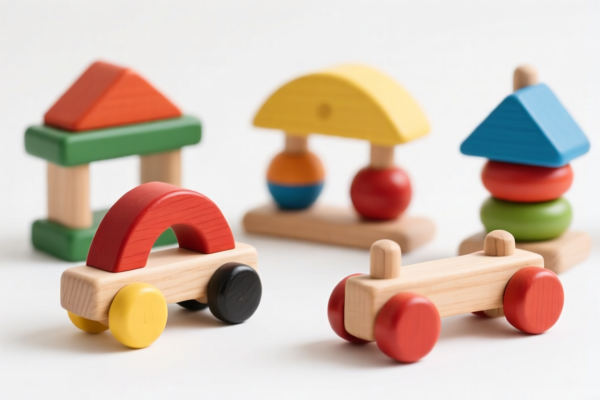

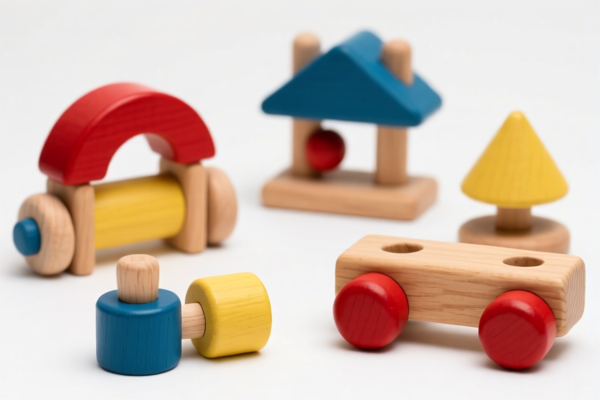
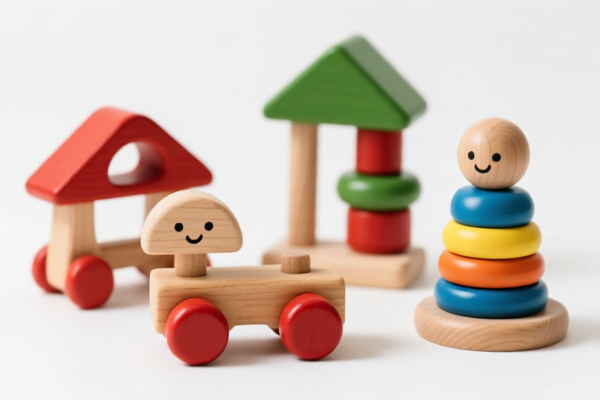
AI Analysis
🧸 Wooden Educational Toys (Wooden Puzzles, Block Sets, Learning Kits)
🌐 HS Code Reference & Customs Clearance Guide | 2026 Latest Tariff Analysis | Professional Clearance Strategy
📌 Part 1: Product Definition & Classification: Do You Really Understand "Wooden Educational Toys"?
Wooden educational toys are interactive learning tools designed to enhance cognitive skills, motor abilities, and logical thinking through play. In international trade, the classification is critical because it determines whether the item is treated as a "Toy" (generally lower duty) or a "Wooden Artifact" (potentially higher duty due to material composition).
Key Classification Divergence:
* As a Toy (9503): If the primary character is the function of entertainment/learning, it falls under Chapter 95.
* As Woodwork (4421): If classified under Chapter 44, it is treated as a generic wooden product, often triggering higher tariffs.
* As Educational Equipment (9023): Rare for general toys, but possible if strictly for professional demonstration.
⚠️ Key Distinction Point:
- If the item is a plaything (even if educational) →归类 to 9503 (Toy Category).
- If the item is strictly a display model or teaching apparatus without playful intent → Potentially 9023 (but rare for consumer toys).
- If misclassified as general woodwork → 4421 (Higher Risk).
📦 Part 2: HS Code Classification Details (2026 Latest Tariff Authority Comparison)
Based on the provided data, here are the four valid HS Code classifications for "Wooden Educational Toys," along with their tax implications.
| HS Code | Product Description | Application Scenario | Primary Classification Logic | Total Tax Rate (US Import) |
|---|---|---|---|---|
9503.00.00.73 |
Wooden益智 (Puzzle/Intellectual) Toys | Wooden puzzles, shape sorters, learning blocks | Classified as Toy due to primary purpose of entertainment/learning. No material conflict with Chapter 95. | 10.0% |
9503.00.00.71 |
Intellectual/Brain Toys | Brain teasers, logic games made of wood | Classified as Toy within the "Other Toys" subheading. No material or use conflict. | 10.0% |
9023.00.00.00 |
Educational Demonstration Models | Strictly for teaching/demonstration purposes | Classified as Teaching Instrument/Model. Fits the description for items used for demonstration. | 10.0% |
4421.91.98.80 |
Other Wooden Articles | Wooden toys classified as general wood products | Classified as Wood Product because it contains wood material and falls under "Other wooden articles." | 38.3% |
4421.99.98.80 |
Other Wooden Articles (Misc) | Wooden toys not specifically excluded | Classified as Wood Product. Material is wood, use is educational/toy, but not in exclusion list. | 38.3% |
🔍 Critical Insight:
- HS Code9503(10% Total) is the optimal classification for most consumer wooden educational toys. It treats the item as a toy, leveraging the lower base duty. - HS Code4421(38.3% Total) should be avoided unless the item cannot be justified as a toy (e.g., a purely decorative wooden block set with no play function). The tariff difference is massive (28.3% higher).
💰 Part 3: 2026 Latest Tariff Rate Details (Including Additional Taxes & Policy Surcharges)
✅ Applicable Country: United States (US)
✅ Origin: China (CN)
✅ Effective Time: 2025 November 10 onwards (Including subsequent imports)
🎯 1. 9503.00.00.73 & 9503.00.00.71 —— Wooden Toys (Intellectual/Educational)
| Item | Content |
|---|---|
| Base Duty Rate | 0% (ad valorem) |
| Section 301 Additional Duty | 0.0% (No additional 301 duty applied to these specific subheadings in this data set) |
| Section 122 Duty | +10% (Specific surcharge for China-origin goods) |
| Total Tax Rate | 10.0% |
| Tax Calculation | CIF Value × 10% |
| De Minimis Exemption Eligible? | ❌ No (Section 122 duties typically override de minimis exemptions for Chinese goods in this context) |
| Legal Basis Path | Base: 0% → Section 122: 10% |
📌 Explanation:
- These codes classify the item as a Toy.
- The 0% base rate is favorable.
- The 10% Section 122 duty is the primary cost driver.
- Total Cost Impact: Only 10% of the CIF value. This is the most cost-effective clearance path.
🎯 2. 9023.00.00.00 —— Educational Demonstration Models
| Item | Content |
|---|---|
| Base Duty Rate | 0% |
| Section 301 Additional Duty | 0.0% |
| Section 122 Duty | +10% |
| Total Tax Rate | 10.0% |
| Tax Calculation | CIF Value × 10% |
| De Minimis Exemption Eligible? | ❌ No |
| Legal Basis Path | Base: 0% → Section 122: 10% |
📌 Note:
- This code is only applicable if the product is explicitly a demonstration model or teaching aid, not a consumer toy for play.
- Tax rate is identical to the toy category (10%), but misclassification can lead to customs audits if the item is clearly for child play.
🎯 3. 4421.91.98.80 & 4421.99.98.80 —— Other Wooden Articles (High Risk/High Cost)
| Item | Content |
|---|---|
| Base Duty Rate | 3.3% |
| Section 301 Additional Duty | +25.0% (Standard 301 tariff for many wooden goods) |
| Section 122 Duty | +10% |
| Total Tax Rate | 38.3% |
| Tax Calculation | CIF Value × 38.3% |
| De Minimis Exemption Eligible? | ❌ No |
| Legal Basis Path | Base: 3.3% → Section 301: 25% → Section 122: 10% |
📌 Warning:
- This classification treats the wooden toy as a wooden product.
- The 25% Section 301 duty significantly increases costs.
- Total Cost Impact: 38.3% of CIF value. This is 3.8x more expensive than the9503classification.
- Do not use this code unless the item is purely a wooden artifact with no "toy" characteristics.
🛠️ Part 4: Customs Clearance Practical Advice (Avoid Pitfalls Guide)
✅ 1. Documentation Checklist (Mandatory)
| Document | Required | Description |
|---|---|---|
| ✅ Product Specification Sheet | ✔️ | Must specify: Material (Wood type), Age Range, Educational Purpose, Safety Standards (ASTM F963, CPSIA). |
| ✅ Product Photos | ✔️ | Clear images showing the item is a toy (e.g., blocks, puzzles) and not a decorative wooden item. |
| ✅ Commercial Invoice | ✔️ | Description should include keywords: "Wooden Educational Toy," "Child's Plaything," "Intellectual Game." Avoid vague terms like "Wooden Art." |
| ✅ Certificate of Origin (CO) | ✔️ | To verify Country of Origin (China). |
| ✅ Safety Compliance Certs | ✔️ | CPSIA Compliance, ASTM F963, CPC (Children's Product Certificate) are mandatory for toys in the US. |
✅ 2. Declaration Strategy (Key Mantra)
🔥 “Toy Character First, Wood Second! Use 9503, Save 28%!”
| Scenario | Correct Declaration | Consequence of Error |
|---|---|---|
| Standard Wooden Puzzle/Blocks | HS: 9503.00.00.73Desc: "Wooden Educational Puzzle for Kids" |
✅ Low Tax (10%) |
Misdeclared as "Wooden Craft" (4421) |
❌ High Tax (38.3%) + Penalties | |
| Purely Decorative Wooden Blocks | HS: 4421.91.98.80Desc: "Decorative Wooden Blocks" |
✅ Correct for Non-Toys |
Misdeclared as "Toy" (9503) |
❌ Customs Reject (If it’s not a toy, it’s wood) | |
| Professional Teaching Model | HS: 9023.00.00.00Desc: "Anatomical Demonstration Model" |
✅ Correct for Education |
Misdeclared as "Toy" (9503) |
✅ Acceptable if playful, but may trigger audit |
📌 Crucial Tip:
- Ensure your product description emphasizes "Educational Toy", "Child", "Play", and "Learning".
- Avoid descriptions that sound like "Wooden Decor," "Furniture," or "Craft Supplies," which push the classification toward4421.
✅ 3. Special Case Handling
| Situation | Handling Advice |
|---|---|
| Mixed Materials | If the toy contains wood + plastic/metal, but the primary character is a toy, 9503 is still preferred. |
| Age Restriction | If labeled for ages 14+, Customs may question if it’s a "toy." Provide proof of play value vs. collectible. |
| High-Value Wooden Sets | Even if expensive, if it’s a toy, 9503 applies. Value does not change the HS Code category here. |
| Origin Marking | Ensure all wooden toys are "Made in China" marked. Missing marks can lead to delays or seizure. |
🌍 Part 5: Global Market Comparison (2026 Latest)
| Market | Recommended HS Code | Estimated Total Duty (China Origin) | Key Requirement | Note |
|---|---|---|---|---|
| 🇺🇸 USA | 9503.00.00.73 |
10% (Section 122) | CPSIA, ASTM F963 | Best Option. Avoid 4421 (38.3%). |
| 🇪🇺 EU | 9503.00 |
~0-6.5% | CE Mark, EN71 | Lower base duty, no Section 122 equivalent. |
| 🇨🇳 China | 9503.00 |
0% (Import) | CCC (for some toys) | Exempt import duty. |
| 🇬🇧 UK | 9503.00 |
~0-6.5% | UKCA Mark | Post-Brexit, similar to EU but separate certification. |
📌 Conclusion:
- The US market is the most sensitive to classification errors due to the high Section 301 and Section 122 duties.
- Always prioritize9503for wooden educational toys to save 28.3% in duties.
📌 Part 6: Common Errors & Pitfalls (Lessons Learned)
❌ Error 1: Declaring Wooden Puzzles as "Wooden Crafts" (4421)
👉 Consequence: Pay 38.3% tax instead of 10%. Overpayment of 28.3%.
❌ Error 2: Missing CPSIA/ASTM Certification
👉 Consequence: Shipment detained by CPSC and CBP. Goods may be returned or destroyed.
❌ Error 3: Using "Wooden Art" as Description
👉 Consequence: Customs may suspect undervaluation or misclassification. Audit risk increases.
✅ Correct Practice:
"Wooden Educational Toy, Shape Sorting Cube, for Ages 3+, ASTM F963 Compliant, Made in China"
🎯 Part 7: Conclusion: Professional Clearance, Save Costs, Ensure Compliance!
🎯 Remember the Mantra:
🔹 "Toy First, Wood Second!
9503is the Way!"
🔹 "4421is for Decor,9503is for Play! Choose Wisely!"
📌 Pro Tip:
If your wooden educational toy is high-value or unique, consider applying for a Pre-Ruling (Binding Ruling) from CBP. This provides legal certainty and protects you from future duty disputes.
📣 Immediate Action:
📞 Contact Customs Broker + Provide Product Photos + Verify CPSIA Compliance
🚀 Let Your Wooden Toys Clear Smoothly, Efficiently, and Profitably!
✨ Professional Clearance Starts with Precise Classification!
💼 Every Cent Saved is Profit Earned!
Customer Reviews
About HS Code Classification
The Harmonized System (HS) is an internationally standardized nomenclature developed by the World Customs Organization (WCO) to classify traded products. Over 200 countries use the HS system as the basis for customs tariffs, trade statistics, and import/export regulations.
Each HS code follows a hierarchical structure:
- Chapter (2 digits) — Broad category of goods (e.g., Chapter 84: Machinery and Mechanical Appliances)
- Heading (4 digits) — More specific grouping within the chapter
- Subheading (6 digits) — Internationally standardized breakdown, used by all WCO member countries
- National subdivisions (8-10 digits) — Country-specific extensions for further classification, such as US HTSUS 10-digit codes
Correct HS code classification is essential for smooth customs clearance, accurate duty payment, and compliance with trade regulations. Misclassification can lead to customs delays, overpayment of duties, or penalties.
When importing from CN to US, the applicable tariff rates may include:
- Most-Favored-Nation (MFN) rate — The standard duty rate applied to WTO members
- General rate — Applied to countries without trade agreements
- Trade remedy duties — Additional tariffs such as Section 301 (anti-dumping), Section 232 (national security), or countervailing duties
The information provided on this page is for reference purposes only. For official classification, please consult with your local customs authority or a licensed customs broker.