Wooden Fish Slice
CN → US| HS Code | Tariff Rate | Origin | Destination | Doc |
|---|---|---|---|---|
| 4421999880 | 38.3% | CN | US | Official Doc |
| 4421919880 | 38.3% | CN | US | Official Doc |
| 4407190092 | 35.0% | CN | US | Official Doc |
| 4407190066 | 35.0% | CN | US | Official Doc |
Product Images
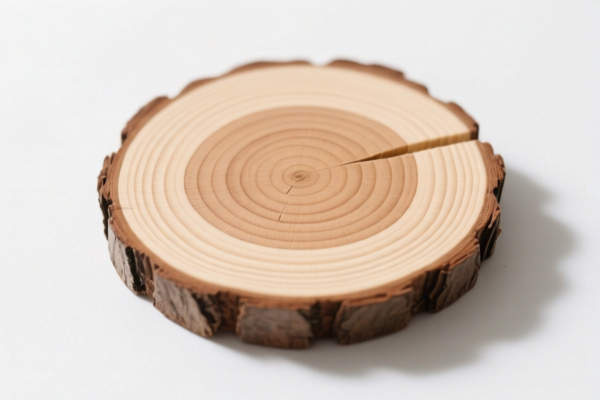
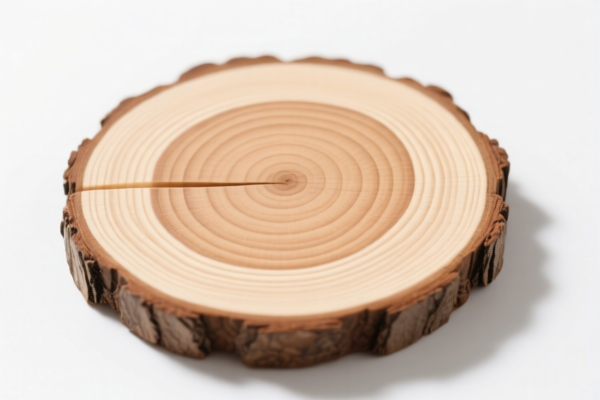


AI Analysis
🎋 Wooden Fish Slice (Buddhist Ritual Utensil / Musical Instrument)
🌐 HS Code Reference & Customs Clearance Guide | 2026 Latest Tariff Analysis | Professional Customs Strategy
📌 I. Product Definition & Classification: Do You Really Understand "Wooden Fish Slices"?
The "Wooden Fish" (Muyu) is a traditional percussion instrument and religious artifact used in Buddhism, Taoism, and traditional Chinese medicine. It is typically carved from wood into a hollow, fish-shaped block. In international trade, it is classified based on its material composition and level of processing.
Key Distinction: - Finished Religious/Musical Artifacts: If the wood is shaped, carved, and polished into a specific ritual object or instrument → Classified under Chapter 44 (4421). - Raw/Primary Wood Products: If the item is simply sawn, sliced, or roughly processed wood without specific shaping for musical/ritual use → Classified under Chapter 44 (4407).
⚠️ Critical Classification Point:
- If the product is a finished "Fish Slice" (carved, hollowed, specific shape) → 4421.99.98.80 / 4421.91.98.80
- If the product is a raw wooden slice/block (sawed or planed wood) → 4407.19.00.92 / 4407.19.00.66
📦 II. HS Code Classification Details (2026 Latest Tariff Authority Comparison)
| HS Code | Product Description | Applicable Scenario | Processing Level |
|---|---|---|---|
4421.99.98.80 |
Other wooden articles | Wooden fish slices as finished ritual/musical items | ✅ Finished |
4421.91.98.80 |
Other articles of wood | Wooden fish slices classified as other specific non-primary goods | ✅ Finished |
4407.19.00.92 |
Coniferous wood, worked longitudinally | Raw wooden slices, coniferous origin, sliced or sawn | ⚠️ Raw/Processed |
4407.19.00.66 |
Coarse wood, worked longitudinally | Roughly processed wooden blocks/slices, primary form | ⚠️ Raw/Processed |
🔍 Important Reminder:
- Finished wooden fish slices (carved, hollowed, polished) must be classified under 4421 ("Other articles of wood"), not 4407 ("Wood continuously sawned or chipped"). - If the product is not yet shaped into a fish form but is merely sliced wood from a coniferous tree, it falls under 4407.
💰 III. 2026 Latest Tariff Rate Breakdown (Including Supplementary Taxes & Policy Add-ons)
✅ Applicable Country: United States (US)
✅ Country of Origin: China (CN)
✅ Effective Date: November 10, 2025 onwards (including subsequent imports)
🎯 1. 4421.99.98.80 —— Wooden Fish Slice (Finished Product)
| Item | Content |
|---|---|
| Base Tariff Rate | 3.3% (ad valorem) |
| Section 301 Supplementary Tariff | +25.0% |
| Section 122 Tariff (IEEPA) | +10.0% |
| Total Effective Tariff Rate | 38.3% |
| Tax Calculation | CIF Value × 38.3% |
| De Minimis Exemption Available? | ❌ No |
| Legal Basis Path | USITC:4421.99.98.80 → SECTION301:3820 → IEEPA:9903.01.24 |
📌 Explanation:
- "Section 301 25%": Imposed under the U.S. Trade Act of 1974, Section 301, targeting Chinese imports. - "Section 122 10%": Additional duty under the International Emergency Economic Powers Act (IEEPA) for certain Chinese wood products. - Total 38.3%: High tariff burden. Must be accounted for in cost structure.
🎯 2. 4421.91.98.80 —— Wooden Fish Slice (Other Specific Wood Article)
| Item | Content |
|---|---|
| Base Tariff Rate | 3.3% |
| Section 301 Supplementary Tariff | +25.0% |
| Section 122 Tariff (IEEPA) | +10.0% |
| Total Effective Tariff Rate | 38.3% |
| Tax Calculation | CIF Value × 38.3% |
| De Minimis Exemption Available? | ❌ No |
| Legal Basis Path | USITC:4421.91.98.80 → SECTION301:3820 → IEEPA:9903.01.24 |
📌 Note:
- Same tariff rate as above. Both 4421 subheadings carry the same supplementary taxes. - Whether classified as "other wooden articles" or "specific non-primary goods," the tax burden is identical.
🎯 3. 4407.19.00.92 —— Coniferous Wood Slice (Raw/Processed)
| Item | Content |
|---|---|
| Base Tariff Rate | 0.0% |
| Section 301 Supplementary Tariff | +25.0% |
| Section 122 Tariff (IEEPA) | +10.0% |
| Total Effective Tariff Rate | 35.0% |
| Tax Calculation | CIF Value × 35.0% |
| De Minimis Exemption Available? | ❌ No |
| Legal Basis Path | USITC:4407.19.00.92 → SECTION301:3820 → IEEPA:9903.01.24 |
📌 Explanation:
- Lower base rate (0%) compared to finished goods (3.3%), but still subject to high supplementary tariffs. - Applicable if the product is not yet carved into a fish shape.
🎯 4. 4407.19.00.66 —— Coarse Wood Slice (Raw/Processed)
| Item | Content |
|---|---|
| Base Tariff Rate | 0.0% |
| Section 301 Supplementary Tariff | +25.0% |
| Section 122 Tariff (IEEPA) | +10.0% |
| Total Effective Tariff Rate | 35.0% |
| Tax Calculation | CIF Value × 35.0% |
| De Minimis Exemption Available? | ❌ No |
| Legal Basis Path | USITC:4407.19.00.66 → SECTION301:3820 → IEEPA:9903.01.24 |
📌 Note:
- Same as above. Coarse or rough wood slices also incur 35% total tariff.
🛠️ IV. Customs Clearance Practical Advice (Battle-Tested Pitfall Avoidance)
✅ 1. Document Checklist (Non-Negotiable)
| Document | Required? | Description |
|---|---|---|
| ✅ Product Specification Sheet | ✔️ | Must specify material (e.g., pine, oak), dimensions, weight, and whether it is carved or raw. |
| ✅ Product Photos | ✔️ | Clear images showing the "fish" shape, hollow interior, and surface finish. |
| ✅ Commercial Invoice | ✔️ | Must clearly describe the item as "Wooden Fish (Muyu)" or "Ritual Wooden Instrument." |
| ✅ Packing List | ✔️ | Detail packaging to prevent damage; indicate if multiple units are boxed. |
| ✅ Certificate of Origin (CO) | ✔️ | Essential for verifying Chinese origin and applying correct tariff rates. |
| ✅ Wood Treatment Certificate | ✔️ | ISPM-15 certification may be required for raw wood or coniferous products. |
✅ 2. Declaration Strategy (Key Mnemonic)
🔥 "Finish Shape: 38.3%, Raw Slice: 35.0%. Declare Accurately, Avoid Fines!"
| Scenario | Correct Declaration | Wrong Practice |
|---|---|---|
| Carved Wooden Fish (Finished) | 4421.99.98.80 or 4421.91.98.80 |
Misdeclare as raw wood → Risk of penalty for misclassification. |
| Raw Wood Slice (Not shaped) | 4407.19.00.92 or 4407.19.00.66 |
Misdeclare as finished instrument → Overpayment of 3.3% base + potential audit. |
| Mixed Batch (Some carved, some raw) | Split Declaration | Combine under one code → Customs rejection or audit. |
✅ 3. Special Situations
| Situation | Handling Advice |
|---|---|
| OEM Custom Wooden Fish | Provide design drawings to confirm it is a "finished article" (4421), not raw wood. |
| Wooden Fish with Metal Parts | If metal handles or inlays are present, still classified under 4421 if wood is the essential character. |
| Wooden Fish for Religious Use | Declare as "Ritual Utensil" to align with 4421. |
| Wooden Fish for Musical Use | Declare as "Musical Instrument Component" under 4421. |
🌍 V. Global Market Comparison (2026 Latest)
| Country/Region | Recommended HS Code | Tariff Rate | Certification | Remarks |
|---|---|---|---|---|
| 🇺🇸 USA | 4421.99.98.80 |
38.3% (China Origin) | None Specific | High tariff due to Section 301 & 122 |
| 🇨🇳 China | 4421.99.98.80 |
3.3% | None | No additional supplementary tariffs |
| 🇪🇺 EU | 4421.99.98.80 |
0% - 2% | FSC (Recommended) | No US-style supplementary tariffs |
| 🇯🇵 Japan | 4421.99.98.80 |
0% - 3% | None | Competitive for finished wood goods |
| 🇦🇺 Australia | 4421.99.98.80 |
5% | None | Moderate tariff, no US-style penalties |
📌 Conclusion:
- USA has the highest tariff burden (38.3% for finished, 35.0% for raw). - EU and Japan offer lower tariffs for finished wooden fish slices. - Consider supply chain diversification if targeting the US market heavily.
📌 VI. Common Mistakes & Pitfall Guide (Lessons Learned)
❌ Mistake 1: Declaring a carved wooden fish as raw wood (4407)
👉 Consequence: Undervaluation of processing → Customs penalty for misclassification.
❌ Mistake 2: Not declaring wood treatment for raw slices (4407)
👉 Consequence: Detention at port for ISPM-15 compliance check → Delays and storage fees.
❌ Mistake 3: Vague description "Wooden Item"
👉 Consequence: Customs ambiguity → Audit and potential reassessment at higher rates.
❌ Mistake 4: Ignoring Section 122 Tariff
👉 Consequence: Underpayment of 10% → Back taxes and interest.
✅ Correct Practice:
"Wooden Fish (Muyu), Carved from Pine, Hollow Interior, Polished, Religious/Musical Use, Model XYZ, Origin China"
🎯 VII. Conclusion: Professional Declaration, Cost Efficiency!
🎯 Remember the Mnemonic:
🔹 "Carved Fish: 38.3%, Raw Slice: 35.0%. Declare with Precision!"
🔹 "HS Code Determines Cost, 3% Base Differs, 38% Total Shock, Accuracy Saves Dollars!"
📌 Tips:
- If your wooden fish slices are originating from Vietnam, Thailand, or Malaysia, you may exempt from Section 122 and 301 tariffs, reducing the rate to base tariff only (3.3% or 0%).
- Apply for Advance Ruling from U.S. Customs and Border Protection (CBP) to confirm the correct HS code and tariff rate before shipment.
📣 Immediate Action:
📞 Contact a Professional Customs Broker + Provide Product Photos + Apply for HS Code Advance Ruling
🚀 Ensure Smooth Clearance, Minimize Costs, Maximize Profit!
✨ Professional Customs Clearance Starts with Accurate Classification!
💼 Every Dollar Saved is a Dollar Earned!
Customer Reviews
About HS Code Classification
The Harmonized System (HS) is an internationally standardized nomenclature developed by the World Customs Organization (WCO) to classify traded products. Over 200 countries use the HS system as the basis for customs tariffs, trade statistics, and import/export regulations.
Each HS code follows a hierarchical structure:
- Chapter (2 digits) — Broad category of goods (e.g., Chapter 84: Machinery and Mechanical Appliances)
- Heading (4 digits) — More specific grouping within the chapter
- Subheading (6 digits) — Internationally standardized breakdown, used by all WCO member countries
- National subdivisions (8-10 digits) — Country-specific extensions for further classification, such as US HTSUS 10-digit codes
Correct HS code classification is essential for smooth customs clearance, accurate duty payment, and compliance with trade regulations. Misclassification can lead to customs delays, overpayment of duties, or penalties.
When importing from CN to US, the applicable tariff rates may include:
- Most-Favored-Nation (MFN) rate — The standard duty rate applied to WTO members
- General rate — Applied to countries without trade agreements
- Trade remedy duties — Additional tariffs such as Section 301 (anti-dumping), Section 232 (national security), or countervailing duties
The information provided on this page is for reference purposes only. For official classification, please consult with your local customs authority or a licensed customs broker.