Wooden Frame Seat (Parts)
CN → US| HS Code | Tariff Rate | Origin | Destination | Doc |
|---|---|---|---|---|
| 9401919010 | 35.0% | CN | US | Official Doc |
| 9401919090 | 35.0% | CN | US | Official Doc |
| 4418919195 | 38.2% | CN | US | Official Doc |
| 4418999195 | 38.2% | CN | US | Official Doc |
Product Images
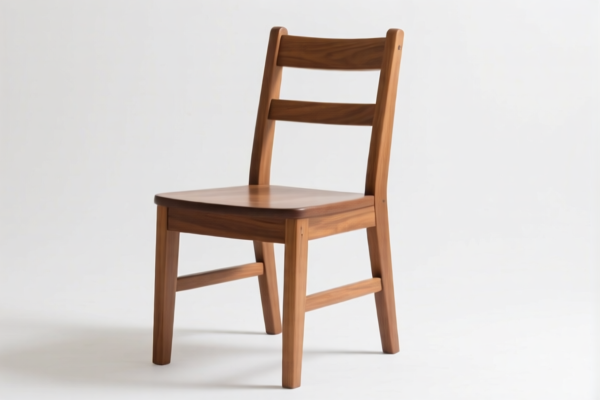
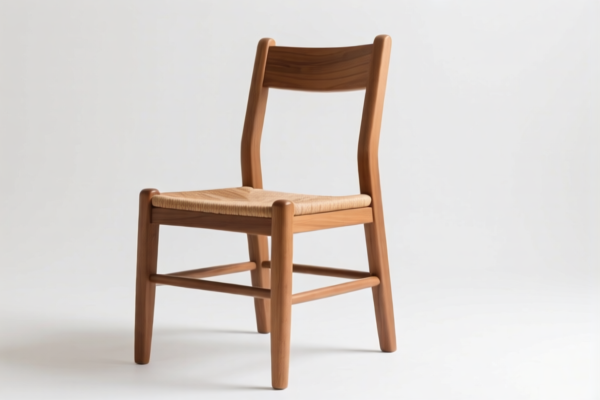
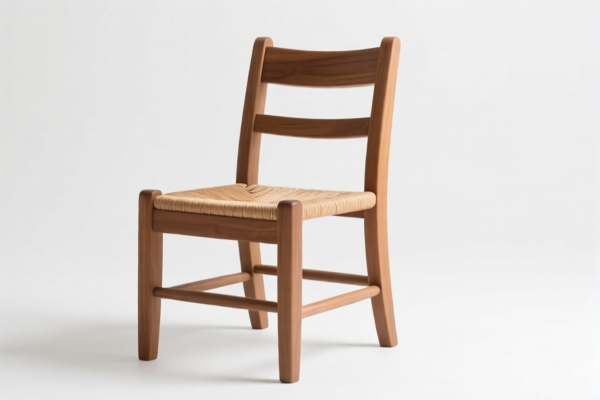
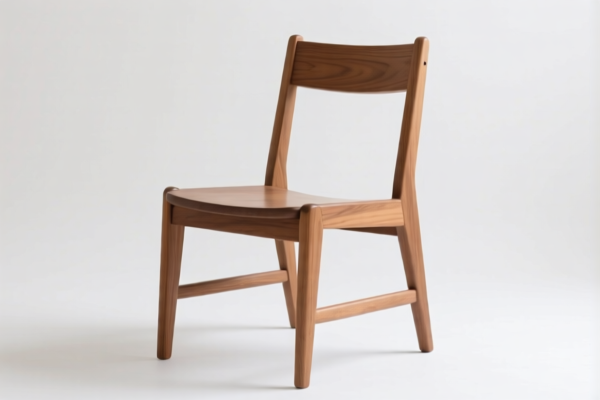
AI Analysis
🪑 Wooden Frame Seat (Parts)
🌐 HS Code Reference & Customs Clearance Guide | 2026 Latest Tariff Analysis | Professional Classification Strategy
📌 I. Product Definition & Classification: What Exactly Are "Wooden Seat Parts"?
Wooden Frame Seat Parts refer to components made primarily of wood that serve as structural supports or frames for seating furniture. In international trade, the classification hinges on two critical factors:
1. Material: The primary material is Wood (木制).
2. Form/Function: They are Parts (零件/部件) of seats, not complete seats themselves.
⚠️ Key Distinction:
- If the item is a complete seat (even if wooden), it falls under Heading 9401.
- If the item is strictly a frame or component made of wood intended for seats, it may fall under Heading 9401.91 (Parts of wooden seats).
- However, if the "part" is considered a general wooden architectural/carpentry item rather than a specific seat part, it might be misclassified under Heading 4418 (Wooden joinery/carpentry).
- Crucial Note: Under US customs practice, parts of seats are generally classified within the seat heading (9401) if they are specifically identifiable as such. However, ambiguous "wooden frames" sometimes face scrutiny under carpentry headings (4418) if the connection to a specific seat type is not clear.
📦 II. HS Code Classification Details (2026 Latest Tariff Authority Comparison)
Based on the provided data, here are the matched HS Codes and their rationales:
| HS Code | Product Description | Match Rationale | Primary Material | Form |
|---|---|---|---|---|
9401.91.90.10 |
Parts of wooden seats (Specific Sub-category) | Match Success: Name explicitly contains "wooden frames" (material) and "parts" (form). Fits 9401.91.90.10 which covers wooden parts of seats. | Wood (木制) | Parts (零件) |
9401.91.90.90 |
Parts of wooden seats (General Sub-category) | Match Success: Contains material (wooden) and form (parts). Fits the definition of wooden seat parts in the classification explanation. | Wood (木制) | Parts (零件) |
4418.91.91.95 |
Other wooden construction/carpentry items | Match Basis: Explicitly mentions material (wooden) and form (parts/frames). Classified under wooden building/carpentry products as other wooden components. | Wood (木制) | Components (部件) |
4418.99.91.95 |
Other wooden construction/carpentry items (Misc.) | Match Success: Contains "wooden frames" (material). "Parts" are considered components under this category of wooden items. | Wood (木制) | Parts (部件) |
🔍 Important Insight:
- Headings 9401.91.xx are the correct classification for dedicated seat parts.
- Headings 4418.xx are alternative/risky classifications if the "part" is generic (e.g., a plain wooden plank/frame not uniquely designed for a seat).
- Risk: Misclassifying a seat part as a general wooden component (4418) can lead to customs audits, especially given the high tariffs on Chinese wood products.
💰 III. 2026 Latest Tariff Rate Breakdown (Including Surcharges & Policy Add-ons)
✅ Applicable Country: USA (US)
✅ Origin: China (CN)
✅ Effective Date: From November 10, 2025 (including subsequent imports)
🎯 1. 9401.91.90.10 & 9401.91.90.90 —— Parts of Wooden Seats
| Item | Content |
|---|---|
| Base Tariff | 0.0% (ad valorem) |
| Section 301 Tariff (USITC) | +25.0% (From USITC Footnote related to Section 301) |
| IEEPA Surcharge | +10.0% (Targeting Chinese/HK products, effective from Nov 10, 2025) |
| Total Tax Rate | 35.0% |
| Tax Calculation | CIF Value × 35% |
| De Minimis Exemption? | ❌ No (deny_de_minimis) |
| Legal Authority Path | Section 301: 9903.88.01 → IEEPA: 9903.01.25/24 → USITC: 9401.91.90.xx |
📌 Explanation:
- 0% Base: Parts of seats generally have low base rates.
- 25% Section 301: Applies to many wood products and furniture parts from China.
- 10% IEEPA: New surcharge on Chinese imports.
- Total 35%: This is a high effective tariff. Must be factored into pricing.
🎯 2. 4418.91.91.95 & 4418.99.91.95 —— Other Wooden Carpentry/Construction Items
| Item | Content |
|---|---|
| Base Tariff | 3.2% (ad valorem) |
| Section 301 Tariff (USITC) | +25.0% |
| IEEPA Surcharge | +10.0% |
| Total Tax Rate | 38.2% |
| Tax Calculation | CIF Value × 38.2% |
| De Minimis Exemption? | ❌ No (deny_de_minimis) |
| Legal Authority Path | Section 301 → IEEPA → USITC: 4418.91/99.91.95 |
📌 Warning:
- Although the base rate is slightly higher (3.2% vs 0%), the total rate (38.2%) is higher than the seat part classification (35.0%).
- Why might this appear? If customs suspects the item is not a true "seat part" but a generic wooden frame, they may assign 4418, resulting in higher taxes.
- Recommendation: Ensure the product is clearly identifiable as a seat part (e.g., "Backrest Frame for Chair", "Seat Base for Stool") to stay under 9401.91 for the lower 35% rate.
🛠️ IV. Customs Clearance Practical Advice (Real-World Pitfall Avoidance Guide)
✅ 1. Preparation Checklist (All Documents Required)
| Document | Mandatory? | Description |
|---|---|---|
| ✅ Product Specification Sheet | ✔️ | Must state: Material (100% Wood), Function (Part of Seat), Dimensions. |
| ✅ Technical Drawing | ✔️ | Highlight that the item is a frame/part, not a complete seat. Show holes for bolts/cushions. |
| ✅ Clear Photos | ✔️ | Photos of the item alone, and ideally with a reference seat to show context. Label: "Wooden Frame Component". |
| ✅ Commercial Invoice | ✔️ | Description must be precise: "Wooden Frame Part for Seat, Model XYZ". Avoid vague terms like "Wooden Block". |
| ✅ Bill of Lading | ✔️ | Consistent with invoice. |
| ✅ Country of Origin Certificate | ✔️ | If not CN, may reduce tariffs (but data implies CN origin). |
✅ 2. Declaration Tips (Key Mnemonic)
🔥 "Be Specific, Avoid Generic, Prove It’s a Seat Part!"
| Scenario | Correct Declaration | Wrong Declaration |
|---|---|---|
| Clear Seat Component | Wooden Backrest Frame for Chair, HS 9401.91.90.10 |
Wooden Frame → Risk of 4418 (38.2%) |
| Generic Wood Piece | Wooden Structural Component |
Wooden Frame → Risk of 4418 |
| Complete Wooden Seat | Complete Wooden Dining Chair |
Wooden Frame Part → Under-declaration of value/type |
📌 Critical Advice:
- Do NOT just write "Wooden Frame".
- DO write "Wooden Frame Part for Seat" or "Chair Frame Component".
- This explicit description helps customs officers classify it under 9401.91 (35%) instead of 4418 (38.2%).
✅ 3. Special Handling for Ambiguous Items
| Situation | Handling Suggestion |
|---|---|
| Is it a seat part or furniture leg? | If it’s a leg, it may still be 9401.91. If it’s a general structural plank, it risks 4418. |
| Mixed Materials | If the frame has metal bolts/plastic inserts, it’s still primarily wood → 9401.91. |
| OEM Custom Parts | Provide the OEM drawing showing the part’s intended use in a seat. |
| Small Samples | Even samples are subject to the 35% rate; de minimis does not apply. |
🌍 V. Global Market Comparison (2026 Latest)
| Country/Region | Recommended HS Code | Tariff (China Origin) | Notes |
|---|---|---|---|
| 🇺🇸 USA | 9401.91.90.10 |
35% (Base 0% + 25% + 10%) | High effective tariff. |
| 🇪🇺 EU | 9401.99.90 |
~4.7% | No Section 301/IEEPA. Lower risk. |
| 🇨🇳 China | 9401.99.90 |
~4-5% | Import duty is low. |
| 🇨🇦 Canada | 9401.99.90 |
~5% | No major surcharges on wood parts. |
| 🇯🇵 Japan | 9401.99.90 |
~0-4% | Generally low. |
📌 Conclusion:
- The USA is the most challenging market for these goods due to the 35% total tariff.
- In other markets, the tariff is significantly lower. Consider supply chain diversification (e.g., assemblage in Vietnam/Mexico) if targeting the US market heavily.
📌 VI. Common Errors & Pitfalls (Blood & Tears Lessons)
❌ Error 1: Declaring "Wooden Frame" without specifying "for Seat"
👉 Consequence: Customs may classify under 4418 (38.2%) instead of 9401 (35%), leading to overpayment of 3.2% and potential audits.
❌ Error 2: Claiming De Minimis (Under $800)
👉 Consequence: Denied. Wood products from China are explicitly excluded from de minimis exemptions under IEEPA/Section 301. All taxes apply.
❌ Error 3: Misidentifying as "Complete Seat"
👉 Consequence: If declared as a complete seat, the tariff might be different (often similar, but value declaration must be accurate). Under-declaring value is fraud.
❌ Error 4: Providing Incomplete Documentation
👉 Consequence: Customs holds the shipment for classification review. Delays can cost $50-$100/day in demurrage.
✅ Correct Approach:
"Wooden Frame Component for Office Chair, Model OC-2026, 100% Pine Wood, Not a Complete Seat"
🎯 VII. Conclusion: Precision Saves Money!
🎯 Remember the Mantra:
🔹 "Specify 'Part for Seat' to get 35%, not 38%!"
🔹 "No De Minimis for Wood Parts from China – Plan for 35% Tax!"
🔹 "Documentation is Key – Drawings Prove It’s a Frame, Not a Table Leg!"
📌 Pro Tip:
If your business volume is high, consider applying for a Binding Tariff Ruling (BTR) from U.S. Customs and Border Protection (CBP) for your specific product. This legally locks in the 9401.91 classification and 35% rate, providing certainty against future audits.
📣 Immediate Action:
📞 Consult with a licensed customs broker.
📤 Submit detailed product images and descriptions.
📝 Do not assume – get a pre-classification opinion.
✨ Professional Clearance, Starting with Accurate Classification!
💼 Every Percentage Point of Tariff Impacts Your Bottom Line!
Customer Reviews
About HS Code Classification
The Harmonized System (HS) is an internationally standardized nomenclature developed by the World Customs Organization (WCO) to classify traded products. Over 200 countries use the HS system as the basis for customs tariffs, trade statistics, and import/export regulations.
Each HS code follows a hierarchical structure:
- Chapter (2 digits) — Broad category of goods (e.g., Chapter 84: Machinery and Mechanical Appliances)
- Heading (4 digits) — More specific grouping within the chapter
- Subheading (6 digits) — Internationally standardized breakdown, used by all WCO member countries
- National subdivisions (8-10 digits) — Country-specific extensions for further classification, such as US HTSUS 10-digit codes
Correct HS code classification is essential for smooth customs clearance, accurate duty payment, and compliance with trade regulations. Misclassification can lead to customs delays, overpayment of duties, or penalties.
When importing from CN to US, the applicable tariff rates may include:
- Most-Favored-Nation (MFN) rate — The standard duty rate applied to WTO members
- General rate — Applied to countries without trade agreements
- Trade remedy duties — Additional tariffs such as Section 301 (anti-dumping), Section 232 (national security), or countervailing duties
The information provided on this page is for reference purposes only. For official classification, please consult with your local customs authority or a licensed customs broker.