Wooden Furniture
CN → US| HS Code | Tariff Rate | Origin | Destination | Doc |
|---|---|---|---|---|
| 9403308001 | 35.0% | CN | US | Official Doc |
| 4409299100 | 35.0% | CN | US | Official Doc |
| 4403260164 | 35.0% | CN | US | Official Doc |
| 4403210130 | 35.0% | CN | US | Official Doc |
| 4407110053 | 10.0% | CN | US | Official Doc |
Product Images
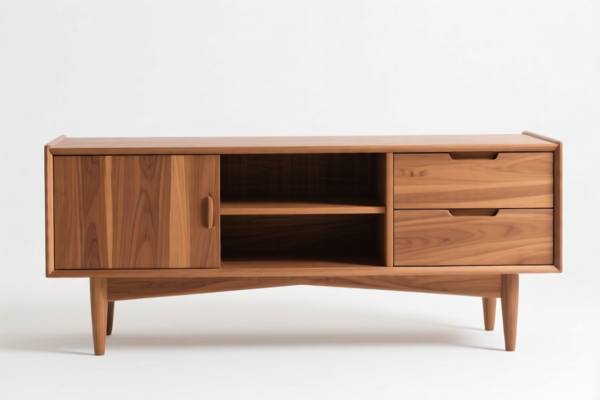
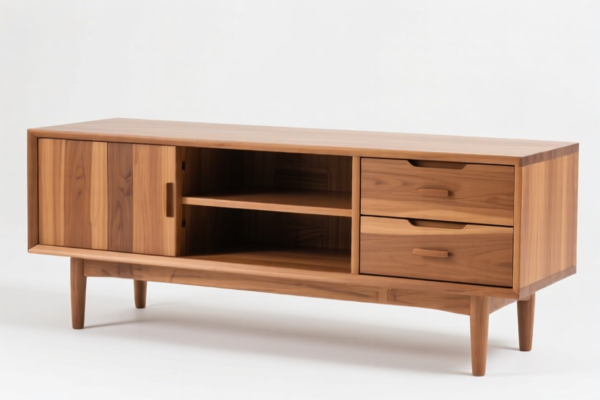
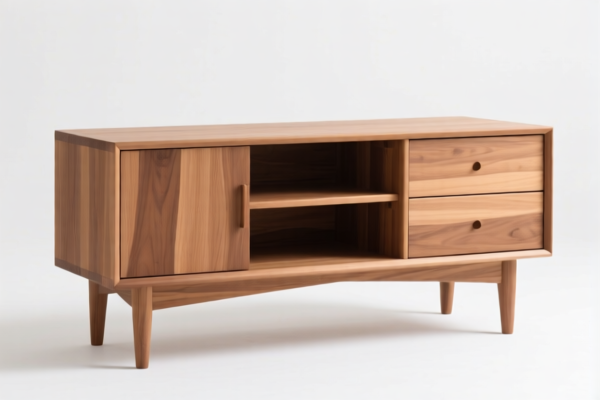
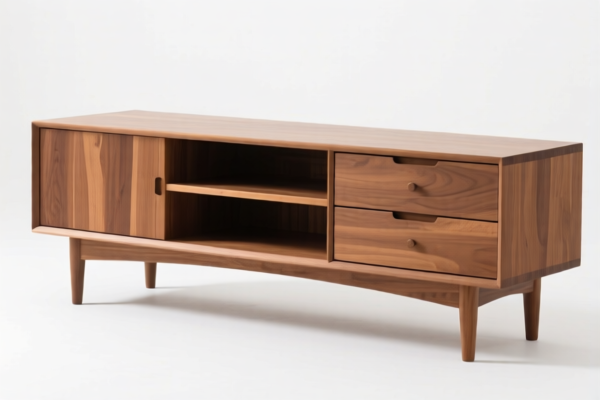
AI Analysis
🪵 Wooden Furniture (Wood Products)
🌐 HS Code Reference & Customs Clearance Guide | 2026 Latest Tariff Analysis | Professional Entry Strategy
📌 I. Product Definition & Classification: Do You Really Know "Wooden Furniture"?
Wooden products in international trade are strictly divided based on their processing stage and final form. Misclassification here is the #1 cause of customs delays because the duty rates vary wildly (from 10% to 35%+) depending on whether the wood is a raw material or a finished good.
1. Raw/Primary Wood (Logs, Planks, Sawn):
Wood in its natural state, logs, or simply sawn/peeled. It has not been assembled into a functional object yet.
Key Indicator:* No joints, no hardware, no assembly instructions.
2. Finished Wooden Furniture:
Fully assembled or knock-down (KD) kits intended for direct use (desks, chairs, cabinets).
Key Indicator:* Functional purpose, assembled structure, often includes hardware (hinges, legs).
⚠️ Critical Distinction Point:
- If it is a single piece of lumber/log → Go to Chapter 44 (Wood Products).
- If it is a functional item (e.g., a table, cabinet) → Go to Chapter 94 (Furniture).
- Note: Even if the furniture is made of wood, it generally falls under HS 9403, NOT 440x, unless it is raw wood.
📦 II. HS Code Classification Details (Based on Provided Data)
| HS Code | Product Description | Application Scenario | Material/Form | Total Tax Rate |
|---|---|---|---|---|
9403.30.80.01 |
Solid Wood Furniture | Finished furniture (desks, cabinets, shelves) | Solid Wood / Wooden | 35.0% |
4409.29.91.00 |
Solid Wood Timber (Non-Coniferous) | Non-coniferous wood, unfinished/formless | Non-Coniferous Timber | 35.0% |
4403.26.01.64 |
Solid Wood Timber (Coniferous/Log) | Logs or rough-sawn coniferous wood | Coniferous/Log | 35.0% |
4403.21.01.30 |
Solid Wood Timber (General Wood) | General logs/wood, unspecified species/dimensions | Logs/Wood | 35.0% |
4407.11.00.53 |
Sawn Wood (Coniferous Pine) | Saw-cut pine wood, primary processed | Sawn/Pine Wood | 10.0% |
4407.99.02.95 |
Sawn Wood (Non-Coniferous) | General non-coniferous sawn wood | Sawn/Other Wood | 35.0% |
🔍 Key Insight:
- Finished Furniture (9403) and most Raw Timbers (4403/4409/4407non-pine) attract a high 35% total tax rate.
- Exception: Sawn Coniferous Pine (4407.11.00.53) is significantly cheaper at 10%.
- All items listed are subject to significant additional tariffs due to trade regulations (see Section III).
💰 III. 2026 Latest Tariff Rate Breakdown (Including Surcharges & Policy Add-ons)
✅ Applicable Country: United States (US)
✅ Country of Origin: China (CN)
✅ Effective Date: Current Trade War Regulations Apply
🎯 1. High-Tax Items (Total Rate: 35.0%)
Applicable Codes: 9403.30.80.01, 4409.29.91.00, 4403.26.01.64, 4403.21.01.30, 4407.99.02.95
| Item | Content |
|---|---|
| Base Tariff | 0.0% (ad valorem) |
| Section 301 Surcharge | +25.0% (From USITC Footnote 9903.88.01 / Section 301) |
| Section 122 Tariff | +10.0% (Specific regulatory surcharge) |
| Total Tax Rate | 35.0% |
| Calculation Basis | CIF Value × 35% |
| De Minimis Exemption? | ❌ NO (Section 301 and 122 tariffs generally void the $800 de minimis exemption for Chinese goods in many contexts, or require strict declaration) |
| Legal Path | Section 301:9903.88.01 → Section 122 → HS Code |
📌 Explanation:
- The 25% comes from the ongoing Section 301 trade tensions against China.
- The 10% is a specific "122 Clause" tariff.
- Total 35% is extremely high. This applies to almost all solid wood furniture and non-pine timber.
🎯 2. Low-Tax Item (Total Rate: 10.0%)
Applicable Code: 4407.11.00.53 (Sawn Coniferous Pine)
| Item | Content |
|---|---|
| Base Tariff | 0.0% |
| Section 301 Surcharge | 0.0% (Exempt or lower tier in this specific sub-category) |
| Section 122 Tariff | +10.0% |
| Total Tax Rate | 10.0% |
| Calculation Basis | CIF Value × 10% |
| De Minimis Exemption? | ❌ NO (Still subject to regulatory scrutiny) |
| Legal Path | Section 122 → USITC:4407.11.00.53 |
📌 Note:
- If you are exporting Pine Lumber, you save 25% compared to other woods.
- However, if you turn this pine into Furniture (9403), you jump back to 35%.
🛠️ IV. Customs Clearance Practical Advice (Real-World Pitfall Guide)
✅ 1. Required Documentation Checklist (None Can Be Missing)
| Document | Required | Description |
|---|---|---|
| ✅ Product Specification Sheet | ✔️ | Must specify: Material (Pine vs. Oak vs. etc.), Finish (Raw/Varnish), Dimensions. |
| ✅ Product Photos | ✔️ | Must clearly show if it is raw wood (chips, bark, saw marks) or furniture (joints, legs, handles). |
| ✅ Commercial Invoice | ✔️ | Must describe items accurately (e.g., "Solid Wood Dining Table" vs. "Wood Planks"). |
| ✅ Packing List | ✔️ | Detailed weight and dimensions. |
| ✅ Wood Treatment Certificate | ✔️ | CRITICAL: ISPM 15 mark for wood packaging (pallets/crates). Failure leads to rejection! |
| ✅ Certificate of Origin (CO) | ✔️ | Proves Chinese origin (triggers the 35% tax). |
✅ 2. Declaration Tips (Key Mantra)
🔥 "Raw Wood vs. Furniture: One is 10%, One is 35%!"
"Pine is King, Other Wood is Expensive!"
| Scenario | Correct Declaration | Wrong Practice | Consequence |
|---|---|---|---|
| Finished Table/Cabinet | 9403.30.80.01 (Furniture) |
Declare as "Wood Parts" | Tax 35%, but risk penalty for misclassification |
| Raw Logs/Rough Sawn | 4403.26.01.64 (Timber) |
Declare as "Furniture Parts" | Unnecessary scrutiny, delayed clearance |
| Sawn Pine Lumber | 4407.11.00.53 (Pine) |
Declare as "Oak" or generic "Wood" | Pay 35% instead of 10%! Overpaid Tax! |
| Non-Coniferous Sawn Wood | 4407.99.02.95 |
Declare as "Pine" | Pay 35% instead of potentially lower if misidentified (but here both are high except Pine) |
Strategic Tip:
If you are selling Pine Furniture, can it be classified as9403(35%) or does a specific pine furniture sub-class exist? Based on the data,9403.30.80.01is the only furniture code provided, and it carries the 35% rate.
However, if you export Pine Planks (4407.11.00.53), you only pay 10%.
Recommendation: If possible, export semi-finished raw wood (if the buyer does final assembly) to utilize the lower tax rate, but this requires complex supply chain management.
✅ 3. Special Cases & Handling
| Situation | Handling Advice |
|---|---|
| Wood Packaging (Pallets) | Must have ISPM 15 Stamp. If missing, customs will destroy the pallets or charge re-export costs. |
| Mixed Shipments | If a container has both Furniture (9403) and Timber (440x), declare separately! Do not lump under one code. |
| OEM Furniture | Provide design blueprints. If it’s a "Knock-Down" (KD) kit, still classified as Furniture (9403), not parts. |
| Origin Fraud | Do not declare Chinese Pine as "Vietnamese" to avoid tariffs. CBP (Customs) checks wood grain and chemical fingerprints. Penalties are severe. |
🌍 V. Global Market Comparison (2026 Update)
| Market | Recommended HS Code | Est. Total Tax (China Origin) | Key Requirements |
|---|---|---|---|
| 🇺🇸 USA | 9403.30.80.01 (Furniture) |
35% | Section 301 + Section 122 |
| 🇺🇸 USA | 4407.11.00.53 (Pine) |
10% | Specific Pine Identification |
| 🇪🇺 EU | 9403.30 |
~4-6% | EUTR (EU Timber Regulation), No FSC mandatory but recommended |
| 🇨🇳 China | 9403.30 |
~5-10% | Domestic consumption, lower burden |
📌 Conclusion:
- The US market is the most expensive for wooden products from China due to overlapping tariffs (301 + 122).
- Pine (4407.11.00.53) is the only "lucky" category with a lower 10% rate, but only for sawn wood, not finished furniture.
📌 VI. Common Errors & Pitfalls (Lessons Learned)
❌ Error 1: Declaring a solid wood chair as "Wooden Parts" (440x)
👉 Result: Customs rejects it. It’s furniture (9403). If you try to pay 10% on furniture, you face fraud charges.
❌ Error 2: Not marking wooden pallets with ISPM 15
👉 Result: Entire shipment held at port. De-palletting costs > $5,000.
❌ Error 3: Misidentifying "Oak" or "Maple" as "Pine" to get 10% tax
👉 Result: Lab test fails. Fines, back-taxes (25% difference), and potential blacklisting.
❌ Error 4: Ignoring the "122 Clause"
👉 Result: Underestimating budget. You planned for 25% (Section 301) only, but the real cost is 35%.
✅ Correct Action:
"Solid Wood Office Desk, Pine Material, KD Kit, 5 Drawers, ISPM 15 Pallets, Model XYZ"
HS Code:9403.30.80.01
Tax: 35%
🎯 VII. Conclusion: Smart Classification, Cost Control
🎯 Remember the Mantra:
🔹 "Furniture is 35%, Raw Pine is 10%. Check the Species!"
🔹 "Don't confuse Planks with Desks. One is cheap, one is expensive."
📌 Pro Tip:
If you are exporting wooden furniture, the 35% tax is a massive cost driver. Consider:
1. Supply Chain Shift: Source raw wood from non-China origins (e.g., Southeast Asia) if possible (though origin rules are strict).
2. Product Design: Can you export flat-pack parts that might qualify for a different sub-category? (Usually no, furniture is furniture).
3. Pre-Ruling: Apply for an HTSUS Advance Ruling from US Customs to confirm the exact code and tax liability before shipping.
📣 Immediate Action:
📞 Verify the wood species (Pine vs. Non-Pine).
📞 Verify the product state (Raw vs. Furniture).
📞 Calculate 35% vs. 10% impact on your profit margin.
✨ Professional clearance starts with precise classification!
💼 Every percentage point saved is pure profit!
Customer Reviews
About HS Code Classification
The Harmonized System (HS) is an internationally standardized nomenclature developed by the World Customs Organization (WCO) to classify traded products. Over 200 countries use the HS system as the basis for customs tariffs, trade statistics, and import/export regulations.
Each HS code follows a hierarchical structure:
- Chapter (2 digits) — Broad category of goods (e.g., Chapter 84: Machinery and Mechanical Appliances)
- Heading (4 digits) — More specific grouping within the chapter
- Subheading (6 digits) — Internationally standardized breakdown, used by all WCO member countries
- National subdivisions (8-10 digits) — Country-specific extensions for further classification, such as US HTSUS 10-digit codes
Correct HS code classification is essential for smooth customs clearance, accurate duty payment, and compliance with trade regulations. Misclassification can lead to customs delays, overpayment of duties, or penalties.
When importing from CN to US, the applicable tariff rates may include:
- Most-Favored-Nation (MFN) rate — The standard duty rate applied to WTO members
- General rate — Applied to countries without trade agreements
- Trade remedy duties — Additional tariffs such as Section 301 (anti-dumping), Section 232 (national security), or countervailing duties
The information provided on this page is for reference purposes only. For official classification, please consult with your local customs authority or a licensed customs broker.