Wooden Furniture Legs
CN → US| HS Code | Tariff Rate | Origin | Destination | Doc |
|---|---|---|---|---|
| 9403910080 | 35.0% | CN | US | Official Doc |
| 9403608093 | 35.0% | CN | US | Official Doc |
| 4418999195 | 38.2% | CN | US | Official Doc |
| 4418919195 | 38.2% | CN | US | Official Doc |
| 4421999880 | 38.3% | CN | US | Official Doc |
| 4421992000 | 39.9% | CN | US | Official Doc |
Product Images
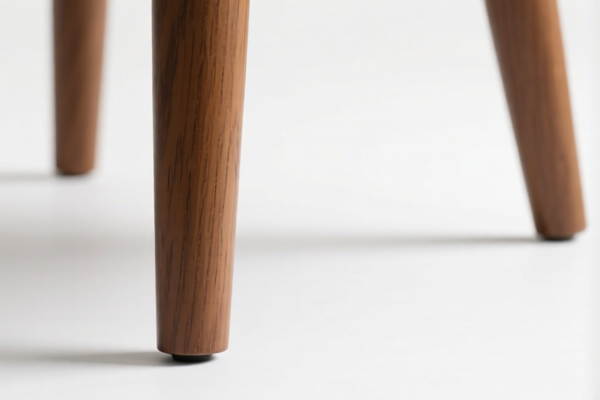
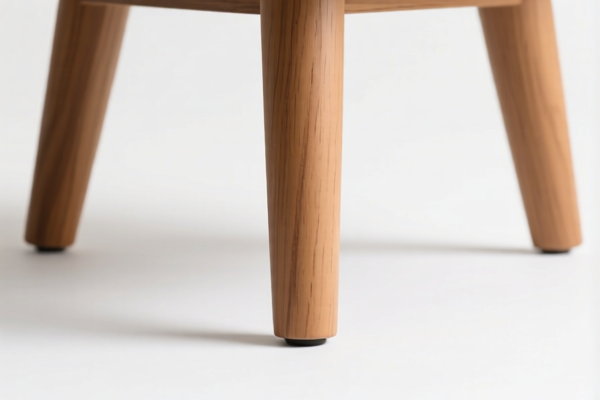
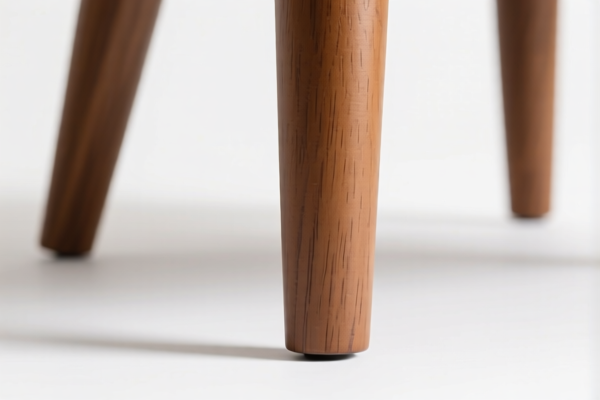
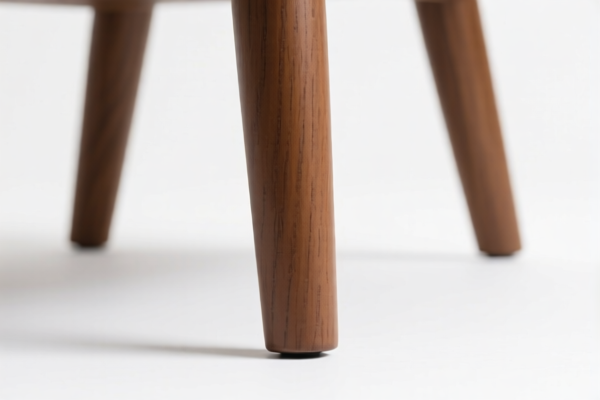
AI Analysis
🪵 Wooden Furniture Legs (Components of Furniture)
🌐 HS Code Reference & Customs Clearance Guide | 2026 Latest Tariff Analysis | Professional-Level Strategy
📌 1. Product Definition & Classification: Do You Really Understand "Wooden Furniture Legs"?
Wooden furniture legs are critical structural components of wooden furniture. In international trade, they are not classified as standalone "furniture" but rather as parts or accessories, depending on their design and finish.
Key Distinction:
- Finished Parts: If the legs are sanded, grooved, drilled, or otherwise processed to fit specific furniture, they are classified as parts of furniture.
- Raw/Semi-Processed Items: If they are basic dowels or unprocessed wood pieces, they may fall under other articles of wood.
- Furniture Assembly: If sold as complete sets with other furniture pieces, they follow the main item’s classification.
⚠️ Critical Note:
- Misclassification can lead to high tariffs (25-28%) vs. zero tariff (0%).
- Always provide detailed specifications to clarify if the item is a "part" or a "finished article."
📦 2. HS Code Classification Details (2026 Latest Tariff Authority)
| HS Code | Product Description | Applicable Scenario | Tax Rate |
|---|---|---|---|
4421.99.98.80 |
Other articles of wood: Other: Other: Other: Other | Basic wooden legs, no further processing | 28.3% (Base 3.3% + Add. 25%) |
4421.99.20.00 |
Other articles of wood: Other: Other: Wood dowel pins: Sanded, grooved or otherwise advanced in condition | Processed dowels, pre-drilled legs | 0.0% |
9403.91.00.80 |
Other furniture and parts thereof: Parts: Of wood Other | Standard wooden furniture legs (sanded, shaped) | 25.0% (Base 0% + Add. 25%) |
9403.60.80.93 |
Other furniture and parts thereof: Other wooden furniture: Other Other: Other | If sold as part of a complete wooden furniture unit | 25.0% (Base 0% + Add. 25%) |
4418.99.91.95 |
Builders' joinery and carpentry of wood: Other: Other: Other Other: Other | Custom architectural woodwork (e.g., decorative leg supports) | 28.2% (Base 3.2% + Add. 25%) |
4418.91.91.95 |
Builders' joinery and carpentry of wood: Other: Of bamboo: Other Other: Other | Bamboo furniture legs | 28.2% (Base 3.2% + Add. 25%) |
🔍 Key Insight:
- Standard wooden furniture legs typically fall under9403.91.00.80(Parts of wood) with a 25% tariff.
- Dowel pins or advanced wood articles may qualify for 0% tariff if they meet specific processing criteria (4421.99.20.00).
- Bamboo legs are treated separately and incur higher tariffs (28.2%).
💰 3. Detailed Tariff Breakdown for 2026 (Including Additional Duties)
✅ Applicable Country: United States (US)
✅ Origin: China (CN)
✅ Effective Date: From November 10, 2025 (and onwards)
🎯 1. 9403.91.00.80 – Parts of Wooden Furniture
| Item | Detail |
|---|---|
| Base Tariff | 0.0% (ad valorem) |
| USITC Additional Duty | +25% (under Section 301) |
| Total Tariff | 25.0% |
| Calculation | CIF Value × 25% |
| De Minimis Exemption | ❌ Not Applicable |
| Legal Basis | USITC:9403.91.00.80 → SECTION 301 |
📌 Explanation:
- This is the most common classification for wooden furniture legs.
- The 25% tariff is non-negotiable for Chinese-origin goods.
- No base tariff, but the additional duty significantly impacts cost.
🎯 2. 4421.99.20.00 – Wood Dowel Pins (Processed)
| Item | Detail |
|---|---|
| Base Tariff | 0.0% |
| USITC Additional Duty | 0.0% |
| Total Tariff | 0.0% |
| Calculation | CIF Value × 0% |
| De Minimis Exemption | ❌ Not Applicable |
| Legal Basis | USITC:4421.99.20.00 |
📌 Explanation:
- If the legs are essentially dowel pins or advanced wood articles (sanded, grooved), they may qualify for 0% tariff.
- Requires proof of processing (e.g., CNC machined, pre-drilled).
- High potential for cost savings if eligible.
🎯 3. 4421.99.98.80 – Other Articles of Wood (Unprocessed)
| Item | Detail |
|---|---|
| Base Tariff | 3.3% |
| USITC Additional Duty | +25% |
| Total Tariff | 28.3% |
| Calculation | CIF Value × 28.3% |
| De Minimis Exemption | ❌ Not Applicable |
| Legal Basis | USITC:4421.99.98.80 → SECTION 301 |
📌 Explanation:
- Applies to basic, unprocessed wooden legs that do not meet the "dowel pin" criteria.
- Higher than standard furniture parts due to the 3.3% base tariff.
🎯 4. 4418.99.91.95 & 4418.91.91.95 – Bamboo/Custom Woodwork
| Item | Detail |
|---|---|
| Base Tariff | 3.2% |
| USITC Additional Duty | +25% |
| Total Tariff | 28.2% |
| Calculation | CIF Value × 28.2% |
| De Minimis Exemption | ❌ Not Applicable |
| Legal Basis | USITC:4418.99.91.95 / 4418.91.91.95 → SECTION 301 |
📌 Explanation:
- Bamboo legs and custom architectural woodwork are taxed at 28.2%.
- No special exemptions for these categories.
🛠️ 4. Practical Customs Clearance Tips (Avoid Pitfalls)
✅ 1. Required Documentation
| Document | Required | Notes |
|---|---|---|
| ✅ Product Specification Sheet | ✔️ | Include dimensions, wood type, finish, and processing details |
| ✅ Photos of Legs | ✔️ | Show pre-drilled holes, grooves, or other advanced features |
| ✅ Commercial Invoice | ✔️ | Clearly state "Wooden Furniture Legs" or "Parts of Wooden Furniture" |
| ✅ Packing List | ✔️ | Detail quantity, weight, and packaging |
| ✅ Certificate of Origin | ✔️ | Confirm origin to apply correct tariffs |
| ✅ Third-Party Test Report | ✔️ | If applicable (e.g., formaldehyde emissions) |
✅ 2. Declaration Strategy (Key Tips)
🔥 "Specify Finish, Prove Processing, Avoid Raw Classifications!"
| Scenario | Correct Declaration | Wrong Approach |
|---|---|---|
| CNC-machined legs | 4421.99.20.00 (0% tariff) |
Declare as "Raw Wood" → 28.3% |
| Standard sanded legs | 9403.91.00.80 (25% tariff) |
Declare as "Furniture" → 25% (same, but avoid ambiguity) |
| Bamboo legs | 4418.91.91.95 (28.2% tariff) |
Declare as "Wood" → 28.3% (slightly higher) |
| Unprocessed blocks | 4421.99.98.80 (28.3% tariff) |
Declare as "Dowel Pins" → 0% (Misdeclaration risk) |
✅ 3. Special Cases
| Scenario | Handling Advice |
|---|---|
| OEM Custom Legs | Provide design drawings + client order to prove specialized processing |
| Sold with Furniture | Declare as part of the complete furniture set under 9403.60.80.93 |
| Bamboo vs. Wood | Clearly specify material; bamboo is taxed differently |
| Pre-drilled vs. Unprocessed | Highlight advanced processing to qualify for 0% tariff |
🌍 5. Global Market Comparison (2026 Latest)
| Country/Region | Recommended HS Code | Tariff | Certification | Notes |
|---|---|---|---|---|
| 🇺🇸 USA | 9403.91.00.80 |
25% (CN) | None | High tariff for wooden parts |
| 🇨🇳 China | 9403.91.00.80 |
5% | None | Lower base tariff |
| 🇪🇺 EU | 9403.91.00.80 |
0% (if compliant) | CE | No additional duties |
| 🇦🇺 Australia | 9403.91.00.80 |
5% | None | Moderate tariff |
| 🇯🇵 Japan | 9403.91.00.80 |
0% | JIS | No additional duties |
📌 Conclusion:
- USA imposes a 25% additional duty on Chinese wooden furniture parts.
- EU and Japan offer better tariff conditions for compliant products.
- Cost optimization: Consider exporting to non-US markets or applying for duty exemptions if eligible.
📌 6. Common Mistakes & Pitfalls (Lessons Learned)
❌ Mistake 1: Declaring processed legs as "Raw Wood"
👉 Consequence: Higher tariff (28.3% vs. 25%) or legal penalties.
❌ Mistake 2: Misclassifying bamboo as wood
👉 Consequence: Incorrect tariff application (28.2% vs. 28.3%).
❌ Mistake 3: Failing to prove advanced processing
👉 Consequence: Denied 0% tariff for 4421.99.20.00.
❌ Mistake 4: Splitting legs from furniture in declaration
👉 Consequence: Higher administrative burden and potential reclassification.
✅ Correct Practice:
"Wooden Furniture Legs, CNC-machined, Pre-drilled, Sanded, Model XYZ, for Table Assembly"
🎯 7. Conclusion: Precise Classification Saves Money!
🎯 Remember:
🔹 "Processed = 0%, Standard = 25%, Raw = 28.3%"
🔹 "Prove your processing to reduce tariffs!"
🔹 "Bamboo is not wood – declare correctly!"
📌 Tip:
If your wooden furniture legs are exported to Vietnam, Mexico, or Thailand, you may qualify for IEEPA exemptions, reducing tariffs to 0-5%.
Consider applying for an Advance Ruling to avoid customs disputes.
📣 Immediate Action:
📞 Contact a professional customs broker + Provide product photos + Apply for HS Code Advance Ruling
🚀 Ensure smooth clearance, reduce costs, and boost profits!
✨ Professional clearance starts with accurate classification!
💼 Every dollar saved is a dollar earned!
Customer Reviews
About HS Code Classification
The Harmonized System (HS) is an internationally standardized nomenclature developed by the World Customs Organization (WCO) to classify traded products. Over 200 countries use the HS system as the basis for customs tariffs, trade statistics, and import/export regulations.
Each HS code follows a hierarchical structure:
- Chapter (2 digits) — Broad category of goods (e.g., Chapter 84: Machinery and Mechanical Appliances)
- Heading (4 digits) — More specific grouping within the chapter
- Subheading (6 digits) — Internationally standardized breakdown, used by all WCO member countries
- National subdivisions (8-10 digits) — Country-specific extensions for further classification, such as US HTSUS 10-digit codes
Correct HS code classification is essential for smooth customs clearance, accurate duty payment, and compliance with trade regulations. Misclassification can lead to customs delays, overpayment of duties, or penalties.
When importing from CN to US, the applicable tariff rates may include:
- Most-Favored-Nation (MFN) rate — The standard duty rate applied to WTO members
- General rate — Applied to countries without trade agreements
- Trade remedy duties — Additional tariffs such as Section 301 (anti-dumping), Section 232 (national security), or countervailing duties
The information provided on this page is for reference purposes only. For official classification, please consult with your local customs authority or a licensed customs broker.