Wooden Keychain
CN → US| HS Code | Tariff Rate | Origin | Destination | Doc |
|---|---|---|---|---|
| 4421999880 | 38.3% | CN | US | Official Doc |
| 4421919880 | 38.3% | CN | US | Official Doc |
| 7326908688 | 87.9% | CN | US | Official Doc |
| 7326903500 | 92.8% | CN | US | Official Doc |
| 8301500000 | 20.6% | CN | US | Official Doc |
Product Images
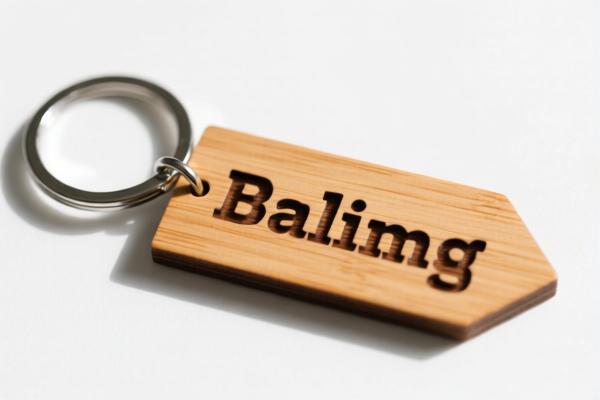
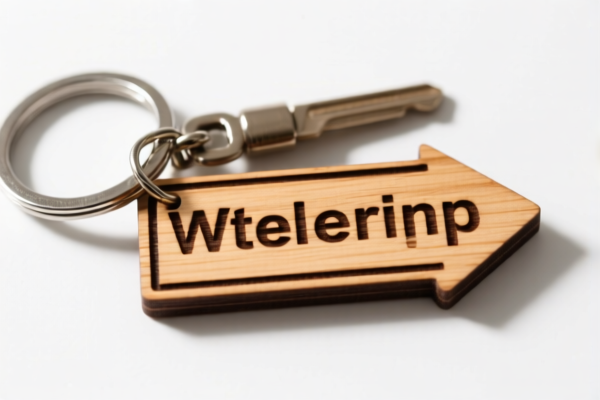
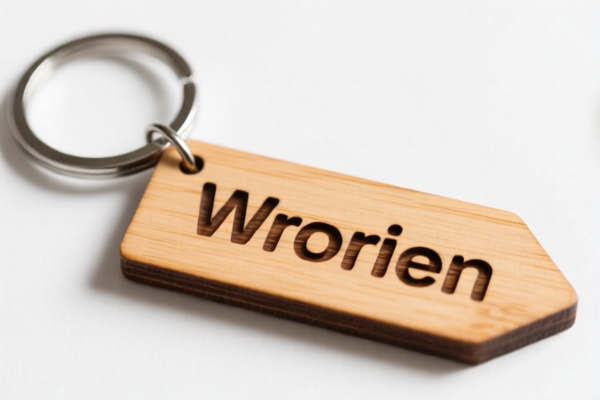

AI Analysis
🔑 Wooden Keychain (木质钥匙扣)
🌐 HS Code Reference & Customs Clearance Guide | 2026 Latest Tariff Analysis | Professional Clearance Strategy
📌 I. Product Definition & Classification: Do You Really Understand "Keychains"?
Keychains are small accessories used to attach keys or other items together. In international trade, their classification heavily depends on the material. While the user input specifies "Wooden Keychain", customs authorities scrutinize mixed materials and structural details.
The provided data identifies five potential HS Codes, splitting them into two main categories:
1. Wooden Keychains (HS Codes starting with 4421)
2. Metal Keychains (HS Codes starting with 7326 or 8301) - Included for comparison and risk warning.
⚠️ Critical Distinction Point: - If the product is primarily made of wood, it falls under Chapter 44. - If the product has metal components (e.g., metal rings, chains, or frames), it may be classified as metal accessories under Chapter 73 or 83. - Misclassification Risk: Declaring a mixed-material keychain as purely "wooden" when it has significant metal parts can lead to severe penalties due to the massive tax difference (38.3% vs. 87.9%+).
📦 II. HS Code Classification Details (2026 Latest Tariff Authority Comparison)
Based on the provided data, here is the breakdown for Wooden Keychains and relevant alternatives.
| HS Code | Product Description | Material | Total Tax Rate | Tax Breakdown |
|---|---|---|---|---|
4421.99.98.80 |
Wooden Keychain, classified as other specific wooden articles not elsewhere specified. | Wood | 38.3% | Base: 3.3% Additional: 25.0% Section 122: 10% |
4421.91.98.80 |
Wooden Keychain, classified under other wooden articles. | Wood | 38.3% | Base: 3.3% Additional: 25.0% Section 122: 10% |
7326.90.86.88 |
Keychain, inferred material: Iron/Steel, classified as other articles of iron/steel. | Iron/Steel | 87.9% | Base: 2.9% Additional: 25.0% Section 122: 10% Steel/Al/Cu Surcharge: 50% |
7326.90.35.00 |
Keychain, metal small containers/hangers, material: Iron/Steel. | Iron/Steel | 92.8% | Base: 7.8% Additional: 25.0% Section 122: 10% Steel/Al/Cu Surcharge: 50% |
8301.50.00.00 |
Keychain, classified as fasteners/frames of base metal. | Base Metal | 20.6% | Base: 3.1% Additional: 7.5% Section 122: 10% |
🔍 Key Takeaway: - Wooden Keychains are taxed at 38.3%. - Metal Keychains face significantly higher or varied taxes, ranging from 20.6% to 92.8%, depending on the specific metal composition and subheading. - Warning: If your "Wooden Keychain" contains metal rings or clips, US Customs may reclassify it. If deemed primarily metal, you could face taxes up to 92.8%.
💰 III. 2026 Latest Tariff Rate Breakdown (Including Additional Taxes & Policy Surcharges)
✅ Applicable Country: United States (US)
✅ Origin: China (CN)
✅ Effective Date: Current policies apply (Section 122 & 301 Tariffs)
🎯 1. 4421.99.98.80 & 4421.91.98.80 —— Wooden Keychains (The Primary Classification)
| Item | Content |
|---|---|
| Base Tariff | 3.3% (Ad Valorem) |
| Section 301 Tariff (Additional) | +25.0% (From USITC Footnotes) |
| Section 122 Tariff | +10.0% (Against China/Global trade adjustments) |
| Total Tariff | 38.3% |
| Tax Calculation | CIF Value × 38.3% |
| De Minimis Exemption | ❌ Not Eligible (Due to high Section 301/122 rates) |
| Legal Basis Path | HTSUS:4421.99.98.80 → Section 301: 25% → Section 122: 10% |
📌 Explanation: - "Base Tariff 3.3%": Standard duty for wooden articles under Chapter 44. - "Additional Tariff 25.0%": The infamous Section 301 Tariff targeting Chinese goods. This applies to most wooden accessories. - "Section 122 Tariff 10%": A specific surcharge applied to imports from China to address trade imbalances. - Total 38.3%: This is a fixed high rate. Unlike some categories with varying surcharges, wooden keychains consistently face this burden.
⚠️ Why Not Metal Codes? (Risk Analysis)
If your product has any metal parts (e.g., a metal key ring), customs might argue it's not "primarily wood."
- If classified as Steel/Iron (7326): You face a 50% surcharge on top of base + 301 + 122, leading to 87.9% - 92.8% total tax.
- If classified as Base Metal Fastener (8301): You might benefit from a lower 20.6% rate, BUT only if it fits the strict definition of "fasteners/frames."
💡 Strategy: To ensure the 38.3% rate (Wooden) rather than 92.8% (Metal), you must prove the essential character is wood.
🛠️ IV. Customs Clearance Practical Advice (Real-World Pitfall Avoidance)
✅ 1. Documentation Checklist (Non-Negotiable)
| Document | Required? | Explanation |
|---|---|---|
| ✅ Product Specification Sheet | ✔️ | Must explicitly state: "100% Wooden Body, Metal Ring." |
| ✅ Material Breakdown | ✔️ | Detail % of wood vs. metal. If metal is <10%, argue for wooden classification. |
| ✅ Product Photos | ✔️ | Clear images of the wooden body and the metal attachment. |
| ✅ Commercial Invoice | ✔️ | Description: "Wooden Keychain, Wood Body with Metal Ring." |
| ✅ Packing List | ✔️ | Consistent with invoice. |
✅ 2. Classification Strategy (Key Mnemonic)
🔥 "Wood Body, Metal Ring? Claim 4421! But Prove It!"
| Scenario | Recommended HS Code | Why? |
|---|---|---|
| Purely Wooden Keychain | 4421.99.98.80 |
Safest, clear classification. |
| Wooden Body + Small Metal Ring | 4421.99.98.80 |
Argue "Essential Character" is wood. Risk: Low if metal is minor. |
| Metal Frame with Small Wood Inlay | 8301.50.00.00 or 7326 |
Essential character is metal. Expect higher or complex taxes. |
| Mixed Material (Undeclared) | Reclassified by Customs | Risk of 92.8% tax + penalties! |
✅ 3. Special Handling Tips
| Situation | Recommendation |
|---|---|
| High-Value Keychains | Consider Advance Ruling from CBP to lock in the 38.3% rate. |
| OEM Custom Keychains | Provide design files showing the wooden part is the main visual element. |
| Avoid "Keychain" as Only Description | Use "Wooden Keychain, Wood Body, Metal Loop" to guide the officer. |
| Check for Section 122 Eligibility | Ensure origin is China to account for the 10% surcharge in your cost model. |
🌍 V. Global Market Clearance Comparison (2026 Update)
| Country/Region | Recommended HS Code | Total Tax (China Origin) | Key Certifications | Notes |
|---|---|---|---|---|
| 🇺🇸 USA | 4421.99.98.80 |
38.3% | None specific | High Section 301 + 122 taxes. |
| 🇨🇳 China | 4421.99.98.80 |
~5-10% (Est.) | None | Lower entry barrier. |
| 🇪🇺 EU | 4421.99.98.80 |
~2.5-5% | FSC Certification (Recommended) | No Section 301/122. |
| 🇬🇧 UK | 4421.99.98.80 |
~4% | FSC | Post-Brexit rules apply. |
📌 Conclusion: - The USA is the most expensive market due to 38.3% combined tariffs. - Wooden keychains are significantly cheaper than metal keychains in the US market (38.3% vs. 87.9%+). - EU/UK are much more favorable if you can secure FSC certification.
📌 VI. Common Mistakes & Pitfalls (Blood & Tears Lessons)
❌ Mistake 1: Declaring a keychain with a heavy metal frame as "Wooden Keychain" (4421).
👉 Consequence: Customs reclassifies to 7326, charging 92.8% instead of 38.3%. Loss: ~54.5% extra tax!
❌ Mistake 2: Ignoring the 10% Section 122 Tariff. 👉 Consequence: Your profit margin is wiped out because you only accounted for 3.3% + 25%. Total tax is 38.3%, not 28.3%.
❌ Mistake 3: Using vague descriptions like "Accessory" or "Gift." 👉 Consequence: High scrutiny, potential delay, or incorrect classification leading to penalties.
✅ Correct Approach:
"Wooden Keychain, Solid Wood Body, Stainless Steel Ring, Model XYZ, Made in China."
🎯 VII. Conclusion: Precision Classification, Cost Control!
🎯 Remember the Formula:
🔹 Wood Body + Metal Ring = 4421 (38.3%)
🔹 Metal Body = 7326 (87.9%-92.8%)
🔹 Base Tax + 25% (Sec 301) + 10% (Sec 122) = 38.3%
📌 Pro Tip:
If your keychain is over 50% metal by weight or value, consult a customs broker. You might save money by classifying it under 8301.50.00.00 (20.6%) if it qualifies as a "fastener/frame," but this is risky. For pure wood, stick to 4421.99.98.80.
📣 Immediate Action:
📞 Contact a Licensed Customs Broker
📸 Provide Clear Photos of the wooden body and metal parts
📄 Request a Pre-Ruling if shipping high volumes to the USA
✨ Professional Clearance Starts with Accurate Classification!
💼 Every 1% of tax difference is pure profit loss!
Customer Reviews
About HS Code Classification
The Harmonized System (HS) is an internationally standardized nomenclature developed by the World Customs Organization (WCO) to classify traded products. Over 200 countries use the HS system as the basis for customs tariffs, trade statistics, and import/export regulations.
Each HS code follows a hierarchical structure:
- Chapter (2 digits) — Broad category of goods (e.g., Chapter 84: Machinery and Mechanical Appliances)
- Heading (4 digits) — More specific grouping within the chapter
- Subheading (6 digits) — Internationally standardized breakdown, used by all WCO member countries
- National subdivisions (8-10 digits) — Country-specific extensions for further classification, such as US HTSUS 10-digit codes
Correct HS code classification is essential for smooth customs clearance, accurate duty payment, and compliance with trade regulations. Misclassification can lead to customs delays, overpayment of duties, or penalties.
When importing from CN to US, the applicable tariff rates may include:
- Most-Favored-Nation (MFN) rate — The standard duty rate applied to WTO members
- General rate — Applied to countries without trade agreements
- Trade remedy duties — Additional tariffs such as Section 301 (anti-dumping), Section 232 (national security), or countervailing duties
The information provided on this page is for reference purposes only. For official classification, please consult with your local customs authority or a licensed customs broker.