Wooden Kitchen Utensil Set
CN → US| HS Code | Tariff Rate | Origin | Destination | Doc |
|---|---|---|---|---|
| 8215992400 | 0.0% | CN | US | Official Doc |
| 8215994060 | 15.0% | CN | US | Official Doc |
| 4419909100 | 20.7% | CN | US | Official Doc |
| 4421916000 | 22.6% | CN | US | Official Doc |
| 4419901100 | 15.3% | CN | US | Official Doc |
| 4421996000 | 15.1% | CN | US | Official Doc |
Product Images
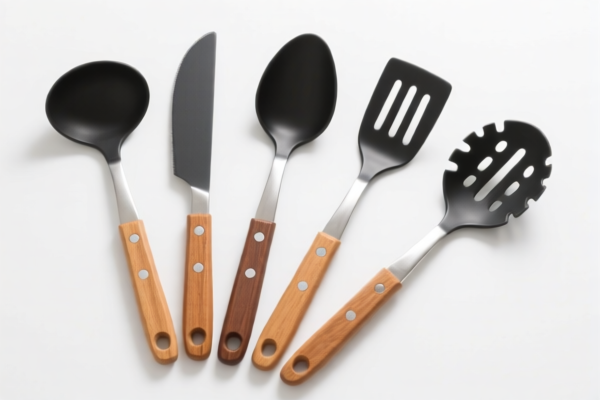
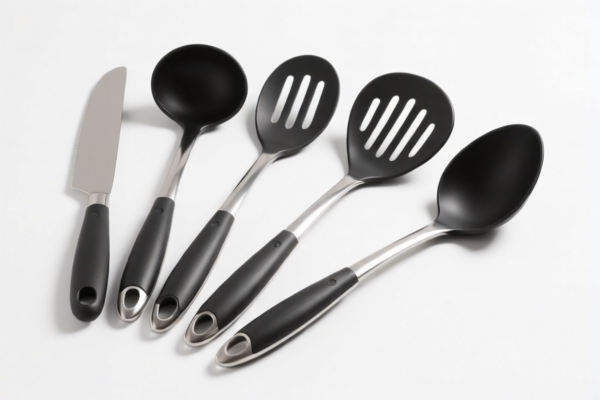
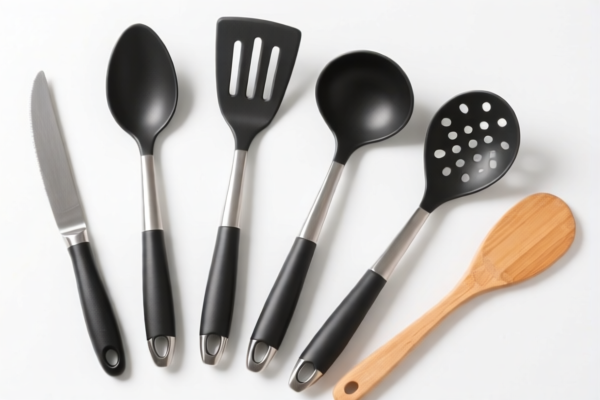

AI Analysis
🥢 Wooden Kitchen Utensil Set (木製厨房用具)
🌐 HS Code Reference & Customs Clearance Guide | 2026 Latest Tariff Analysis | Professional Clearance Strategy
📌 I. Product Definition & Classification: Do You Truly Understand "Wooden Kitchen Utensils"?
A "Wooden Kitchen Utensil Set" is a broad category encompassing various tools made primarily of wood (such as bamboo, acacia, or maple) used for cooking, serving, and food preparation. In international trade, classification depends heavily on material composition, specific form (spoon vs. chopstick vs. stick), and intended use.
The data provided highlights five potential HS Code matches, ranging from metal-handled tools (if the wood is merely a handle) to pure wooden small articles. Below is the detailed breakdown of why each HS Code applies and its associated tax implications.
📦 II. HS Code Classification Details (2026 Latest Tariff Authority Match)
Based on the provided data, here are the specific HS Codes, their matching logic, and tax details.
| HS Code | Product Description & Matching Logic | Key Matching Criteria |
|---|---|---|
| 8215.99.24.00 | Cutlery with Non-Stainless Steel Handles Mismatch Risk: High if pure wood. Matches only if the utensil has a metal body (e.g., a wooden-handled barbecue fork or metal spatula). |
• Material: "Non-stainless steel metal or non-metal handle." • Form: Inferred to include forks/spoons. • Logic: Based on common sense that "kitchen utensil" may include metal tools with wooden handles. |
| 8215.99.40.60 | Other Cutlery (Non-Stainless Steel) Applies if the utensil has a non-stainless steel/non-metal handle (wood) and is considered a spoon/ladle. |
• Material: "Non-stainless steel metal or non-metal handle." • Use: "Spoon/Ladle" category. • Logic: "Other" category fallback rule + reasonable material inference. |
| 4419.90.91.00 | Wooden Tableware/Kitchenware (Other) Best Match for Pure Wooden Items. Explicitly covers wooden kitchen utensils that are not chopsticks or skewers. |
• Material: Explicitly "Wooden" (木质). • Use: "Kitchen Utensils" (厨房用具). • Logic: Perfect match for material and use case. |
| 4421.91.60.00 | Wooden Small Articles (Chopsticks/Sticks) Applies if the "set" consists mainly of chopsticks, skewers, or stirrers. |
• Material: Wooden/Bamboo. • Form: "Small articles like chopsticks, stirrers." • Logic: Fits the "small article" inference for kitchen tools. |
| 4419.90.11.00 | Wooden Tableware (Chopsticks/Bowls/Spoons) Applies if the set includes traditional wooden tableware like chopsticks or bowls. |
• Material: Wooden. • Use: "Tableware/Kitchen Utensils." • Logic: Matches wooden tableware scope. |
| 4421.99.60.00 | Other Wooden Small Articles Fallback for wooden items that don't fit specific tableware categories (e.g., ice cream sticks, tongue depressors, specific stirrers). |
• Material: Wooden. • Form: "Other small items" (e.g., stirrers). • Logic: Fallback for "other" wooden kitchen small items. |
🔍 Key Insight:
- If your product is pure wood (spoons, spatulas, bowls), 4419.90.91.00 is the most accurate and recommended code.
- If your product includes metal parts (e.g., stainless steel head with wooden handle), look at 8215.xx.xx.
- If it is chopsticks or skewers, use 4421.91.60.00 or 4419.90.11.00.
💰 III. 2026 Latest Tariff Rate Breakdown (Detailed Tax Clauses)
✅ Applicable Country: United States (US)
✅ Origin: China (CN)
✅ Effective Date: Tariffs apply to imports from China.
🎯 1. 4419.90.91.00 — Recommended for Pure Wooden Utensils
(Most common for sets of wooden spoons, spatulas, etc.)
| Item | Detail |
|---|---|
| Base Tariff | 3.2% |
| Section 301 Surcharge | 7.5% |
| Section 122 Tariff | 10% |
| Total Tax Rate | 20.7% |
| Tax Calculation | CIF Value × 20.7% |
| Legal Basis | Base rate (HTSUS) + USITC 301 Footnote + IEEPA 122 Clause |
📌 Explanation:
- This is the most likely classification for standard wooden kitchen utensil sets (non-chopstick).
- 20.7% is the total burden. Note that Section 122 (10%) is a specific additional tariff that may apply depending on current executive orders.
🎯 2. 4419.90.11.00 — Wooden Tableware (e.g., Chopsticks/Bowls)
| Item | Detail |
|---|---|
| Base Tariff | 5.3% |
| Section 301 Surcharge | 0.0% (Note: Some interpretations may vary, but data shows 0%) |
| Section 122 Tariff | 10% |
| Total Tax Rate | 15.3% |
| Tax Calculation | CIF Value × 15.3% |
| Legal Basis | HTSUS 4419.90.11 + IEEPA 122 Clause |
📌 Explanation:
- If your set is primarily chopsticks, this code offers a lower total tax (15.3%) compared to general utensils (20.7%).
- However, Section 301 is 0% here, which is unusual. Verify if this exemption still holds in 2026. If 301 applies, add 7.5% → Total 22.8%. Based strictly on provided data, it is 15.3%.
🎯 3. 4421.91.60.00 — Wooden Small Articles (Chopsticks/Skewers)
| Item | Detail |
|---|---|
| Base Tariff | 5.1% |
| Section 301 Surcharge | 7.5% |
| Section 122 Tariff | 10% |
| Total Tax Rate | 22.6% |
| Tax Calculation | CIF Value × 22.6% |
| Legal Basis | HTSUS 4421.91 + 301 + 122 |
📌 Explanation:
- Applies to chopsticks, stirrers, or skewers.
- Highest base rate among wooden items (5.1%) + standard surcharges.
🎯 4. 4421.99.60.00 — Other Wooden Small Articles
| Item | Detail |
|---|---|
| Base Tariff | 5.1% |
| Section 301 Surcharge | 0.0% |
| Section 122 Tariff | 10% |
| Total Tax Rate | 15.1% |
| Tax Calculation | CIF Value × 15.1% |
| Legal Basis | HTSUS 4421.99 + IEEPA 122 Clause |
📌 Explanation:
- Fallback for miscellaneous wooden kitchen items (e.g., ice cream sticks, specific small tools).
- Lowest total tax (15.1%) if Section 301 is indeed 0%.
🎯 5. 8215.99.24.00 & 8215.99.40.60 — Mixed Material (Metal + Wood)
| HS Code | Total Tax Rate | Breakdown |
|---|---|---|
| 8215.99.24.00 | 0.3¢/ea + 4.5% + 17.5% | Base: 0.3¢/ea + 4.5%; 301: 7.5%; 122: 10%. Total Effective: ~17.5% + per-unit fee. |
| 8215.99.40.60 | 15.0% | Base: 5.0%; 301: 0%; 122: 10%. |
⚠️ Critical Warning:
- These codes apply ONLY if the utensil has a metal component (e.g., stainless steel head).
- 8215.99.24.00 includes a per-unit tax (0.3¢ each) in addition to ad valorem rates, which can be costly for small items.
- If your product is 100% wood, these codes are incorrect and may lead to customs penalties.
🛠️ IV. Customs Clearance Practical Advice (Avoid Pitfalls)
✅ 1. Documentation Checklist (Must-Haves)
| Document | Required? | Purpose |
|---|---|---|
| Product Photos | ✅ Yes | Show material (wood grain), handle shape, and any metal parts. |
| Material Composition Sheet | ✅ Yes | Specify % of wood vs. metal. Critical for distinguishing 44xx vs 8215. |
| HS Code Declaration | ✅ Yes | Declare the correct HS Code based on primary use/material. |
| Commercial Invoice | ✅ Yes | Clearly state "Wooden Kitchen Utensils" or "Wooden Chopsticks." |
| Certificate of Origin | ✅ Yes | Confirm China origin for tariff calculation. |
✅ 2. Classification Strategy (Key Rules)
🔥 "Material First, Form Second, Mixed Materials Get Higher Taxes!"
| Scenario | Recommended HS Code | Tax Rate | Risk Level |
|---|---|---|---|
| 100% Wood (Spoons, Spatulas, Bowls) | 4419.90.91.00 |
20.7% | ✅ Low |
| 100% Wood (Chopsticks) | 4419.90.11.00 |
15.3% | ✅ Low |
| 100% Wood (Skewers/Stirrers) | 4421.91.60.00 |
22.6% | ⚠️ Medium |
| Metal Head + Wooden Handle | 8215.99.24.00 |
~17.5% + per-unit | ⚠️ High (Complex) |
| Mixed/Unknown Material | Risk of Re-classification | Varies | ❌ High |
✅ 3. Special Handling Tips
- Avoid "Kitchen Utensil" Ambiguity:
Do not just write "Kitchen Utensil." Be specific: - ✅ "Wooden Serving Spoons" →
4419.90.91.00 - ✅ "Wooden Chopsticks" →
4419.90.11.00 -
❌ "Kitchen Tool" → Will be flagged for detailed inspection.
-
Section 122 Tariff (10%):
This is a persistent tariff on Chinese goods. Ensure your importer of record is prepared for this additional cost. -
Per-Unit Tax on
8215.99.24.00:
If your product is partially metal, the 0.3¢ per item tax adds up quickly. Calculate carefully if shipping thousands of units.
🌍 V. Global Market Comparison (2026)
| Market | Recommended HS Code | Approx. Tariff (China Origin) | Notes |
|---|---|---|---|
| 🇺🇸 USA | 4419.90.91.00 |
20.7% | Includes 301 (7.5%) + 122 (10%). |
| 🇪🇺 EU | 4419.90.91.00 |
0-4% | No Section 301/122. Lower burden. |
| 🇨🇳 China | 4419.90.91.00 |
20-30% (Import Duty) | Domestic production is low; imports are taxed. |
| 🇬🇧 UK | 4419.90.91.00 |
0-4% | Post-Brexit tariffs may vary. |
| 🇯🇵 Japan | 4419.90.91.00 |
0-3% | FTA benefits may apply if certified. |
📌 Conclusion:
- The US market has the highest tariff burden for wooden utensils due to Section 301 and Section 122.
- EU/UK/Japan are more tariff-friendly. Consider market diversification if US margins are tight.
📌 VI. Common Mistakes & Pitfalls (Lessons Learned)
❌ Mistake 1: Classifying pure wood as 8215.99.24.00 (Cutlery).
👉 Consequence: Customs may reject the declaration or impose penalties for misclassification.
✅ Fix: Use 4419.90.91.00 for pure wood.
❌ Mistake 2: Ignoring Section 122 (10%).
👉 Consequence: Underpaying taxes, leading to audits, back-taxes, and fines.
✅ Fix: Always include 10% in cost calculations for Chinese imports to the US.
❌ Mistake 3: Mixing chopsticks and spoons in one HS Code without clarification.
👉 Consequence: Customs may split the shipment and apply different taxes, causing delays.
✅ Fix: Declare separate line items for different HS Codes if both are present.
🎯 VII. Conclusion: Precision in Classification Saves Money!
🎯 Key Takeaways:
1. Pure Wood → Use 4419.90.91.00 (20.7% Tax).
2. Chopsticks → Use 4419.90.11.00 (15.3% Tax).
3. Mixed Metal/Wood → Use 8215.99.24.00 (~17.5% + per-unit).
4. Always Declare Material Composition to avoid customs holds.
📌 Pro Tip:
📞 Apply for an Advance Ruling from US Customs (CBP) if you are unsure about the classification. This provides legal certainty and prevents future penalties.
📊 Calculate Total Landed Cost: Include 20.7% tariff + 10% Section 122 + Shipping + Insurance to determine true profitability.
📣 Act Now:
🚀 Optimize your supply chain by choosing the correct HS Code.
💼 Professional clearance starts with accurate classification.
📉 Reduce costs by avoiding misclassification penalties.
✨ Accurate Classification, Smooth Clearance, Maximum Profit!
💼 Your Bottom Line Depends on Your HS Code!
Customer Reviews
About HS Code Classification
The Harmonized System (HS) is an internationally standardized nomenclature developed by the World Customs Organization (WCO) to classify traded products. Over 200 countries use the HS system as the basis for customs tariffs, trade statistics, and import/export regulations.
Each HS code follows a hierarchical structure:
- Chapter (2 digits) — Broad category of goods (e.g., Chapter 84: Machinery and Mechanical Appliances)
- Heading (4 digits) — More specific grouping within the chapter
- Subheading (6 digits) — Internationally standardized breakdown, used by all WCO member countries
- National subdivisions (8-10 digits) — Country-specific extensions for further classification, such as US HTSUS 10-digit codes
Correct HS code classification is essential for smooth customs clearance, accurate duty payment, and compliance with trade regulations. Misclassification can lead to customs delays, overpayment of duties, or penalties.
When importing from CN to US, the applicable tariff rates may include:
- Most-Favored-Nation (MFN) rate — The standard duty rate applied to WTO members
- General rate — Applied to countries without trade agreements
- Trade remedy duties — Additional tariffs such as Section 301 (anti-dumping), Section 232 (national security), or countervailing duties
The information provided on this page is for reference purposes only. For official classification, please consult with your local customs authority or a licensed customs broker.