Wooden Landscape Fence
CN → US| HS Code | Tariff Rate | Origin | Destination | Doc |
|---|---|---|---|---|
| 4418999195 | 38.2% | CN | US | Official Doc |
| 4409101080 | 35.0% | CN | US | Official Doc |
| 4418999150 | 38.2% | CN | US | Official Doc |
| 4407110053 | 35.0% | CN | US | Official Doc |
| 4407190093 | 35.0% | CN | US | Official Doc |
Product Images
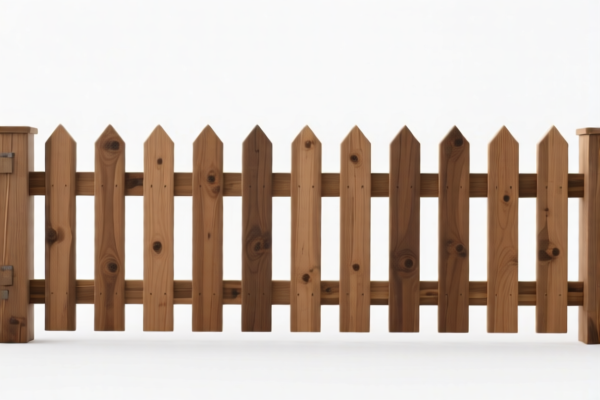
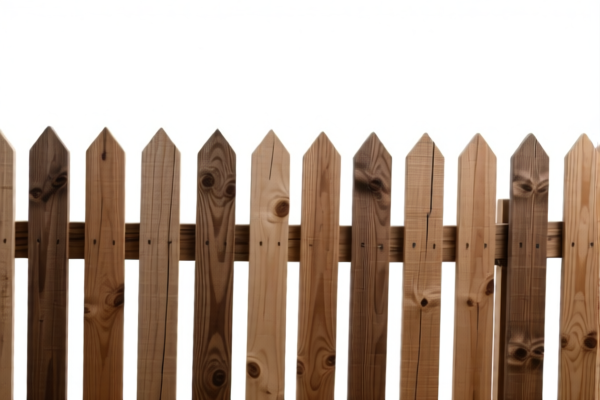
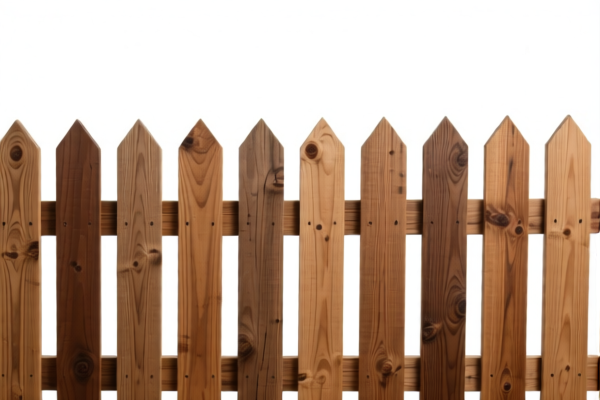
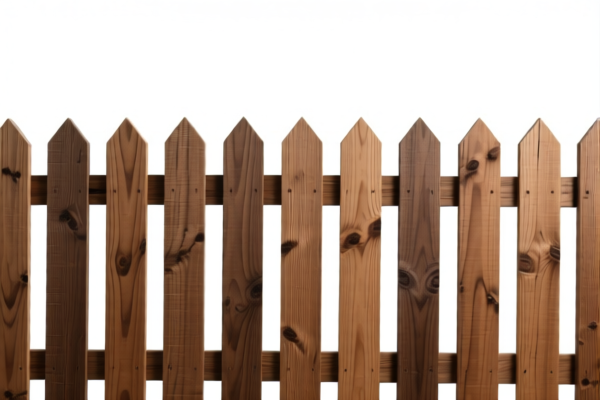
AI Analysis
🏡 Wooden Landscape Fence (Wooden Fencing Boards)
🌐 HS Code Reference & Customs Clearance Guide | 2026 Latest Tariff Analysis | Professional Entry Strategy
📌 I. Product Definition & Classification: Do You Really Understand "Wooden Landscape Fence"?
Wooden landscape fences are essential components in outdoor construction, used for boundary demarcation, aesthetic enhancement, and privacy protection in residential and commercial landscaping. In international trade, these products are often misclassified due to the ambiguity between "structural building materials" and "finished wood products."
The key to accurate classification lies in the physical form and intended use: * Structural Building Elements: If the wood is treated as a panel, barrier, or part of a larger architectural structure (even if outdoor), it often falls under Chapter 44 heading 4418 (Builders' joinery and carpentry). * Processed Wood Lumber: If the item is primarily viewed as shaped wood (like siding or planks) without being a complete joinery unit, it may fall under Chapter 44 heading 4409 (Wood continuously shaped along all or part of its length) or 4407 (Wood sawn/chipped).
⚠️ Critical Distinction:
- If the fence panel is assembled, framed, or designed as a complete barrier unit → It is typically "Builders' Joinery" (4418).
- If the fence component is unframed planks, siding, or simple shaped boards intended for installation → It may be "Continuously Shaped Wood" (4409) or "Sawn Wood" (4407).
📦 II. HS Code Classification Details (2026 Latest Tariff Authority Cross-Reference)
Based on the specific product characteristics of "Wooden Landscape Fence," here are the potential HS Codes and their logical mappings:
| HS Code | Product Description | Application Scenario | Classification Logic |
|---|---|---|---|
4418.99.91.95 |
Wooden fence panels, classified as building fence panels | Prefabricated fence sections, framed outdoor barriers | Matches "Other builders' joinery" category for architectural wood products. |
4409.10.10.80 |
Wooden fence boards, in the form of wood wall siding/cladding | Unframed wooden planks used as cladding or simple fencing | Fits the "Other" catch-all logic for continuously shaped wood profiles. |
4418.99.91.50 |
Wooden fence panels, categorized under building panels/partitions | Solid wood panels used as privacy screens or隔断 (partitions) | Falls within the scope of "Building panels" under builders' carpentry. |
4407.11.00.53 |
Wooden fence boards, belonging to sawn/coniferous pine wood | Raw or semi-processed pine planks for fencing | Classified as "Sawn wood of coniferous species" (e.g., Pine). |
4407.19.00.93 |
Wooden fence boards, processed wood with thickness >6mm | Generic processed wood strips/thick planks for landscaping | Fits "Other wood sawn" rules for thickness-based classification. |
🔍 Key Reminder:
- "Builders' Joinery" (4418) generally carries a higher burden of proof for being a "complete component" of a building/structure.
- "Sawn/Shaped Wood" (4407/4409) is often safer for simple planks but may trigger different tariff calculations.
- Misclassification between 4418 and 4407/4409 can lead to significant duty differences or customs holds due to varying "122 Clause" or Section 301 interpretations.
💰 III. 2026 Latest Tariff Rate Breakdown (Including Surcharges & Policy Add-ons)
✅ Applicable Country: United States (US)
✅ Origin: China (CN)
✅ Effective Date: Current ongoing trade measures (Section 301 & 122)
🎯 1. 4418.99.91.95 & 4418.99.91.50 — Building Fence Panels (Builders' Joinery)
| Item | Detail |
|---|---|
| Base Tariff | 3.2% (Ad valorem) |
| Section 301 Surcharge | +25.0% (Trade Remedy Measures) |
| Section 122 Surcharge | +10.0% (Emergency safeguard measures on certain imports) |
| Total Tax Rate | 38.2% |
| Tax Calculation | CIF Value × 38.2% |
| De Minimis Exemption | ❌ Not Eligible (High value threshold applies) |
| Legal Basis Path | USITC:4418.99.91.xx → Section 301: Footnote 9903.88.01 → Section 122: Authority |
📌 Explanation:
- The 3.2% is the standard Most Favored Nation (MFN) rate for builders' joinery.
- The 25% is the standard Section 301 tariff for most Chinese wood products.
- The 10% Section 122 tariff is an additional safeguard duty.
- Total 38.2% is a high-cost category. Accurate labeling as "Fence Panel" vs. "Siding" is critical.
🎯 2. 4409.10.10.80 — Wood Siding/Fence Boards (Continuously Shaped)
| Item | Detail |
|---|---|
| Base Tariff | 0.0% (Ad valorem) |
| Section 301 Surcharge | +25.0% |
| Section 122 Surcharge | +10.0% |
| Total Tax Rate | 35.0% |
| Tax Calculation | CIF Value × 35.0% |
| De Minimis Exemption | ❌ Not Eligible |
| Legal Basis Path | USITC:4409.10.10.80 → Section 301: Footnote 9903.88.01 → Section 122 |
📌 Note:
- Although the base rate is 0%, the surcharges (35% total) are still significant.
- This classification is often used for grooved, tongued, or shaped boards (siding style) rather than flat panels.
- If the wood is not continuously shaped (just sawn), this code is invalid.
🎯 3. 4407.11.00.53 & 4407.19.00.93 — Sawn Wood Products
| Item | Detail |
|---|---|
| Base Tariff | 0.0% (Ad valorem) |
| Section 301 Surcharge | +25.0% |
| Section 122 Surcharge | +10.0% |
| Total Tax Rate | 35.0% |
| Tax Calculation | CIF Value × 35.0% |
| De Minimis Exemption | ❌ Not Eligible |
| Legal Basis Path | USITC:4407.xx.xx.xx → Section 301 → Section 122 |
📌 Critical Distinction:
-4407.11: Specifically for Pine (Coniferous).
-4407.19: For other coniferous wood or general processed wood >6mm.
- These codes apply if the fence is essentially processed lumber rather than a finished "panel."
🛠️ IV. Customs Clearance Practical Advice (Pitfall Avoidance Guide)
✅ 1. Documentation Checklist (Essential Items)
| Document | Required? | Description |
|---|---|---|
| ✅ Product Specification Sheet | ✔️ | Must detail dimensions, wood species (Pine vs. Oak), treatment (pressure-treated?), and finish. |
| ✅ Physical Photos | ✔️ | Clear images showing if it is a framed panel (4418) or simple plank/siding (4407/4409). |
| ✅ Commercial Invoice | ✔️ | Describe as "Wooden Fence Panel" or "Wood Siding Board" accurately. Avoid vague terms like "Wood Product." |
| ✅ Bill of Lading | ✔️ | Ensure weight and volume match the invoice. |
| ✅ Treatment Certificate | ✔️ | If pressure-treated, provide ISPM 15 or EPA compliance docs (phytosanitary requirement). |
✅ 2. Classification Strategy (Key Mantra)
🔥 "Framed = Panel (4418, 38.2%) | Shaped = Siding (4409, 35.0%) | Sawn = Lumber (4407, 35.0%)"
| Scenario | Recommended HS Code | Reason |
|---|---|---|
| Prefab Fence Sections with Frames | 4418.99.91.95 or 4418.99.91.50 |
Considered "Builders' Joinery" or "Building Panels." |
| Grooved/Tongued Fence Boards | 4409.10.10.80 |
Continuously shaped along length, like wall siding. |
| Simple Sawnc Pine Planks | 4407.11.00.53 |
Unshaped or minimally processed pine. |
| Thick Wood Strips (>6mm) | 4407.19.00.93 |
General processed wood, not specific siding. |
⚠️ Warning:
- Do not declare framed panels as "Siding" (4409) to save 3.2% on the base rate. Customs may reject this if the item is clearly a panel structure.
- Conversely, declaring simple planks as "Panels" (4418) might not be wrong but could attract stricter scrutiny on "building component" status.
✅ 3. Special Cases
| Situation | Handling Advice |
|---|---|
| Pressure-Treated Wood | Must provide treatment certificate. Failure may lead to rejection or fumigation costs. |
| Mixed Materials | If the fence has metal posts or concrete bases, the wood part is still classified under HS 44, but the metal posts fall under 7326 (Other steel articles). Split shipment declaration is crucial. |
| Landscaping vs. Construction | If used strictly for gardening (not permanent structure), argue for "Garden Product" under 4409/4407 to avoid "Builders' Joinery" complexity. |
🌍 V. Global Market Comparison (2026 Update)
| Market | Recommended HS Code | Total Tariff (China Origin) | Notes |
|---|---|---|---|
| 🇺🇸 USA | 4418.99.91.95 / 4409.10.10.80 |
35.0% - 38.2% | High due to Section 301 + 122. |
| 🇨🇳 China | 4418.99.91.95 |
~5-10% | No Section 301/122. Import duty is lower. |
| 🇪🇺 EU | 4418.99.91 |
~0-5% | Check EUTR (Timber Regulation) for legality docs. |
| 🇬🇧 UK | 4418.99.91 |
~0-5% | Post-Brexit rules apply. |
📌 Conclusion:
- The US market is the most expensive for Chinese wooden fences due to the 35-38% total duty.
- Cost Saving Tip: Ensure the wood is not pressure-treated with prohibited chemicals, and verify if Section 122 exemptions apply (rare for wood).
📌 VI. Common Mistakes & Pitfalls (Lessons Learned)
❌ Mistake 1: Calling a "Fence Panel" a "Wooden Siding" to get 0% base tax.
👉 Consequence: Customs audit reveals it's a panel → Penalty + Back Duties (3.2% + Interest).
❌ Mistake 2: Ignoring the 10% Section 122 tariff.
👉 Consequence: Underpayment by 10% → Seizure or Heavy Fines.
❌ Mistake 3: Mixing wood fences with metal posts in one HS Code.
👉 Consequence: Misclassification of the metal part → Compliance violation.
✅ Correct Practice:
"Prefabricated Wooden Fence Panel, Pressure-Treated Pine, 6ft x 6ft, for Outdoor Landscaping"
🎯 VII. Conclusion: Precise Classification Saves Money
🎯 Remember the Mantra:
🔹 "Framed is 38.2% | Shaped is 35.0% | Sawn is 35.0% | Don't Hide the Metal!"
🔹 "HS Code determines your profit margin, especially in the US market."
📌 Pro Tip:
If your wooden fences are shipped from Vietnam or Malaysia (with substantial transformation), you may avoid the Section 301 and 122 tariffs.
Recommendation:
📞 Contact a customs broker before shipment.
📋 Request a Pre-Ruling (ISF/HTS Classification) for your specific design.
🚀 Clear your goods faster, avoid delays, and protect your margins!
✨ Professional Clearance Starts with Accurate Classification!
💼 Every Dollar of Tariff Matters in Landscaping Exports!
Customer Reviews
About HS Code Classification
The Harmonized System (HS) is an internationally standardized nomenclature developed by the World Customs Organization (WCO) to classify traded products. Over 200 countries use the HS system as the basis for customs tariffs, trade statistics, and import/export regulations.
Each HS code follows a hierarchical structure:
- Chapter (2 digits) — Broad category of goods (e.g., Chapter 84: Machinery and Mechanical Appliances)
- Heading (4 digits) — More specific grouping within the chapter
- Subheading (6 digits) — Internationally standardized breakdown, used by all WCO member countries
- National subdivisions (8-10 digits) — Country-specific extensions for further classification, such as US HTSUS 10-digit codes
Correct HS code classification is essential for smooth customs clearance, accurate duty payment, and compliance with trade regulations. Misclassification can lead to customs delays, overpayment of duties, or penalties.
When importing from CN to US, the applicable tariff rates may include:
- Most-Favored-Nation (MFN) rate — The standard duty rate applied to WTO members
- General rate — Applied to countries without trade agreements
- Trade remedy duties — Additional tariffs such as Section 301 (anti-dumping), Section 232 (national security), or countervailing duties
The information provided on this page is for reference purposes only. For official classification, please consult with your local customs authority or a licensed customs broker.