Wooden Lined Textile Insulated Food or Beverage Bag
CN → US| HS Code | Tariff Rate | Origin | Destination | Doc |
|---|---|---|---|---|
| 3923900080 | 38.0% | CN | US | Official Doc |
| 3923290000 | 38.0% | CN | US | Official Doc |
| 4202920807 | 42.0% | CN | US | Official Doc |
| 4202920809 | 42.0% | CN | US | Official Doc |
| 6305330080 | 25.9% | CN | US | Official Doc |
Product Images
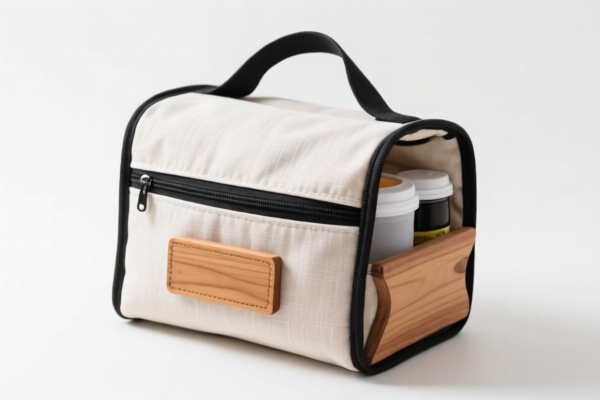
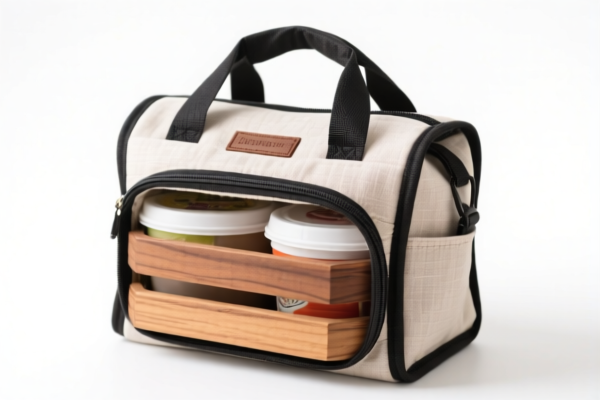
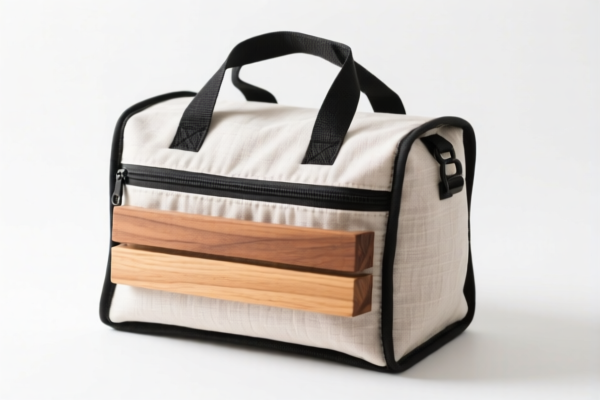
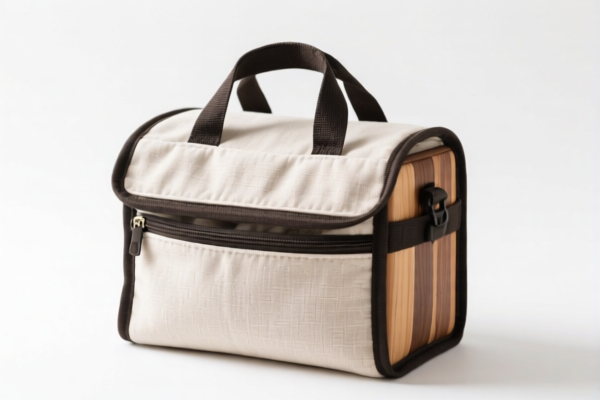
AI Analysis
🌿 Wooden-Lined Textile Insulated Food or Beverage Bag
🌐 HS Code Reference & Customs Clearance Guide | 2026 Latest Tariff Analysis | Professional Compliance Strategy
📌 1. Product Definition and Classification: Do You Truly Understand This Bag?
A "Wooden-Lined Textile Insulated Food or Beverage Bag" is a specialized cold-chain packaging solution combining textile outer layers, thermal insulation materials (e.g., foam, foil), and natural wooden lining for aesthetic or functional purposes. In international trade, it falls under Chapter 42 (Articles of Leather; Saddle and Harness Goods; Travel Goods, Handbags...) or Chapter 46 (Plaiting Materials; Basketware...), depending on the primary characteristic and material composition.
⚠️ Key Distinction Points:
- Textile-dominated with wooden accents → Likely classified under 4202.92.00 (Travel goods, handbags, etc., with outer surface of textile materials).
- Wooden structure predominating → May fall under 4602.12.00 (Basketware plaited from vegetable materials) or 4415.20.00 (Cases, drums, similar packings, of wood).
- Insulation function dominates → If primarily for thermal protection, customs may scrutinize under 3926.90.97 (Plastic articles, n.e.c.) if synthetic insulation is dominant.
📦 2. HS Code Classification Details (2026 Latest Tariff Authority Comparison)
| HS Code | Product Description | Application Scenario | Primary Material |
|---|---|---|---|
4202.92.00.00 |
Travel goods, handbags, shopping bags, etc., with outer surface of textile materials | Retail bags, promotional items, textile-dominated designs | ✅ Textile |
4202.92.90.00 |
Other travel goods, handbags, shopping bags, etc., with outer surface of textile materials | Custom-designed bags, non-standard shapes | ✅ Textile |
4602.12.00.00 |
Basketware, plaited from vegetable materials (including wood strips) | Artisanal bags, wooden-weave designs | ✅ Wood |
4415.20.00.00 |
Wooden cases, drums, pallets, and similar packings | Heavy-duty insulation containers, wooden-box-style bags | ✅ Wood |
3926.90.97.00 |
Other plastic articles, n.e.c. (if synthetic insulation >50%) | Synthetic-lined bags with minimal wooden parts | ❌ Plastic dominant |
🔍 Critical Reminders:
- If textile is the primary outer material → Must declare under 4202.92.00.00;
- If wooden lining constitutes >30% of volume/value → Customs may reclassify under 4602.12.00.00 or 4415.20.00.00;
- Insulation material (e.g., foam, aluminum foil) is not a standalone classification criterion; it supports the bag’s function but does not override material-based classification.
💰 3. 2026 Latest Tariff Rates (Including Surcharges, Policy Add-ons)
✅ Applicable Country: United States (US)
✅ Country of Origin: China (CN)
✅ Effective Date: November 10, 2025 (including subsequent imports)
🎯 1. 4202.92.00.00 – Travel Goods, Handbags, Shopping Bags (Textile Outer)
| Item | Details |
|---|---|
| Base Tariff | 3.2% (ad valorem) |
| USITC Surtax | +25% (from USITC Footnote 9903.88.01, Section 301) |
| IEEPA Surtax | +10% (China/HK products, per IEEPA Proclamation 10944) |
| Total Rate | 38.2% |
| Tax Calculation | CIF Value × 38.2% |
| De Minimis Eligibility | ❌ Not Eligible (deny_de_minimis) |
| Legal Basis Path | IEEPA:9903.01.25 → IEEPA:9903.01.24 → USITC:4202.92.00.00 → FOOTNOTE:9903.88.01 |
📌 Explanation:
- “USITC 25% surtax” arises from Section 301 of the Trade Act;
- “IEEPA 10% surtax” is imposed under the International Emergency Economic Powers Act;
- Total 38.2%, a high tariff burden, requiring advance planning.
🎯 2. 4602.12.00.00 – Basketware Plaited from Vegetable Materials (Wood)
| Item | Details |
|---|---|
| Base Tariff | 0% |
| USITC Surtax | +25% (Section 301 applies to wood/plaited goods) |
| IEEPA Surtax | +10% (China/HK products) |
| Total Rate | 35% |
| Tax Calculation | CIF Value × 35% |
| De Minimis Eligibility | ❌ Not Eligible |
| Legal Basis Path | IEEPA:9901.25 → IEEPA:9903.01.24 → USITC:4602.12.00.00 → FOOTNOTE:9903.88.01 |
📌 Note:
- Same tax structure as textile bags;
- Wooden-weave designs are equally subject to surtaxes.
🛠️ 4. Customs Clearance Practical Advice (实战避坑指南)
✅ 1. Required Documentation Checklist (No Exceptions)
| Document | Mandatory? | Notes |
|---|---|---|
| ✅ Product Specification Sheet | ✔️ | Includes dimensions, materials, insulation type, weight |
| ✅ Material Composition Report | ✔️ | Breakdown: % textile, % wood, % insulation, % other |
| ✅ Product Photos (including labels) | ✔️ | Clear images of outer textile, wooden lining, insulation layer |
| ✅ Third-Party Test Reports | ✔️ | FDA (food contact), REACH, Prop 65 (if applicable) |
| ✅ Commercial Invoice | ✔️ | Must state “Insulated Food Bag, Textile Outer, Wooden Lining” |
| ✅ Certificate of Origin (CO) | ✔️ | For origin-based tariff benefits |
| ✅ Packing List | ✔️ | Detail bag components to avoid split declaration penalties |
✅ 2. Declaration Tips (Key Principles)
🔥 “Material Dominates, Function Supports, Name Precisely Defined, Tariff Optimized!”
| Scenario | Correct Declaration | Wrong Practice |
|---|---|---|
| Textile outer + wooden lining | 4202.92.00.00 |
Misdeclare as “wooden box” → 35% vs 38.2% (minor difference but risk) |
| Wooden structure dominant | 4602.12.00.00 |
Misdeclare as “textile bag” → 38.2% vs 35% (risk of penalty) |
| Mixed materials (50/50) | Provide material % breakdown | Vague description → Customs reclassification risk |
| Insulation >50% synthetic | 3926.90.97.00 |
Misdeclare as “bag” → 25% (plastic surtax) vs 38.2% |
✅ 3. Special Cases Handling
| Scenario | Recommendation |
|---|---|
| OEM Custom Bags | Provide client order + design files to avoid “non-standard” penalties |
| Food-Contact Wooden Lining | Submit FDA compliance certificate to avoid rejection |
| Heavy Wooden Insulation Boxes | Declare under 4415.20.00.00 (wooden packaging) |
| Promotional Bags with Logos | Ensure invoice specifies “Promotional Item” for potential duty drawbacks |
🌍 5. Global Market Customs Comparison (2026 Latest)
| Country/Region | Recommended HS Code | Tariff | Certification Requirements | Notes |
|---|---|---|---|---|
| 🇺🇸 United States | 4202.92.00.00 |
38.2% (CN origin) | FDA + REACH | High surtaxes apply |
| 🇨🇳 China | 4202.92.00.00 |
5% | None | Low domestic tariff |
| 🇪🇺 European Union | 4202.92.00.00 |
0% (if CE compliant) | CE + REACH | No surtaxes |
| 🇦🇺 Australia | 4202.92.00.00 |
5% | RCM | No surtaxes |
| 🇯🇵 Japan | 4202.92.00.00 |
0% | PSE | No surtaxes |
📌 Conclusion:
- The US is the only market imposing high surtaxes;
- Chinese-origin bags face 38.2% total tariff in the US; consider supply chain diversification.
📌 6. Common Errors & Pitfalls (Lessons from the Field)
❌ Error 1: Declaring as “wooden box” when textile dominates
👉 Consequence: Penalty for misclassification + retroactive tariff difference
❌ Error 2: Omitting material breakdown in invoice
👉 Consequence: Customs reclassification → Delay + 38.2% tariff instead of 35%
❌ Error 3: Ignoring food-contact compliance for wooden lining
👉 Consequence: FDA rejection → Cargo return/destruction
❌ Error 4: Using vague terms like “eco-friendly bag”
👉 Consequence: Ambiguous declaration → Customs hold for verification
✅ Correct Practice:
“Insulated Food Bag, 30L, Outer: Polyester Textile, Lining: Bamboo Wood Weave, Insulation: EPE Foam, FDA-Compliant, Model XYZ”
🎯 7. Conclusion: Precision Declaration, Cost Efficiency, Risk Mitigation
🎯 Key Mantras:
🔹 “Material defines HS, function supports, surtaxes loom, declare precisely!”
🔹 “38.2% for textile, 35% for wood, avoid penalties, save thousands!”
📌 Pro Tip:
- If bags are originating from Vietnam, Mexico, Thailand, or Malaysia, apply for IEEPA exemptions (tariffs drop to 0%~5%);
- Pre-apply for Advance Ruling to secure classification certainty.
📣 Immediate Action Required:
📞 Engage licensed customs brokers + submit product specs + request HS Code Advance Ruling
🚀 Ensure smooth customs clearance, efficient exports, maximized profits!
✨ Professional clearance begins with precise classification!
💼 Every cent saved is a cent earned!
Customer Reviews
About HS Code Classification
The Harmonized System (HS) is an internationally standardized nomenclature developed by the World Customs Organization (WCO) to classify traded products. Over 200 countries use the HS system as the basis for customs tariffs, trade statistics, and import/export regulations.
Each HS code follows a hierarchical structure:
- Chapter (2 digits) — Broad category of goods (e.g., Chapter 84: Machinery and Mechanical Appliances)
- Heading (4 digits) — More specific grouping within the chapter
- Subheading (6 digits) — Internationally standardized breakdown, used by all WCO member countries
- National subdivisions (8-10 digits) — Country-specific extensions for further classification, such as US HTSUS 10-digit codes
Correct HS code classification is essential for smooth customs clearance, accurate duty payment, and compliance with trade regulations. Misclassification can lead to customs delays, overpayment of duties, or penalties.
When importing from CN to US, the applicable tariff rates may include:
- Most-Favored-Nation (MFN) rate — The standard duty rate applied to WTO members
- General rate — Applied to countries without trade agreements
- Trade remedy duties — Additional tariffs such as Section 301 (anti-dumping), Section 232 (national security), or countervailing duties
The information provided on this page is for reference purposes only. For official classification, please consult with your local customs authority or a licensed customs broker.