Wooden Lining Cloth Travel Bag
CN → US| HS Code | Tariff Rate | Origin | Destination | Doc |
|---|---|---|---|---|
| 4202993000 | 35.0% | CN | US | Official Doc |
| 4202999000 | 55.0% | CN | US | Official Doc |
| 4202929336 | 52.6% | CN | US | Official Doc |
Product Images
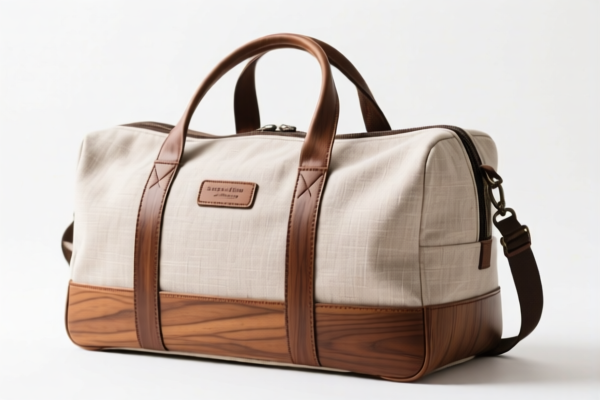
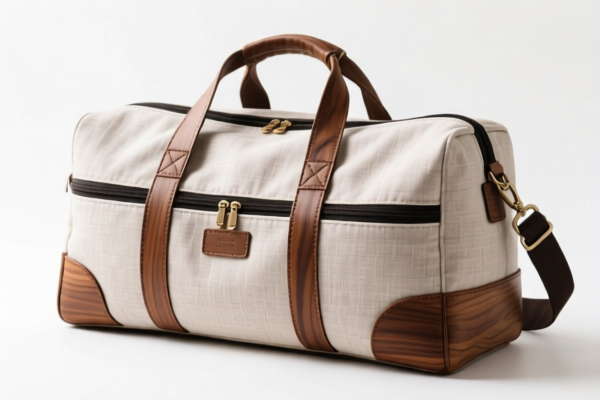
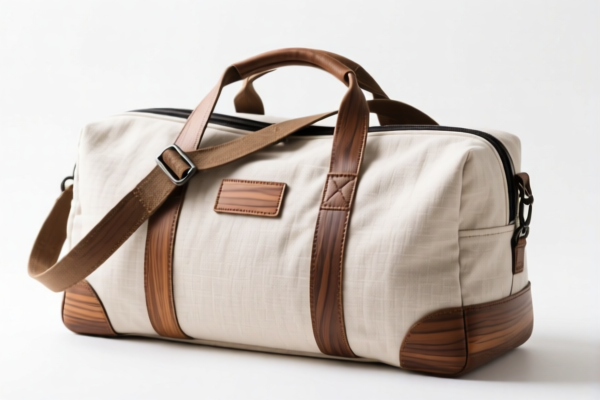
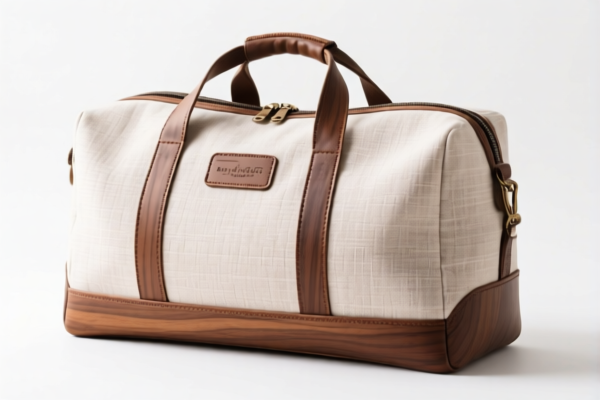
AI Analysis
🧳 Wooden Lining Cloth Travel Bag (木质衬里布旅行包)
🌐 HS Code Reference & Customs Clearance Guide | 2026 Latest Tariff Analysis | Professional Level Strategy
📌 I. Product Definition & Classification: Do You Really Understand the "Wooden Lining Cloth Travel Bag"?
A Wooden Lining Cloth Travel Bag is a composite commodity combining textile materials with hard structural elements. In international trade, its classification hinges on the primary material and structural composition. It is not a simple bag but a hybrid container where the presence of "wooden lining" triggers specific tariff regulations under US Chapter 42 (Articles of Leather; Related Articles).
⚠️ Key Classification Distinction:
- If the wood is merely decorative surface trim and the bag is predominantly textile → 4202.99 series.
- If the wood forms the core structural lining and the exterior is textile, it still falls under 4202.99, but the duty rate varies significantly based on how US Customs and Border Protection (CBP) interprets the "principal material" vs. "specific exclusion."
- Critical Note: The presence of wood often invites scrutiny under Section 301 and Section 122 tariffs.
📦 II. HS Code Classification Details (2026 Latest Tariff Authority Comparison)
Based on the provided data, here are the three potential HS Codes for this product, each with distinct tax implications.
| HS Code | Product Description | Applicability Scenario | Key Classification Logic |
|---|---|---|---|
| 4202.99.30.00 | Wooden-lined cloth travel bag, material contains wood and textile | Lowest Duty Option | CBP accepts that the textile exterior defines the classification, ignoring the wood lining for duty purposes (0% base). |
| 4202.99.90.00 | Wooden-lined cloth travel bag, overall structure is a textile container | Highest Duty Option | CBP classifies it as a "generic other bag," applying standard high tariffs on textile/other bags. |
| 4202.92.93.36 | Wooden-lined cloth travel bag, outer surface is textile material | Medium Duty Option | Classified under "Bags with outer surface of textile materials," attracting higher base tariffs. |
🔍 Important Reminder:
- All three codes fall under Chapter 42.02 (Trunks, suitcases, vanity cases, etc.).
- The difference lies in the subheading nuance: whether the bag is treated as a "specialty item" (30.00) or a "generic textile bag" (90.00 or 92.93).
- The total tax burden varies from 35% to 55% depending on which code is accepted by CBP.
💰 III. 2026 Latest Tariff Rate Breakdown (Including Surtaxes & Policy Add-ons)
✅ Applicable Country: United States (US)
✅ Country of Origin: China (CN)
✅ Effective Time: Current tariffs apply for imports from China.
🎯 1. 4202.99.30.00 —— The "Optimal" Classification (Lowest Base)
| Item | Content |
|---|---|
| Base Tariff | 0.0% (ad valorem) |
| Section 301 Surcharge | +25.0% |
| Section 122 Tariff | +10.0% (Specific to certain travel goods/bags from China) |
| Total Tax Rate | 35.0% |
| Tax Calculation | CIF Value × 35% |
| De Minimis Eligibility | ❌ No (Section 321 exemption does not apply to goods subject to these specific surcharges if value exceeds limits or if specifically excluded) |
| Legal Basis Path | HTSUS:4202.99.30 → USITC Footnote: 301 → Trade Policy: Section 122 |
📌 Explanation:
- "Base 0%": This is the most favorable outcome. CBP may accept this if the bag is deemed primarily defined by its textile character, and the wood is incidental.
- "25% Section 301": Standard punitive tariff on Chinese goods in this category.
- "10% Section 122": A lesser-known but critical surcharge on certain travel goods/bags imported from China, added to protect domestic industries.
- Total 35% is the minimum possible cost if this classification is approved.
🎯 2. 4202.99.90.00 —— The "Generic" Classification (Highest Base)
| Item | Content |
|---|---|
| Base Tariff | 20.0% (ad valorem) |
| Section 301 Surcharge | +25.0% |
| Section 122 Tariff | +10.0% |
| Total Tax Rate | 55.0% |
| Tax Calculation | CIF Value × 55% |
| De Minimis Eligibility | ❌ No |
| Legal Basis Path | HTSUS:4202.99.90 → USITC Footnote: 301 → Trade Policy: Section 122 |
📌 Explanation:
- "Base 20%": CBP classifies this as a generic "other bag of materials other than metal, leather, or paper."
- "25% Section 301": Applied on top of the 20% base.
- "10% Section 122": Again, applied because it’s a travel bag from China.
- Total 55% is a severe cost penalty. This is the risk if CBP rejects the 30.00 classification.
🎯 3. 4202.92.93.36 —— The "Textile Outer" Classification (Medium Base)
| Item | Content |
|---|---|
| Base Tariff | 17.6% (ad valorem) |
| Section 301 Surcharge | +25.0% |
| Section 122 Tariff | +10.0% |
| Total Tax Rate | 52.6% |
| Tax Calculation | CIF Value × 52.6% |
| De Minimis Eligibility | ❌ No |
| Legal Basis Path | HTSUS:4202.92.93 → USITC Footnote: 301 → Trade Policy: Section 122 |
📌 Explanation:
- "Base 17.6%": CBP sees the "outer surface of textile" as the defining feature, placing it in 4202.92 (with outer surface of plastic sheeting or textile materials).
- "25% Section 301": Added to the 17.6% base.
- "10% Section 122": Still applicable due to the product type and origin.
- Total 52.6% is slightly lower than the 55% option but still very high compared to the 35% goal.
🛠️ IV. Customs Clearance Practical Advice (Real-World Pitfall Avoidance)
✅ 1. Preparation Checklist (Non-Negotiable)
| Document | Required? | Explanation |
|---|---|---|
| ✅ Detailed Product Description | ✔️ | Must specify: "Travel Bag with Wooden Lining and Textile Exterior." |
| ✅ Material Composition Statement | ✔️ | Breakdown by weight: e.g., "Textile 70%, Wood 20%, Hardware 10%." |
| ✅ High-Resolution Photos | ✔️ | Front, back, inside (showing wood lining clearly), and label. |
| ✅ Functionality Description | ✔️ | Confirm it is used for travel/luggage, not storage or decoration. |
| ✅ Commercial Invoice | ✔️ | Must match the HS Code requested and clearly state the material. |
| ✅ Customs Ruling Request (Optional) | ✔️ | Highly recommended to pre-justify 4202.99.30.00. |
✅ 2. Declaration Strategy (Key Mantra)
🔥 "Focus on Textile, Minimize Wood Impact, Fight for 30.00!"
| Scenario | Correct Declaration | Wrong Action |
|---|---|---|
| Goal: Minimize Tax | Declare as 4202.99.30.00 (0% base) |
Defaulting to 4202.99.90.00 (20% base) → 20% extra cost! |
| Risk: CBP Audits Wood | Provide photos showing wood is lining, not main structure | Hide the wood → Fraud risk + Penalties |
| Risk: Section 122 | Acknowledge 10% surcharge in cost model | Assume only 25% tariff → Unexpected 35% vs 25% gap |
✅ 3. Special Handling Tips
| Situation | Advice |
|---|---|
| OEM Custom Bags | Ensure the design drawings highlight the textile exterior. Wood should be described as "internal reinforcement" or "lining," not "primary shell." |
| Mixed Materials | If the bag has leather patches, it might move to Chapter 42.02 with different rates. Stick to "Cloth/Textile" as the primary descriptor. |
| Section 122 Impact | This is a hidden cost. Many importers forget it. Budget for 35% total, not just 25%. |
| Dispute Resolution | If CBP insists on 4202.99.90.00, file a Post Summary Correction (PSC) or Appeal with evidence that the textile character is predominant. |
🌍 V. Global Market Comparison (2026 Latest)
| Country/Region | Recommended HS Code | Tariff (China Origin) | Certification | Notes |
|---|---|---|---|---|
| 🇺🇸 USA | 4202.99.30.00 |
35% (Min) | None specific | High complexity due to 301 + 122. Try to get 30.00. |
| 🇨🇳 China | 4202.99.30.00 |
0% - 5% | CCC (if applicable) | No Section 122 or 301 for domestic. |
| 🇪🇺 EU | 4202.92.91 |
0% - 4% | CE (if applicable) | No Section 122 equivalent. Lower base rates. |
| 🇬🇧 UK | 4202.92.91 |
4% | None | Post-Brexit rates similar to EU. |
| 🇦🇺 Australia | 4202.92.91 |
5% | RCM (if applicable) | No punitive surcharges like US. |
📌 Conclusion:
- The USA is the most expensive market for this product due to Section 301 (25%) + Section 122 (10%).
- Total Tax Can Range from 35% to 55% depending on HS Code interpretation.
- Strategic Recommendation: Always aim for4202.99.30.00(35% total). Never assume 25% is the final cost.
📌 VI. Common Mistakes & Pitfall Guide (Lessons Learned)
❌ Mistake 1: Ignoring Section 122 Tariff
👉 Consequence: Budgeting for 25% tax, but actual cost is 35%. Profit margin erosion by 10%!
❌ Mistake 2: Defaulting to Generic HS Code 4202.99.90.00
👉 Consequence: Paying 20% base duty instead of 0%. Total tax jumps from 35% to 55%.
❌ Mistake 3: Failing to Prove "Textile Principal Character"
👉 Consequence: CBP rejects 4202.99.30.00 and moves to 4202.92.93.36 (17.6% base). Higher than expected cost.
❌ Mistake 4: Not Disclosing "Wooden Lining"
👉 Consequence: Accusation of misdeclaration. Fines + Delay + Potential seizure.
✅ Correct Action:
"Travel Bag, Textile Exterior, Wooden Interior Lining, For Personal Use. Classify under 4202.99.30.00. Subject to 25% Sec 301 and 10% Sec 122 tariffs."
🎯 VII. Conclusion: Professional Declaration Saves Money!
🎯 Remember the Mantra:
🔹 "35% is the Floor, 55% is the Ceiling. Fight for 30.00!"
🔹 "Section 122 is Real. Don't Forget the 10%."
🔹 "Textile Character Wins. Wood is Just Lining."
📌 Pro Tip:
If you import large volumes, consider applying for a CBP Advance Ruling for 4202.99.30.00 before shipment. This locks in the 35% rate and prevents surprise audits at customs.
📣 Immediate Action:
📞 Consult with a licensed US Customs Broker.
📄 Prepare detailed material breakdowns.
🚀 Ensure your landed cost includes 35% minimum. Do not underestimate!
✨ Professional Clearance Starts with Precise Classification!
💼 Every Percentage Point Counts in Your Profit!
Customer Reviews
About HS Code Classification
The Harmonized System (HS) is an internationally standardized nomenclature developed by the World Customs Organization (WCO) to classify traded products. Over 200 countries use the HS system as the basis for customs tariffs, trade statistics, and import/export regulations.
Each HS code follows a hierarchical structure:
- Chapter (2 digits) — Broad category of goods (e.g., Chapter 84: Machinery and Mechanical Appliances)
- Heading (4 digits) — More specific grouping within the chapter
- Subheading (6 digits) — Internationally standardized breakdown, used by all WCO member countries
- National subdivisions (8-10 digits) — Country-specific extensions for further classification, such as US HTSUS 10-digit codes
Correct HS code classification is essential for smooth customs clearance, accurate duty payment, and compliance with trade regulations. Misclassification can lead to customs delays, overpayment of duties, or penalties.
When importing from CN to US, the applicable tariff rates may include:
- Most-Favored-Nation (MFN) rate — The standard duty rate applied to WTO members
- General rate — Applied to countries without trade agreements
- Trade remedy duties — Additional tariffs such as Section 301 (anti-dumping), Section 232 (national security), or countervailing duties
The information provided on this page is for reference purposes only. For official classification, please consult with your local customs authority or a licensed customs broker.