Wooden Lining Textile Cigarette Box
CN → US| HS Code | Tariff Rate | Origin | Destination | Doc |
|---|---|---|---|---|
| 4421999880 | 38.3% | CN | US | Official Doc |
| 4421919880 | 38.3% | CN | US | Official Doc |
Product Images
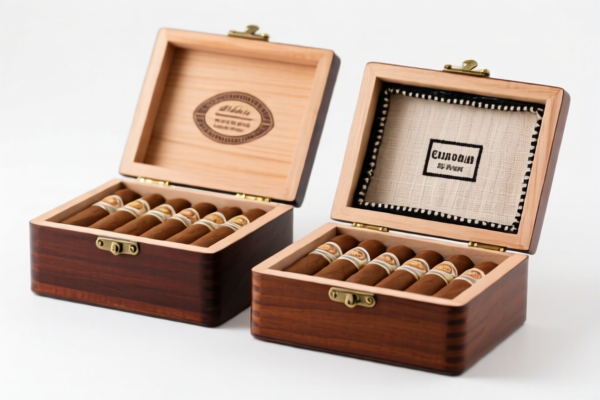
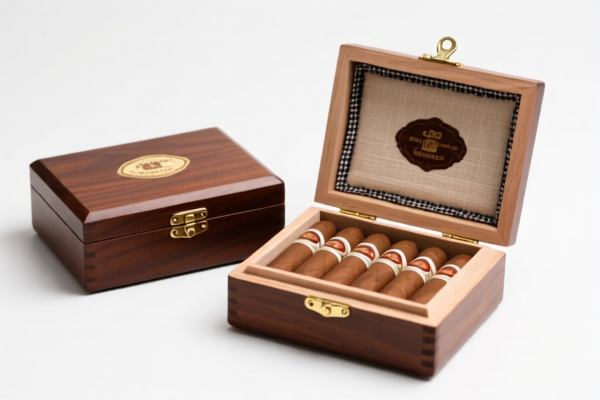
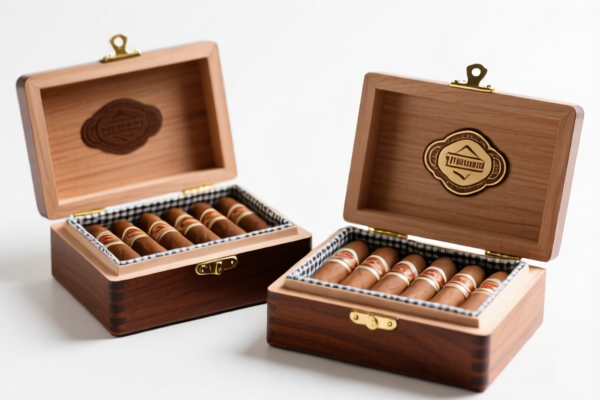
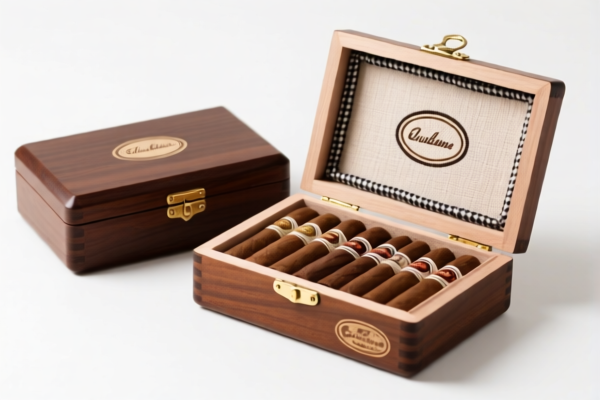
AI Analysis
🚬 Wooden Lining Textile Cigarette Box
🌐 HS Code Reference & Customs Clearance Guide | 2026 Latest Tariff Analysis | Professional Clearance Strategy
📌 I. Product Definition and Classification: What is a "Wooden Lining Textile Cigarette Box"?
A "Wooden Lining Textile Cigarette Box" is a composite packaging product. It typically consists of an outer layer made of textile/fabric (for aesthetic appeal and soft-touch feel) and an inner layer or structural core made of wood (for rigidity, aroma preservation, or premium feel). In international trade, it is classified not as a textile product, but as an article of wood, because the wooden component provides the essential shape and structural integrity of the container.
⚠️ Key Classification Point:
- If the box has a wooden frame/core and the textile is merely a decorative cover → Classified under Chapter 44 (Wood)
- If the box is 100% textile with no wooden parts → Classified under Chapter 63 (Other Made-up Textile Articles)
- Crucial Distinction: Since the prompt specifies "Wooden Lining," it implies a wooden structural component exists. Therefore, it falls under Chapter 44, specifically Heading 4421 (Other articles of wood).
📦 II. HS Code Classification Details (2026 Latest Tariff Authority Comparison)
Based on the provided <DATA>, the product is classified into one of two specific HS Codes depending on the material of the wood used.
| HS Code | Product Description | Material Composition | Applicable Scenario |
|---|---|---|---|
4421.99.98.80 |
Other articles of wood: Other: Other: Other: Other: Other | Non-Bamboo Wood (e.g., Oak, Maple, Birch, Plywood) | Most common premium cigarette boxes made from standard hardwoods or softwoods. |
4421.91.98.80 |
Other articles of wood: Other: Of bamboo: Other: Other | Bamboo | Eco-friendly or Asian-market specific boxes where the wooden core is made of bamboo. |
🔍 Important Note:
- The "Textile" component does not change the heading to Chapter 63, as the wooden part is considered the essential character of the article (structural support).
- You must determine if the wooden part is Bamboo or Other Wood to select the correct code.
- If the material is mixed and cannot be determined, customs may default to the non-preferential or higher-risk classification.
💰 III. 2026 Latest Tariff Rate Details (Detailed Tax Breakdown)
✅ Applicable Country: United States (US)
✅ Origin: China (CN) (Assumed based on typical export context; adjust if different)
✅ Effective Date: Current rates apply
Both HS Codes listed in <DATA> carry identical tariff structures due to the specific trade policies applied to "Other articles of wood."
🎯 1. 4421.99.98.80 —— Other Articles of Wood (Non-Bamboo)
| Item | Content |
|---|---|
| Base Duty Rate | 3.3% (Ad Valorem) |
| Section 301 Additional Duty | +25.0% (Trade War Tariff) |
| Total Tax Rate | 28.3% |
| Tax Calculation | CIF Value × 28.3% |
| De Minimis Exemption | ❌ Not Applicable (De minimis usually does not apply to Section 301 goods from China) |
| Legal Basis | HTSUS 4421.99.98.80 → Section 301 Footnote 3 |
📌 Explanation:
- Base Duty (3.3%): This is the standard Most Favored Nation (MFN) rate for other wooden articles not specified elsewhere in Chapter 44.
- Additional Duty (25.0%): This is the Section 301 tariff imposed by the USTR on a wide range of Chinese goods, including many wood products.
- Total Impact: For a $10,000 shipment, the duty is $2,830. This is a significant cost factor.
🎯 2. 4421.91.98.80 —— Other Articles of Wood (Of Bamboo)
| Item | Content |
|---|---|
| Base Duty Rate | 3.3% (Ad Valorem) |
| Section 301 Additional Duty | +25.0% (Trade War Tariff) |
| Total Tax Rate | 28.3% |
| Tax Calculation | CIF Value × 28.3% |
| De Minimis Exemption | ❌ Not Applicable |
| Legal Basis | HTSUS 4421.91.98.80 → Section 301 Footnote 3 |
📌 Note:
- Bamboo products are also subject to Section 301 tariffs in the US.
- Do not assume bamboo enjoys a lower rate; the total tax is identical to non-bamboo wood in this category.
🛠️ IV. Customs Clearance Practical Advice (Pitfall Avoidance Guide)
✅ 1. Required Documentation Checklist (Mandatory)
| Document | Must Provide | Explanation |
|---|---|---|
| ✅ Commercial Invoice | ✔️ | Must clearly state: "Wooden Cigarette Box with Textile Lining" and specify wood type (Bamboo vs. Other). |
| ✅ Packing List | ✔️ | Detail weight and dimensions. Ensure no hazardous materials (e.g., flammable solvents in the lining). |
| ✅ Material Composition Statement | ✔️ | Explicitly declare: "Outer: Textile (X%), Inner/Core: Wood (Y%). Wood Type: [Specify]." |
| ✅ Phytosanitary Certificate | ✔️ | CRITICAL: If the wood is raw or unprocessed, the US requires a phytosanitary certificate to prevent insect infestation. |
| ✅ Fumigation Certificate | ✔️ | Often required for wooden packaging materials (ISPM 15 compliant) if the box is considered packaging. |
| ✅ Product Photos | ✔️ | Show the cross-section to prove the wooden core structure. |
✅ 2. Declaration Tips (Key Mantra)
🔥 "Declare Wood, Not Textile; Prove Fumigation, Avoid Detention!"
| Scenario | Correct Declaration | Wrong Approach |
|---|---|---|
| Standard Wooden Box | HS Code: 4421.99.98.80Description: "Wooden Cigarette Box" |
Describe only as "Textile Case" → Misclassification Risk |
| Bamboo Box | HS Code: 4421.91.98.80Description: "Bamboo Cigarette Box" |
Describe as "Plastic-like Wood" → Confusion |
| Wooden Packaging | If the box is used as packaging for other goods, it may fall under HS 4415 (Wooden Packaging) | Classifying as finished good (4421) vs. packaging (4415) changes duties and phytosanitary requirements |
📌 Critical Warning:
- Fumigation: The US Customs and Border Protection (CBP) strictly enforces ISPM 15 standards for wooden materials. If your wooden lining is not heat-treated or fumigated, the shipment will be rejected or destroyed at the port.
- Misclassification Risk: If you declare it as "Textile Article" (Chapter 63), CBP may reclassify it as wood, leading to penalties and back-taxes for failing to declare the wood content properly.
✅ 3. Special Case Handling
| Situation | Handling Advice |
|---|---|
| Gift Sets | If the box is part of a gift set with cigarettes, ensure the tobacco content is declared separately if subject to TTB (Tax and Trade Bureau) regulations. |
| Scented Lining | If the textile contains aromatic oils, ensure it does not violate hazardous material shipping regulations (IMDG/IATA) if shipped via air. |
| Anti-Smuggling Measures | US has strict regulations on tobacco accessories. Ensure the box does not promote illegal tobacco sales. |
🌍 V. Global Market Comparison (2026 Latest)
| Country/Region | Recommended HS Code | Tariff Rate | Certification Requirement | Notes |
|---|---|---|---|---|
| 🇺🇸 USA | 4421.99.98.80 or 4421.91.98.80 |
28.3% (3.3% + 25%) | Phytosanitary + Fumigation | High duty due to Section 301. |
| 🇨🇳 China | 4421.99.99.90 |
~5-7% | N/A | Lower duty for import into China. |
| 🇪🇺 EU | 4421.99 |
~2.8% | CE (if applicable) + FSC Wood Certificate | No Section 301. Strong eco-labeling trends. |
| 🇬🇧 UK | 4421.99 |
~2.8% | FSC/PEFC Wood Certificates | Post-Brexit rules apply. |
📌 Conclusion:
- The US market is the most expensive for wooden cigarette boxes due to the 25% Section 301 tariff.
- Wood sourcing is critical: Ensure your supplier provides ISPM 15 compliance documentation. Non-compliance leads to immediate seizure.
📌 VI. Common Mistakes & Pitfall Guide (Blood & Tears Lessons)
❌ Mistake 1: Declaring the product as "Textile Pouch" (HS 6307)
👉 Consequence: CBP reclassifies as Wood → 28.3% duty + Penalties.
❌ Mistake 2: Omitting the Wood Type (Bamboo vs. Other)
👉 Consequence: CBP may choose the higher-risk code or delay clearance for inspection.
❌ Mistake 3: Ignoring Phytosanitary Requirements
👉 Consequence: Shipment quarantined or destroyed at US port. No exceptions.
❌ Mistake 4: Assuming "Lining" means it's not wood
👉 Consequence: Misclassification. The wooden core defines the product.
✅ Correct Practice:
"Wooden Cigarette Box with Textile Interior, Hardwood Core, Fumigated, Model XYZ, HS Code 4421.99.98.80"
🎯 VII. Conclusion: Professional Declaration, Cost Control, Risk Mitigation!
🎯 Remember the Mantra:
🔹 "Wood Defines, Textile Decorates. Declare Wood, Pay 28.3%."
🔹 "Fumigate or Fail! No Phytosanitary, No Entry!"
📌 Pro Tip:
If you want to reduce the 25% Section 301 tariff, consider:
1. Supply Chain Diversification: Produce wooden components in Vietnam, Malaysia, or Thailand (check rules of origin carefully).
2. Pre-Clearance: Apply for an Advance Ruling from US CBP to confirm the HS Code and duty liability before shipping.
📣 Immediate Action:
📞 Verify wood type (Bamboo vs. Other)
📞 Obtain Fumigation Certificate
📞 Calculate Landed Cost including 28.3% Duty
🚀 Ensure Smooth Clearance and Profitable Export!
✨ Professional Customs Clearance Starts with Accurate Classification!
💼 Your Bottom Line Depends on Details!
Customer Reviews
About HS Code Classification
The Harmonized System (HS) is an internationally standardized nomenclature developed by the World Customs Organization (WCO) to classify traded products. Over 200 countries use the HS system as the basis for customs tariffs, trade statistics, and import/export regulations.
Each HS code follows a hierarchical structure:
- Chapter (2 digits) — Broad category of goods (e.g., Chapter 84: Machinery and Mechanical Appliances)
- Heading (4 digits) — More specific grouping within the chapter
- Subheading (6 digits) — Internationally standardized breakdown, used by all WCO member countries
- National subdivisions (8-10 digits) — Country-specific extensions for further classification, such as US HTSUS 10-digit codes
Correct HS code classification is essential for smooth customs clearance, accurate duty payment, and compliance with trade regulations. Misclassification can lead to customs delays, overpayment of duties, or penalties.
When importing from CN to US, the applicable tariff rates may include:
- Most-Favored-Nation (MFN) rate — The standard duty rate applied to WTO members
- General rate — Applied to countries without trade agreements
- Trade remedy duties — Additional tariffs such as Section 301 (anti-dumping), Section 232 (national security), or countervailing duties
The information provided on this page is for reference purposes only. For official classification, please consult with your local customs authority or a licensed customs broker.