Wooden Paw Print
CN → US| HS Code | Tariff Rate | Origin | Destination | Doc |
|---|---|---|---|---|
| 4420190000 | 13.2% | CN | US | Official Doc |
| 4420908000 | 38.2% | CN | US | Official Doc |
| 9503000073 | 10.0% | CN | US | Official Doc |
| 9503000071 | 10.0% | CN | US | Official Doc |
Product Images
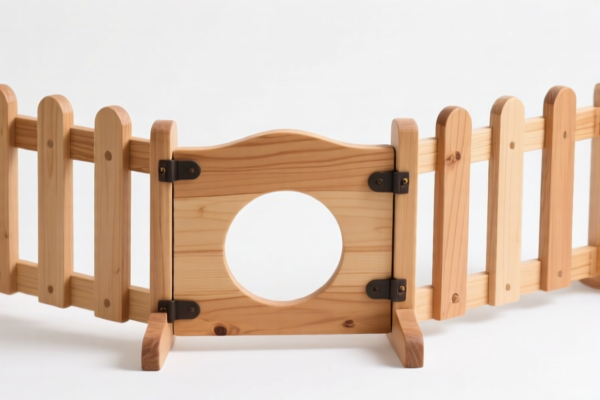
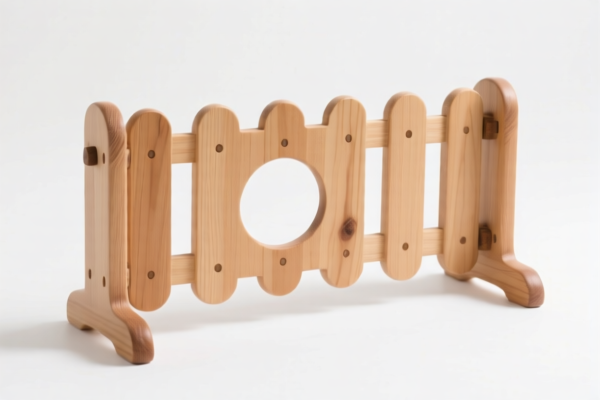
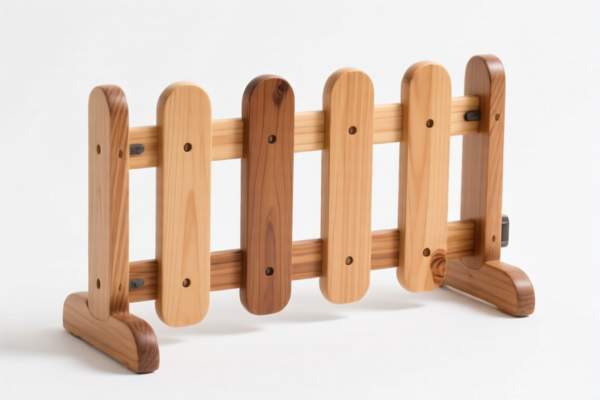
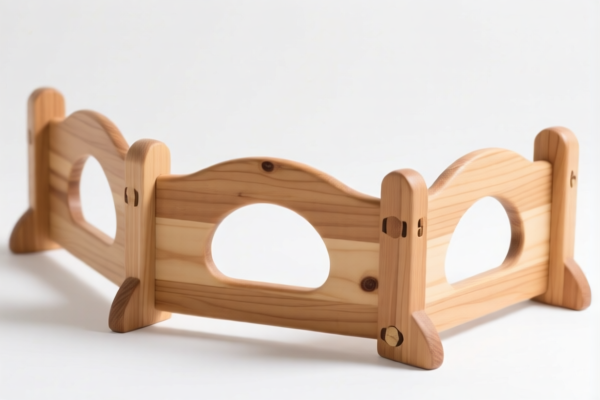
AI Analysis
🐾 Wooden Paw Print – Artisanal Pet Keepsake & Decorative Ornament
🌐 HS Code & Tariff Guide | 2026 U.S. Customs Classification | Expert Clearing Strategy
📌 One Product, Two Possible Classifications – Know the Difference to Avoid 25% Tariff Pitfalls!
📦 1. Product Definition & Key Classification Triggers
The Wooden Paw Print is a handcrafted wooden ornament typically shaped like a dog’s paw, used as: - A keepsake for pets (e.g., memorial, birthday, adoption gift), - A decorative item for homes, pet stores, or gift shops, - An artistic display or furniture accent (e.g., mounted on a wall or base).
⚠️ Critical Distinction: - If it's purely decorative (no functional furniture use) → 4420.19.00.00
- If it's part of a larger decorative set (e.g., inlaid in a jewelry box or cutlery case) → 4420.90.80.00
🧩 2. HS Code Breakdown – 2026 U.S. Tariff Authority (From Data)
| HS Code | Product Description | Tax Status | Key Conditions |
|---|---|---|---|
4420.19.00.00 |
Wood marquetry and inlaid wood; statuettes and other ornaments, of wood; wooden articles of furniture not falling within chapter 94: Statuettes and other ornaments: Other | ✅ 3.2% total tariff | - Non-furniture ornament - Hand-carved, artistic, decorative - Not part of a case or container |
4420.90.80.00 |
Wood marquetry and inlaid wood; caskets and cases for jewelry or cutlery and similar articles, of wood; statuettes and other ornaments, of wood; wooden articles of furniture not falling within chapter 94: Other: Other | ❌ 28.2% total tariff | - Part of a decorative set (e.g., inlaid in a box) - Or classified as “other” in a broader category - Includes 25% additional tariff |
🔍 Why the 25% Extra?
- The4420.90.80.00code is subject to Section 301 tariffs (U.S. Trade Act) on Chinese-origin goods. - This 25% add-on applies only to goods from China (CN) and is not applied to4420.19.00.00.
💰 3. 2026 U.S. Tariff Deep Dive – What You Really Pay
✅ HS Code 4420.19.00.00 – The Low-Tariff Path (Recommended!)
| Item | Detail |
|---|---|
| Base Duty | 3.2% (ad valorem) |
| Additional Tariff | 0.0% |
| Total Tariff | 3.2% |
| Tax Calculation | CIF Value × 3.2% |
| De Minimis Threshold | ✅ Yes – Applies (if value ≤ $800) |
| Legal Basis | U.S. HTSUS 4420.19.00.00 – General category for wooden ornaments |
📌 When to Use This Code:
- The paw print is sold alone, as a standalone ornament
- It’s not embedded in a case, box, or furniture
- It’s not part of a set (e.g., not one of 12 in a pet-themed display)
❌ HS Code 4420.90.80.00 – The High-Tariff Trap (Avoid!)
| Item | Detail |
|---|---|
| Base Duty | 3.2% |
| Additional Tariff (Section 301) | +25.0% |
| Total Tariff | 28.2% |
| Tax Calculation | CIF Value × 28.2% |
| De Minimis Threshold | ❌ No – Not eligible (due to 301 tariff) |
| Legal Basis | HTSUS 4420.90.80.00 + USITC Footnote 9903.88.01 |
📌 When This Code Applies:
- The paw print is inlaid in a jewelry box, cutlery case, or furniture piece
- It’s part of a decorative set (e.g., “Paw Print Collection” with 5 pieces)
- The importer labels it as part of a larger decorative article⚠️ Danger Zone:
- Even if the paw print is 100% standalone, if the invoice or packaging says “set of pet ornaments” → can trigger 28.2%
- U.S. Customs may reclassify based on commercial context, not just physical form.
🛠️ 4. Clearance Best Practices – Avoid 25% Tariff & Delays
✅ 1. Documentation Must-Haves (No Exceptions)
| Document | Why It Matters |
|---|---|
| ✅ Product Photos (Multiple Angles) | Show it’s a standalone ornament, not embedded |
| ✅ Commercial Invoice | Must say: “Wooden Paw Print Ornament – Standalone Decorative Item” |
| ✅ Packing List | Clearly state: “1 piece – No set, No case, No inlay” |
| ✅ Certificate of Origin (CO) | If from China (CN), must declare – triggers 301 tariff risk |
| ✅ Artisan/Handmade Certification (Optional) | Helps prove it’s a statuette, not a functional item |
✅ 2.申报技巧(Pro申报 Tips)
🔥 “Standalone, Not Set, No Inlay – That’s 3.2%, Not 28.2%!”
| Scenario | Correct HS Code | Common Mistake |
|---|---|---|
| Sold alone, no packaging set | 4420.19.00.00 |
Misclassified as 4420.90.80.00 |
| Inlaid in a wooden jewelry box | 4420.90.80.00 |
Misclassified as 4420.19.00.00 |
| Part of a “Pet Memorial Set” (3 items) | 4420.90.80.00 |
Claiming “individual item” → risk of audit |
| Hand-carved, no function | 4420.19.00.00 |
Overcomplicating with “furniture” language |
✅ 3. Special Cases & How to Handle Them
| Situation | Solution |
|---|---|
| Made in China, sold as single item | Use 4420.19.00.00 → 3.2% only |
| Made in Vietnam, Mexico, or Thailand | Can apply for 301 tariff exemption → 0% additional tariff |
| Gift packaging with “Pet Memorial” theme | Avoid phrases like “set”, “collection”, or “complete” |
| Custom order with multiple paw prints | If shipped together, even if identical → may be treated as a set → 28.2% |
📌 Pro Tip:
- Ship one paw print per package
- Label each as “Individual Ornament – Not a Set”
- Use plain packaging, no themed boxes
🌍 5. Global Market Comparison (2026)
| Country | Recommended HS Code | Tariff | Certification | Notes |
|---|---|---|---|---|
| 🇺🇸 United States | 4420.19.00.00 |
3.2% (if China) | None | Avoid 28.2% trap! |
| 🇨🇳 China | 4420.19.00.00 |
0% | None | No 301 tariffs |
| 🇪🇺 EU | 4420.19.00.00 |
0% (if CE) | CE | No extra tariffs |
| 🇦🇺 Australia | 4420.19.00.00 |
0% | RCM | No 301 risk |
| 🇯🇵 Japan | 4420.19.00.00 |
0% | PSE | No additional duties |
📌 Insight:
- Only the U.S. applies 301 tariffs on this item if misclassified
- All other major markets treat it as a low-duty decorative item
🚨 6. Common Mistakes & Costly Errors (Real-World Examples)
❌ Mistake 1:
“We shipped 100 wooden paw prints in one box labeled ‘Pet Memorial Collection’.”
👉 Result: Customs reclassified as a set → 28.2% tariff on all units → $10,000+ in extra fees
❌ Mistake 2:
“We used ‘wooden inlaid ornament’ in the invoice.”
👉 Result: Customs assumed inlay → triggered4420.90.80.00→ 28.2% instead of 3.2%
❌ Mistake 3:
“We didn’t declare origin – it’s from China.”
👉 Result: No de minimis → 28.2% applied even for $500 shipment
✅ Correct Approach:
- Use “Standalone Wooden Paw Print Ornament”
- Say “No inlay, no set, no case”
- Declare origin clearly
- Ship one per package if bulk
🎯 7. Final Verdict: Win the Tariff War!
🎯 Your 3.2% vs. 28.2% Decision Starts Here
🔹 If it’s alone, carved, decorative → Use
4420.19.00.00
🔹 If it’s in a box, set, or inlaid → Use4420.90.80.00(28.2%)
🔹 Never guess – document and declare clearly✅ Golden Rule:
“No set, no inlay, no case = 3.2%”
“Set, inlay, case = 28.2%”
📣 Act Now: Protect Your Profit Margin!
📞 Contact a U.S. Customs Broker + Submit product photos + Request HS Code Pre-Ruling
🚀 Get a binding decision before shipping – avoid $10,000+ in surprise tariffs
✨ Your paw print is a memory. Your customs declaration should be a masterstroke.
💼 Precise classification = Lower cost = Faster delivery = Happy customers.
✅ Pro Tip:
If your paw prints are made in Vietnam, Mexico, or Thailand, apply for 301 Tariff Exemption – zero additional duty on
4420.90.80.00!
📌 File Form 301 Exemption Request (USITC) before shipment.
📣 Ready to ship?
🛠️ Double-check your HS Code.
💰 Save 25% in tariffs.
🐶 Honor your pet. Honor your business.
Customer Reviews
About HS Code Classification
The Harmonized System (HS) is an internationally standardized nomenclature developed by the World Customs Organization (WCO) to classify traded products. Over 200 countries use the HS system as the basis for customs tariffs, trade statistics, and import/export regulations.
Each HS code follows a hierarchical structure:
- Chapter (2 digits) — Broad category of goods (e.g., Chapter 84: Machinery and Mechanical Appliances)
- Heading (4 digits) — More specific grouping within the chapter
- Subheading (6 digits) — Internationally standardized breakdown, used by all WCO member countries
- National subdivisions (8-10 digits) — Country-specific extensions for further classification, such as US HTSUS 10-digit codes
Correct HS code classification is essential for smooth customs clearance, accurate duty payment, and compliance with trade regulations. Misclassification can lead to customs delays, overpayment of duties, or penalties.
When importing from CN to US, the applicable tariff rates may include:
- Most-Favored-Nation (MFN) rate — The standard duty rate applied to WTO members
- General rate — Applied to countries without trade agreements
- Trade remedy duties — Additional tariffs such as Section 301 (anti-dumping), Section 232 (national security), or countervailing duties
The information provided on this page is for reference purposes only. For official classification, please consult with your local customs authority or a licensed customs broker.