Wooden Pen Case
CN → US| HS Code | Tariff Rate | Origin | Destination | Doc |
|---|---|---|---|---|
| 4415103000 | 35.0% | CN | US | Official Doc |
| 4420908000 | 38.2% | CN | US | Official Doc |
| 4415109000 | 45.7% | CN | US | Official Doc |
| 9208100000 | 13.2% | CN | US | Official Doc |
| 9208900040 | 22.8% | CN | US | Official Doc |
Product Images
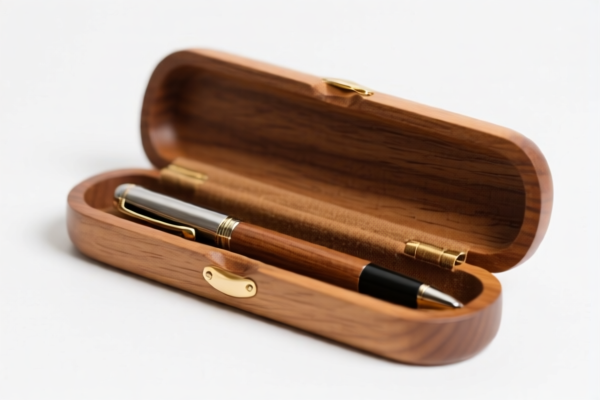
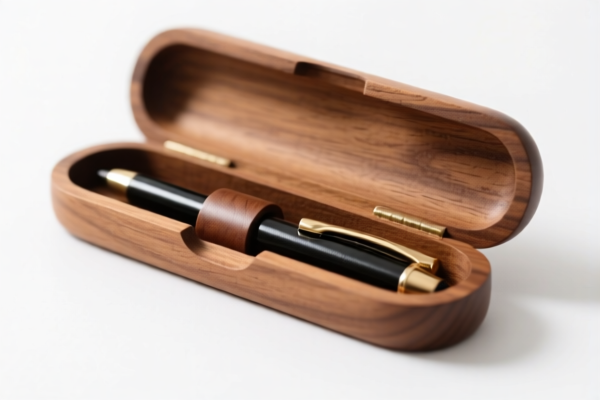
AI Analysis
✒️ Wooden Pen Case (Packaging of Wood)
🌐 HS Code Reference & Customs Clearance Guide | 2026 Latest Tariff Analysis | Professional Clearance Strategy
📌 One, Product Definition and Classification: What exactly is a "Wooden Pen Case"?
In international trade, a "Wooden Pen Case" is rarely classified by the contents (the pens) but rather by the container itself. According to Harmonized System (HS) principles, if the packaging is suitable for travel, commercial use, and is specifically shaped or constructed for packing cases, boxes, crates, drums, etc., it falls under Chapter 44 (Wood and Articles of Wood).
Key Distinction: * Custom-Made Wooden Box/Crate: Rigid, solid sides, lids, and bottoms, often used for high-value goods. → 4415.10.30.00 * General Wooden Packaging: Includes crates, boxes, or other wooden packings not specifically defined as "solid sides/lids/bottoms" or if they are standard crates/pallets. → 4415.10.90.00
⚠️ Critical Point:
If the "case" is merely a soft pouch, metal tin, or plastic box, it does not belong in Chapter 44. This guide applies only to cases made of wood.
- If it is a luxury presentation box with solid wooden walls, lid, and bottom → 4415.10.30.00
- If it is a standard wooden crate/box for shipping or general packing → 4415.10.90.00
📦 Two, HS Code Classification Details (2026 Latest Tariff Authority Comparison)
| HS Code | Product Description | Applicable Scenario | Key Features |
|---|---|---|---|
4415.10.30.00 |
Packing boxes and cases with solid sides, lids, and bottoms | Luxury pen boxes, high-end gift cases, rigid wooden crates for shipping | ✅ Rigid structure, no folding, solid wood panels |
4415.10.90.00 |
Other packing cases, boxes, crates, drums | Standard wooden shipping crates, collapsible boxes, other wooden packings | ✅ Includes non-solid structures or other wooden packings not listed above |
🔍 Important Reminder:
- Both codes fall under Chapter 4415: "Packing cases, boxes, crates, drums and similar packings, of wood." - The distinction between.30and.90is crucial for determining the base tariff rate.
💰 Three, 2026 Latest Tariff Rate Details (Detailed Tax Clauses)
✅ Applicable Country: United States (US)
✅ Origin: China (CN)
✅ Effective Time: Current rates apply as per provided data
🎯 1. 4415.10.30.00 —— Packing Boxes/Cases with Solid Sides, Lids, and Bottoms
| Item | Content |
|---|---|
| Base Tariff | 0.0% (Ad Valorem) |
| Additional Tariff (Section 301) | +25.0% |
| Total Tariff | 25.0% |
| Tax Calculation | CIF Value × 25% |
| De Minimis Exemption? | ❌ NO (De Minimis does not apply to goods subject to Section 301 tariffs) |
| Legal Basis Path | HTSUS:4415.10.30.00 → USITC:Footnote 9903.88.01 (Section 301) |
📌 Explanation:
- The Base Rate is 0%, which might seem low, but the Section 301 Additional Duty of 25% makes the total burden significant. - This classification is for premium, solid wooden cases (e.g., luxury pen presentation boxes made of solid wood panels). - Warning: Even with a 0% base rate, the effective tax is 25%. Do not assume "0% base" means "free import."
🎯 2. 4415.10.90.00 —— Other Packing Cases, Boxes, Crates, Drums
| Item | Content |
|---|---|
| Base Tariff | 10.7% (Ad Valorem) |
| Additional Tariff (Section 301) | +25.0% |
| Total Tariff | 35.7% |
| Tax Calculation | CIF Value × 35.7% |
| De Minimis Exemption? | ❌ NO |
| Legal Basis Path | HTSUS:4415.10.90.00 → USITC:Footnote 9903.88.01 (Section 301) |
📌 Explanation:
- The Base Rate is 10.7%, which is significantly higher than.30. - This applies to standard wooden crates/boxes used for shipping or general packaging. - Total Tax of 35.7% is the highest burden for wooden packaging. - Strategic Tip: If your "pen case" is actually a solid luxury box, argue for.30to save 10.7% in base duties. If it's a generic crate, you must pay.90.
🛠️ Four, Customs Clearance Practical Advice (Battle-Tested Pitfall Guide)
✅ 1. Preparation Checklist (Non-Negotiable)
| Document | Required | Description |
|---|---|---|
| ✅ Product Photos | ✔️ | Clear images showing solid wood construction, lid, bottom, and hinges. |
| ✅ Commercial Invoice | ✔️ | Must explicitly state "Wooden Packaging" or "Wooden Case", NOT just "Pen Box" (which might be confused with Chapter 96). |
| ✅ Packing List | ✔️ | Detail the weight and dimensions of the wooden case itself vs. contents. |
| ✅ Material Declaration | ✔️ | Confirm wood type (e.g., Pine, Oak, Bamboo). Ensure no invasive species (CITES compliance if applicable). |
| ✅ Fumigation Certificate | ✔️ | If wood is not processed/heat-treated (ISPM 15), fumigation may be required for entry into some countries (though US generally allows processed wood). |
✅ 2. Declaration Tips (Key Mantra)
🔥 "Solid Sides = .30, Other Crates = .90, Never Split, Always Declare Wood!"
| Scenario | Correct Declaration | Wrong Practice |
|---|---|---|
| Luxury Pen Case (Solid Wood Panels) | 4415.10.30.00 |
Misdeclare as 4415.10.90.00 → Overpay 10.7% |
| Standard Wooden Shipping Crate | 4415.10.90.00 |
Misdeclare as .30 → Underpayment risk, penalty + back taxes |
| Pen Case made of Plastic | Not HS 4415 | Incorrect Chapter → Clearance delay |
| Pen Case made of Metal | Not HS 4415 | Incorrect Chapter → Clearance delay |
📌 Crucial Advice:
- If the case is reusable and made of solid wood, it is almost certainly 4415.10.30.00.
- If the case is a crating box used for shipping multiple units, it is likely 4415.10.90.00.
- Do not declare the pens inside the case as the primary item. The case is the "packing material." If the pens are also imported, they should be declared separately (e.g.,9608.10.00for ballpoint pens), but the wooden case itself must be declared under 4415.
✅ 3. Special Circumstances Handling
| Situation | Handling Advice |
|---|---|
| OEM Custom Wooden Cases | Provide design drawings to prove "solid sides, lids, bottoms" structure to justify .30 |
| Bamboo Cases | Still falls under Chapter 44 (Bamboo is treated as wood in HS), so same HS codes apply |
| Recycled Wood Cases | Ensure ISPM 15 compliance (heat-treated mark) to avoid rejection at US border |
| De Minimis (Section 321) Claims? | ❌ NO. Section 301 tariffs block de minimis exemptions. Even for low-value shipments, tariffs apply. |
🌍 Five, Global Market Comparison (2026 Latest)
| Country/Region | Recommended HS Code | Tariff (China Origin) | Certification/Requirement | Note |
|---|---|---|---|---|
| 🇺🇸 USA | 4415.10.30.00 / .90 |
25% / 35.7% | ISPM 15 (if raw wood) | High tariff environment |
| 🇨🇳 China | 4415.10.30.00 / .90 |
Varies (0-10%) | N/A | Lower impact |
| 🇪🇺 EU | 4415.10.30.00 / .90 |
~0-2.5% | FSC/PEFC (Sustainability) | No Section 301 equivalent |
| 🇬🇧 UK | 4415.10.30.00 / .90 |
~0-2.5% | UKCA/CE (if applicable) | Post-Brexit rules apply |
📌 Conclusion:
- The US is the most expensive market for wooden packaging due to Section 301 tariffs.
- Total Tax of 25% or 35.7% significantly impacts margin.
- For non-US markets, the cost is much lower, but sustainability certifications (FSC) may be required.
📌 Six, Common Mistakes & Pitfalls (Blood & Tears Lessons)
❌ Mistake 1: Declaring the entire shipment (pens + case) as 4415.10.30.00
👉 Consequence: The pens are not wood! Only the case is wood. Declaring pens as wood is fraud/description error → Seizure + Fine.
✅ Fix: Declare Pens separately (9608.xx) and Wooden Case separately (4415.10.30.00).
❌ Mistake 2: Assuming 4415.10.30.00 is "0% tax"
👉 Consequence: Expecting 0% payment but being charged 25% → Cash flow shock.
✅ Fix: Always calculate Total Tax = Base + Section 301.
❌ Mistake 3: Using "Wooden Box" vague description
👉 Consequence: Customs officer cannot determine if it's .30 (solid) or .90 (other) → Delay + Inspection.
✅ Fix: Use "Wooden Packing Case with Solid Sides and Lid" for .30 or "Wooden Crate" for .90.
❌ Mistake 4: Ignoring ISPM 15 for Raw Wood
👉 Consequence: Shipment rejected/destroyed at US port if wood is not heat-treated/fumigated.
✅ Fix: Ensure HT/MB stamp is visible on the wooden case.
🎯 Seven, Conclusion: Precision Classification Saves Money!
🎯 Remember the Mantra:
🔹 "Solid Wood Case = .30 (25% Total)"
🔹 "General Crate = .90 (35.7% Total)"
🔹 "Separate Pens from Case!"
🔹 "No De Minimis for Section 301!"
📌 Pro Tip:
If your wooden pen case is recyclable, reusable, and made of high-quality solid wood, argue strongly for 4415.10.30.00 to save the 10.7% base duty. If it's a disposable shipping crate, you must pay 35.7%.
📣 Immediate Action:
📞 Contact a licensed customs broker
📷 Provide photos of the wooden case structure (solid vs. crate)
📄 Declare wooden case and pens separately on the Commercial Invoice
🚀 Clear customs smoothly, avoid penalties, and protect your margin!
✨ Professional Customs Clearance Starts with Accurate Classification!
💼 Every Percentage Point Counts!
Customer Reviews
About HS Code Classification
The Harmonized System (HS) is an internationally standardized nomenclature developed by the World Customs Organization (WCO) to classify traded products. Over 200 countries use the HS system as the basis for customs tariffs, trade statistics, and import/export regulations.
Each HS code follows a hierarchical structure:
- Chapter (2 digits) — Broad category of goods (e.g., Chapter 84: Machinery and Mechanical Appliances)
- Heading (4 digits) — More specific grouping within the chapter
- Subheading (6 digits) — Internationally standardized breakdown, used by all WCO member countries
- National subdivisions (8-10 digits) — Country-specific extensions for further classification, such as US HTSUS 10-digit codes
Correct HS code classification is essential for smooth customs clearance, accurate duty payment, and compliance with trade regulations. Misclassification can lead to customs delays, overpayment of duties, or penalties.
When importing from CN to US, the applicable tariff rates may include:
- Most-Favored-Nation (MFN) rate — The standard duty rate applied to WTO members
- General rate — Applied to countries without trade agreements
- Trade remedy duties — Additional tariffs such as Section 301 (anti-dumping), Section 232 (national security), or countervailing duties
The information provided on this page is for reference purposes only. For official classification, please consult with your local customs authority or a licensed customs broker.