Wooden Perforated Pendant
CN → US| HS Code | Tariff Rate | Origin | Destination | Doc |
|---|---|---|---|---|
| 4421999880 | 38.3% | CN | US | Official Doc |
| 4421919880 | 38.3% | CN | US | Official Doc |
| 9503000071 | 10.0% | CN | US | Official Doc |
| 9503000071 | 10.0% | CN | US | Official Doc |
| 9503000073 | 10.0% | CN | US | Official Doc |
Product Images

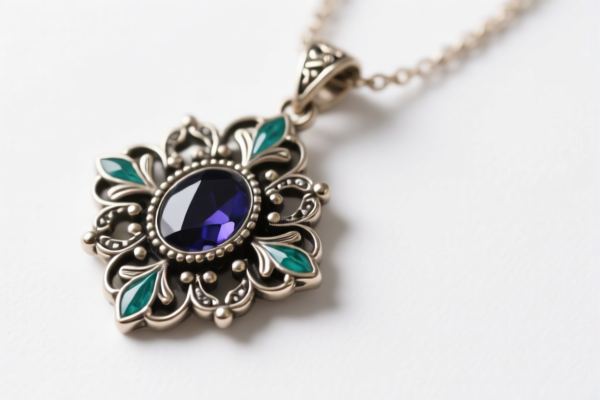
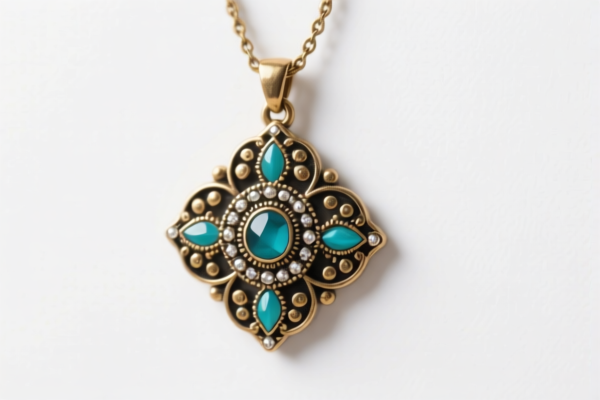

AI Analysis
🪵 Wooden Perforated Pendant: HS Code Classification & 2026 US Customs Clearance Guide
🌐 HS Code Reference & Clearance Strategy | 2026 Latest Tariff Analysis | Professional Duty Optimization
📌 I. Product Definition & Classification: What Exactly Is a "Wooden Perforated Pendant"?
A Wooden Perforated Pendant is a small, decorative item made of wood with a hole drilled through it, typically used for necklaces, keychains, or craft accessories. In international trade, its classification depends heavily on its intended use, material composition, and physical form.
⚠️ Key Distinction Points:
- If classified as a wooden artifact/accessory → Falls under Chapter 44 (Wood) → High tariffs due to US-China trade tensions.
- If classified as a toy accessory or decorative item → Falls under Chapter 95 (Toys, Games) → Lower tariffs, but strict documentation required.
📦 II. HS Code Classification Details (2026 Official Tariff Schedule)
| HS Code | Product Description | Application Scenario | Material/Type |
|---|---|---|---|
| 4421.99.98.80 | Other wooden articles (not elsewhere specified) | General wooden crafts, unclassified accessories | Wood |
| 4421.91.98.80 | Wooden articles (bamboo/wood mix, non-specific purpose) | Mixed-material wooden/bamboo items | Bamboo/Wood |
| 9503.00.00.71 | Toys, accessories, or decorative items (wooden) | Toy parts, decorative pendants, craft items | Wood |
| 9503.00.00.73 | Toy/model parts (wooden) | Parts for wooden toys, models, or kits | Wood |
🔍 Critical Reminder:
- Wooden artifacts (Ch. 44) are subject to high additional tariffs (Section 301 + IEEPA).
- Toy/accessory classifications (Ch. 95) offer significantly lower tax rates, but require proof of "toy/decorative" use.
- Misclassification risks: Declaring as "wooden artifact" when it’s a "toy part" can lead to back taxes + penalties.
💰 III. 2026 US Tariff Rate Breakdown (China-Origin Goods)
✅ Target Market: United States (US)
✅ Origin: China (CN)
✅ Effective Date: November 10, 2025 (and subsequent imports)
🎯 1. HS Code 4421.99.98.80 & 4421.91.98.80 – Wooden Articles
| Item | Details |
|---|---|
| Base Tariff | 3.3% (ad valorem) |
| Section 301 Additional Duty | +25% |
| IEEPA Additional Duty | +10% (China-specific) |
| Total Effective Rate | 38.3% |
| Tax Calculation | CIF Value × 38.3% |
| De Minimis Exemption? | ❌ No (denied under Section 301/IEEPA) |
| Legal Basis Path | IEEPA:9903.01.25 → IEEPA:9903.01.24 → USITC:4421.99.98.80 → FOOTNOTE:9903.88.01 |
📌 Explanation:
- 3.3% is the standard Most Favored Nation (MFN) rate for wooden goods.
- 25% is the Section 301 penalty on Chinese wood products.
- 10% is the IEEPA surcharge targeting China.
- Total: 38.3% → Extremely high duty, significantly impacting profitability.
🎯 2. HS Code 9503.00.00.71 & 9503.00.00.73 – Toy/Decorative Accessories
| Item | Details |
|---|---|
| Base Tariff | 0% |
| Section 301 Additional Duty | 0% |
| IEEPA Additional Duty | +10% (China-specific) |
| Total Effective Rate | 10.0% |
| Tax Calculation | CIF Value × 10.0% |
| De Minimis Exemption? | ❌ No (IEEPA denies de minimis for China) |
| Legal Basis Path | IEEPA:9901.25 → IEEPA:9903.01.24 → USITC:9503.00.00.71/73 |
📌 Key Advantage:
- Only 10% total duty vs. 38.3% for wooden articles.
- Savings: 28.3% reduction in tariff burden.
- Requirement: Must prove product is used as a toy accessory or decorative item (not general wooden craft).
🛠️ IV. Clearance Practical Advice (Avoiding Pitfalls)
✅ 1. Required Documentation Checklist
| Document | Mandatory? | Purpose |
|---|---|---|
| ✅ Product Specification Sheet | ✔️ | Dimensions, hole size, weight, wood type |
| ✅ Usage Declaration | ✔️ | Explicitly state "Toy Accessory" or "Decorative Pendant" |
| ✅ Product Photos | ✔️ | Show perforation, finish, and packaging |
| ✅ Commercial Invoice | ✔️ | Clearly label as "Wooden Pendant for Toys/Decor" |
| ✅ Packing List | ✔️ | Confirm no mixed shipments (e.g., with non-wood items) |
📌 Pro Tip:
- Avoid vague terms like "wooden item" or "craft supply."
- Use precise language: "Wooden Perforated Pendant for Toy Assembly/Decorative Use."
✅ 2. Classification Strategy (Best Practices)
| Scenario | Recommended HS Code | Risk if Misclassified |
|---|---|---|
| Sold as toy part/keepsake | 9503.00.00.71/73 |
Low risk if documentation supports |
| Sold as general wooden decor | 4421.99.98.80 |
38.3% duty → High cost |
| Mixed material (wood + plastic) | 4421.91.98.80 |
38.3% duty → Same high rate |
🔥 Golden Rule:
"Toy/Decorative = 10% | Wooden Artifact = 38.3% | Misclassification = Penalty + Delay"
✅ 3. Special Cases & Solutions
| Situation | Solution |
|---|---|
| OEM Custom Pendants | Provide client order + design specs to prove "toy/accessory" use |
| Bamboo-Wood Mix | Use 4421.91.98.80 → Still 38.3% (no tax benefit) |
| Non-Chinese Origin | If from Vietnam/Malaysia → 0% IEEPA → Total duty 25% (Section 301 only) |
📌 Key Insight:
- Origin matters: Only China-origin goods face the 10% IEEPA surcharge.
- Re-routing option: Source from ASEAN countries to reduce IEEPA impact (though Section 301 still applies).
🌍 V. Global Market Comparison (2026)
| Country/Region | Recommended HS Code | Total Duty | Certifications | Notes |
|---|---|---|---|---|
| 🇺🇸 USA | 9503.00.00.71/73 |
10% | None | Avoid 4421 codes |
| 🇨🇳 China | 4421.99.98.80 |
3.3% | None | No additional tariffs |
| 🇪🇺 EU | 4421.99.98 |
4.5% | FSC/PEFC | No US-style penalties |
| 🇬🇧 UK | 4421.99.98 |
4.5% | FSC | Post-Brexit rules apply |
📌 Conclusion:
- USA is the most punitive market for Chinese wooden goods due to Section 301 + IEEPA.
- EU/UK offer lower, predictable rates with standard environmental certifications.
📌 VI. Common Mistakes & Pitfalls (Lessons Learned)
❌ Mistake 1: Declaring wooden pendants as "general crafts" (4421) when they’re toy accessories.
👉 Result: 38.3% duty instead of 10% → $28.3% cost increase.
❌ Mistake 2: Using vague descriptions like "wooden item" on invoices.
👉 Result: Customs delay + potential penalty for misclassification.
❌ Mistake 3: Ignoring IEEPA surcharges for non-China origins.
👉 Result: Unexpected 10% extra tax if origin is not properly declared.
✅ Best Practice:
"Wooden Perforated Pendant for Toy/Decorative Use, Model XYZ, Origin: China"
🎯 VII. Conclusion: Smart Classification Saves Money
🎯 Key Takeaways:
🔹 "Toy/Decorative = 10% | Wooden Artifact = 38.3%"
🔹 "HS Code determines duty, duty determines profit"
🔹 "Clear documentation prevents customs hell"
📌 Action Steps:
📞 Engage a licensed customs broker to file a Pre-Ruling Request with CBP.
📄 Provide product photos + usage declaration to justify9503classification.
🚀 Optimize supply chain: Consider non-China origins to reduce IEEPA impact.
✨ Professional clearance starts with accurate classification!
💼 Your bottom line depends on these details!
Customer Reviews
About HS Code Classification
The Harmonized System (HS) is an internationally standardized nomenclature developed by the World Customs Organization (WCO) to classify traded products. Over 200 countries use the HS system as the basis for customs tariffs, trade statistics, and import/export regulations.
Each HS code follows a hierarchical structure:
- Chapter (2 digits) — Broad category of goods (e.g., Chapter 84: Machinery and Mechanical Appliances)
- Heading (4 digits) — More specific grouping within the chapter
- Subheading (6 digits) — Internationally standardized breakdown, used by all WCO member countries
- National subdivisions (8-10 digits) — Country-specific extensions for further classification, such as US HTSUS 10-digit codes
Correct HS code classification is essential for smooth customs clearance, accurate duty payment, and compliance with trade regulations. Misclassification can lead to customs delays, overpayment of duties, or penalties.
When importing from CN to US, the applicable tariff rates may include:
- Most-Favored-Nation (MFN) rate — The standard duty rate applied to WTO members
- General rate — Applied to countries without trade agreements
- Trade remedy duties — Additional tariffs such as Section 301 (anti-dumping), Section 232 (national security), or countervailing duties
The information provided on this page is for reference purposes only. For official classification, please consult with your local customs authority or a licensed customs broker.