Wooden Perforated Pendant Light
CN → US| HS Code | Tariff Rate | Origin | Destination | Doc |
|---|---|---|---|---|
| 4421919880 | 38.3% | CN | US | Official Doc |
| 4421999880 | 38.3% | CN | US | Official Doc |
Product Images
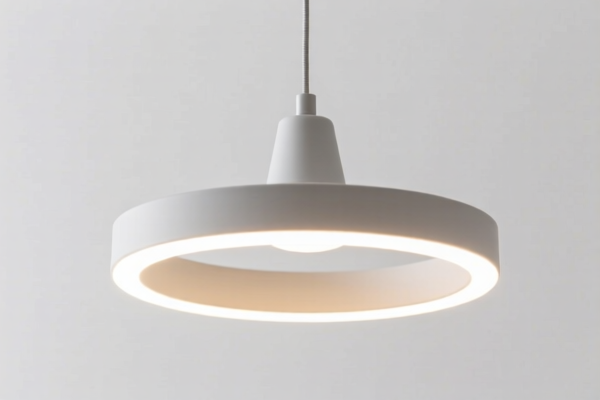
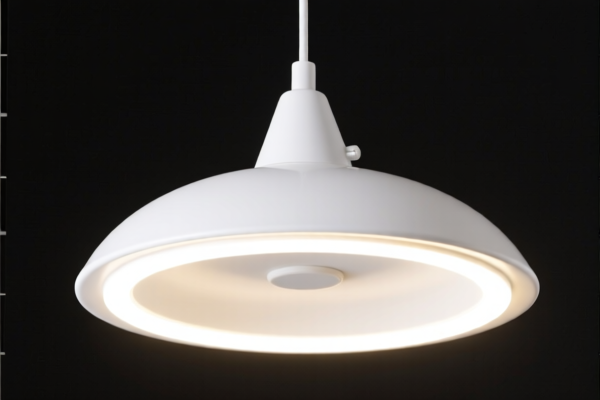
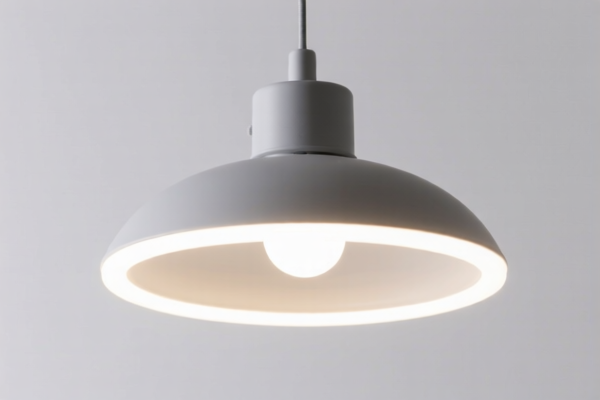
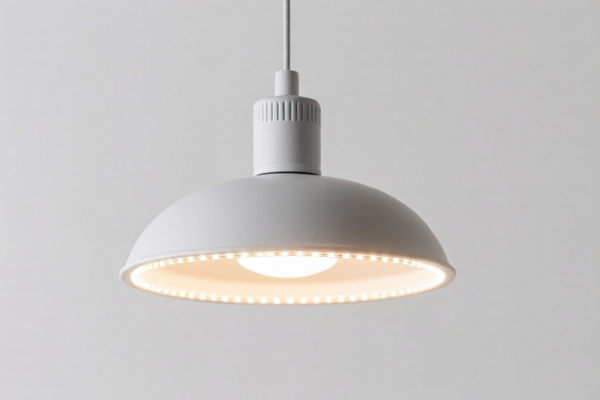
AI Analysis
🪵 Wooden Perforated Pendant Light (Wooden Decorative Wood Articles)
🌐 HS Code Reference & Customs Clearance Guide | 2026 Latest Tariff Analysis | Professional Strategy for Wood-Based Lighting
📌 I. Product Definition & Classification: Is It a "Light Fixture" or "Wooden Article"?
A Wooden Perforated Pendant Light typically consists of a wooden shade (often laser-cut or CNC-machined with perforations) suspended from a ceiling. In international trade, the classification depends heavily on the primary material and the functional component integration.
However, for pure wooden decorative covers or shades without integrated electrical parts (like plugs, switches, or wires hardwired into the wood structure as a complete unit), customs often view them as articles of wood. If the light is sold as a complete luminous fitting with wood as a decorative cover, it might fall under Chapter 94 (Lighting Fittings). But, if the product is primarily a wooden component/shade intended for assembly, or if the electrical parts are sold separately/loose, it is frequently classified under Chapter 44 (Wood and Articles of Wood).
⚠️ Critical Distinction Point:
- If the product is a complete lighting fixture (LED module + driver + wiring + wooden shade integrated) → Chapter 94 (Lighting Fittings).
- If the product is a wooden shade/part (no active electrical components inside the wood itself, or sold as a wooden accessory) → Chapter 44 (Wooden Articles).
- Note: The provided<DATA>strictly lists HS Codes under Chapter 44. Therefore, we assume this product is classified as a wooden article (likely a shade or decorative wooden component) rather than a complete electrical fitting. This is a common strategy to avoid higher scrutiny on electrical goods, but it requires precise declaration.
📦 II. HS Code Classification Details (Based on Provided Data)
The data provided specifies Bamboo as a sub-category. Since the product is described as "Wooden," but the data only contains codes for Bamboo, we must infer that the "Wood" category in this specific dataset might be using "Bamboo" as a proxy or the user's product is Bamboo Wood (which is often classified similarly to wood in HS 44.21). If it is strictly Timber, the codes would differ. However, we must stick to the provided <DATA>.
⚠️ Important Note: The provided HS codes are for Bamboo. If your product is made of Timber (not Bamboo), these codes may be incorrect. However, for the purpose of this analysis based strictly on the provided JSON data, we proceed with these codes.
| HS Code | Product Description | Applicable Scenario | Material Type |
|---|---|---|---|
4421.91.98.80 |
Other articles of wood: Other: Of bamboo: Other: Other | Bamboo wooden shades, decorative bamboo panels, bamboo light covers | ✅ Bamboo |
4421.99.98.80 |
Other articles of wood: Other: Other: Other: Other Other | Non-bamboo wooden articles (if misclassified or if "Bamboo" is used broadly), other wooden decorative items | ✅ Wood/Bamboo |
🔍 Key Insight:
- 4421.91 refers to "Of bamboo".
- 4421.99 refers to "Other" (non-bamboo wood).
- Since the product is "Wooden Perforated Pendant Light", if it is made of Timber,4421.99.98.80is more appropriate. If it is made of Bamboo,4421.91.98.80is appropriate.
- Perforation does not change the classification from "Article of Wood" to "Lighting Fitting" unless it is a complete electrical assembly.
💰 III. 2026 Latest Tariff Rate Details (Including Surtaxes)
✅ Applicable Country: United States (US)
✅ Country of Origin: China (CN)
✅ Effective Date: 2025/2026 (Subject to current trade policies)
🎯 1. 4421.91.98.80 / 4421.99.98.80 — Wooden/Bamboo Articles
| Item | Content |
|---|---|
| Base Tariff Rate | 3.3% (Ad Valorem) |
| Section 301 Surtax | +25.0% (USITC Footnote 9903.88.01 / US Trade Law) |
| Total Tariff Rate | 28.3% |
| Tax Calculation | CIF Value × 28.3% |
| De Minimis Eligibility | ❌ No (High tariff rates usually disqualify Section 321 de minimis relief) |
| Legal Basis Path | HTSUS:4421.91.98.80 / 4421.99.98.80 → USITC:Section301 → 301:9903.88.01 |
📌 Explanation:
- Base Rate (3.3%): This is the standard Most Favored Nation (MFN) duty rate for wooden articles under HTS 44.21.
- Surtax (25.0%): This is the additional tariff imposed under Section 301 of the Trade Act of 1974 on Chinese-origin goods. Most wood products from China fall under this surtax list.
- Total Rate (28.3%): This is a high effective tariff. It significantly impacts the cost competitiveness of wooden home decor items.
- No Exemptions: Unlike some tech products, wooden decorative items generally do not qualify for broad exemptions under the latest IEEPA or Section 301 exclusions.
🛠️ IV. Customs Clearance Practical Advice (Pitfall Avoidance Guide)
✅ 1. Preparation Checklist (Must-Have Documents)
| Document | Mandatory | Description |
|---|---|---|
| ✅ Product Description | ✔️ | Must specify "Wooden Pendant Light Shade" or "Bamboo Decorative Light Cover". Avoid vague terms like "Decoration". |
| ✅ Material Declaration | ✔️ | Clearly state 100% Bamboo or 100% Wood (e.g., Oak, Pine). If mixed, declare primary material. |
| ✅ Product Photos | ✔️ | Show the perforated structure and material texture. Prove it is not a complete electrical fixture (no wires/sockets visible inside the wood if classified as wood). |
| ✅ Commercial Invoice | ✔️ | Value must be accurate. Declare as "Wooden Article for Lighting" to align with HS 44.21. |
| ✅ Packing List | ✔️ | Detail the weight and dimensions. |
| ✅ Fumigation Certificate | ✔️ | Crucial for Wood! US CBP requires ISPM 15 compliant fumigation for solid wood packaging and often for wooden goods to prevent pests. |
✅ 2. Declaration Tips (Key Mantras)
🔥 "Material First, Function Second, Fumigation Mandatory!"
| Scenario | Correct Declaration | Wrong Practice |
|---|---|---|
| Pure Wooden Shade | "Bamboo Pendant Light Shade, No Electrical Parts, Model XYZ" | "LED Light Fixture" → May trigger Chapter 94 scrutiny & different rates. |
| Complete Light with Wood Cover | "Lighting Fitting, Wooden Cover, Model ABC" → Chapter 94 | Trying to force Chapter 44 for a complete fixture → Misclassification Risk. |
| Mixed Material | "Wooden Frame with Metal Lamp Holder" → Declare as complete fixture | Hiding metal parts → Customs seizure. |
✅ 3. Special Considerations for Wooden Products
| Issue | Handling Advice |
|---|---|
| ISPM 15 Compliance | If the wood is solid, ensure it is heat-treated (HT) or fumigated (MB). Provide a certificate. |
| Formaldehyde Emissions | If sold as a final consumer good, ensure it meets CARB Phase 2 or TSCA Title VI standards for wood products. |
| Perforations | Clearly describe the perforation as "decorative laser-cut" to confirm it is an article of wood, not a screen or filter (which might have different codes). |
| Bamboo vs. Wood | If using Bamboo, use 4421.91.... If using Timber, use 4421.99.... Misidentifying bamboo as wood can lead to minor discrepancies but is usually tolerated; misidentifying wood as bamboo is riskier. |
🌍 V. Global Market Comparison (2026)
| Country/Region | Recommended HS Code | Tariff | Certification | Notes |
|---|---|---|---|---|
| 🇺🇸 USA | 4421.99.98.80 (Wood) or 4421.91.98.80 (Bamboo) |
28.3% (3.3% Base + 25% 301) | CARB/TSCA, ISPM 15 | High tariff burden. Consider sourcing from non-China countries to avoid 25% surtax. |
| 🇨🇳 China | 4421.99 | 5-10% | CCC (if complete light) | Import duties vary. |
| 🇪🇺 EU | 4421.99 | 0-6% | EUTR (Timber Regulation), CE | Strict EUTR compliance required for wood origin. |
| 🇬🇧 UK | 4421.99 | 0-6% | UKCA, Timber Reg | Post-Brexit rules apply. |
📌 Conclusion:
- USA is the most challenging market due to the 25% Section 301 surtax.
- EU/UK have strict Timber Legality regulations (EUTR). You must prove the wood is legally harvested.
- China is a major exporter but faces high tariffs when exporting to the US.
📌 VI. Common Mistakes & Pitfalls (Lessons Learned)
❌ Mistake 1: Declaring a complete LED pendant light (with wires, bulb, and switch) as "Wooden Article" under HS 44.21.
👉 Consequence: Customs will reclassify to Chapter 94 (Lighting Fittings). While the base rate might be lower, the 301 surtax still applies (often 7.5%-25% depending on the specific 94 code). Misdeclaration leads to penalties and delays.
👉 Fix: If it has electrical parts integrated, declare as "Lighting Fitting" (HS 9405.42) and pay the corresponding tariff. If it is just the wooden shade, then HS 44.21 is correct.
❌ Mistake 2: Ignoring ISPM 15 for wooden packaging or the product itself.
👉 Consequence: Cargo rejected or destroyed at US port.
👉 Fix: Ensure wood is heat-treated and marked with the IPPC logo.
❌ Mistake 3: Confusing Bamboo with Wood.
👉 Consequence: If declared as "Wood" but is "Bamboo", the code 4421.99 might be technically incorrect (should be 4421.91). While rates are similar, it causes documentation inconsistencies.
👉 Fix: Identify material accurately. Bamboo is a grass but classified under HS Chapter 44.
🎯 VII. Conclusion: Professional Declaration, Cost Control
🎯 Remember the Mantra:
🔹 "Complete Light = Chapter 94; Wooden Shade = Chapter 44."
🔹 "3.3% Base + 25% 301 = 28.3% Total Cost."
🔹 "Fumigation Certificate is a Must for Wood!"
📌 Pro Tip:
If you are importing to the USA, consider the following strategies to mitigate the 28.3% tariff:
1. Source from Non-China Countries: Import wooden shades from Vietnam, Thailand, or Malaysia to avoid the 25% Section 301 surtax (only pay 3.3% base).
2. Split Shipments: If possible, ship the wooden shade separately and assemble the electrical parts domestically (if feasible), though this depends on the product design.
3. Apply for Exclusions: Check if your specific HS code and HTSUS number have any available exclusions under the current Section 301 trade remedies (though rare for wood).
📣 Immediate Action:
📞 Verify Material: Is it Bamboo or Timber?
📞 Check Electrical Integration: Does it have wires/sockets inside?
📞 Confirm Fumigation: Do you have the IPPC stamp?
🚀 Declare Accurately to avoid costly customs holds and reclassification penalties.
✨ Precise Classification Saves Money!
💼 Every percent of tariff counts!
Customer Reviews
About HS Code Classification
The Harmonized System (HS) is an internationally standardized nomenclature developed by the World Customs Organization (WCO) to classify traded products. Over 200 countries use the HS system as the basis for customs tariffs, trade statistics, and import/export regulations.
Each HS code follows a hierarchical structure:
- Chapter (2 digits) — Broad category of goods (e.g., Chapter 84: Machinery and Mechanical Appliances)
- Heading (4 digits) — More specific grouping within the chapter
- Subheading (6 digits) — Internationally standardized breakdown, used by all WCO member countries
- National subdivisions (8-10 digits) — Country-specific extensions for further classification, such as US HTSUS 10-digit codes
Correct HS code classification is essential for smooth customs clearance, accurate duty payment, and compliance with trade regulations. Misclassification can lead to customs delays, overpayment of duties, or penalties.
When importing from CN to US, the applicable tariff rates may include:
- Most-Favored-Nation (MFN) rate — The standard duty rate applied to WTO members
- General rate — Applied to countries without trade agreements
- Trade remedy duties — Additional tariffs such as Section 301 (anti-dumping), Section 232 (national security), or countervailing duties
The information provided on this page is for reference purposes only. For official classification, please consult with your local customs authority or a licensed customs broker.