Wooden Pet Door
CN → US| HS Code | Tariff Rate | Origin | Destination | Doc |
|---|---|---|---|---|
| 9403608093 | 35.0% | CN | US | Official Doc |
| 9403910080 | 35.0% | CN | US | Official Doc |
| 9403608010 | 10.0% | CN | US | Official Doc |
| 4421999870 | 38.3% | CN | US | Official Doc |
| 4414900000 | 21.4% | CN | US | Official Doc |
Product Images
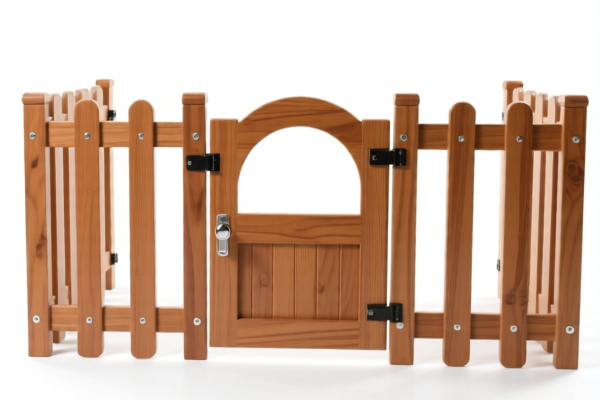
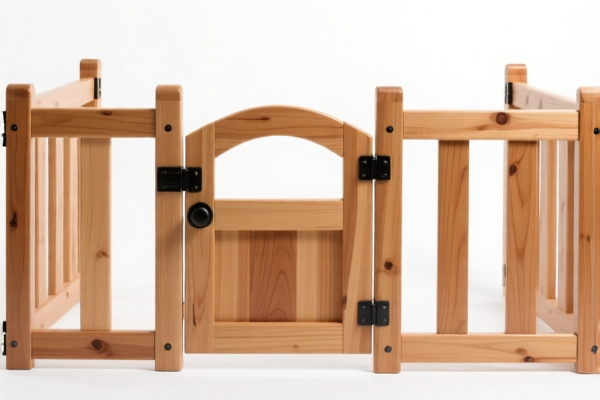
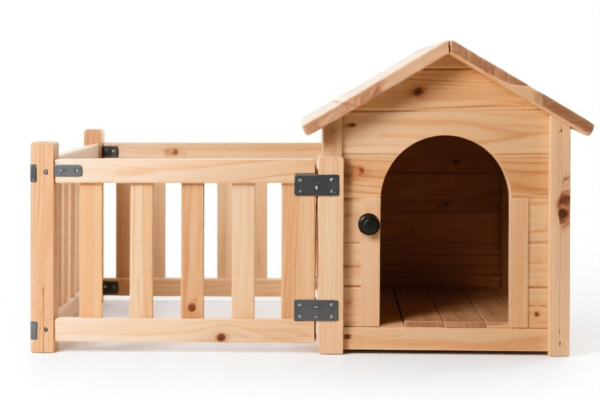
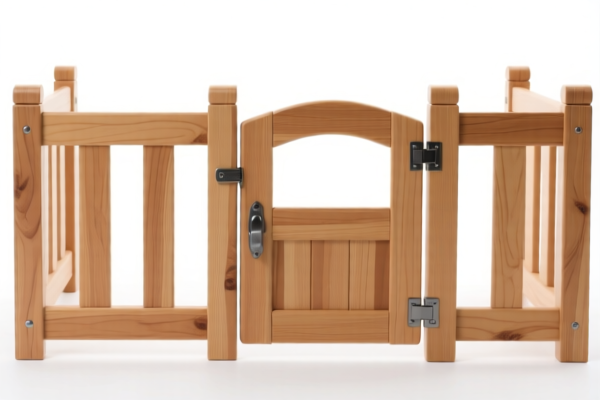
AI Analysis
🐾 Wooden Pet Door (Wooden Pet Gates/Fences)
🌐 HS Code Reference & Customs Clearance Guide | 2026 Latest Tariff Analysis | Professional Entry Strategy
📌 I. Product Definition & Classification: Do You Really Understand "Wooden Pet Doors"?
A Wooden Pet Door (often categorized under pet gates, pet fences, or pet enclosures) is a wooden structure designed to restrict or allow passage for pets within a home. In international trade, its classification depends heavily on its structure, function, and specific design features (e.g., whether it is a standalone panel, a part of a larger furniture piece, or a general wood product).
⚠️ Key Classification Distinction:
- If it is a complete wooden furniture item (like a pet gate/panel with frame): It falls under Chapter 94 (Furniture).
- If it is considered a part/component of other wooden furniture: It falls under Chapter 94 Headings 91/92 (Parts).
- If it is a simple wooden barrier or frame without complex furniture characteristics: It may fall under Chapter 44 (Wood Articles).
📦 II. HS Code Classification Details (2026 Latest Tariff Authority Comparison)
| HS Code | Product Description | Application Scenario | Tax Rate (US Import from CN) | Legal Basis / Tax Detail |
|---|---|---|---|---|
| 9403.60.80.93 | Wooden Pet Door, classified as Other Wooden Furniture | Standalone pet gates, pet enclosures, or decorative wooden pet doors that qualify as "furniture" | 35.0% | Base: 0% + Trade War: 25% + Section 122: 10% |
| 9403.91.00.80 | Wooden Pet Door, classified as Parts of Other Wooden Furniture | Pet door components, frames, or panels sold separately as parts of a larger furniture set | 35.0% | Base: 0% + Trade War: 25% + Section 122: 10% |
| 9403.60.80.10 | Wooden Pet Door, classified as Fences under Other Wooden Furniture | Specific classification for wooden pet fences or barriers categorized under furniture | 10.0% | Base: 0% + Trade War: 0% + Section 122: 10% |
| 4421.99.98.70 | Wooden Pet Door, classified as Other Wood Articles | General wooden pet doors not fitting furniture definitions (e.g., simple wooden barriers) | 38.3% | Base: 3.3% + Trade War: 25% + Section 122: 10% |
| 4414.90.00.00 | Wooden Pet Door, classified as Wooden Frame Structures | Wooden frames for pet doors (e.g., frame-only structures) | 21.4% | Base: 3.9% + Trade War: 7.5% + Section 122: 10% |
🔍 Critical Reminder:
- High-Risk Codes:9403.60.80.93and9403.91.00.80carry a 35% total tax. Misclassification here leads to significant cost increases.
- Optimization Opportunity:9403.60.80.10(Fence Category) has a 10% total tax if your product qualifies as a "fence" under furniture headings.
- General Wood Products: If the product is simple (no furniture attributes),4421.99.98.70applies at 38.3%, which is higher than the furniture fence option.
💰 III. 2026 Latest Tariff Rate Breakdown (Including Surtaxes & Policy Add-ons)
✅ Applicable Country: United States (US)
✅ Origin: China (CN)
✅ Effective Date: Ongoing (including post-November 10, 2025 imports)
🎯 1. 9403.60.80.93 & 9403.91.00.80 —— Other Wooden Furniture / Parts
| Item | Content |
|---|---|
| Base Tariff | 0% (ad valorem) |
| USITC Surtax (Section 301) | +25% |
| Section 122 Tariff | +10% (Specific to certain wood/furniture items) |
| Total Tax Rate | 35.0% |
| Tax Calculation | CIF Value × 35% |
| De Minimis Exemption | ❌ Not Eligible (High tariff prevents de minimis clearance) |
| Legal Path | USITC:9403.60.80.93 → Footnote:301-Sector → Sec122:WoodFurniture |
📌 Explanation:
- These codes are treated as furniture-related items. The 25% Section 301 tax applies broadly to Chinese furniture imports.
- The Section 122 10% tariff is a specific additional duty applied to certain wooden articles.
- Total 35% is a high-cost threshold. Importers must verify if the product can be classified as a "fence" (9403.60.80.10) to save 25 percentage points.
🎯 2. 9403.60.80.10 —— Wooden Pet Fences (Furniture Category)
| Item | Content |
|---|---|
| Base Tariff | 0% |
| USITC Surtax (Section 301) | 0% (Exempt or not applicable under this specific subheading) |
| Section 122 Tariff | +10% |
| Total Tax Rate | 10.0% |
| Tax Calculation | CIF Value × 10% |
| De Minimis Exemption | ❌ Not Eligible (Due to Section 122) |
| Legal Path | USITC:9403.60.80.10 → Footnote:FenceCategory → Sec122:Wood |
📌 Note:
- This is the most cost-effective classification for wooden pet doors/gates if they can be defined as fences.
- Crucial: You must provide evidence that the product is a "fence" (e.g., product images showing barrier function, not decorative furniture).
- Savings: 25% lower than the standard "Other Wooden Furniture" classification.
🎯 3. 4421.99.98.70 —— Other Wood Articles (General)
| Item | Content |
|---|---|
| Base Tariff | 3.3% |
| USITC Surtax (Section 301) | +25% |
| Section 122 Tariff | +10% |
| Total Tax Rate | 38.3% |
| Tax Calculation | CIF Value × 38.3% |
| De Minimis Exemption | ❌ Not Eligible |
| Legal Path | USITC:4421.99.98.70 → Footnote:301-Wood → Sec122:Wood |
📌 Warning:
- This is the highest tax rate among all options.
- Only use this if the product cannot be classified as furniture or parts of furniture.
- Avoid this classification unless necessary, as it adds 3.3% base tax plus full surtaxes.
🎯 4. 4414.90.00.00 —— Wooden Frame Structures
| Item | Content |
|---|---|
| Base Tariff | 3.9% |
| USITC Surtax (Section 301) | +7.5% (Reduced rate for specific wood frames) |
| Section 122 Tariff | +10% |
| Total Tax Rate | 21.4% |
| Tax Calculation | CIF Value × 21.4% |
| De Minimis Exemption | ❌ Not Eligible |
| Legal Path | USITC:4414.90.00.00 → Footnote:WoodFrames → Sec122:Wood |
📌 Opportunity:
- If the pet door is primarily a wooden frame (e.g., a gate frame without side panels), this 21.4% rate is a mid-tier option.
- Cheaper than furniture (35%) but more expensive than fences (10%).
- Requires proof that the item is a "frame structure" rather than a complete furniture piece.
🛠️ IV. Customs Clearance Practical Advice (Real-World Pitfall Guide)
✅ 1. Required Documents Checklist (Non-Negotiable)
| Document | Must Provide | Explanation |
|---|---|---|
| ✅ Product Specifications | ✔️ | Include dimensions, weight, material type (solid wood, MDF, etc.), and assembly instructions. |
| ✅ Product Photos | ✔️ | Clear images showing the entire structure, including hinges, latches, and installation method. |
| ✅ Function Statement | ✔️ | Explicitly state: "Used as a pet barrier/fence," not "Decorative furniture." |
| ✅ Bill of Materials (BOM) | ✔️ | List all components to determine if it's a "part" or "complete item." |
| ✅ Commercial Invoice | ✔️ | Describe as "Wooden Pet Gate/Fence" or "Wooden Pet Door Assembly," avoiding vague terms like "Wooden Part." |
| ✅ Packing List | ✔️ | Show if items are shipped assembled or knocked-down (KD). |
✅ 2. Declaration Tips (Key Rules)
🔥 “Declare Function, Not Just Form! Fence Saves Money!”
| Scenario | Correct Declaration | Incorrect Practice |
|---|---|---|
| Complete Pet Gate/Fence | 9403.60.80.10 (Fence) → 10% |
Misclassify as "Other Furniture" → 35% |
| Pet Door Frame Only | 4414.90.00.00 (Frame) → 21.4% |
Misclassify as "Complete Furniture" → 35% |
| Pet Door Panel/Part | 9403.91.00.80 (Part) → 35% |
No declaration of purpose → Risk of Audit |
| Simple Wooden Barrier | 4421.99.98.70 (Other Wood) → 38.3% |
Avoid unless no other classification fits |
✅ 3. Special Case Handling
| Situation | Handling Advice |
|---|---|
| Knocked-Down (KD) Kits | Declare as "Parts" (9403.91.00.80) if shipped unassembled, but ensure components are clearly identifiable as furniture parts. |
| Customized Sizes | Provide custom order details to prove it's a "fence" rather than standard "furniture." |
| Mixed Materials | If only the frame is wood, but panels are mesh, argue for 4414.90.00.00 (Frame) to get 21.4% instead of 35%. |
| Dual Use (Pet + Human) | If used as a room divider for humans, it may still be classified as furniture (9403.60.80.93). Stick to "Pet" usage in documentation. |
🌍 V. Global Market Comparison (2026 Latest)
| Country/Region | Recommended HS Code | Tariff Rate | Certification Requirements | Notes |
|---|---|---|---|---|
| 🇺🇸 USA | 9403.60.80.10 (Fence) |
10% | FCC (if electronic), Prop 65 (if California) | Best Rate for pet fences. Avoid 4421 (38.3%). |
| 🇨🇳 China | 9403.60.80.10 |
0-5% (Import) | CCC (if applicable) | Low import duty, but high export scrutiny on wood. |
| 🇪🇺 EU | 9403.60.80 |
0-5% (Most FTA) | CE, REACH, FSC (Wood Sustainability) | No Section 122 equivalent. Focus on sustainability certs. |
| 🇬🇧 UK | 9403.60.80 |
0-5% | UKCA, REACH | Post-Brexit rules similar to EU. |
| 🇦🇺 Australia | 9403.60.80 |
0-5% | AQIS (Wood Treatment) | Require ISPM 15 for wooden packaging. |
📌 Conclusion:
- USA is the most challenging market due to Section 301 and Section 122 tariffs.
- Optimization is critical: Classifying as a "Fence" (9403.60.80.10) saves 25% compared to "Other Furniture."
- EU/UK/AU are more favorable, with lower base rates and no punitive surtaxes.
📌 VI. Common Mistakes & Pitfalls (Lessons Learned)
❌ Mistake 1: Declaring a Pet Gate as "Decorative Wooden Furniture"
👉 Result: 35% tariff instead of 10%.
👉 Fix: Emphasize "Pet Barrier/Fence" function in description.
❌ Mistake 2: Declaring a Complete Pet Door as "Wooden Frame" (4414.90.00.00)
👉 Result: 21.4% tariff (acceptable) vs. 35% (furniture).
👉 Fix: If it has panels/latches, it's more than just a frame. Use 9403.60.80.10 if possible.
❌ Mistake 3: Ignoring Section 122
👉 Result: Missing the 10% additional duty calculation.
👉 Fix: All wood/furniture imports from China face this 10% add-on.
❌ Mistake 4: Using "Wooden Door" (Generic)
👉 Result: Customs may assign 4421.99.98.70 (38.3%) as a default.
👉 Fix: Use specific terms: "Wooden Pet Gate," "Pet Enclosure," "Pet Fence."
✅ Correct Practice:
"Wooden Pet Gate, 36" x 24", Solid Wood, Hinged, for Indoor Pet Containment, Model PG-101, FSC Certified"
🎯 VII. Conclusion: Professional Classification, Cost Savings!
🎯 Remember the Mantra:
🔹 "Fence = 10%, Furniture = 35%, Frame = 21.4%, Other Wood = 38.3%!"
🔹 "Define Function, Not Just Material!"
📌 Pro Tip:
If your wooden pet door has electronic features (e.g., automatic locking, sensors), it may be classified under Chapter 85 (Electrical Machinery) instead of Chapter 94. This changes the tariff structure entirely.
Recommendation: Apply for a Binding Tariff Information (BTI) or Advance Ruling from US Customs if the product is complex.
📣 Take Action Now:
📞 Consult a licensed customs broker + Provide product photos + Clarify "Pet Fence" function
🚀 Ensure smooth clearance, minimize tariffs, and maximize profits!
✨ Professional Clearance Starts with Accurate Classification!
💼 Every percentage point counts in cross-border trade!
Customer Reviews
About HS Code Classification
The Harmonized System (HS) is an internationally standardized nomenclature developed by the World Customs Organization (WCO) to classify traded products. Over 200 countries use the HS system as the basis for customs tariffs, trade statistics, and import/export regulations.
Each HS code follows a hierarchical structure:
- Chapter (2 digits) — Broad category of goods (e.g., Chapter 84: Machinery and Mechanical Appliances)
- Heading (4 digits) — More specific grouping within the chapter
- Subheading (6 digits) — Internationally standardized breakdown, used by all WCO member countries
- National subdivisions (8-10 digits) — Country-specific extensions for further classification, such as US HTSUS 10-digit codes
Correct HS code classification is essential for smooth customs clearance, accurate duty payment, and compliance with trade regulations. Misclassification can lead to customs delays, overpayment of duties, or penalties.
When importing from CN to US, the applicable tariff rates may include:
- Most-Favored-Nation (MFN) rate — The standard duty rate applied to WTO members
- General rate — Applied to countries without trade agreements
- Trade remedy duties — Additional tariffs such as Section 301 (anti-dumping), Section 232 (national security), or countervailing duties
The information provided on this page is for reference purposes only. For official classification, please consult with your local customs authority or a licensed customs broker.