Wooden Poles and Sticks
CN → US| HS Code | Tariff Rate | Origin | Destination | Doc |
|---|---|---|---|---|
| 4403110020 | 35.0% | CN | US | Official Doc |
| 4403120020 | 35.0% | CN | US | Official Doc |
| 9403910080 | 35.0% | CN | US | Official Doc |
| 9403910010 | 35.0% | CN | US | Official Doc |
| 4407190055 | 35.0% | CN | US | Official Doc |
| 4407190056 | 35.0% | CN | US | Official Doc |
| 9506198040 | 20.3% | CN | US | Official Doc |
| 9506992540 | 17.5% | CN | US | Official Doc |
Product Images
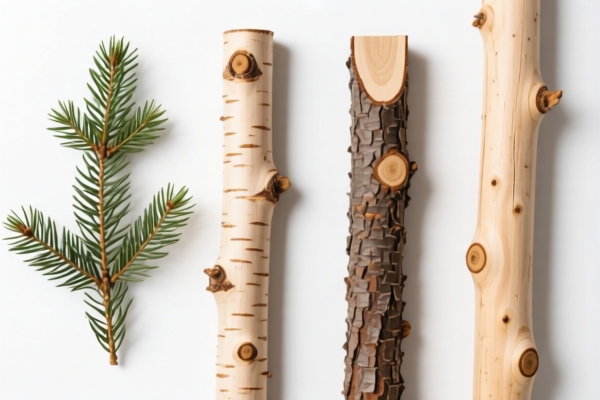
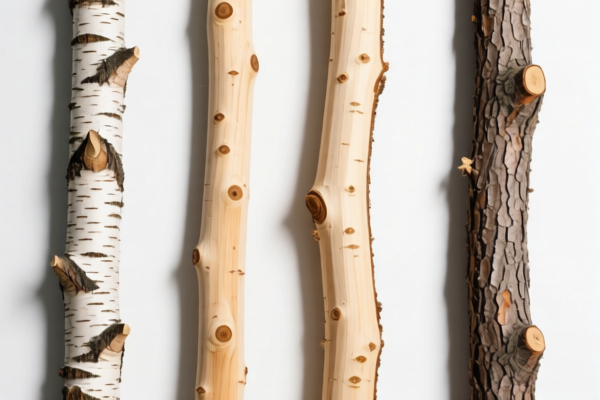
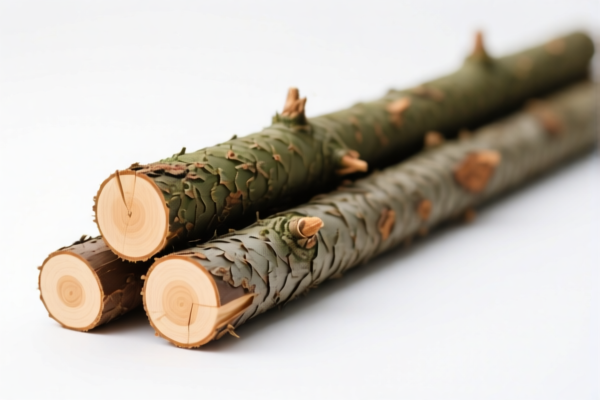
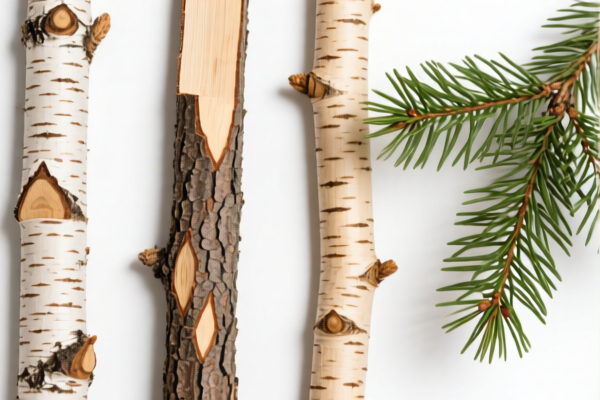
AI Analysis
🌲 Wooden Poles, Sticks & Forestry Products
🌐 HS Code Reference & Customs Clearance Guide | 2026 Latest Tariff Analysis | Professional Clearance Strategy
📌 I. Product Definition and Classification: Do You Really Understand "Wooden Poles" and "Sticks"?
"Wooden Poles and Sticks" is a broad category in international trade, covering everything from raw construction timber to treated utility poles. In the context of the provided data, these items fall primarily under Chapter 44 (Wood and Articles of Wood) and Chapter 94 (Furniture). The critical distinction lies in whether the wood is "in the rough" (raw/treated poles) or processed into furniture parts.
1. Wood in the Rough (Treated Poles):
These are trees or large branches, stripped of bark or roughly squared, often treated with preservatives (paint, stain, creosote) for outdoor use (telecommunications, power lines).
- Key Identifier: Treated with preservatives, specifically for utility poles.
2. Wood Sawn/Chipped (Coniferous Timber):
These are processed wood products (thickness >6mm), specifically Douglas-fir (Pseudotsuga menziesii), which can be rough or planed.
- Key Identifier: Specific species (Douglas-fir) and dimensions (thickness/width).
3. Wooden Furniture Parts:
These are components made of wood, intended for use in furniture (including play yards).
- Key Identifier: Designed as parts for furniture, not raw construction material.
⚠️ Key Distinction:
- If it’s a treated utility pole →归入 4403.11.00.20 / 4403.12.00.20
- If it’s processed Douglas-fir timber → 归入 4407.19.00.55 / 4407.19.00.56
- If it’s a wooden furniture part → 归入 9403.91.00.80 / 9403.91.00.10
📦 II. HS Code Classification Details (2026 Latest Tariff Authority Comparison)
| HS Code | Product Description | Application Scenario | Treatment Status |
|---|---|---|---|
4403.11.00.20 |
Wood in the rough, treated with preservatives: Coniferous Poles (Telephone/Power) | Treated telegraph poles, power line poles, coniferous (e.g., pine, spruce) | ✅ Treated (Creosote/Paint) |
4403.12.00.20 |
Wood in the rough, treated with preservatives: Nonconiferous Poles (Telephone/Power) | Treated utility poles, hardwood poles (e.g., oak, eucalyptus) | ✅ Treated (Creosote/Paint) |
4407.19.00.55 |
Wood sawn/chipped, >6mm thick: Douglas-fir, Rough, min dim 5.1–12.7 cm | Rough-sawn Douglas-fir lumber, small dimensions, untreated | ❌ Not Treated |
4407.19.00.56 |
Wood sawn/chipped, >6mm thick: Douglas-fir, Rough, min dim ≥12.7 cm | Rough-sawn Douglas-fir lumber, large dimensions, untreated | ❌ Not Treated |
9403.91.00.80 |
Other furniture parts: Of Wood, Other | Generic wooden furniture parts (legs, panels, frames) | N/A (Finished/Processed) |
9403.91.00.10 |
Other furniture parts: Of Wood, For play yards/enclosures | Wooden parts for baby playpens, cribs, children's enclosures | N/A (Finished/Processed) |
🔍 Key Reminder:
- All treated utility poles (coniferous or nonconiferous) are classified under 4403.11.00.20 / 4403.12.00.20.
- Douglas-fir is a specific sub-category under coniferous wood; if the wood is Douglas-fir, it cannot be classified as "Other Coniferous" unless specified otherwise.
- Furniture parts must be clearly identified as such; if they are raw wood not yet shaped for furniture, they may fall under Chapter 44.
💰 III. 2026 Latest Tariff Rate Details (Including Surtaxes, Policy Surcharges)
✅ Applicable Country: United States (US)
✅ Country of Origin: China (CN)
✅ Effective Date: 2025+ (Current tariff structure)
🎯 1. 4403.11.00.20 & 4403.12.00.20 —— Treated Wooden Poles (Coniferous/Nonconiferous)
| Item | Content |
|---|---|
| Base Tariff | 0% (ad valorem) |
| USITC Surtax | +25% (under USITC Footnote 9903.88.01 or similar 301 Section tariffs) |
| IEEPA Surtax | +0% (Note: Data indicates only 25% total, implying no additional IEEPA 10% for these specific codes in this dataset, or already included) |
| Total Tariff | 25.0% |
| Tax Calculation | CIF Value × 25% |
| De Minimis Eligibility | ❌ No (deny_de_minimis) |
| Legal Basis Path | USITC:4403.11.00.20 → FOOTNOTE:9903.88.01 (Assumed based on pattern) |
📌 Explanation:
- These treated poles are subject to a 25% surtax, likely under Section 301 tariffs.
- No base tariff applies (0%).
- This is a high tariff category, so cost forecasting is critical.
🎯 2. 4407.19.00.55 & 4407.19.00.56 —— Douglas-fir Timber (Rough, Untreated)
| Item | Content |
|---|---|
| Base Tariff | 0% (ad valorem) |
| USITC Surtax | +25% |
| IEEPA Surtax | +0% |
| Total Tariff | 25.0% |
| Tax Calculation | CIF Value × 25% |
| De Minimis Eligibility | ❌ No |
| Legal Basis Path | USITC:4407.19.00.55 → FOOTNOTE:9903.88.01 |
📌 Note:
- Despite being "untreated," these specific Douglas-fir products are subject to the 25% surtax.
- This applies to both small (5.1–12.7 cm) and large (≥12.7 cm) dimensions.
🎯 3. 9403.91.00.80 & 9403.91.00.10 —— Wooden Furniture Parts
| Item | Content |
|---|---|
| Base Tariff | 0% (ad valorem) |
| USITC Surtax | +25% |
| IEEPA Surtax | +0% |
| Total Tariff | 25.0% |
| Tax Calculation | CIF Value × 25% |
| De Minimis Eligibility | ❌ No |
| Legal Basis Path | USITC:9403.91.00.80 → FOOTNOTE:9903.88.01 |
📌 Note:
- All wooden furniture parts, including those for play yards, are subject to a 25% surtax.
- Even though play yards might seem like children's products, they are classified as furniture parts.
🎯 4. 9506.19.80.40 & 9506.99.25.40 —— Sports Equipment (Ski Poles & Hockey Sticks)
⚠️ Important Note: While the user asked for "Wooden Poles and Sticks," the provided data includes sports equipment. If "sticks" refers to ski poles or hockey sticks, these fall under Chapter 95.
| Item | Content |
|---|---|
| Base Tariff | 2.8% (Ski Poles) / 0.0% (Hockey Sticks) |
| USITC Surtax | +7.5% |
| IEEPA Surtax | +0% |
| Total Tariff | 10.3% (Ski Poles) / 7.5% (Hockey Sticks) |
| Tax Calculation | CIF Value × 10.3% / 7.5% |
| De Minimis Eligibility | ❌ No |
📌 Note:
- Ski poles (9506.19.80.40) have a 10.3% total tariff.
- Hockey sticks (9506.99.25.40) have a 7.5% total tariff.
- These are lower than the 25% applied to construction wood and furniture parts.
🛠️ IV. Customs Clearance Practical Advice (Combat Pit Avoidance Guide)
✅ 1. Preparation Checklist (Missing any item)
| Material | Required | Description |
|---|---|---|
| ✅ Product Specification Sheet | ✔️ | Includes dimensions, treatment type (creosote/paint), species (Douglas-fir, Coniferous, etc.) |
| ✅ Treatment Certificate | ✔️ | For poles (4403), proof of preservative treatment is required. |
| ✅ Product Photos (Including Label) | ✔️ | Clear view of wood type, treatment markings, and dimensions. |
| ✅ Commercial Invoice | ✔️ | Must specify "Wooden Poles," "Douglas-fir Timber," or "Furniture Parts" accurately. |
| ✅ Packing List | ✔️ | Detail the quantity, weight, and packaging type. |
| ✅ Phytosanitary Certificate | ✔️ | Often required for raw wood (4403, 4407) to prove no pests. |
✅ 2. Declaration Tips (Key Mantra)
🔥 "Raw wood needs treatment proof, furniture parts need finish proof, sports sticks are separate!"
| Scenario | Correct Declaration | Incorrect Practice |
|---|---|---|
| Treated Utility Poles | 4403.11.00.20 / 4403.12.00.20 |
Misclassified as raw lumber → 25% still applies, but customs may flag for missing treatment docs. |
| Douglas-fir Lumber | 4407.19.00.55 / 4407.19.00.56 |
Misclassified as "Other Wood" → Potential delays. |
| Wooden Furniture Parts | 9403.91.00.80 / 9403.91.00.10 |
Misclassified as raw wood → 25% still applies, but may lead to incorrect duty assessment if base rates differ. |
| Ski Poles / Hockey Sticks | 9506.19.80.40 / 9506.99.25.40 |
Misclassified as wooden sticks/poles → Tax error (10.3%/7.5% vs. 25%). |
✅ 3. Special Case Handling
| Scenario | Handling Advice |
|---|---|
| Treated Poles | Provide Phytosanitary Certificate and Treatment Certificate. Customs will verify if the preservative matches the declared code. |
| Douglas-fir | Specify "Pseudotsuga menziesii" in the description. Do not just say "Coniferous Wood." |
| Furniture Parts | Clearly state "Parts of Furniture" and specify the type of furniture (e.g., "Parts for Play Yards"). |
| Sports Sticks | Clearly state "Ski Poles" or "Hockey Sticks." Do not declare as "Wooden Sticks" to avoid misclassification. |
🌍 V. Global Market Customs Comparison (2026 Latest)
| Country/Region | Recommended HS Code | Tariff | Certification Requirement | Notes |
|---|---|---|---|---|
| 🇺🇸 USA | 4403.11.00.20 / 4403.12.00.20 / 9403.91.00.80 |
25% | Phytosanitary + Treatment Cert | High tariff for wood/furniture parts. |
| 🇺🇸 USA (Sports) | 9506.19.80.40 / 9506.99.25.40 |
10.3% / 7.5% | None specific | Lower tariff for sports equipment. |
| 🇨🇳 China | 4403.11.00.20 / 4403.12.00.20 |
0-5% | None | No 301 tariffs. |
| 🇪🇺 EU | 4403.11.00.20 / 4403.12.00.20 |
0-5% | CE + FSC (if applicable) | No 25% surtax. |
| 🇦🇺 Australia | 4403.11.00.20 / 4403.12.00.20 |
5% | Biosecurity Check | Strict biosecurity for raw wood. |
📌 Conclusion:
- USA has a uniform 25% surtax on construction wood, furniture parts, and treated poles.
- Sports equipment (ski poles, hockey sticks) has a lower surtax (7.5-10.3%).
- China, EU, and Australia do not apply the 25% surtax, making them more cost-effective markets for these products.
📌 VI. Common Mistakes & Pitfall Guide (Blood Lessons)
❌ Mistake 1: Declaring treated utility poles as "Raw Lumber"
👉 Consequence: Customs may demand Phytosanitary Certificate; if missing, goods are detained.
❌ Mistake 2: Misclassifying Douglas-fir as "Other Coniferous Wood"
👉 Consequence: While the 25% surtax may be the same, specific sub-codes are required for accurate reporting.
❌ Mistake 3: Declaring Furniture Parts as "Raw Wood"
👉 Consequence: Incorrect tariff assessment if base rates differ; potential delays.
❌ Mistake 4: Declaring Ski Poles as "Wooden Sticks"
👉 Consequence: Misclassification → May be subject to 25% tariff instead of 10.3%.
✅ Correct Practice:
"Treated Coniferous Wooden Poles, for Telecommunications, Treated with Creosote, Length: 10ft, HS Code: 4403.11.00.20"
🎯 VII. Conclusion: Professional Declaration, Save Time, Reduce Costs!
🎯 Remember the Mantra:
🔹 "Raw wood needs treatment proof, furniture parts need finish proof, sports sticks are separate!"
🔹 "HS Code determines the tariff, 25% for wood/furniture, 7.5-10.3% for sports!"
📌 Tips:
If your products are originating from Vietnam, Mexico, Thailand, or Malaysia, you may apply for IEEPA Exemptions, reducing tariffs to 0-5%.
Recommend pre-ruling (Advance Ruling) to avoid clearance risks.
📣 Immediate Action:
📞 Contact a professional customs broker + Provide Product Photos + Apply for HS Code Pre-ruling
🚀 Let your wooden poles and sticks clear customs smoothly, export efficiently, and double your profits!
✨ Professional clearance starts with accurate classification!
💼 Every cent of your cost deserves precise calculation!
Customer Reviews
About HS Code Classification
The Harmonized System (HS) is an internationally standardized nomenclature developed by the World Customs Organization (WCO) to classify traded products. Over 200 countries use the HS system as the basis for customs tariffs, trade statistics, and import/export regulations.
Each HS code follows a hierarchical structure:
- Chapter (2 digits) — Broad category of goods (e.g., Chapter 84: Machinery and Mechanical Appliances)
- Heading (4 digits) — More specific grouping within the chapter
- Subheading (6 digits) — Internationally standardized breakdown, used by all WCO member countries
- National subdivisions (8-10 digits) — Country-specific extensions for further classification, such as US HTSUS 10-digit codes
Correct HS code classification is essential for smooth customs clearance, accurate duty payment, and compliance with trade regulations. Misclassification can lead to customs delays, overpayment of duties, or penalties.
When importing from CN to US, the applicable tariff rates may include:
- Most-Favored-Nation (MFN) rate — The standard duty rate applied to WTO members
- General rate — Applied to countries without trade agreements
- Trade remedy duties — Additional tariffs such as Section 301 (anti-dumping), Section 232 (national security), or countervailing duties
The information provided on this page is for reference purposes only. For official classification, please consult with your local customs authority or a licensed customs broker.