Wooden Profile (HS 4409225020)
CN → US| HS Code | Tariff Rate | Origin | Destination | Doc |
|---|---|---|---|---|
| 4418999195 | 38.2% | CN | US | Official Doc |
| 4409225090 | 35.0% | CN | US | Official Doc |
| 4409226000 | 35.0% | CN | US | Official Doc |
| 4409226500 | 39.9% | CN | US | Official Doc |
| 4409106500 | 39.9% | CN | US | Official Doc |
Product Images
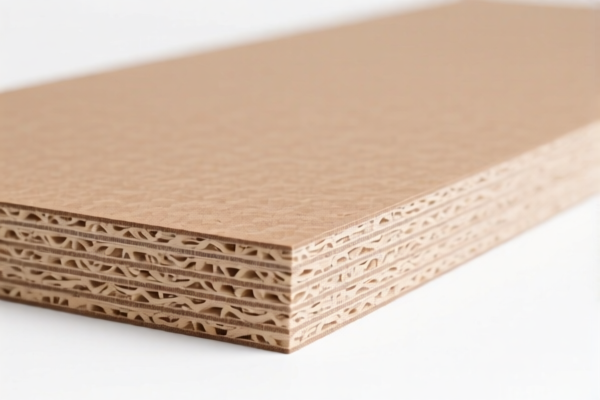
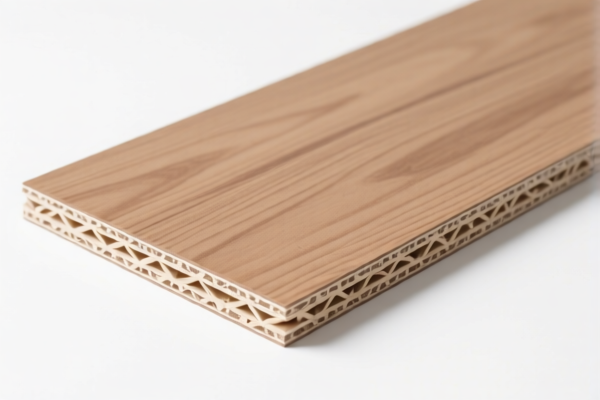
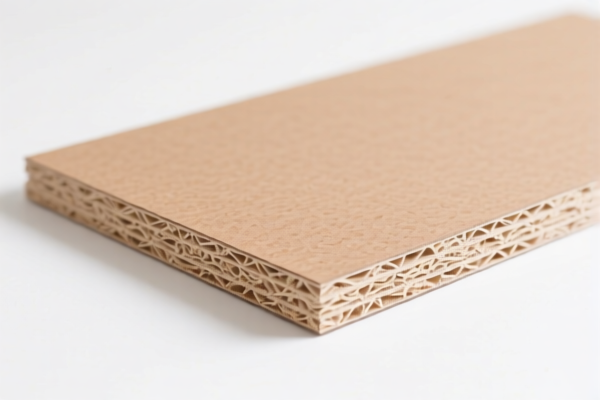
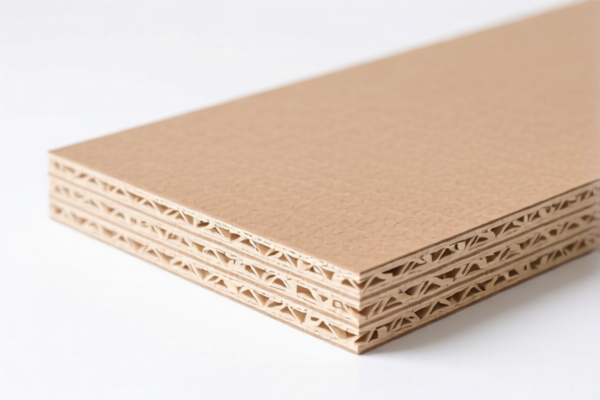
AI Analysis
🪵 Wooden Profile (HS Code: 4409.22.50.90)
🌐 HS Code Reference & Customs Clearance Guide | 2026 Latest Tariff Analysis | Professional Level Clearance Strategy
📌 I. Product Definition and Classification: Do You Really Understand "Wooden Profiles"?
Wooden Profiles refer to wooden materials that have been shaped or processed along their edges or surfaces (e.g., tongued, grooved, chamfered, rounded, V-jointed, center-routed, bead-edged, scalloped, beaded, or similarly shaped). In international trade, these are generally classified under Chapter 44, specifically heading 4409 (Wood continuously shaped along any of its edges, faces or surfaces, whether or not planed, sanded or end-jointed).
⚠️ Key Distinction Points:
- If the wood is Tropical Hardwood (Non-Coniferous) and continuously shaped → Classify under 4409.22 series.
- If the wood is Coniferous (Softwood) → Classify under 4409.10 series.
- If the item is simply cut to length without continuous shaping along edges/surfaces → It may fall under 4418.99 (Other builders' carpentry) or 4407 (Sawn wood), depending on specific features.
- "Profile" implies a specific cross-sectional shape created by machining, not just a raw board.
📦 II. HS Code Classification Details (Based on Provided Data)
The provided data identifies five (5) potential HS Codes for "Wooden Profile," primarily focusing on Tropical Hardwoods (Non-Coniferous) with varying degrees of processing specificity.
| HS Code | Product Description & Match Logic | Total Tax Rate | Tax Breakdown |
|---|---|---|---|
| 4409.22.50.90 | Matched Successfully. • 'Wooden' → Tropical Wood (Non-Coniferous) • 'Profile' → Wood molded/shaped. • Fits "Tropical wood, continuously shaped, not otherwise specified." |
35.0% | Base: 0.0% Add-on (Sec 301): 25.0% 122 Clause: 10% |
| 4409.22.60.00 | Matched Successfully. • 'Wooden' → Non-Coniferous/Tropical Wood • 'Profile' → Continuously shaped along edges/surfaces. • Fits definition of shaped tropical wood profiles. |
35.0% | Base: 0.0% Add-on (Sec 301): 25.0% 122 Clause: 10% |
| 4409.22.65.00 | Matched Successfully. • 'Wooden' → Tropical Wood • 'Profile' → Processed wood profile (Rods/Bars category). • Fits processed tropical wood rods/bars features. |
39.9% | Base: 4.9% Add-on (Sec 301): 25.0% 122 Clause: 10% |
| 4409.10.65.00 | Matched Successfully. • 'Wooden Profile' → Continuously shaped. • Note: This code is for Coniferous (Softwood) wood bars/profiles. • Matches if material is Pine/Fir/etc., not Tropical Hardwood. |
39.9% | Base: 4.9% Add-on (Sec 301): 25.0% 122 Clause: 10% |
| 4418.99.91.95 | Matched by Logic: • Material: Wood • Form: Profile (Builder's carpentry component) • Category: Other builders' wooden products (not specifically shaped under 4409). • Used if it doesn't meet the "continuously shaped" criteria of 4409. |
38.2% | Base: 3.2% Add-on (Sec 301): 25.0% 122 Clause: 10% |
🔍 Key Observation:
- HS 4409.22.50.90 and 4409.22.60.00 are the most likely candidates for general Tropical Wood Profiles with a 35% total rate.
- HS 4409.22.65.00 is for specific rod/bar profiles, incurring a higher base duty (4.9%), totaling 39.9%.
- HS 4409.10.65.00 applies only if the wood is Softwood (e.g., Pine), resulting in 39.9%.
- HS 4418.99.91.95 is a fallback for "Other" wooden builders' items, totaling 38.2%.
💰 III. 2026 Latest Tariff Rate Details (Including Surcharges)
✅ Applicable Country: USA (US)
✅ Origin: China (CN)
✅ Effective Date: Post-November 10, 2025 (Including subsequent imports)
🎯 1. 4409.22.50.90 & 4409.22.60.00 —— Tropical Wood Profiles (General)
| Item | Details |
|---|---|
| Base Duty Rate | 0.0% (Ad Valorem) |
| USITC Section 301 Surcharge | +25% (Under USITC Footnote 9903.88.01) |
| IEEPA Additional Duty | +10% (China/Hong Kong origin, effective Nov 10, 2025) |
| 122 Clause Tariff | +10% (Specific trade restriction clause) |
| Total Effective Rate | 35.0% |
| Calculation | CIF Value × 35.0% |
| De Minimis Eligibility | ❌ Not Eligible (deny_de_minimis applies to China-origin goods under these clauses) |
| Legal Pathway | IEEPA:9903.01.25 → USITC:4409.22 → FOOTNOTE:9903.88.01 → 122 Clause |
📌 Explanation:
- The 25% is the standard Section 301 tariff on Chinese wooden articles.
- The 10% IEEPA and 10% 122 Clause are additional penalties/restrictions on Chinese goods.
- Total 35% is significant for low-margin wooden products.
🎯 2. 4409.22.65.00 —— Tropical Wood Rods/Bars (Processed)
| Item | Details |
|---|---|
| Base Duty Rate | 4.9% |
| USITC Section 301 Surcharge | +25% |
| IEEPA Additional Duty | +10% |
| 122 Clause Tariff | +10% |
| Total Effective Rate | 39.9% |
| Calculation | CIF Value × 39.9% |
| De Minimis Eligibility | ❌ Not Eligible |
📌 Note:
- The higher base rate (4.9%) makes this code more expensive than the general profile codes (0% base).
- Only use if the product is specifically classified as round rods or bars under 4409.22.65.
🎯 3. 4409.10.65.00 —— Coniferous (Softwood) Wood Bars
| Item | Details |
|---|---|
| Base Duty Rate | 4.9% |
| USITC Section 301 Surcharge | +25% |
| IEEPA Additional Duty | +10% |
| 122 Clause Tariff | +10% |
| Total Effective Rate | 39.9% |
| Calculation | CIF Value × 39.9% |
📌 Critical Check:
- If your "Wooden Profile" is made of Pine, Spruce, or Fir (Softwood), this is the correct code.
- If it is Teak, Mahogany, or Oak (Hardwood/Tropical), DO NOT use this code; use 4409.22 codes instead.
🎯 4. 4418.99.91.95 —— Other Builders' Wooden Products
| Item | Details |
|---|---|
| Base Duty Rate | 3.2% |
| USITC Section 301 Surcharge | +25% |
| IEEPA Additional Duty | +10% |
| 122 Clause Tariff | +10% |
| Total Effective Rate | 38.2% |
| Calculation | CIF Value × 38.2% |
📌 When to Use:
- Use this only if the profile is not considered "continuously shaped" under 4409, but is instead a generic builders' component (e.g., simple moldings that don't meet the strict definition of 4409).
🛠️ IV. Customs Clearance Practical Advice (Battle-Tested Pitfall Guide)
✅ 1. Required Documentation Checklist (Non-Negotiable)
| Document | Must Provide? | Explanation |
|---|---|---|
| ✅ Product Specification Sheet | ✔️ | Must clearly state: Wood Species (Tropical vs. Coniferous), Dimensions, Profile Shape (Tongue & Groove, Round, etc.). |
| ✅ Material Certificate (COO) | ✔️ | Crucial to prove origin (China) and wood species (Tropical vs. Softwood). Mislabeling wood type leads to major classification errors. |
| ✅ Photos of Product & Cross-Section | ✔️ | Must show the "Profile" shape to justify HS 4409. Without a visible cross-section, CBP may classify it as raw lumber (4407) or other (4418). |
| ✅ Commercial Invoice | ✔️ | Explicitly describe as "Wooden Profile, Tropical Hardwood, Continuously Shaped." Avoid vague terms like "Wooden Part." |
| ✅ Packing List | ✔️ | Detail net/gross weight. Wood is heavy; accurate weight affects duty calculation. |
| ✅ Fumigation Phytosanitary Certificate | ✔️ | Mandatory for all wood products entering the US. Without it, goods will be refused entry or destroyed. |
✅ 2. Declaration Tips (Key Mantra)
🔥 “Shape Determines 4409, Species Determines 4409.10 vs 4409.22, Invoice Defines!”
| Scenario | Correct Declaration | Wrong Action |
|---|---|---|
| Tropical Wood (e.g., Teak) with Tongue/Groove | HS 4409.22.50.90 or 4409.22.60.00 | Report as "Wooden Board" → Higher scrutiny |
| Softwood (e.g., Pine) Bar | HS 4409.10.65.00 | Report as "Tropical Wood" → Classification Error |
| Simple Cut-to-Length Wood (No Edge Shaping) | HS 4418.99.91.95 or 4407 | Report as "Profile" → Risk of penalty for over-shaping claim |
| Wooden Profile + Fumigation Stamp Visible | Include Photo & Cert | Forget Phytosanitary Cert → Refusal of Entry |
✅ 3. Special Situation Handling
| Situation | Handling Advice |
|---|---|
| Mixed Wood Types | If a batch contains both Tropical and Softwood profiles, must split declarations or use the higher-risk code. Mixing causes CBP audit flags. |
| OEM Custom Profiles | Provide client design drawings showing the cross-section to prove "continuously shaped" status for HS 4409. |
| Wood Treatment | If chemically treated, ensure the invoice states "Treated Wood" and check if it affects chemical regulations (EPA/TSCA). |
| Wood Species Ambiguity | If unsure if wood is Tropical or Coniferous, consider applying for an Advance Ruling from CBP. Misclassification between 4409.10 and 4409.22 is common. |
🌍 V. Global Market Clearance Comparison (2026 Latest)
| Country/Region | Recommended HS Code | Duty Rate (China Origin) | Certification | Notes |
|---|---|---|---|---|
| 🇺🇸 USA | 4409.22.50.90 / 4409.10.65.00 |
35% - 39.9% | Fumigation Cert | High tariffs due to 301 + 122 + IEEPA |
| 🇨🇳 China | 4409.22 / 4409.10 |
5% - 8% | N/A | Low import duty, but check environmental taxes |
| 🇪🇺 EU | 4409.22 / 4409.10 |
0% - 6% | EUTR Compliance | Strict deforestation regulations (EUTR) |
| 🇬🇧 UK | 4409.22 / 4409.10 |
0% - 6% | UK EUTR | Post-Brexit, UK-specific phytosanitary rules |
| 🇦🇺 Australia | 4409.22 / 4409.10 |
5% - 10% | IPPC Mark | Strict biosecurity checks |
📌 Conclusion:
- USA is the most costly market due to multiple layered tariffs (Base + 301 + IEEPA + 122).
- EU/UK have low base duties but strict environmental compliance (Deforestation Regulation).
- Asia/Australia focus on Phytosanitary/Fumigation.
📌 VI. Common Mistakes & Pitfall Guide (Lessons Learned)
❌ Mistake 1: Labeling as "Wooden Plank" instead of "Profile"
👉 Consequence: CBP may reclassify to 4407 (Sawn Wood) or 4418 (Builders' Wood), leading to different duty rates and potential penalties for misdescription.
❌ Mistake 2: Ignoring Wood Species (Tropical vs. Softwood)
👉 Consequence: Misclassification between 4409.10 and 4409.22. While both have high total rates, the base duty differs (0% vs 4.9%), affecting valuation audits.
❌ Mistake 3: Missing Fumigation Certificate
👉 Consequence: Goods detained or destroyed by USDA APHIS. No exceptions.
❌ Mistake 4: Using "De Minimis" for Wooden Profiles
👉 Consequence: Denied. Wood products from China are explicitly excluded from de minimis exemptions under current trade acts.
✅ Correct Approach:
"Tropical Hardwood Wooden Profile, Tongue & Groove, 24mm x 12mm, Fumigated, Origin: China, HS 4409.22.50.90"
🎯 VII. Conclusion: Precise Classification Saves Money!
🎯 Remember the Mantra:
🔹 "Shape = 4409, Species = 4409.10/22, Fumigation = Mandatory, 35%+ Duty = Reality!"
🔹 "Mislabel Wood Type = Audit Risk, Missing Cert = Destroyed Goods!"
📌 Pro Tip:
If your wooden profiles are wood species-specific (e.g., Teak, Mahogany) and you are unsure about the exact subheading, apply for a CBP Advance Ruling before shipment. This can prevent costly reclassifications and delays at US ports.
📣 Immediate Action Required:
📞 Confirm Wood Species with Supplier + Ensure Fumigation Certificate + Calculate 35% Duty Impact
🚀 Clear Customs Smoothly, Avoid Delays, Protect Margins!
✨ Professional Customs Clearance Starts with Precise Classification!
💼 Every Percent of Duty Counts in Wood Trade!
Customer Reviews
About HS Code Classification
The Harmonized System (HS) is an internationally standardized nomenclature developed by the World Customs Organization (WCO) to classify traded products. Over 200 countries use the HS system as the basis for customs tariffs, trade statistics, and import/export regulations.
Each HS code follows a hierarchical structure:
- Chapter (2 digits) — Broad category of goods (e.g., Chapter 84: Machinery and Mechanical Appliances)
- Heading (4 digits) — More specific grouping within the chapter
- Subheading (6 digits) — Internationally standardized breakdown, used by all WCO member countries
- National subdivisions (8-10 digits) — Country-specific extensions for further classification, such as US HTSUS 10-digit codes
Correct HS code classification is essential for smooth customs clearance, accurate duty payment, and compliance with trade regulations. Misclassification can lead to customs delays, overpayment of duties, or penalties.
When importing from CN to US, the applicable tariff rates may include:
- Most-Favored-Nation (MFN) rate — The standard duty rate applied to WTO members
- General rate — Applied to countries without trade agreements
- Trade remedy duties — Additional tariffs such as Section 301 (anti-dumping), Section 232 (national security), or countervailing duties
The information provided on this page is for reference purposes only. For official classification, please consult with your local customs authority or a licensed customs broker.