Wooden Profile (HS 4409290655)
CN → US| HS Code | Tariff Rate | Origin | Destination | Doc |
|---|---|---|---|---|
| 4418999195 | 38.2% | CN | US | Official Doc |
| 4409225090 | 35.0% | CN | US | Official Doc |
| 4409106000 | 35.0% | CN | US | Official Doc |
| 4409106500 | 39.9% | CN | US | Official Doc |
| 4409290655 | 38.2% | CN | US | Official Doc |
Product Images


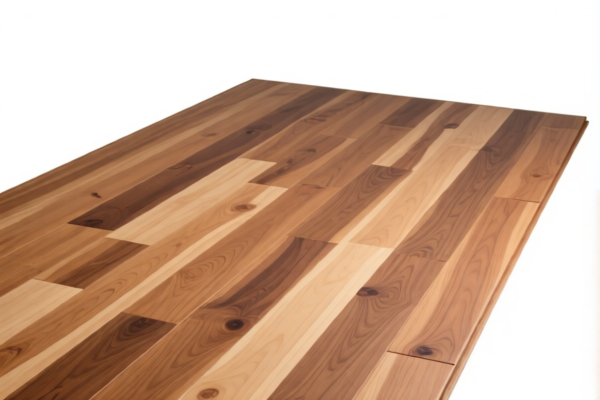
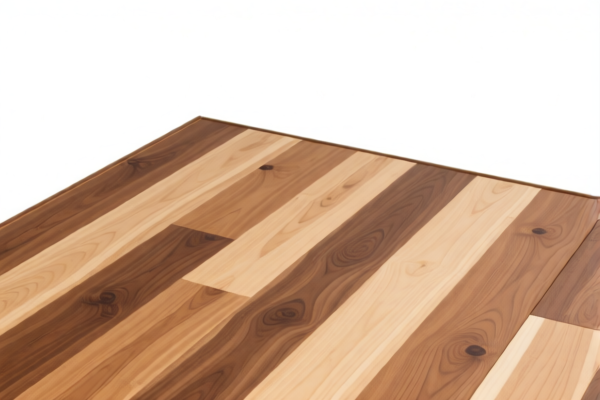
AI Analysis
🪵 Wooden Profile (HS 4409.29.06.55)
🌐 HS Code Reference & Customs Clearance Guide | 2026 Latest Tariff Analysis | Professional Entry Strategy
📌 1. Product Definition: What is a "Wooden Profile"?
"Wooden Profile" generally refers to timber that has been shaped, molded, grooved, tongued, or otherwise worked along its length. It is not just raw lumber but semi-finished construction materials used for flooring, wall paneling, window frames, or decorative trim.
In the context of US Customs and Border Protection (CBP) classifications, the key distinction lies in: * Species: Is it Tropical Hardwood or Coniferous (Softwood)? * Processing: Has it been mechanically worked (molded/grooved) beyond simple sawing? * Specific Subheading: Does it fit a specific "other" category or a general "moulded" category?
⚠️ Key Distinction:
- Raw Sawed Timber → Often falls under different chapters (e.g., 4407).
- Worked/Molded Timber → Falls under Chapter 4409.
- General Construction Wood → If not specifically molded, it may fall under 4418.
📦 2. HS Code Classification Breakdown (Based on Provided Data)
According to the provided data, the import of "Wooden Profile" can be classified into four potential HS codes depending on the specific wood species and processing details. Here is the detailed analysis:
| HS Code | Summary & Matching Logic | Total Tax Rate |
|---|---|---|
| 4418.99.91.95 | General Construction Wood: Matches "Wooden" material and "Profile" shape under construction wood products. It is considered "Other construction wood products" not specified in other categories. | 38.2% |
| 4409.22.50.90 | Tropical Hardwood Molded: Matches "Wooden" as Tropical Hardwood and "Profile" as Molded Timber. Fits the category for "Other tropical wood" that has been molded. | 35.0% |
| 4409.10.60.00 | Coniferous (Softwood) Rods: Matches material (Wooden) and form (Profile/Rod). Infers "Coniferous wood" type. Fits the logic for coniferous wood rods/profiles. | 35.0% |
| 4409.10.65.00 | Coniferous Molded Timber: Matches "Wooden Profile" with "grooved or otherwise worked" characteristics. Specifically fits coniferous wood rods/profiles that have undergone further processing. | 39.9% |
🔍 Critical Note on Data Provided:
The provided data explicitly links these four HS codes to "Wooden Profile." The selection depends entirely on:
1. Species Identification: Is it Tropical (4409.22) or Coniferous (4409.10)?
2. Processing Detail: Is it just shaped (4409.22/4409.10) or general construction use (4418)?
3. Specific Sub-category: Does it fit the "rod" or "other worked" descriptors in 4409.10?
💰 3. 2026 Tariff Rate Breakdown (Detailed Tax Clauses)
✅ Applicable Country: United States (US)
✅ Origin: China (CN) (Implied by "122 Clause" and "Section 301" references in data)
✅ Effective Date: Current trade policies apply
🎯 1. 4418.99.91.95 — Other Construction Wood Products
- Base Tariff: 3.2%
- Section 301 Additional Tariff: 25.0%
- Section 122 Tariff: 10.0%
- Total Tax Rate: 38.2%
- Calculation: CIF Value × 38.2%
- De Minimis Exemption: ❌ Not Eligible (Section 301 and 122 tariffs generally do not apply to de minimis, meaning shipments under $800 will likely face duties or be held for processing).
- Legal Basis Path:
USITC:4418.99.91.95→SECTION_301:9903.88.01→SECTION_122
📌 Explanation:
- Section 301 (25%): Applied to many Chinese wood products due to trade tensions.
- Section 122 (10%): Often applies to specific industrial or construction inputs.
- High Risk: This code attracts both major additional tariffs, making it the second most expensive option in the list.
🎯 2. 4409.22.50.90 — Molded Tropical Hardwood
- Base Tariff: 0.0%
- Section 301 Additional Tariff: 25.0%
- Section 122 Tariff: 10.0%
- Total Tax Rate: 35.0%
- Calculation: CIF Value × 35.0%
- De Minimis Exemption: ❌ Not Eligible
- Legal Basis Path:
USITC:4409.22.50.90→SECTION_301:9903.88.01→SECTION_122
📌 Explanation:
- Base Tariff 0%: Tropical hardwoods often have lower base rates.
- Heavy Surcharges: Despite 0% base, the 35% total is still significant due to Section 301 and 122.
- Species Critical: You must prove the wood is "Tropical Hardwood" (e.g., Teak, Mahogany, Ipe) to use this code. If it's softwood, this code is invalid.
🎯 3. 4409.10.60.00 — Coniferous Wood Profiles (Rods)
- Base Tariff: 0.0%
- Section 301 Additional Tariff: 25.0%
- Section 122 Tariff: 10.0%
- Total Tax Rate: 35.0%
- Calculation: CIF Value × 35.0%
- De Minimis Exemption: ❌ Not Eligible
- Legal Basis Path:
USITC:4409.10.60.00→SECTION_301:9903.88.01→SECTION_122
📌 Explanation:
- Base Tariff 0%: Coniferous woods often benefit from lower base rates.
- Shape Specific: "Profile" here is interpreted as "rod" or simple shaped timber.
- Species Critical: Must be Coniferous (e.g., Pine, Spruce, Fir). Using this for Tropical Hardwood is a misclassification risk.
🎯 4. 4409.10.65.00 — Molded/Worked Coniferous Wood
- Base Tariff: 4.9%
- Section 301 Additional Tariff: 25.0%
- Section 122 Tariff: 10.0%
- Total Tax Rate: 39.9%
- Calculation: CIF Value × 39.9%
- De Minimis Exemption: ❌ Not Eligible
- Legal Basis Path:
USITC:4409.10.65.00→SECTION_301:9903.88.01→SECTION_122
📌 Explanation:
- Highest Tax Rate: This is the most expensive code at 39.9%.
- Worked Timber: The higher base tariff (4.9%) reflects more complex processing (grooving, tongue-and-groove, detailed molding).
- Use Case: Ideal for finished trim, detailed window profiles, or heavily worked coniferous parts.
🛠️ 4. Customs Clearance Practical Advice (Avoid Pitfalls)
✅ 1. Document Checklist (Mandatory)
| Document | Required | Purpose |
|---|---|---|
| ✅ Commercial Invoice | ✔️ | Must state "Wooden Profile," value, and weight. |
| ✅ Packing List | ✔️ | Detail dimensions, quantity, and packaging type. |
| ✅ Product Specification | ✔️ | Crucial for HS classification: Wood Species (Coniferous vs. Tropical) and Processing Level (Sawed vs. Molded). |
| ✅ Plant Quarantine Certificate | ✔️ | Required by USDA APHIS for all wood products. |
| ✅ Fumigation Certificate | ✔️ | Proof of ISPM 15 compliance (if pallets/containers are wood). |
| ✅ Photos of Goods | ✔️ | Show cross-sections to verify species and molding details. |
📌 Critical: The CBP officer will ask for the wood species. If you claim "Tropical" but it's "Coniferous," you face penalties for misclassification.
✅ 2. Classification Strategy (Key Decision Tree)
| Condition | Recommended HS Code | Tax Rate |
|---|---|---|
| General Construction Use (Not specifically molded/rod) |
4418.99.91.95 |
38.2% |
| Tropical Hardwood + Molded | 4409.22.50.90 |
35.0% |
| Coniferous (Softwood) + Simple Shape/Rod | 4409.10.60.00 |
35.0% |
| Coniferous (Softwood) + Complex Molding/Grooving | 4409.10.65.00 |
39.9% |
🔥 Pro Tip:
- If your product is pine flooring strips (tongue-and-groove), use4409.10.65.00(39.9%) or4409.10.60.00(35.0%) depending on how "molded" it is.
- If your product is generic wooden beams used in construction,4418.99.91.95(38.2%) is safer.
- Do not mix species in one shipment. Classify by species.
✅ 3. Special Handling Tips
| Scenario | Action |
|---|---|
| De Minimis ($800) | ❌ Not Safe. Section 301 and 122 tariffs apply. Small shipments will be delayed and assessed duties. |
| Mixed Wood Types | ❌ Do Not Mix. Declare each species separately. Mixing leads to audits and fines. |
| Wooden Pallets | ✅ Ensure ISPM 15 stamp is visible. Non-compliant wood packaging causes detention. |
| Treated Wood | ✅ Provide treatment certificates if wood is chemically treated (e.g., for outdoor use). |
🌍 5. Global Market Comparison (2026)
| Market | Typical HS Code | Base Tariff | Additional Tariffs (China) | Total Cost |
|---|---|---|---|---|
| 🇺🇸 USA | 4409.10.65.00 / 4418.99 | 0–4.9% | 35% (301+122) | 35–40% |
| 🇨🇳 China | 4409.10.65.00 | 0–5% | None | ~0–5% |
| 🇪🇺 EU | 4409.10.65.00 | 0–4% | None (if sustainable) | ~0–4% |
| 🇬🇧 UK | 4409.10.65.00 | 0–4% | None | ~0–4% |
📌 Conclusion:
- The US market is the most expensive for Chinese wooden profiles due to Section 301 and 122 tariffs.
- EU/UK are more competitive if sustainability documentation (FSC/PEFC) is provided.
- Consider supply chain diversification (e.g., sourcing from Canada or EU) if targeting the US to avoid high tariffs.
📌 6. Common Mistakes & Pitfalls (Learn from Errors)
❌ Mistake 1: Declaring "Wooden Profile" without specifying species.
👉 Consequence: CBP may reclassify to the highest duty code or issue a Warning Letter.
❌ Mistake 2: Using De Minimis ($800) for wooden profiles.
👉 Consequence: Shipment held, duties assessed retroactively, storage fees incurred.
❌ Mistake 3: Ignoring Section 122 in tax calculations.
👉 Consequence: Underpayment by 10% → Penalties and interest.
✅ Correct Approach:
"Coniferous Wood Profile, Pine, Tongue-and-Groove, 27mm x 95mm, FSC Certified, Fumigated, ISPM 15 Compliant"
🎯 7. Conclusion: Strategic Clearance for Wooden Profiles
🎯 Remember:
🔹 "Species First, Processing Second, Tariff Last!"
🔹 "Section 301 + 122 = 35%+ Duty. Plan your costs accordingly!"
🔹 "De Minimis is a Trap for Wood. Declare Properly!"
📌 Pro Tip:
If your wooden profiles are not from China (e.g., sourced from Canada, Russia, or EU), you avoid the 35% additional tariffs.
- Canadian Wood: Often qualifies for USMCA (0% tariff).
- EU Wood: 0% tariff (unless anti-dumping measures apply).
✅ Action Item:
📞 Verify wood species with your supplier.
📄 Request Fumigation & ISPM 15 certificates.
🧮 Calculate total landed cost including 35%+ duties for US imports.
✨ Professional Customs Clearance Starts with Accurate Classification!
💼 Every Percent of Duty Matters. Get it Right, Ship with Confidence.
Customer Reviews
About HS Code Classification
The Harmonized System (HS) is an internationally standardized nomenclature developed by the World Customs Organization (WCO) to classify traded products. Over 200 countries use the HS system as the basis for customs tariffs, trade statistics, and import/export regulations.
Each HS code follows a hierarchical structure:
- Chapter (2 digits) — Broad category of goods (e.g., Chapter 84: Machinery and Mechanical Appliances)
- Heading (4 digits) — More specific grouping within the chapter
- Subheading (6 digits) — Internationally standardized breakdown, used by all WCO member countries
- National subdivisions (8-10 digits) — Country-specific extensions for further classification, such as US HTSUS 10-digit codes
Correct HS code classification is essential for smooth customs clearance, accurate duty payment, and compliance with trade regulations. Misclassification can lead to customs delays, overpayment of duties, or penalties.
When importing from CN to US, the applicable tariff rates may include:
- Most-Favored-Nation (MFN) rate — The standard duty rate applied to WTO members
- General rate — Applied to countries without trade agreements
- Trade remedy duties — Additional tariffs such as Section 301 (anti-dumping), Section 232 (national security), or countervailing duties
The information provided on this page is for reference purposes only. For official classification, please consult with your local customs authority or a licensed customs broker.