Wooden Profile (HS Code 4409296100)
CN → US| HS Code | Tariff Rate | Origin | Destination | Doc |
|---|---|---|---|---|
| 4409226500 | 39.9% | CN | US | Official Doc |
| 4409226000 | 35.0% | CN | US | Official Doc |
| 4418999195 | 38.2% | CN | US | Official Doc |
| 4409225090 | 35.0% | CN | US | Official Doc |
| 4409106000 | 35.0% | CN | US | Official Doc |
Product Images
AI Analysis
🪵 Wooden Profile (HS Code 4409.29.61.00 & Alternatives)
🌐 HS Code Reference & Customs Clearance Guide | 2026 Latest Tariff Analysis | Professional-Level Strategy
📌 I. Product Definition & Classification: Do You Really Understand "Wooden Profiles"?
Wooden profiles are processed wood products shaped along their edges or surfaces to facilitate assembly or aesthetic purposes. In international trade, they are primarily categorized by wood species (Coniferous vs. Non-Coniferous/Tropical) and processing method.
The user provided HS Code 4409.29.61.00, but the provided <DATA> suggests five alternative HS codes with different tax implications. Below is an analysis of why the input code might be referenced, followed by a detailed breakdown of the specific HS codes found in the data.
⚠️ Key Distinction Point:
- If the wood is Non-Coniferous (Hardwood/Tropical) and processed into rounded logs/bars (not just simple planed edges), it may fall under different subheadings than standard planed profiles.
- Coniferous (Softwood) profiles generally have lower base tariffs but are subject to the same additional taxes if originating from China.
📦 II. HS Code Classification Details (Based on Provided Data)
The following HS codes and descriptions are derived strictly from the provided <DATA> content. Note that 4409.29.61.00 is not explicitly listed in the JSON data, but the data includes closely related codes for Non-Coniferous wood profiles.
| HS Code | Product Description (Summary from Data) | Application Scenario | Wood Type |
|---|---|---|---|
4409.22.65.00 |
Wood material, shaped into processed wood profiles. Matches characteristics of non-coniferous/tropical wood round bar processing. | Tropical hardwood rounds, decorative rods, specialized structural shapes | Non-Coniferous (Tropical) |
4409.22.60.00 |
Wood material, shaped into profiles continuously formed along edges or surfaces. Matches non-coniferous/tropical wood classification. | Standard planed/dressed tropical wood boards, molding, trim | Non-Coniferous (Tropical) |
4418.99.91.95 |
Wood material, shaped into profiles. Belongs to building wood products, fits other building wood products classification logic. | General construction timber, specialized architectural wood elements | Non-Coniferous (General) |
4409.22.50.90 |
Material is tropical wood, shape is wood molded. Fits non-specific species tropical wood molding classification. | Molded tropical wood components, decorative moldings, carved wood parts | Tropical Wood |
4409.10.60.00 |
Material is wood, shape is wood round bar or shaped wood. Belongs to coniferous wood classification. | Softwood (pine/spruce) rounds, beams, standard construction softwood profiles | Coniferous (Softwood) |
🔍 Important Note:
- The input HS4409.29.61.00typically refers to non-coniferous wood planed/matched wood. The data provided (4409.22...) is consistent with this, as4409.22is the subheading for non-coniferous wood. - If your product is Softwood (Pine, Fir, Spruce), you should look at4409.10.60.00instead of the4409.22codes listed above.
💰 III. 2026 Latest Tariff Rate Breakdown (Including Surcharges)
✅ Applicable Country: United States (US)
✅ Origin: China (CN)
✅ Effective Time: Post-2025 (Including subsequent imports)
All tariffs below include the standard Base Tariff + Section 301 Additional Tariff + IEEPA Surcharge.
🎯 1. 4409.22.65.00 —— Non-Coniferous Wood Profiles (Round Bars)
| Item | Content |
|---|---|
| Base Tariff | 4.9% |
| Section 301 Additional Tariff | +25.0% |
| IEEPA Surcharge (122 Clause) | +10.0% |
| Total Tax Rate | 39.9% |
| Tax Calculation | CIF Value × 39.9% |
| De Minimis Eligibility | ❌ No (High tax burden prevents small parcel exemption) |
| Legal Basis Path | Base Tariff → USITC:4409.22.65.00 → Footnote 301:25% → IEEPA:10% |
📌 Explanation:
- This code applies to tropical hardwoods shaped into round bars or specific processed forms.
- The total tariff of 39.9% is high. Ensure the product is strictly tropical hardwood and not mistakenly declared as softwood.
🎯 2. 4409.22.60.00 —— Non-Coniferous Wood Profiles (Edge/Surface Shaped)
| Item | Content |
|---|---|
| Base Tariff | 0.0% |
| Section 301 Additional Tariff | +25.0% |
| IEEPA Surcharge (122 Clause) | +10.0% |
| Total Tax Rate | 35.0% |
| Tax Calculation | CIF Value × 35.0% |
| De Minimis Eligibility | ❌ No |
| Legal Basis Path | Base Tariff → USITC:4409.22.60.00 → Footnote 301:25% → IEEPA:10% |
📌 Explanation:
- This is the most common code for standard planed or matched tropical wood profiles (e.g., tongue-and-groove boards, decorative moldings).
- 35.0% is the baseline for most standard non-coniferous wooden profiles.
🎯 3. 4418.99.91.95 —— Other Building Wood Products
| Item | Content |
|---|---|
| Base Tariff | 3.2% |
| Section 301 Additional Tariff | +25.0% |
| IEEPA Surcharge (122 Clause) | +10.0% |
| Total Tax Rate | 38.2% |
| Tax Calculation | CIF Value × 38.2% |
| De Minimis Eligibility | ❌ No |
| Legal Basis Path | Base Tariff → USITC:4418.99.91.95 → Footnote 301:25% → IEEPA:10% |
📌 Explanation:
- Used for building wood products that do not fit strictly into planed profile categories (Chapter 44) but are still wood-based construction materials.
- Use this only if the product is more "structural" or "architectural" rather than a simple processed timber profile.
🎯 4. 4409.22.50.90 —— Tropical Wood Moldings
| Item | Content |
|---|---|
| Base Tariff | 0.0% |
| Section 301 Additional Tariff | +25.0% |
| IEEPA Surcharge (122 Clause) | +10.0% |
| Total Tax Rate | 35.0% |
| Tax Calculation | CIF Value × 35.0% |
| De Minimis Eligibility | ❌ No |
| Legal Basis Path | Base Tariff → USITC:4409.22.50.90 → Footnote 301:25% → IEEPA:10% |
📌 Explanation:
- Specifically for molded tropical wood items (e.g., curved moldings, carved decorative pieces).
- Same rate as standard planed profiles (35.0%).
🎯 5. 4409.10.60.00 —— Coniferous (Softwood) Wood Profiles
| Item | Content |
|---|---|
| Base Tariff | 0.0% |
| Section 301 Additional Tariff | +25.0% |
| IEEPA Surcharge (122 Clause) | +10.0% |
| Total Tax Rate | 35.0% |
| Tax Calculation | CIF Value × 35.0% |
| De Minimis Eligibility | ❌ No |
| Legal Basis Path | Base Tariff → USITC:4409.10.60.00 → Footnote 301:25% → IEEPA:10% |
📌 Explanation:
- CRITICAL: If your "Wooden Profile" is made of Pine, Spruce, or Fir (Softwood/Coniferous), use this code.
- Despite a different base tariff description in some contexts, the total effective rate is also 35.0% due to the heavy surcharges.
🛠️ IV. Customs Clearance Practical Advice (Battle-Tested Pitfall Guide)
✅ 1. Document Checklist (Non-Negotiable)
| Document | Required? | Explanation |
|---|---|---|
| ✅ Product Specification Sheet | ✔️ | Must specify Wood Species (e.g., Oak, Pine, Teak). Incorrect species = Wrong HS Code. |
| ✅ Processing Description | ✔️ | Clearly state: "Planed," "Molded," "Round Bar," or "Tongue-and-Groove." |
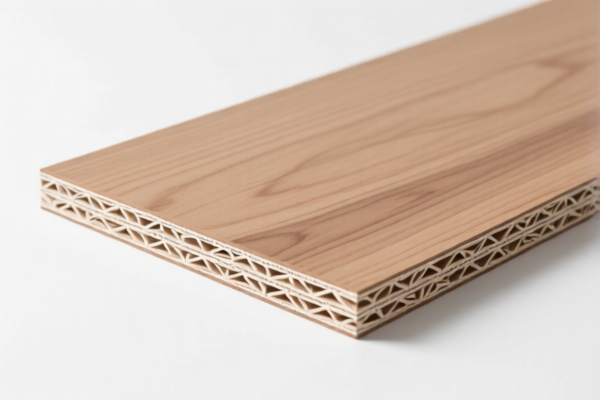
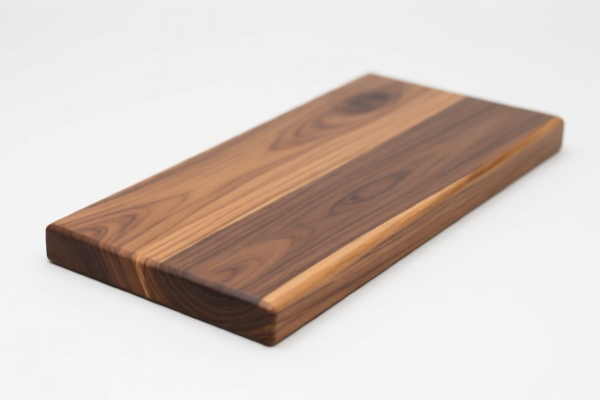
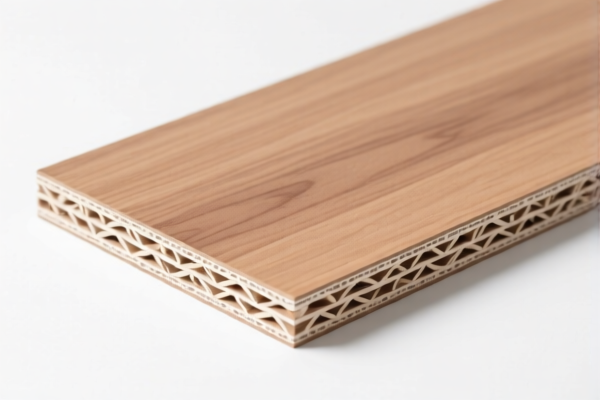
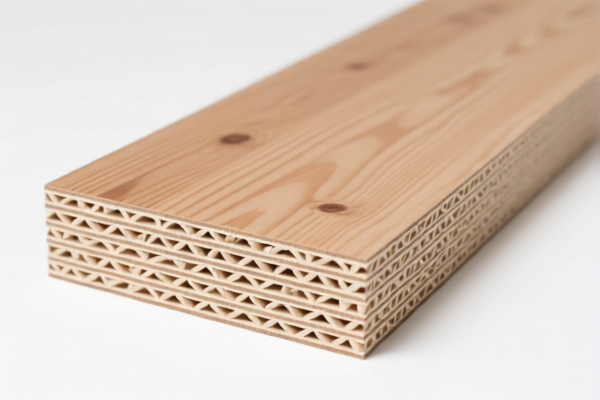
| ✅ Photos (Labeled) | ✔️ | Show cross-section to prove shape (Round vs. Rectangular vs. Molded). |
| ✅ Commercial Invoice | ✔️ | Must include: "Wooden Profile, [Species], [Dimensions], Made in China." |
| ✅ ISF (Importer Security Filing) | ✔️ | Must be filed 24 hours before loading. |
| ✅ Phytosanitary Certificate | ⚠️ Check | Depending on wood treatment, may be required to prove pest-free status. |
✅ 2. Declaration Tips (Key Mantra)
🔥 "Species First, Shape Second, Origin Clear, Tax Accurate!"
| Situation | Correct Declaration | Incorrect Action |
|---|---|---|
| Softwood (Pine) | Use 4409.10.60.00 |
Misdeclare as 4409.22 (Hardwood) → Risk of audit/fine |
| Tropical Hardwood (Planed) | Use 4409.22.60.00 |
Misdeclare as 4418 (Building Product) → May trigger additional scrutiny |
| Molded/Carved Wood | Use 4409.22.50.90 |
Declare as simple "Board" → Under-declaration risk |
| Mixed Shipments | Separate lines in Invoice | Combine Softwood and Hardwood on one line → Classification error |
✅ 3. Special Cases Handling
| Case | Handling Suggestion |
|---|---|
| Wood Treatment | If heat-treated (HT), mention "HT Mark" in description. If chemically treated, disclose to avoid quarantine issues. |
| Custom Sizes | Even if non-standard, if it is a "profile" (shaped along length), it still falls under Chapter 44.09. |
| Packaging | Ensure wooden packaging itself is compliant with ISPM 15 to avoid separate penalties for packaging materials. |
| Valuation | Declare Transaction Value accurately. Under-invoicing leads to seizure or heavy fines. |
🌍 V. Global Market Comparison (2026 Latest)
| Country/Region | Recommended HS Code (Example) | Tariff (China Origin) | Notes |
|---|---|---|---|
| 🇺🇸 USA | 4409.22.60.00 |
35.0% | Includes 25% Sec 301 + 10% IEEPA. High barrier. |
| 🇨🇳 China | 4409.22.60.00 |
Low/0% | Import duty may be low, but check consumption tax. |
| 🇪🇺 EU | 4409.22.60.00 |
Varies (0-5%) | Check EUTR (EU Timber Regulation) for legality proof. |
| 🇬🇧 UK | 4409.22.60.00 |
Varies | Similar to EU post-Brexit. Check FLEGT licenses. |
| 🇯🇵 Japan | 4409.22.60.00 |
Varies (0-3%) | Usually low, no major surcharges like US. |
📌 Conclusion:
- The USA is the most expensive market for wooden profiles due to the layered tariffs.
- Documentation of wood species is critical to avoid misclassification penalties.
📌 VI. Common Mistakes & Pitfalls (Lessons Learned)
❌ Mistake 1: Declaring all wood products as 4409.10 (Softwood)
👉 Consequence: If customs tests the wood and finds it is Oak or Teak (Hardwood), they will reclassify to 4409.22, potentially adjusting duties and causing delays.
❌ Mistake 2: Ignoring the "122 Clause" 10% Surcharge
👉 Consequence: Underestimating landed cost by 10%, leading to margin erosion.
❌ Mistake 3: Failing to specify "Processed Profile" vs. "Raw Timber"
👉 Consequence: Raw timber (4407) has different rules. Profiles (4409) imply edge/surface treatment. Mislabeling causes customs confusion.
✅ Correct Practice:
"Wooden Profile, Oak, Planed, 20mm x 50mm, Heat Treated, HS Code 4409.22.60.00, Made in China"
🎯 VII. Conclusion: Professional Declaration, Save Time, Reduce Costs!
🎯 Remember the Mantra:
🔹 "Species Determines HS, Shape Determines Subheading, Surcharge is Fixed, Declaration Must be Precise!"
🔹 "Hardwood vs. Softwood: Don't Mix, Or Pay the Price!"
📌 Pro Tip:
If your wooden profiles are sourced from Vietnam, Thailand, or Malaysia, they may be exempt from US Section 301 tariffs. Ensure your Certificate of Origin clearly states the non-China origin to claim reduced duty rates (0-5% instead of 35-40%).
📣 Immediate Action:
📞 Consult with a licensed customs broker before shipping.
📸 Provide clear cross-section photos of the wood to verify the HS code.
🚀 Ensure your commercial invoice matches the physical product exactly to avoid delays at US ports.
✨ Professional Customs Clearance Starts with Accurate Classification!
💼 Every Percentage Point of Tax Matters in International Trade!
Customer Reviews
About HS Code Classification
The Harmonized System (HS) is an internationally standardized nomenclature developed by the World Customs Organization (WCO) to classify traded products. Over 200 countries use the HS system as the basis for customs tariffs, trade statistics, and import/export regulations.
Each HS code follows a hierarchical structure:
- Chapter (2 digits) — Broad category of goods (e.g., Chapter 84: Machinery and Mechanical Appliances)
- Heading (4 digits) — More specific grouping within the chapter
- Subheading (6 digits) — Internationally standardized breakdown, used by all WCO member countries
- National subdivisions (8-10 digits) — Country-specific extensions for further classification, such as US HTSUS 10-digit codes
Correct HS code classification is essential for smooth customs clearance, accurate duty payment, and compliance with trade regulations. Misclassification can lead to customs delays, overpayment of duties, or penalties.
When importing from CN to US, the applicable tariff rates may include:
- Most-Favored-Nation (MFN) rate — The standard duty rate applied to WTO members
- General rate — Applied to countries without trade agreements
- Trade remedy duties — Additional tariffs such as Section 301 (anti-dumping), Section 232 (national security), or countervailing duties
The information provided on this page is for reference purposes only. For official classification, please consult with your local customs authority or a licensed customs broker.