Wooden Rods and Sticks
CN → US| HS Code | Tariff Rate | Origin | Destination | Doc |
|---|---|---|---|---|
| 4404200090 | 35.0% | CN | US | Official Doc |
| 4421916000 | 22.6% | CN | US | Official Doc |
| 4421915000 | 10.0% | CN | US | Official Doc |
| 4404100090 | 35.0% | CN | US | Official Doc |
Product Images
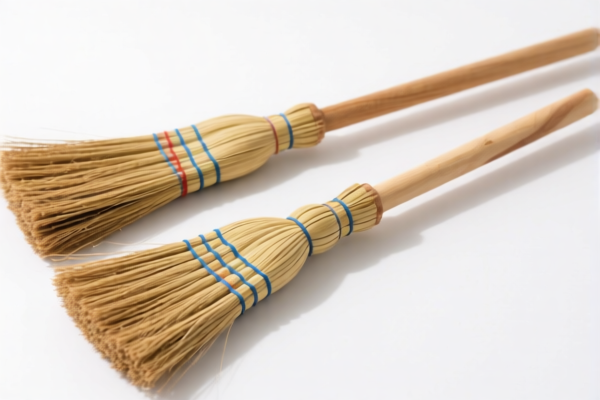
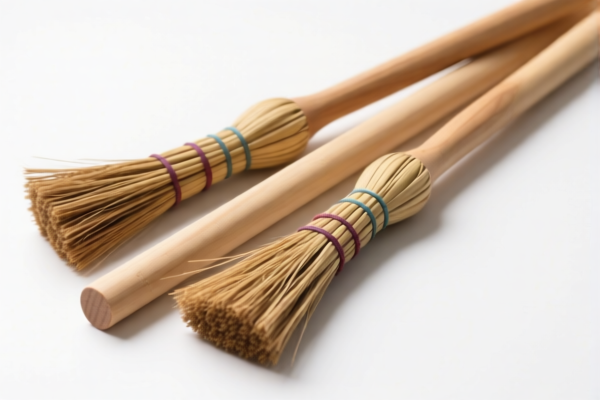
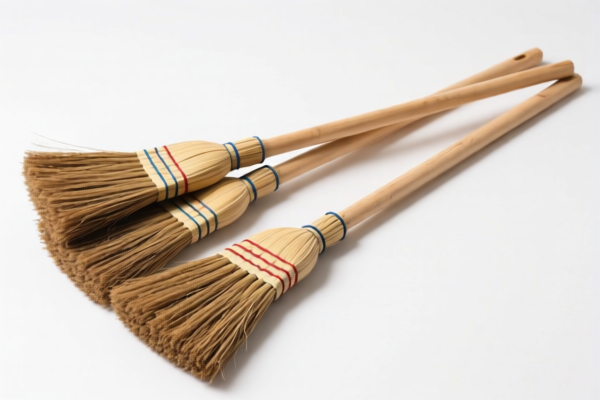
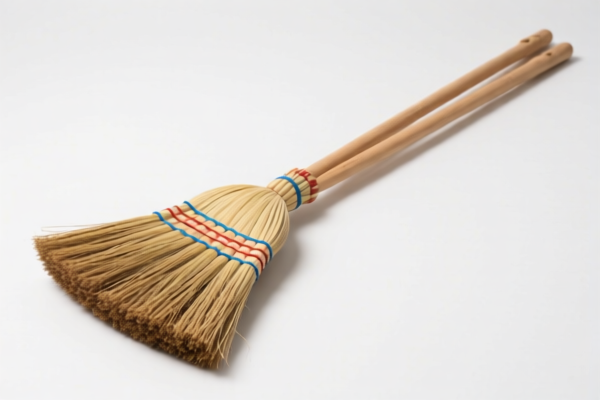
AI Analysis
🪵 Wooden Rods and Sticks (Popsicle Sticks, Stirrers & Rods)
🌐 HS Code Reference & Customs Clearance Guide | 2026 Latest Tariff Analysis | Professional Clearance Strategy
📌 Part I: Product Definition & Classification: Do You Really Know "Wooden Rods"?
Wooden rods, sticks, and small wooden articles are ubiquitous in food processing, household items, and industrial applications. In international trade, they are strictly categorized based on wood type (Coniferous vs. Non-Coniferous) and specific use/form.
Key Distinctions: * Popsicle Sticks/Stirring Sticks: Small, thin wooden pieces, often processed for specific consumer uses (food grade). * Wooden Rods (Coniferous): Typically longer, thicker, made from pine/spruce/fir. * Wooden Rods (Non-Coniferous): Made from hardwoods like oak, beech, or bamboo. * Small Wooden Articles: Miscellaneous small wooden items that don't fit the "rod" definition.
⚠️ Critical Classification Point:
- If it is a small stick for food/consumer use (like popsicle sticks), it often falls under 4421.91.
- If it is a general-purpose wooden rod (construction, craft, industrial), it falls under 4404.
- Coniferous (Softwood) vs. Non-Coniferous (Hardwood/Bamboo) determines the specific HS Code and significantly impacts the tariff rate.
📦 Part II: HS Code Classification Details (2026 Latest Tariff Authority Comparison)
Based on the provided data, here are the precise classifications for wooden rods and sticks:
| HS Code | Product Description | Scenario | Wood Type / Feature | Total Tax Rate |
|---|---|---|---|---|
4404.10.00.90 |
Coniferous Wooden Rods (Other) | General softwood rods (pine, spruce, etc.) | Coniferous (Softwood) | 35.0% |
4404.20.00.90 |
Non-Coniferous Wooden Rods | General hardwood rods (oak, beech, etc.) | Non-Coniferous (Hardwood) | 35.0% |
4421.91.50.00 |
Small Wooden Articles (e.g., Popsicle Sticks, Stirring Sticks) | Food-grade sticks, craft sticks | Specific small articles | 10.0% |
4421.91.60.00 |
Small Wooden/Bamboo Articles (Other Stick-like Products) | Other small stick-like items (e.g., chopsticks, toothpicks, decorative sticks) | Small articles (non-food specific or other) | 22.6% |
🔍 Key Reminder:
- Popsicle Sticks & Stirring Sticks enjoy a significantly lower tariff (10%) compared to general wooden rods (35%). Properly labeling and describing these as "food-grade sticks" is crucial to avoid overpaying taxes.
- General Wooden Rods (whether softwood or hardwood) are taxed heavily at 35%. Do not try to misdeclare them as "small articles" unless they truly fit the dimensions and use cases of popsicle sticks or similar small items.
- Other Small Stick-like Products (like chopsticks or decorative sticks) fall into the 22.6% bracket.
💰 Part III: 2026 Latest Tariff Rate Breakdown (Including Additional Taxes & Policy Surcharges)
✅ Applicable Country: United States (US)
✅ Origin: China (CN)
✅ Effective Time: 2025/2026 (Current Policy)
🎯 1. 4404.10.00.90 & 4404.20.00.90 —— General Wooden Rods (Coniferous & Non-Coniferous)
| Item | Content |
|---|---|
| Base Tariff | 0.0% (ad valorem) |
| Section 301 Additional Tariff | +25.0% (USITC Footnote 9903.88.01) |
| Section 122 Tariff | +10.0% (Specific to certain wood products/China) |
| Total Tax Rate | 35.0% |
| Tax Calculation | CIF Value × 35.0% |
| De Minimis Eligibility | ❌ Not Eligible (High risk of seizure or tax demand) |
| Legal Basis Path | Section 301: 9903.88.01 → Section 122: 10% surcharge → HS Code 4404 |
📌 Explanation:
- The 25% is the standard Section 301 tariff on Chinese goods.
- The 10% is the "Section 122" tariff, specifically targeting certain imports from China, often related to strategic sectors or political retaliatory measures.
- Total 35% is very high. These products are considered basic manufactured goods with minimal value-add, so they face the full brunt of trade barriers.
🎯 2. 4421.91.50.00 —— Small Wooden Articles (Popsicle Sticks, Stirring Sticks)
| Item | Content |
|---|---|
| Base Tariff | 0.0% |
| Section 301 Additional Tariff | 0.0% (Exempted or not applicable for this specific subheading in the provided data) |
| Section 122 Tariff | +10.0% |
| Total Tax Rate | 10.0% |
| Tax Calculation | CIF Value × 10.0% |
| De Minimis Eligibility | ❌ Not Eligible (Check specific CBP rulings, but generally high volume goods are scrutinized) |
| Legal Basis Path | Section 122: 10% surcharge → HS Code 4421.91.50.00 |
📌 Note:
- This is the most favorable classification for small consumer wood products.
- Only the 10% Section 122 tariff applies. No 25% Section 301 tariff is listed in the provided data for this specific code, making it significantly cheaper to import.
- Action: Ensure your product is clearly defined as "Popsicle Sticks" or "Stirring Sticks" with appropriate food-grade certifications (FDA, LFGB) to justify this HS Code.
🎯 3. 4421.91.60.00 —— Other Small Wooden/Bamboo Stick-like Products
| Item | Content |
|---|---|
| Base Tariff | 5.1% |
| Section 301 Additional Tariff | +7.5% (Reduced from 25% due to specific exclusions or negotiations? See Note) |
| Section 122 Tariff | +10.0% |
| Total Tax Rate | 22.6% |
| Tax Calculation | CIF Value × 22.6% |
| De Minimis Eligibility | ❌ Not Eligible |
| Legal Basis Path | Base: 5.1% → Section 301: 7.5% → Section 122: 10% → HS Code 4421.91.60.00 |
📌 Note:
- This category includes items like chopsticks, toothpicks, or decorative wooden sticks that are not popsicle sticks.
- The Section 301 tariff is reduced to 7.5% in the provided data (possibly due to specific product exclusions or partial relief), resulting in a 22.6% total rate.
- This is cheaper than general wooden rods (35%) but more expensive than popsicle sticks (10%).
🛠️ Part IV: Customs Clearance Practical Advice (Avoid Pitfalls)
✅ 1. Documentation Checklist (Mandatory)
| Document | Must Provide | Explanation |
|---|---|---|
| ✅ Product Specification Sheet | ✔️ | Include dimensions, wood type (coniferous/non-coniferous), moisture content, treatment (heat-treated/fumigated). |
| ✅ Product Photos (Clear Label) | ✔️ | Show the product shape. Is it a "rod" or a "small stick"? |
| ✅ Certificate of Origin (CO) | ✔️ | To prove Chinese origin and apply correct tariffs. |
| ✅ Phytosanitary Certificate | ✔️ | Critical for wood products. Proves no pests. Required by USDA. |
| ✅ FDA Letter of Intent/Registration | ✔️ | For popsicle sticks/stirring sticks. If claiming food-grade, you must comply with FDA regulations. |
| ✅ Commercial Invoice | ✔️ | Clearly state: "Popsicle Sticks" or "Stirring Sticks" if using 4421.91.50.00. Do NOT just say "Wooden Products." |
| ✅ Packing List | ✔️ | Detail quantity, weight, and package dimensions. |
✅ 2. Declaration Tips (Key Mantra)
🔥 “Define by Use, Declare by Shape, Food-Grade Needs FDA!”
| Scenario | Correct Declaration | Wrong Declaration | Consequence |
|---|---|---|---|
| Popsicle Sticks | 4421.91.50.00 - "Popsicle Sticks, Heat-Treated" |
"Wooden Sticks" | Misclassification → Tax jumps from 10% to 35% + Penalties |
| Stirring Sticks | 4421.91.50.00 - "Wooden Stirring Sticks" |
"Wooden Rods" | Same as above. High tax risk. |
| General Softwood Rods | 4404.10.00.90 - "Coniferous Wooden Rods" |
"Small Wooden Articles" | Customs may reclassify → Back taxes + Interest |
| Chopsticks | 4421.91.60.00 - "Bamboo/Wooden Chopsticks" |
"Wooden Sticks" | May be accepted, but ensure description is accurate. |
| Decorative Wooden Sticks | 4421.91.60.00 - "Decorative Wooden Sticks" |
"Wooden Rods" | Avoid 35% tariff if they fit the "small article" definition. |
✅ 3. Special Cases Handling
| Situation | Handling Advice |
|---|---|
| Heat-Treated (HT) vs. Fumigated (MB) | Ensure the Phytosanitary Certificate matches the treatment. HT is preferred for EU/US. |
| OEM Custom Shapes | If the shape is unique (e.g., shaped like a flower), it may still fall under 4421.91.60.00 if it's a "small article." Provide detailed drawings. |
| Mixed Containers | If shipping popsicle sticks (10%) and wooden rods (35%) together, declare separately. Do not consolidate under one HS Code to save tax. Customs will audit and penalize. |
| Bamboo Products | Bamboo is often treated as non-coniferous wood. If it's bamboo chopsticks, use 4421.91.60.00 or 4421.91.50.00 depending on use. |
🌍 Part V: Global Main Market Customs Comparison (2026 Latest)
| Country/Region | Recommended HS Code | Tariff (China Origin) | Certification Requirement | Notes |
|---|---|---|---|---|
| 🇺🇸 USA | 4421.91.50.00 (Popsicle) |
10% (Section 122 only) | FDA, Phytosanitary | Best rate for small sticks. |
| 🇺🇸 USA | 4404.xx.xx (Rods) |
35% (301 + 122) | Phytosanitary | Very high tariff. |
| 🇪🇺 EU | 4421.91 (Various) |
0-5% (If ETA applies) | Fumigation/HT, CE (if applicable) | No Section 301/122. |
| 🇨🇳 China | 4421.91 |
5-10% | None (Import into China) | Not relevant for US export. |
| 🇬🇧 UK | 4421.91 |
0-5% | Phytosanitary | Post-Brexit tariffs. |
📌 Conclusion:
- The US is the most expensive market for wooden rods/sticks due to Section 301 and 122 tariffs.
- Small articles (popsicle/stirring sticks) have a huge advantage (10%) over general rods (35%).
- Proper classification is the #1 cost-saving strategy.
📌 Part VI: Common Errors & Pitfalls (Blood & Tears Lessons)
❌ Mistake 1: Declaring "Popsicle Sticks" as "Wooden Rods" (4404)
👉 Consequence: Pay 35% tax instead of 10%. Overpay 25% on every container!
❌ Mistake 2: Declaring "Wooden Rods" as "Small Articles" (4421) without justification
👉 Consequence: Customs inspection reveals product size/shape mismatch. Seizure, fines, and back taxes.
❌ Mistake 3: Missing Phytosanitary Certificate
👉 Consequence: Rejected entry. Goods destroyed or re-exported at your cost.
❌ Mistake 4: Using generic name "Wooden Products" on Invoice
👉 Consequence: Customs cannot determine HS Code. Delays, additional fees, and potential audit.
✅ Correct Approach:
“Heat-Treated Wooden Popsicle Sticks, Food Grade, Model XYZ, HS Code 4421.91.50.00”
🎯 Part VII: Conclusion: Professional Declaration, Save Money, Clear Smoothly!
🎯 Remember the Mantra:
🔹 “Popsicle Sticks are 10%, Wooden Rods are 35%. Declare correctly, save big!”
🔹 “Phytosanitary Certificate is King. No Certificate, No Entry!”
🔹 “Food-Grade Needs FDA. Don’t Guess, Check!”
📌 Tips:
- If your wooden sticks are made in Vietnam, Thailand, or Malaysia, you may avoid Section 301 (25%) and Section 122 (10%) tariffs, potentially paying 0-5% base tariff.
- Apply for an Advance Ruling (CBP Ruling) if you are unsure about the classification. It provides legal certainty and prevents future disputes.
📣 Take Action Now:
📞 Contact a professional customs broker + Provide product photos + Request a Pre-classification Ruling
🚀 Let your wooden sticks clear customs smoothly, reduce costs, and boost profits!
✨ Professional Clearance Starts with Accurate Classification!
💼 Every cent saved is a cent earned!
Customer Reviews
About HS Code Classification
The Harmonized System (HS) is an internationally standardized nomenclature developed by the World Customs Organization (WCO) to classify traded products. Over 200 countries use the HS system as the basis for customs tariffs, trade statistics, and import/export regulations.
Each HS code follows a hierarchical structure:
- Chapter (2 digits) — Broad category of goods (e.g., Chapter 84: Machinery and Mechanical Appliances)
- Heading (4 digits) — More specific grouping within the chapter
- Subheading (6 digits) — Internationally standardized breakdown, used by all WCO member countries
- National subdivisions (8-10 digits) — Country-specific extensions for further classification, such as US HTSUS 10-digit codes
Correct HS code classification is essential for smooth customs clearance, accurate duty payment, and compliance with trade regulations. Misclassification can lead to customs delays, overpayment of duties, or penalties.
When importing from CN to US, the applicable tariff rates may include:
- Most-Favored-Nation (MFN) rate — The standard duty rate applied to WTO members
- General rate — Applied to countries without trade agreements
- Trade remedy duties — Additional tariffs such as Section 301 (anti-dumping), Section 232 (national security), or countervailing duties
The information provided on this page is for reference purposes only. For official classification, please consult with your local customs authority or a licensed customs broker.